Xiaomi 17 vs iPhone 17 Pro Max vs Oneplus 15 📸 BLIND CAMERA COMPARISON ( Banksy Exhibit, London )
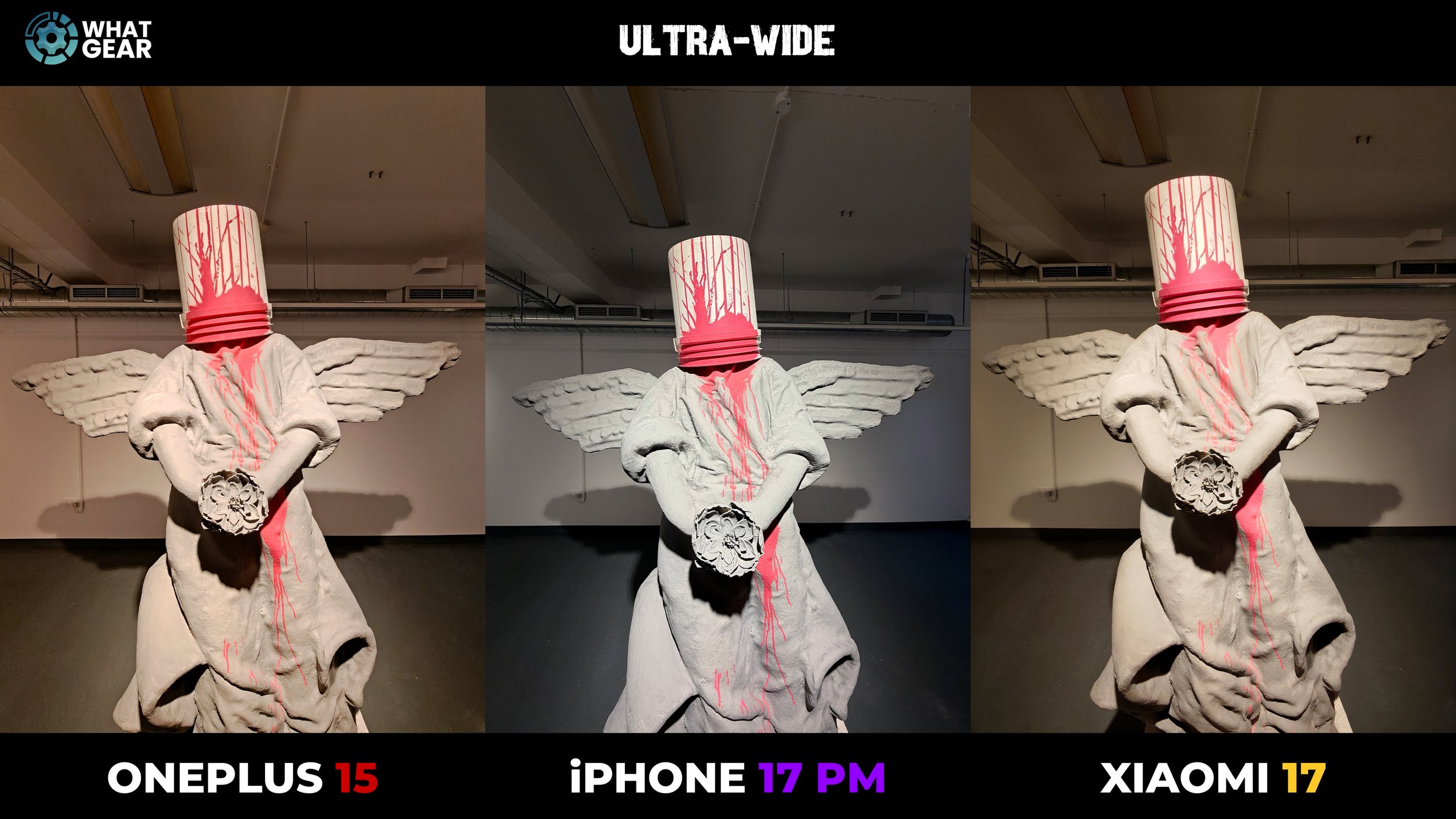
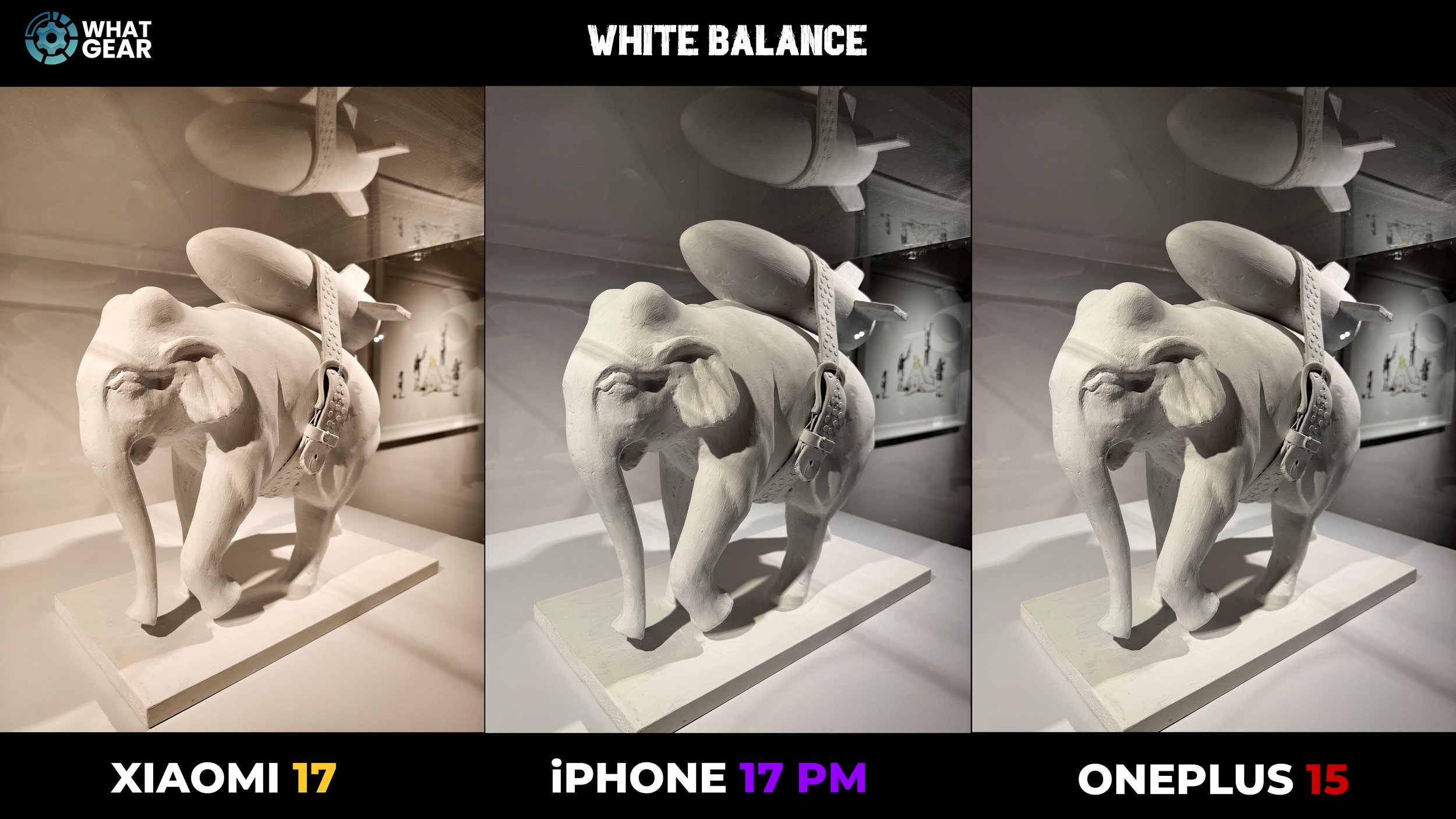
Welcome to another whatGear blind camera comparison. In this one, I'm testing the brand new Xiaomi 17 against the iPhone 17 Pro Max, and I've thrown in the OnePlus 15 for good measure. And if it's your first time here, here's how this works. I'm going to show you three photos. Take a look at them closely and choose which one you think instantly looks the best. And you see this timer up top. When that timer runs out, the phones that took the photos will be revealed. That way, you can come to your own unbiased conclusion about which phone is taking the best photos and videos. Now, before you ask, why didn't I test the Xiaomi 17 Ultra? Well, unfortunately, Xiaomi didn't send it to me. Maybe they didn't think I was going to make a video like this, but either way, let's see how it holds up against these top-tier flagships. Let's kick this off with the ultra wide. You should know that all phones were shooting in auto mode. So the white balance is very different on all three of these images. If my memory serves me correctly, there were some warm lights in the environment around this statue.
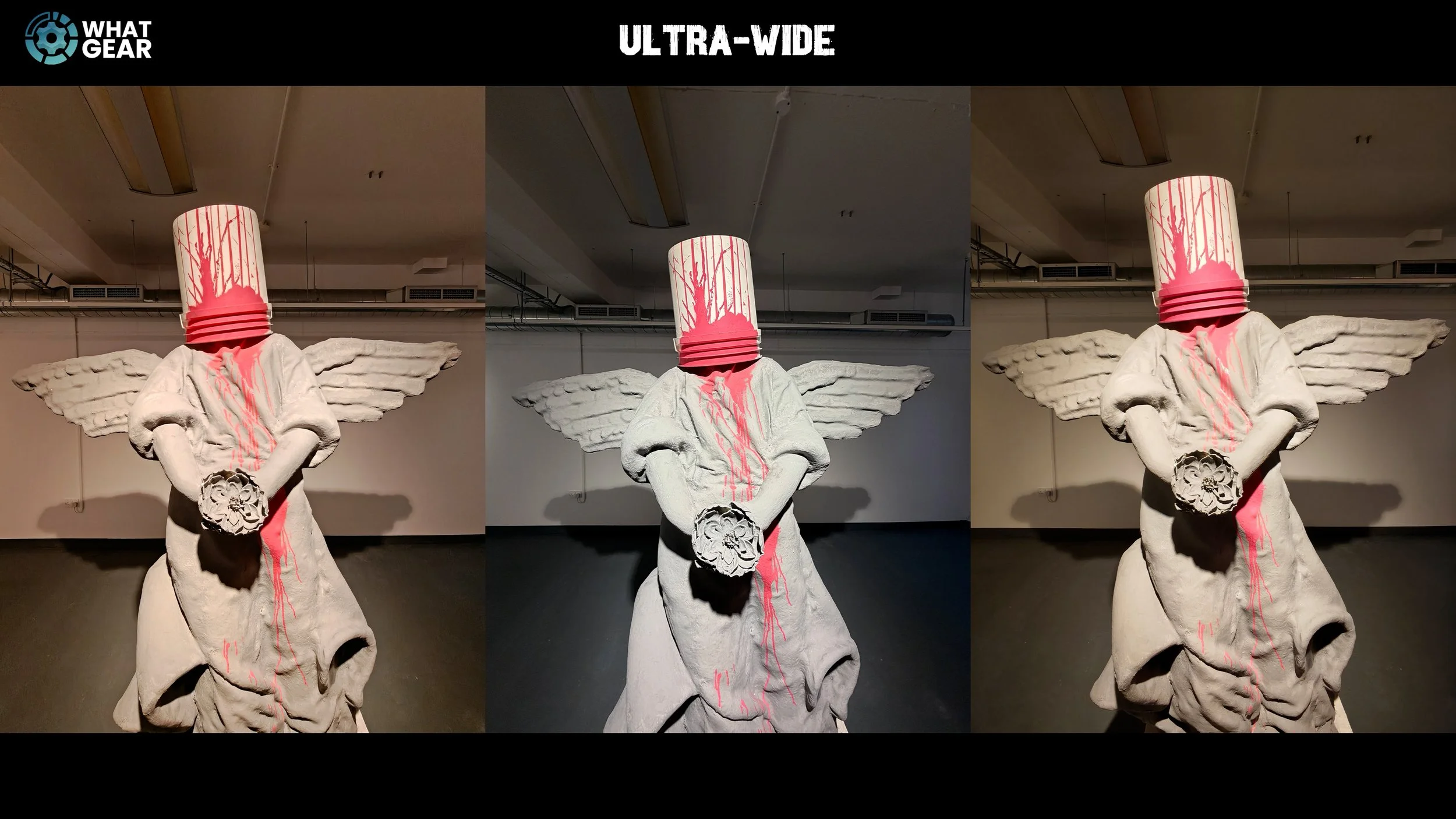
You'll notice instantly that there is a difference in the field of view. Some are wider. The center image has been hit with a lot of cool tones to balance out that warm light, which is interesting, and it does look good. The colors are closer to real life in the image on the right. But aside from that, which one actually looks like the best overall in your opinion? And definitely keep a little tally as to which one is winning here. I would be very interested to know which phone wins overall on your scorecard.
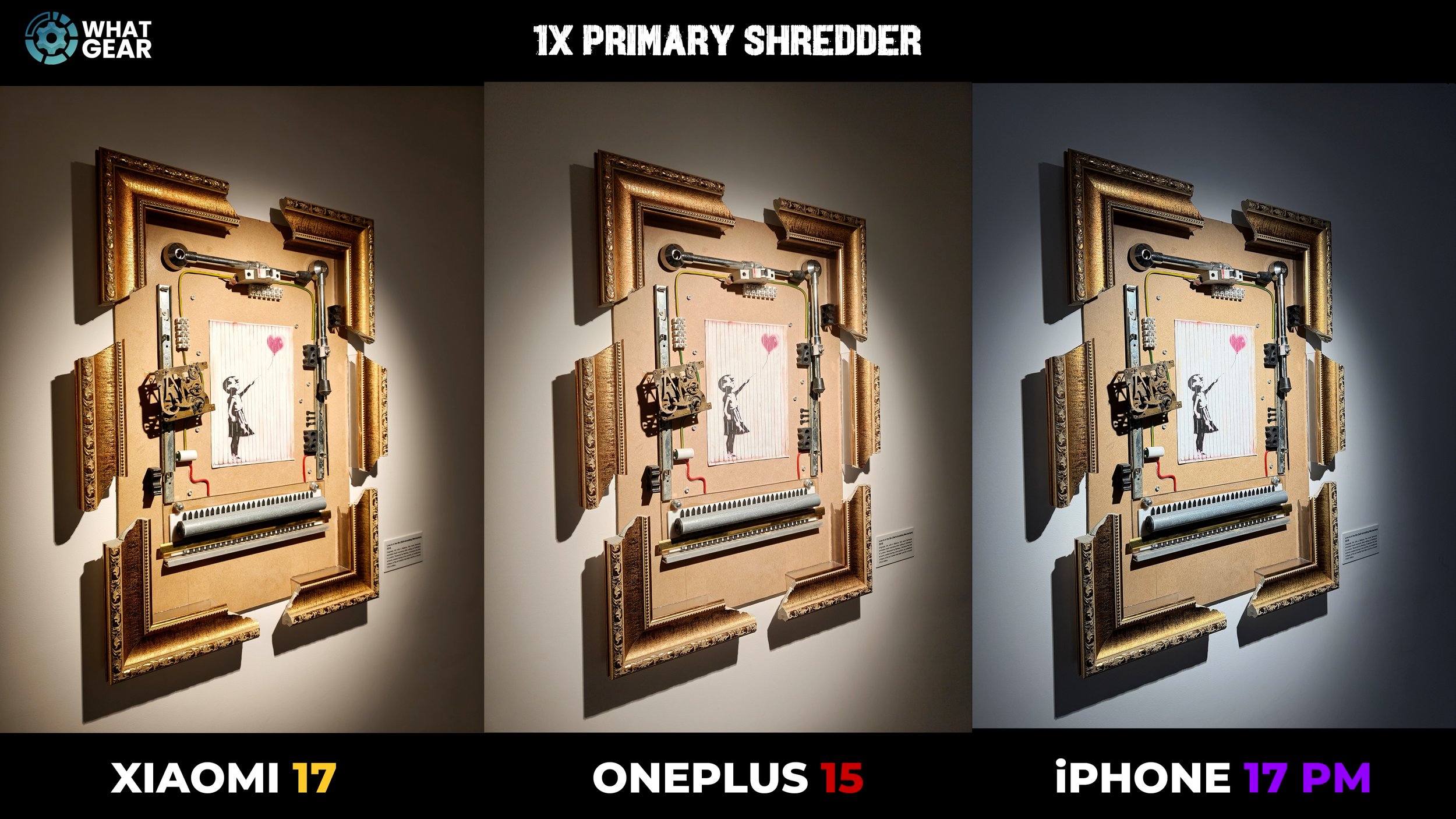
This is a 1x shot, and there is, in fact, a bright spotlight right on this. So this would be a good time to zoom right in and check those highlight details. Now, while all three phones have delivered fantastic details, I'm sure there's one here that's standing out to you. And also, while we're this close, check out the details on the mechanical elements here — all of this money printing, shredding device.
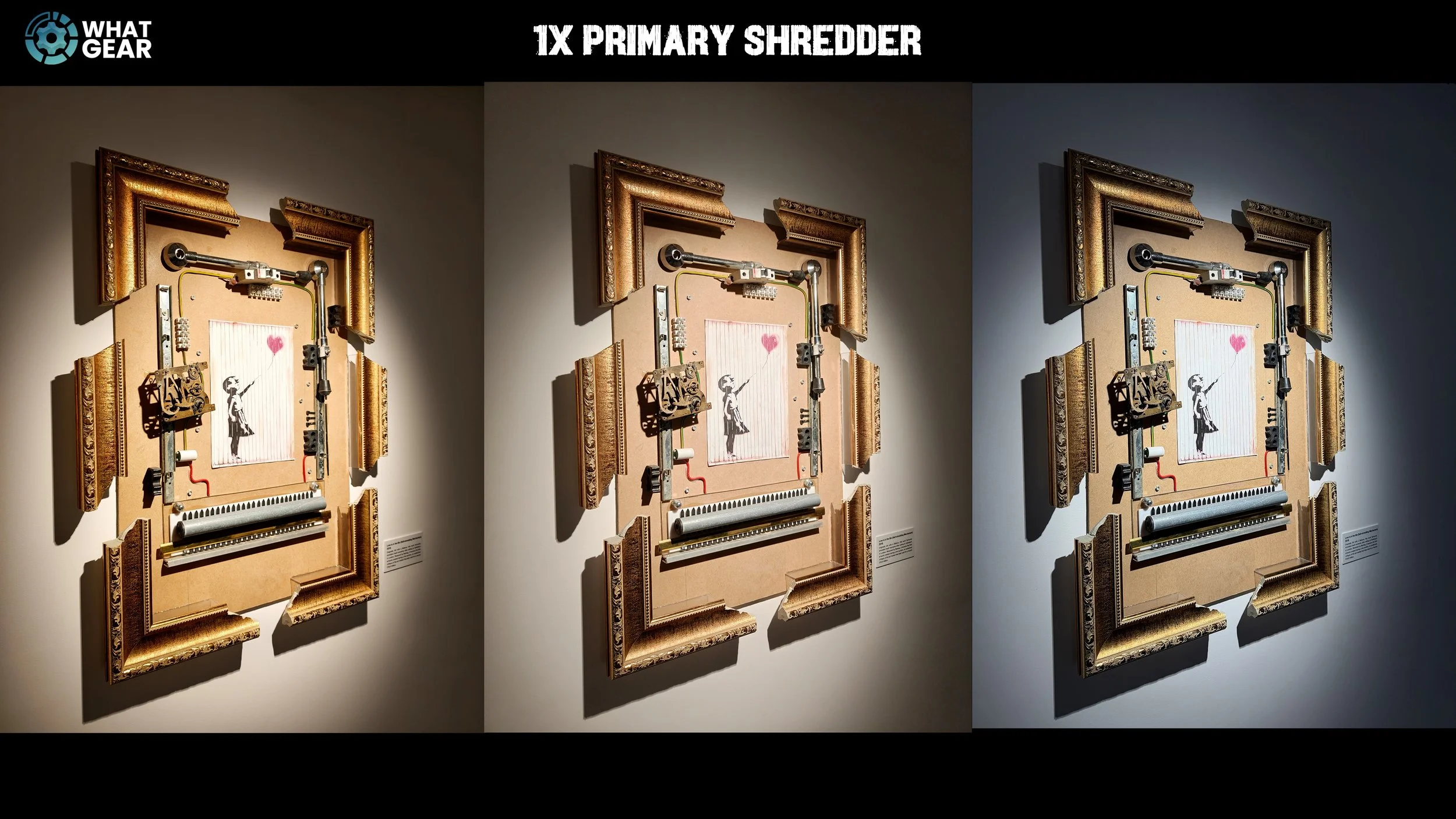
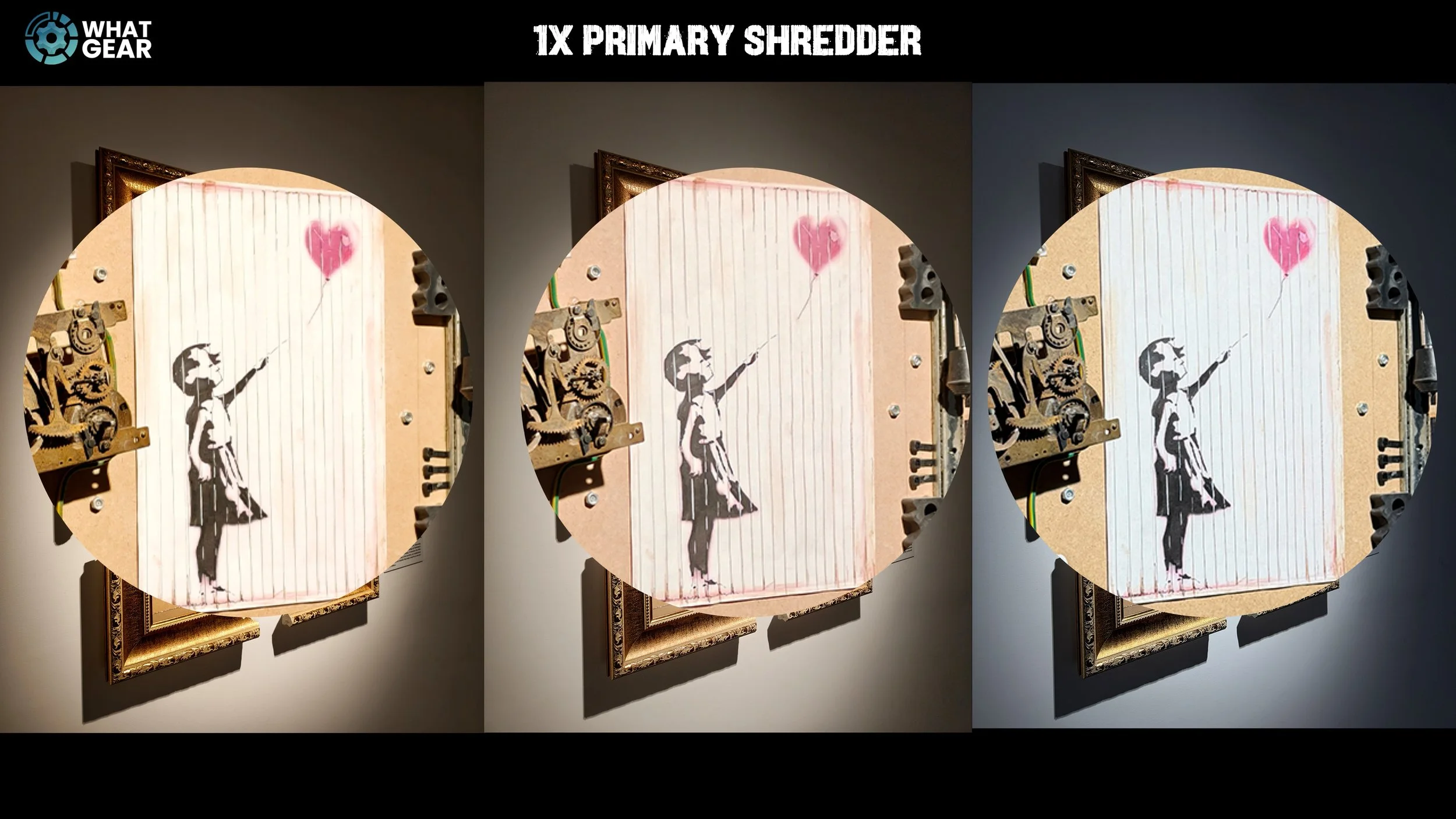
You'll also notice that there's a similar theme when it comes to the white balances. So based on that alone, you might actually be able to guess which one is which. Anyway, now's your time to decide.
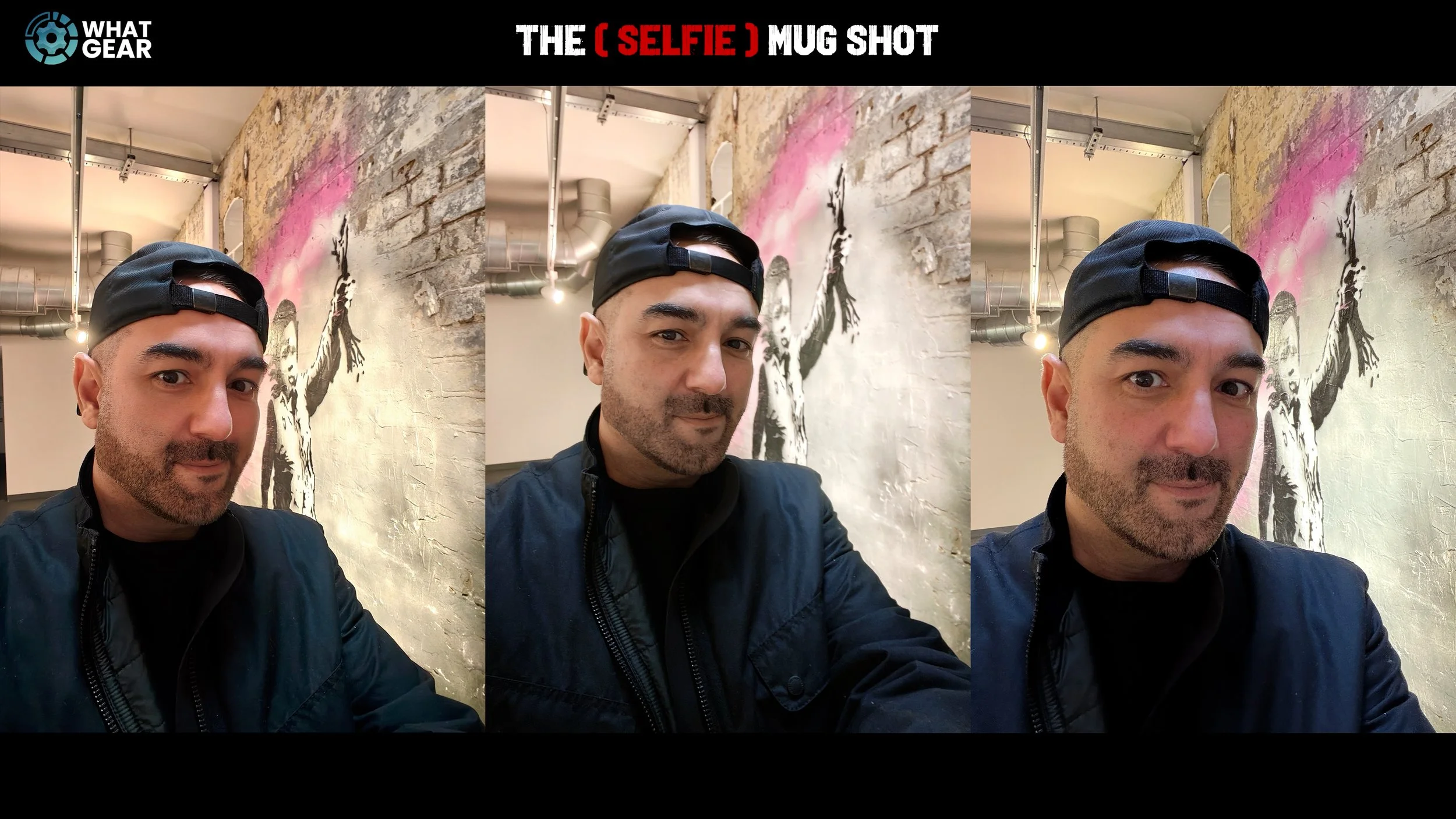
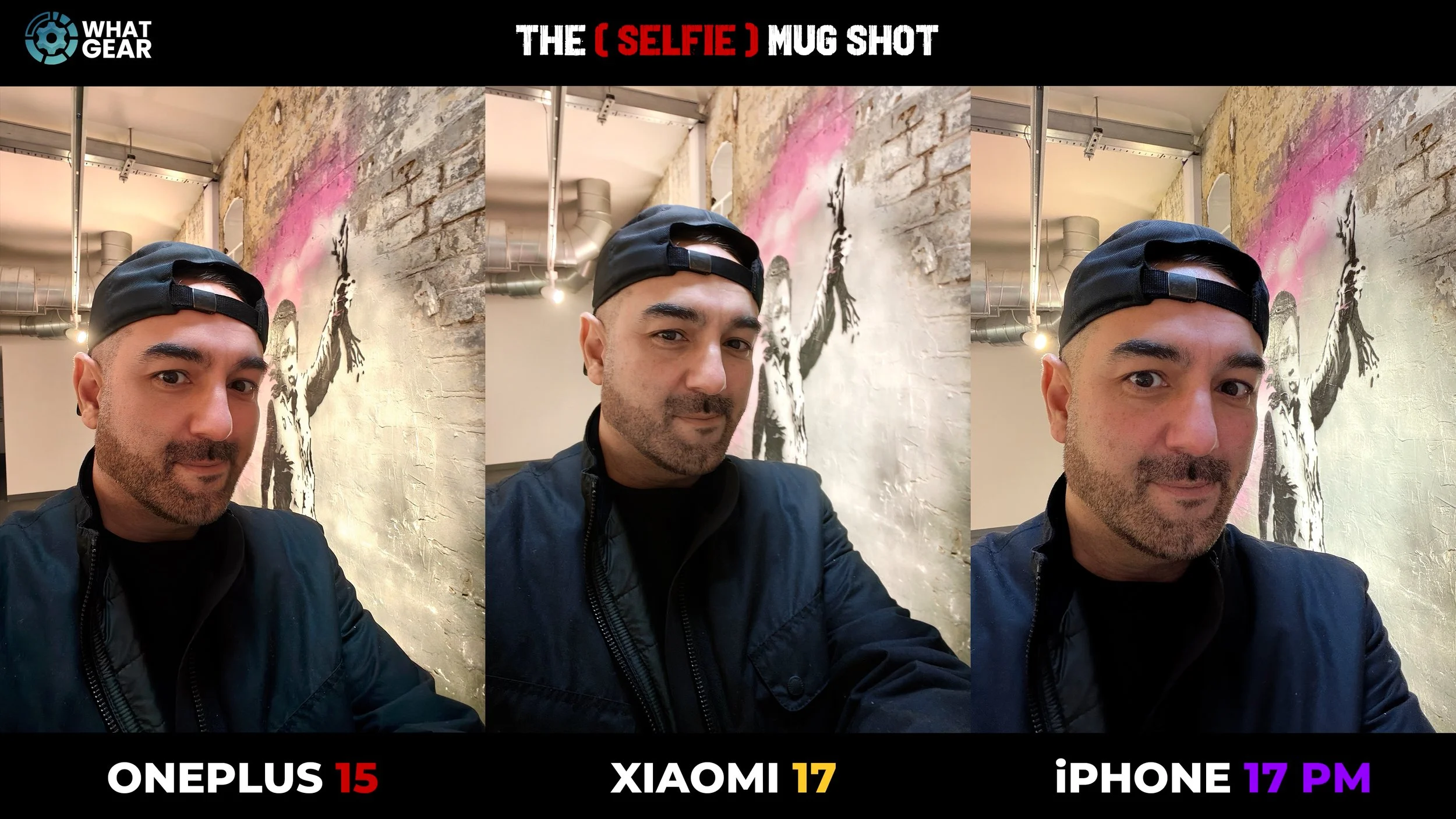
There's a pretty big difference between the phones when it comes to skin tones and also AI processing. In the photo on the left, my skin looks incredibly smooth, which is nice, but maybe not true to life. I do like the warmth in this image, though. In the center image, my skin looks less smooth and ultimately more true to life. However, I don't think I was that pale on that day. I do really like the details and the shallow depth of field here in that centre image. And finally, the photo on the right: the details are really nice. There is not much AI in play, but there is some, and I'm not sure my face was actually that red. That looks like the face of a person who'd been up late the night before drinking…
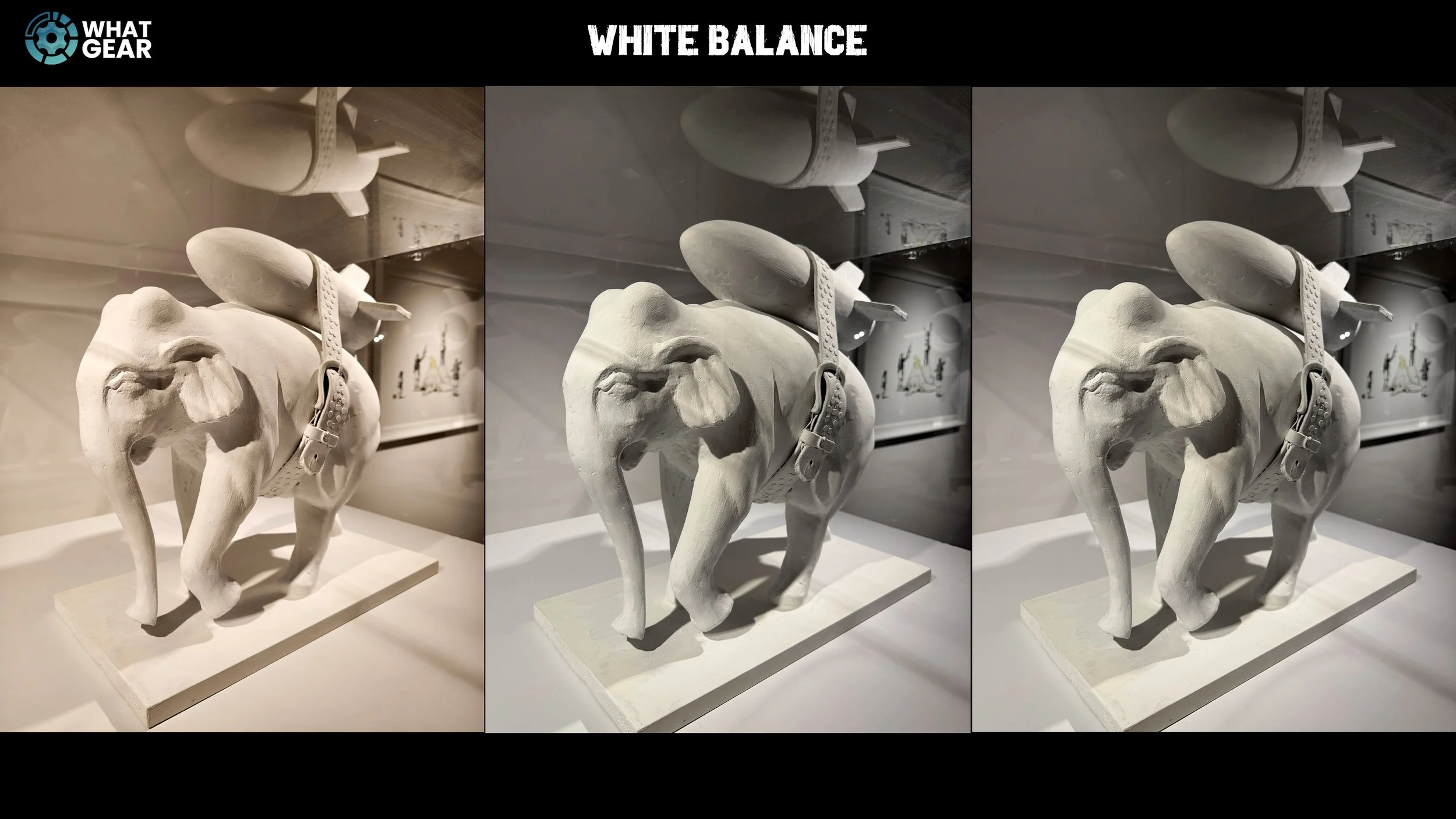
Here's a 2x shot. Typically, the phones will use a sensor crop as opposed to a zoom, so we shouldn't see any loss of detail here versus 1x. This is another good one for white balance, and again, you might be able to guess which phone took which just based on that, but also on the details. And that's really what I'm going to say about this one. But there is one question for you: war — what is it good for?
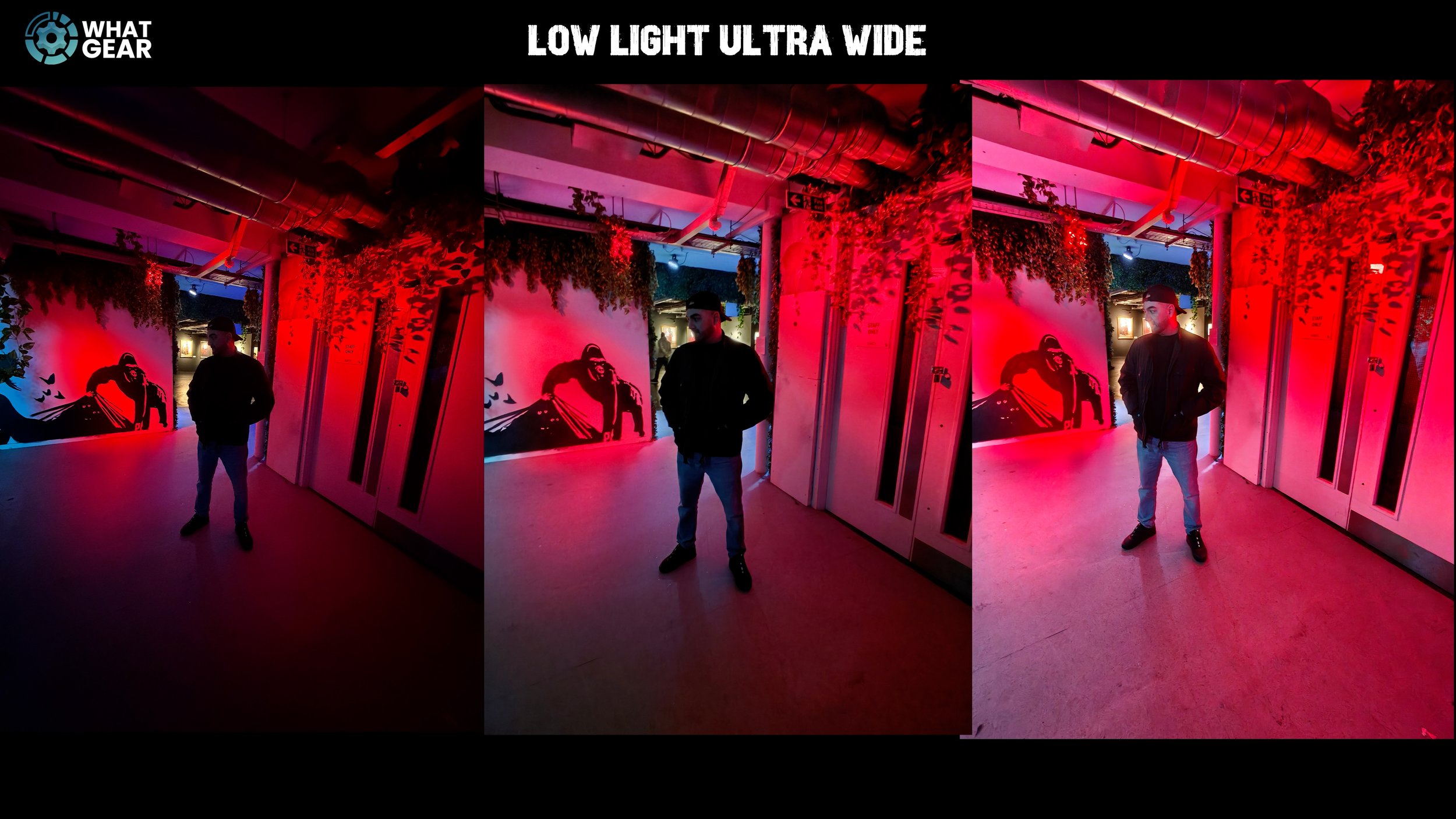
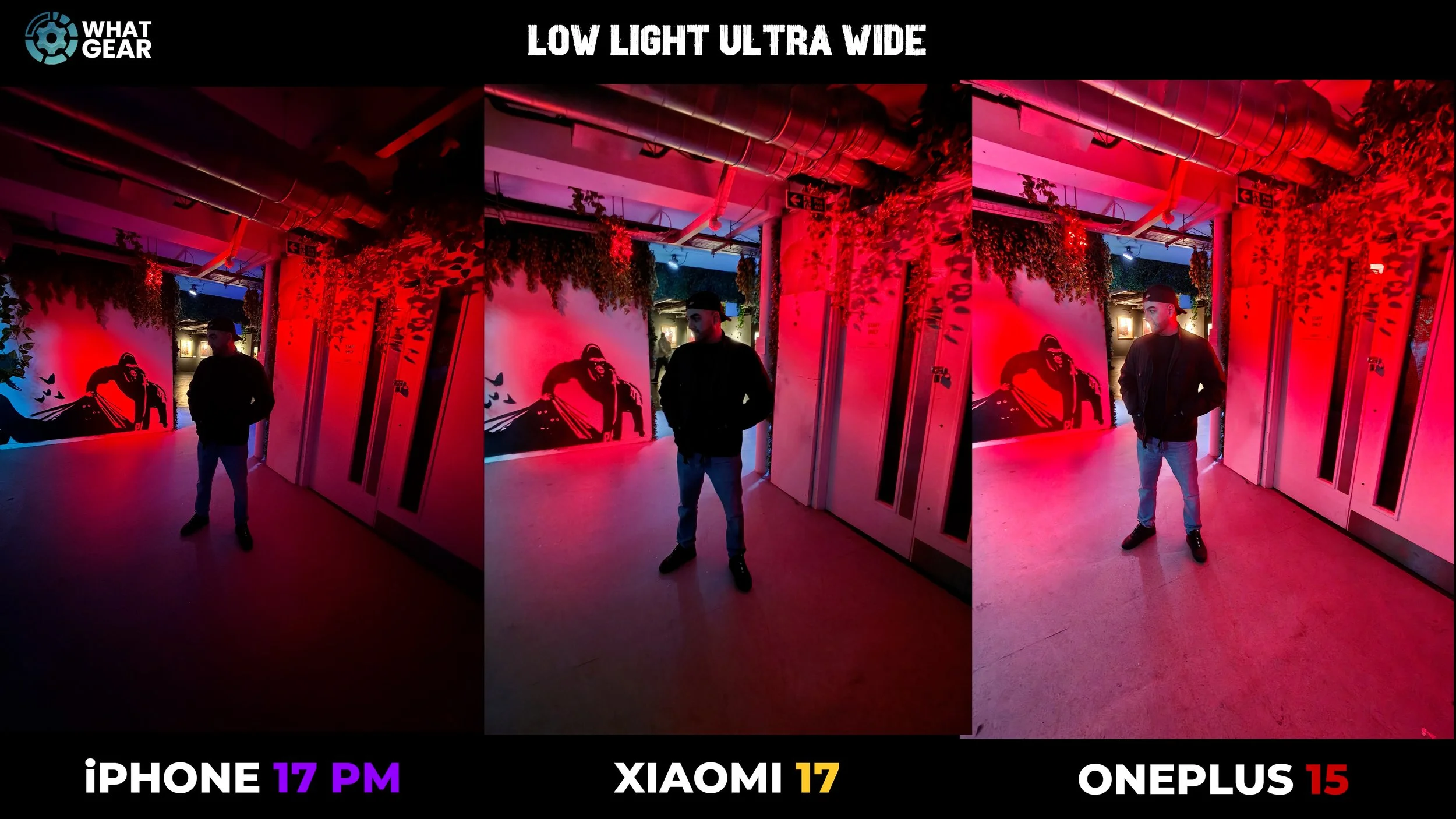
Here's another ultra wide, and this one is in a much darker setting. And this is interesting because it's in such a challenging lighting scenario. There are bright back lights, there are red lights, there are blue lights, there's a lot of shadows — and all these things can kind of throw off the accuracy of colours. And on top of that, to make it even more challenging, I'm wearing dark clothes, so this would also be a good test of the dynamic range when it comes to ultra-wide. So let's zoom in and check the details here.
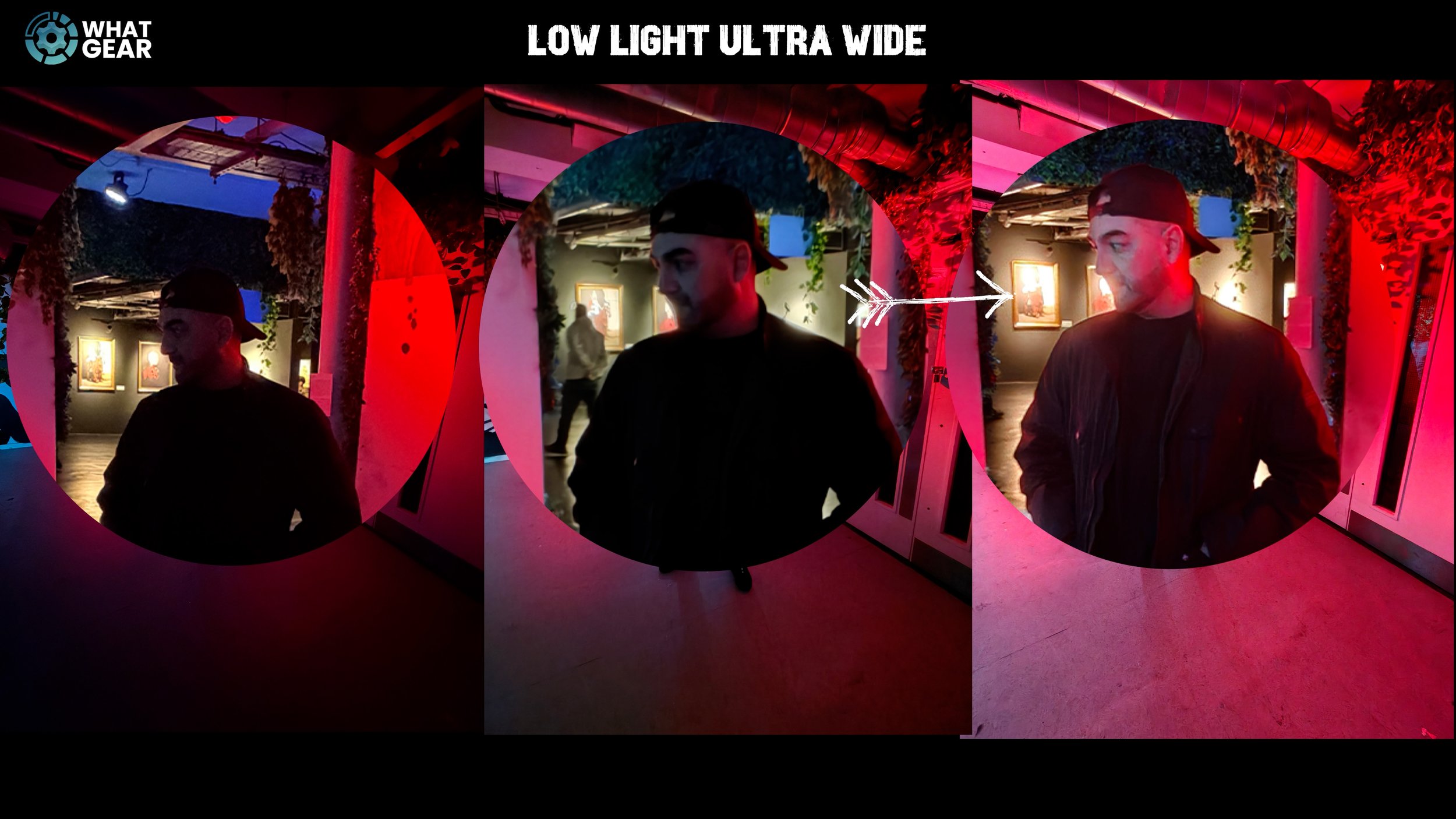
And just while we're here zoomed in, see that little portrait just over my shoulder in the back? Let's do a long-range Zoom test. Let me know what you think. Which one won the Zoom test in your eyes?
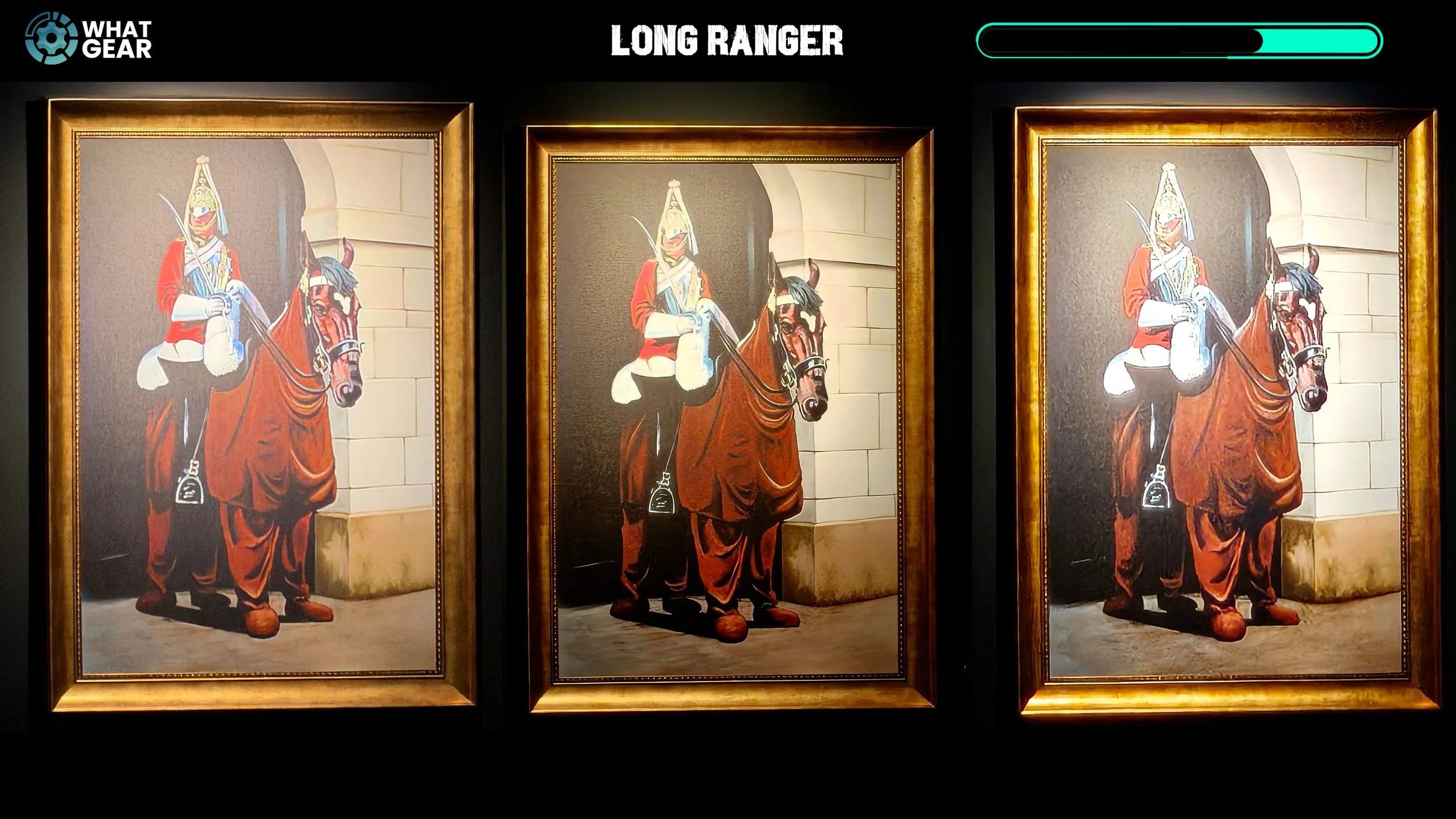
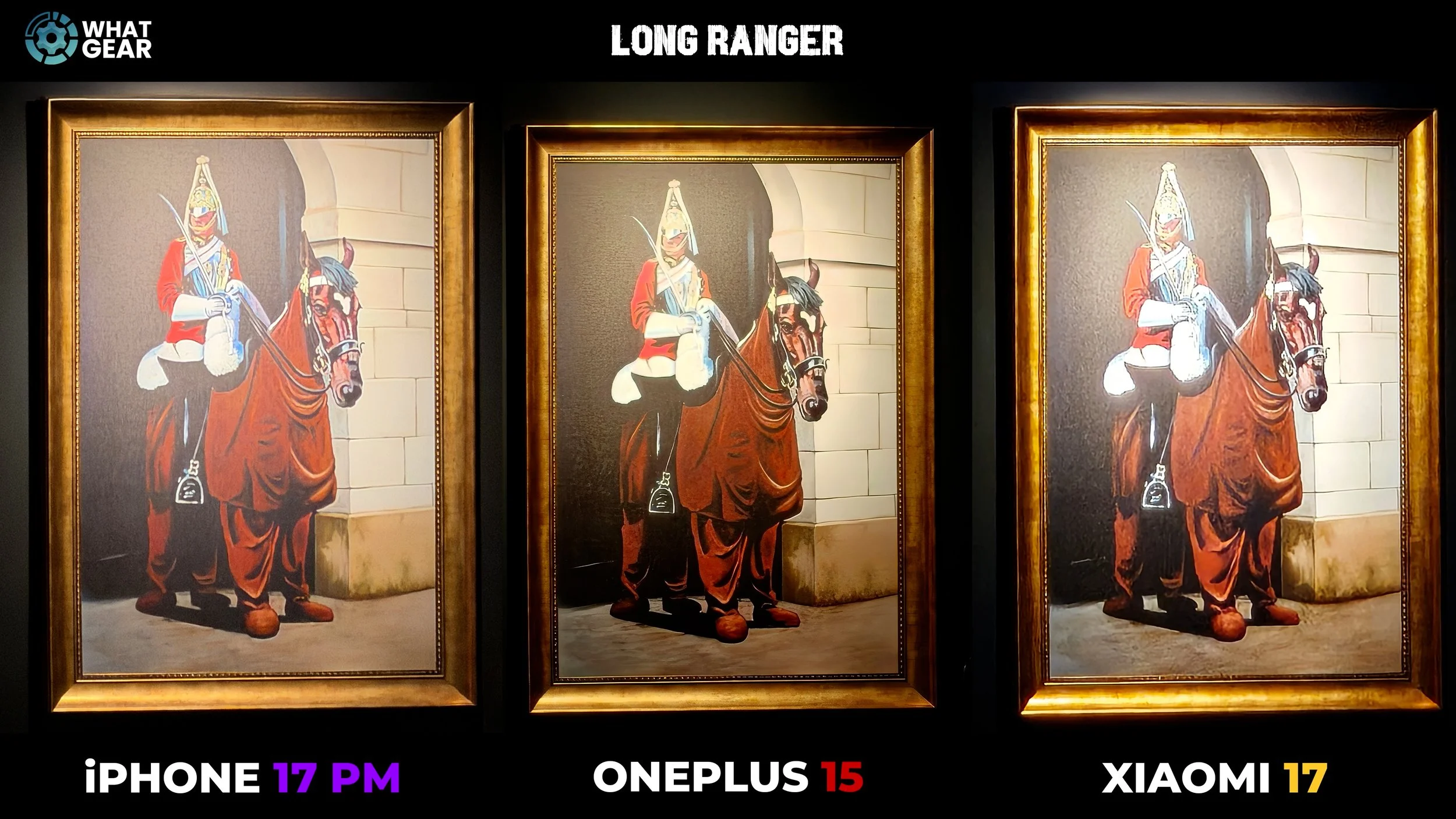
And now I'm going to just roll a few more photos from the Van Gogh: The Immersive Experience exhibition in London, and then we'll get into some more natural lit and lower lit scenes.
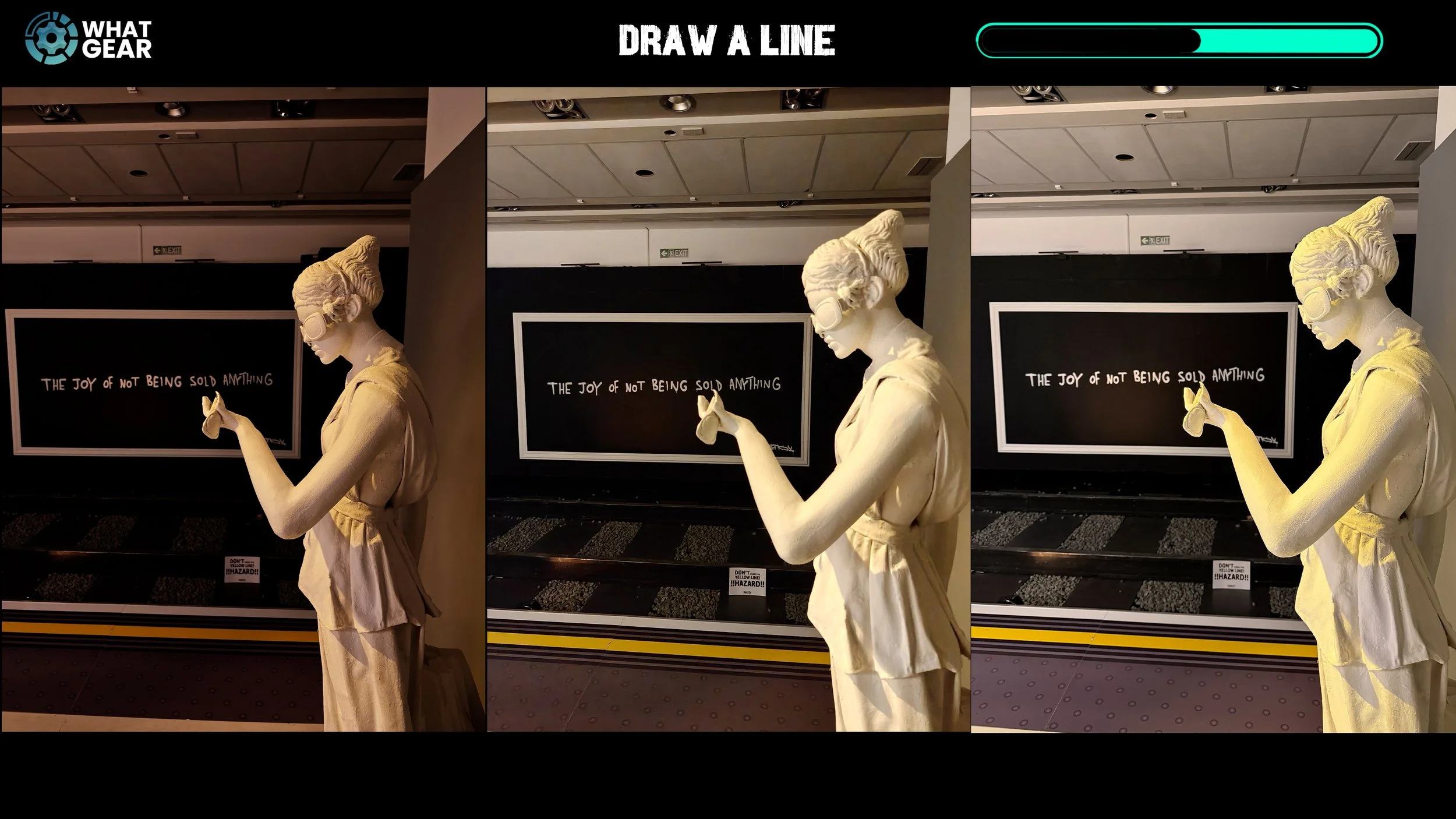
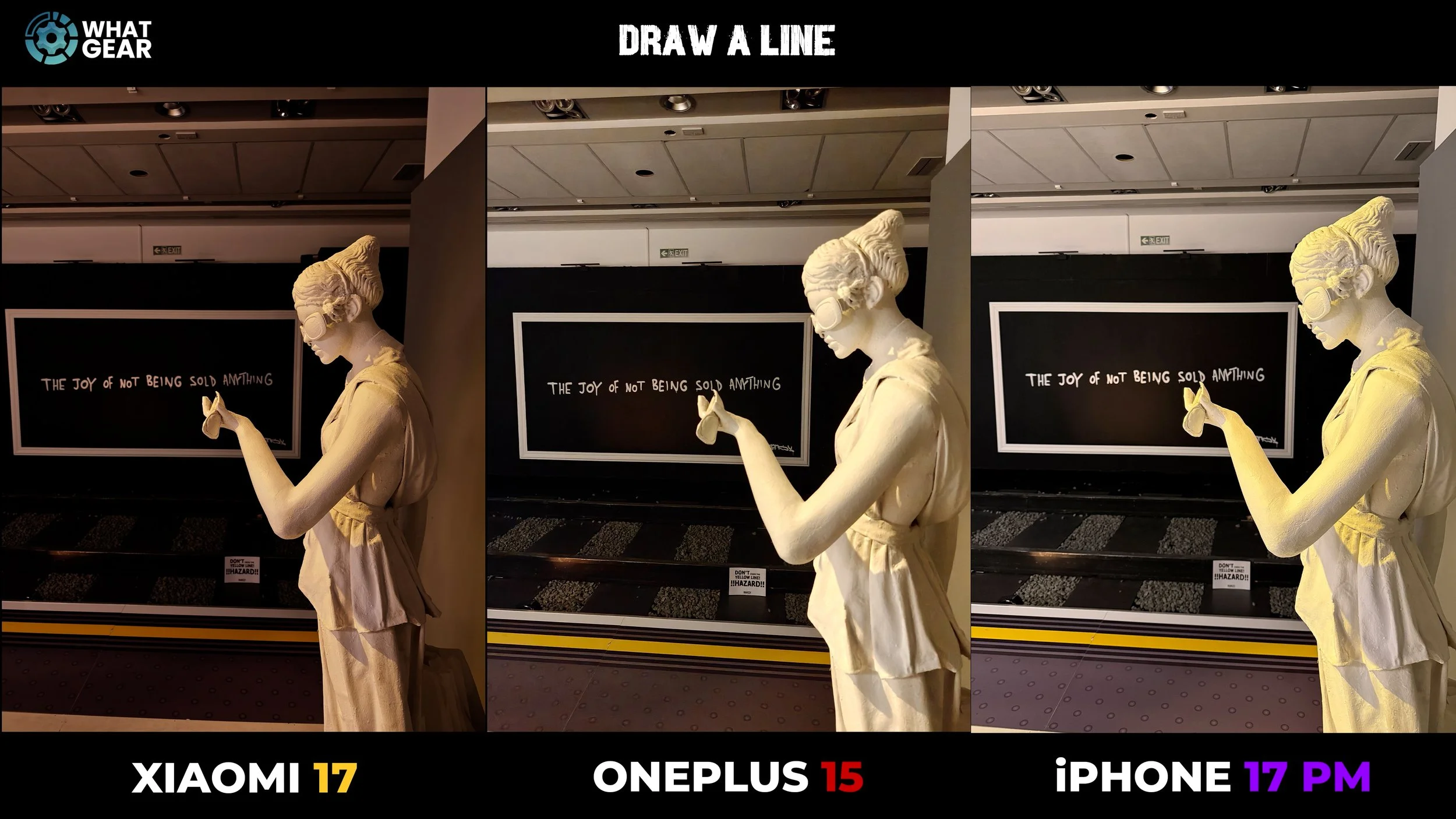
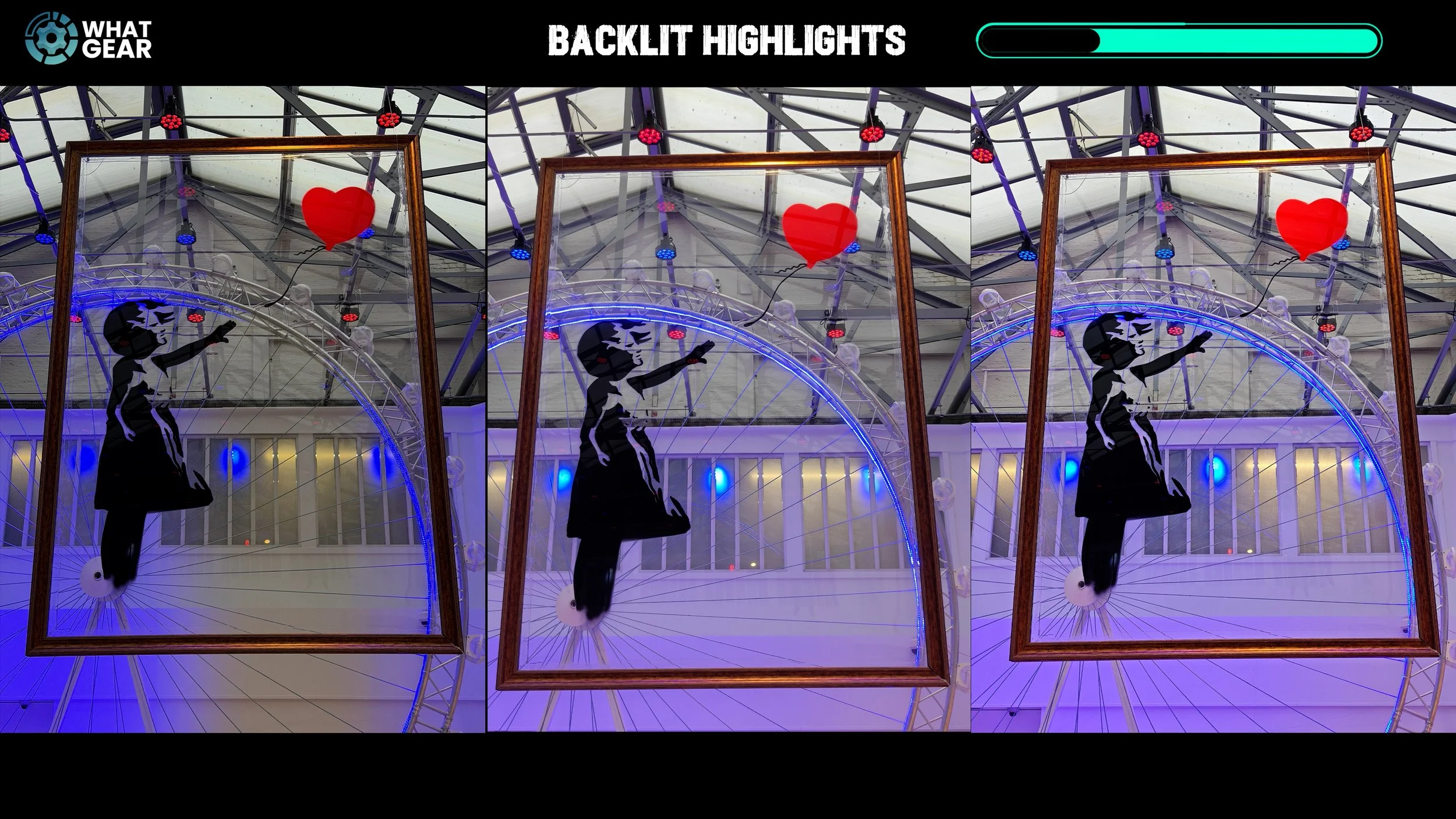
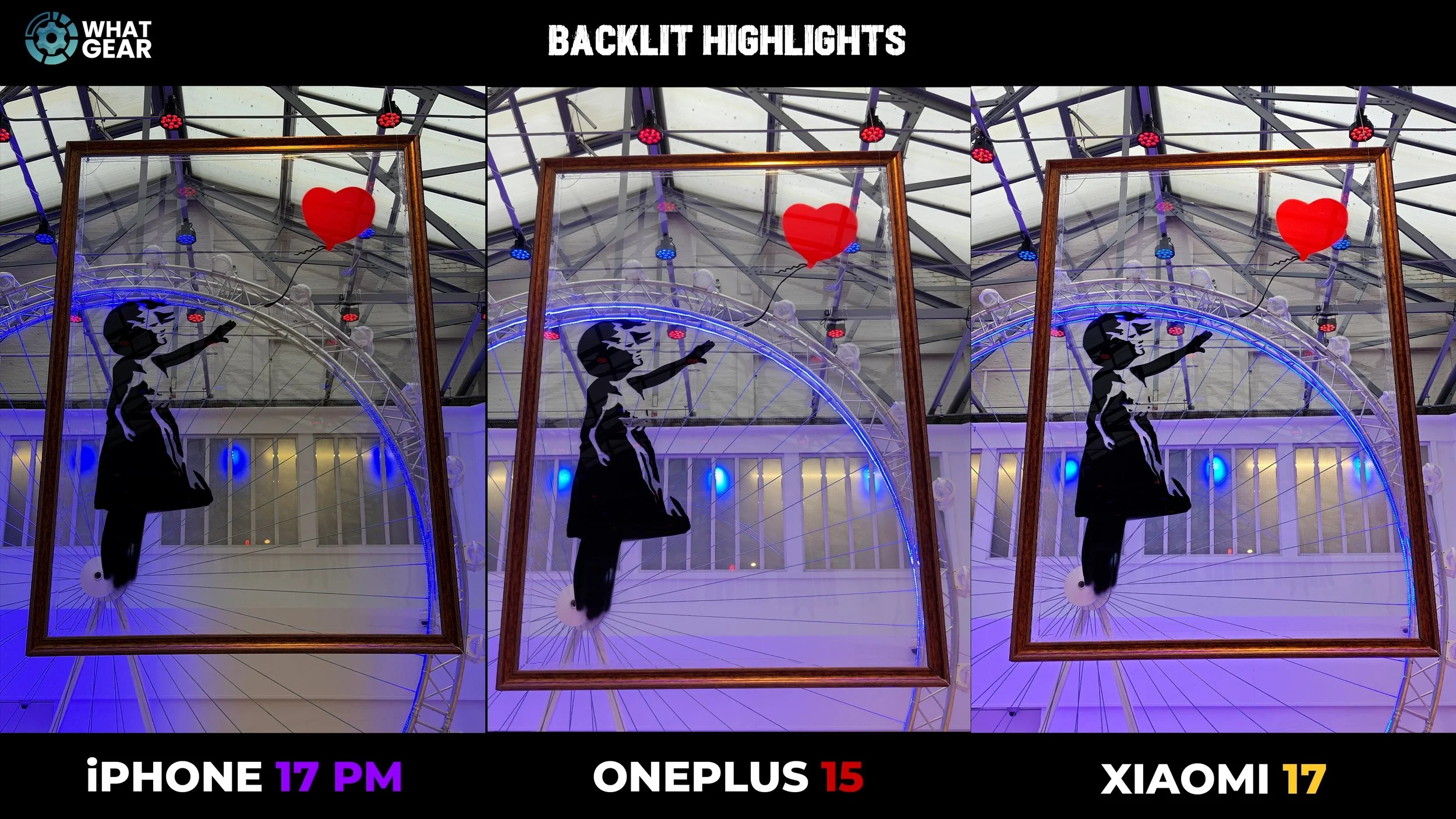
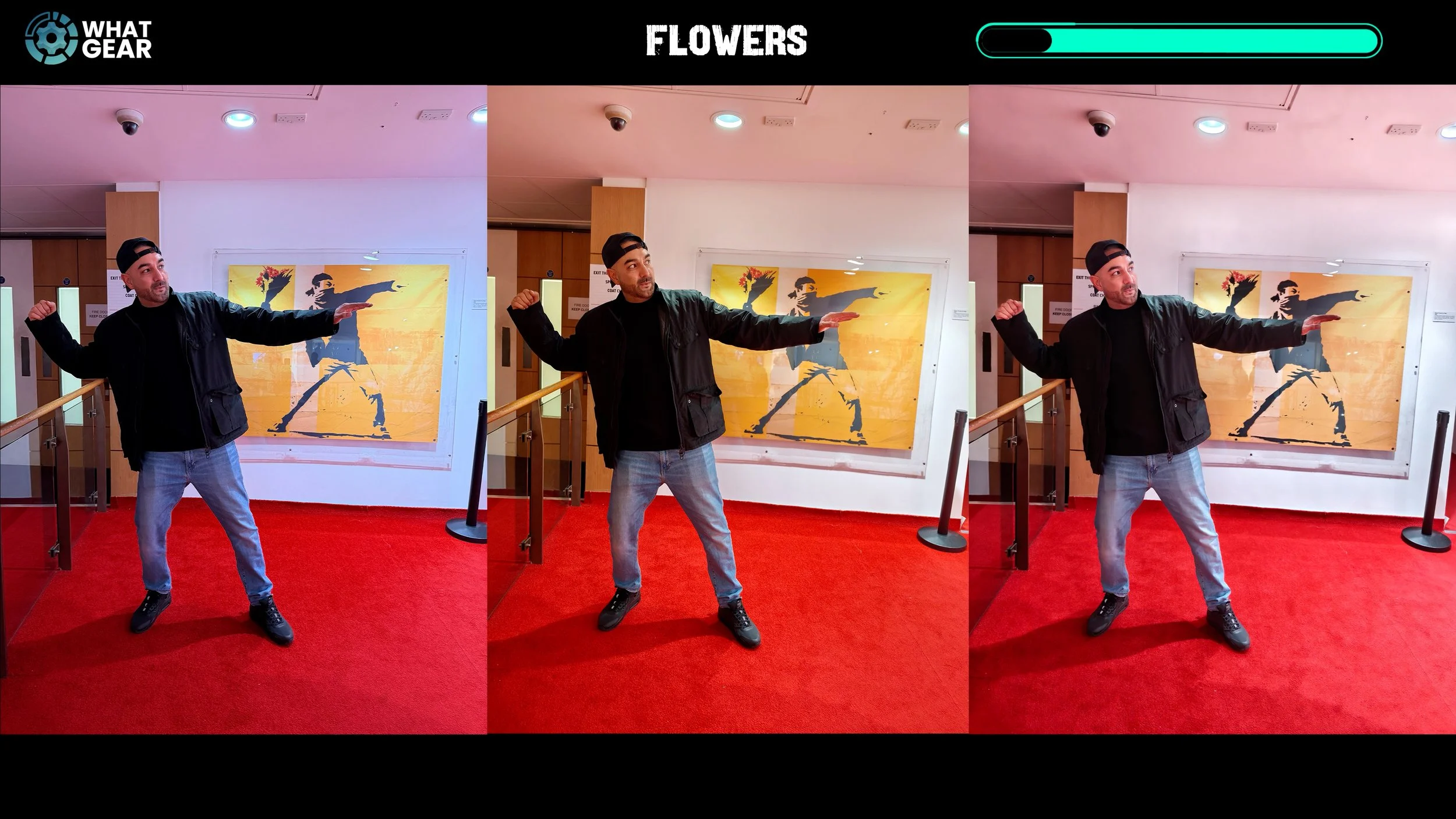
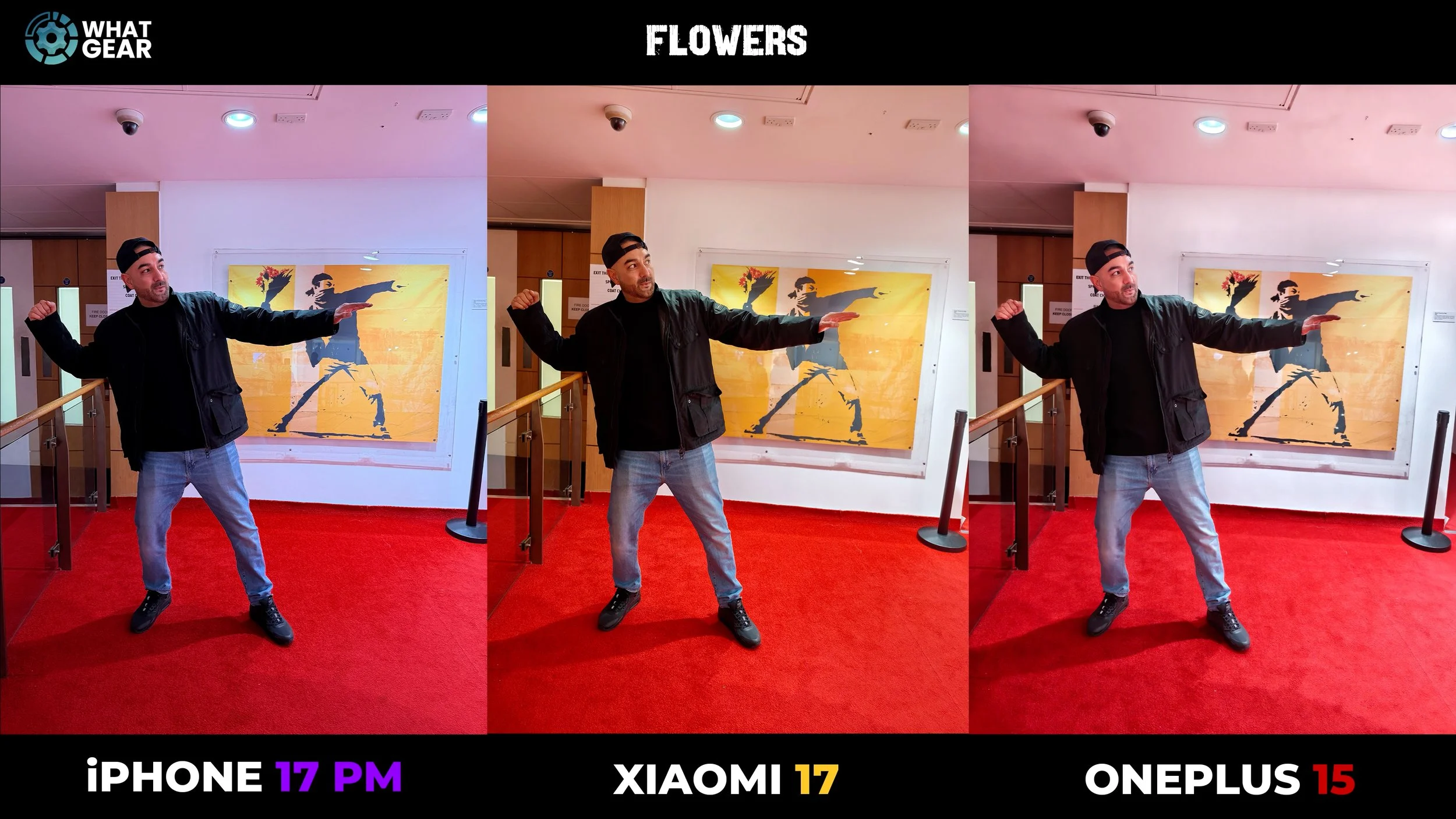
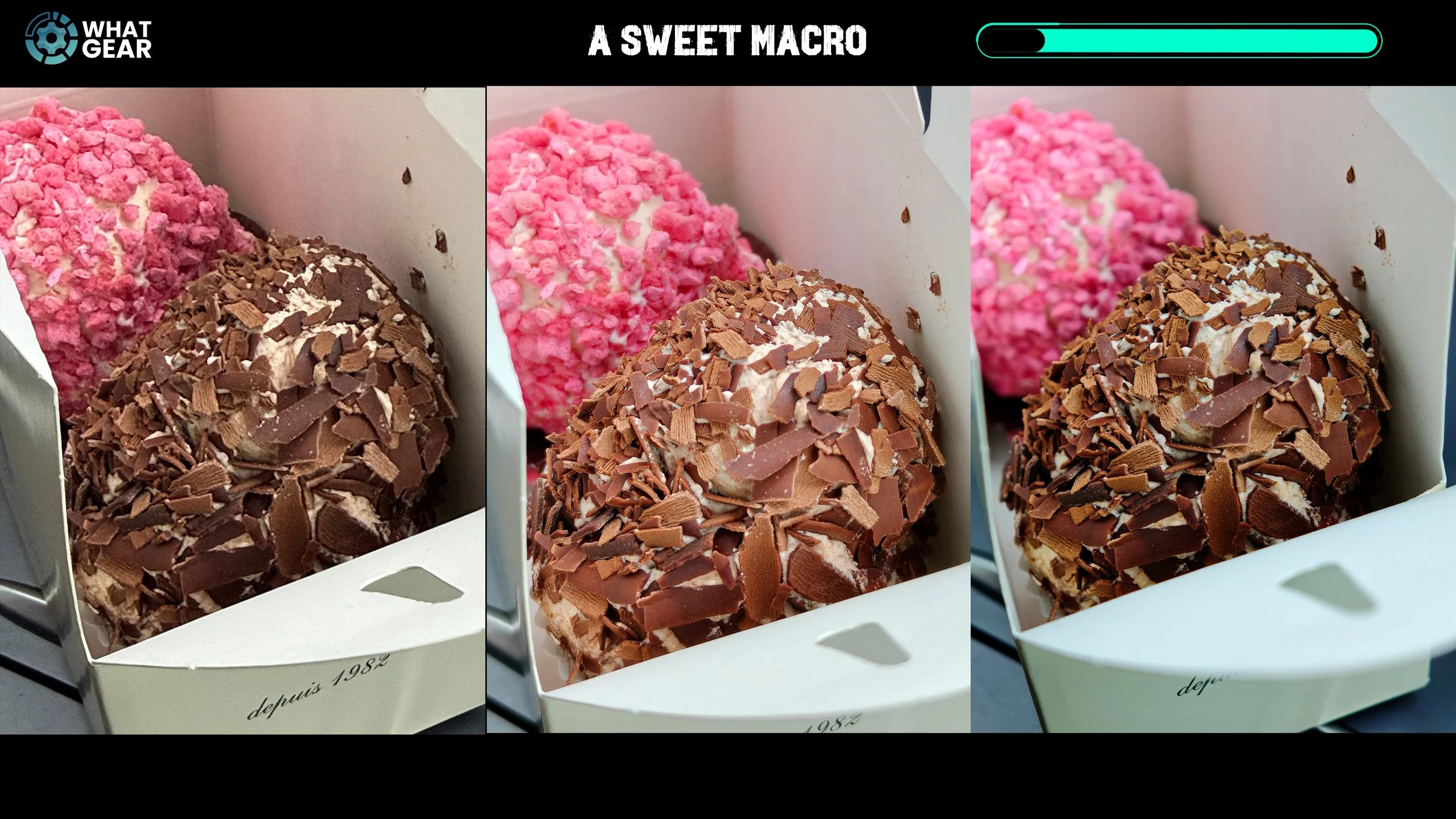
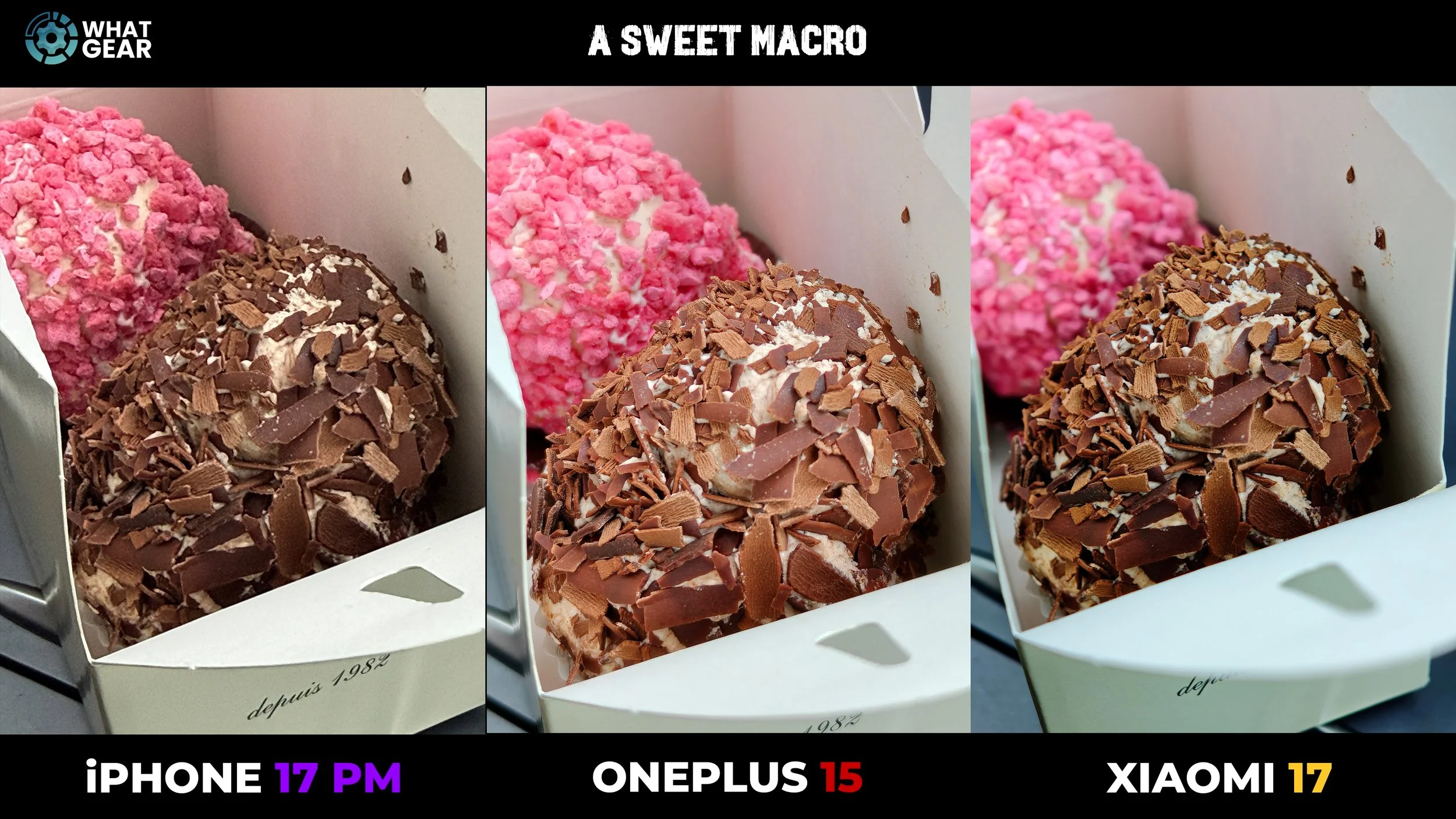
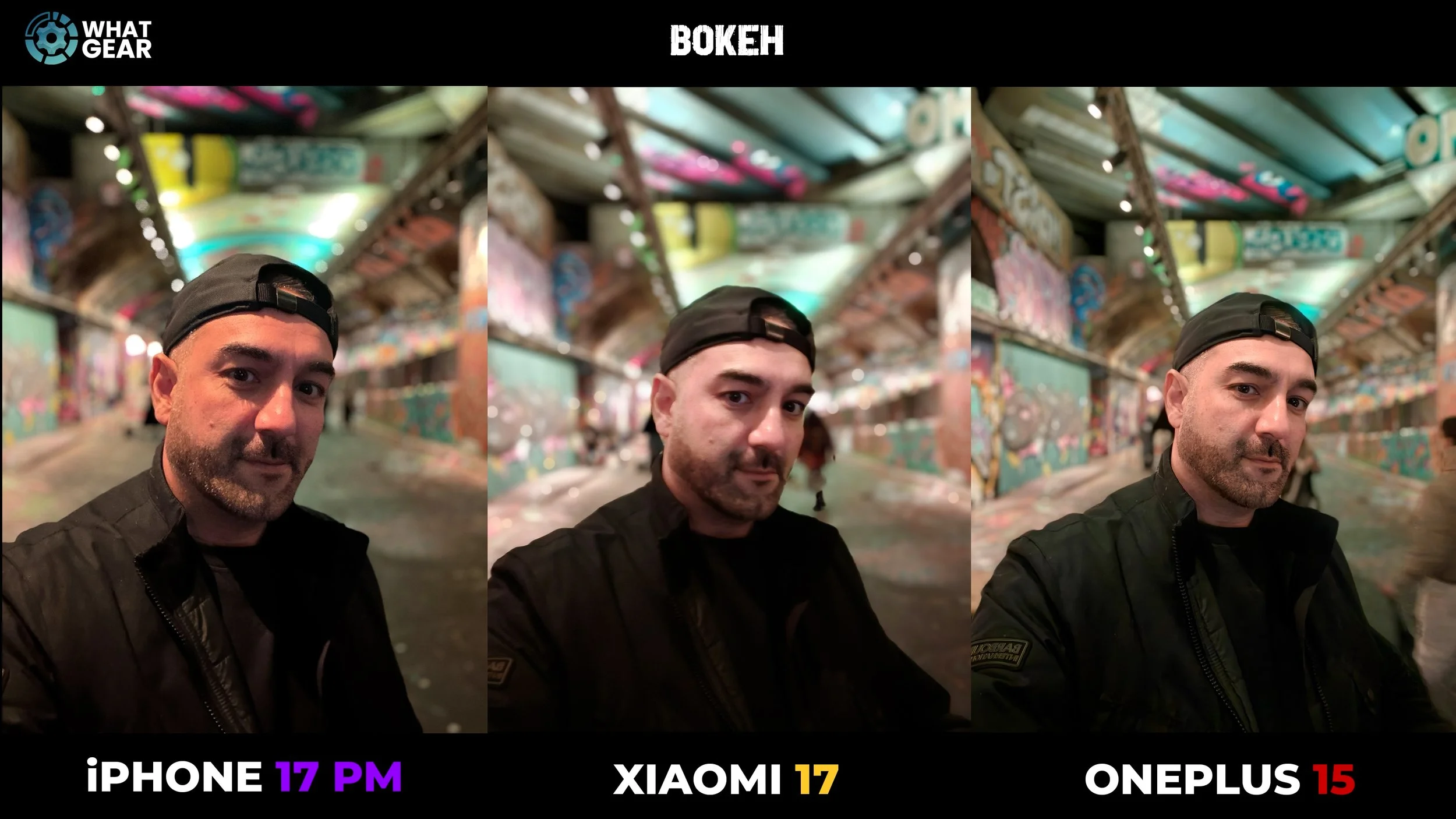
So now I am at Leake Street, the famous graffiti tunnel started by Banksy. So I kind of figured, let's take some graffiti-centred shots from here, because it takes a lower light source around here. Let me know how the three cameras are performing against each other. And again, you get to have a look yourself. Here is a portrait shot. This is where the phones add this kind of blurry background effect to the image using post-processing. And this really is an interesting balancing act for the phones.
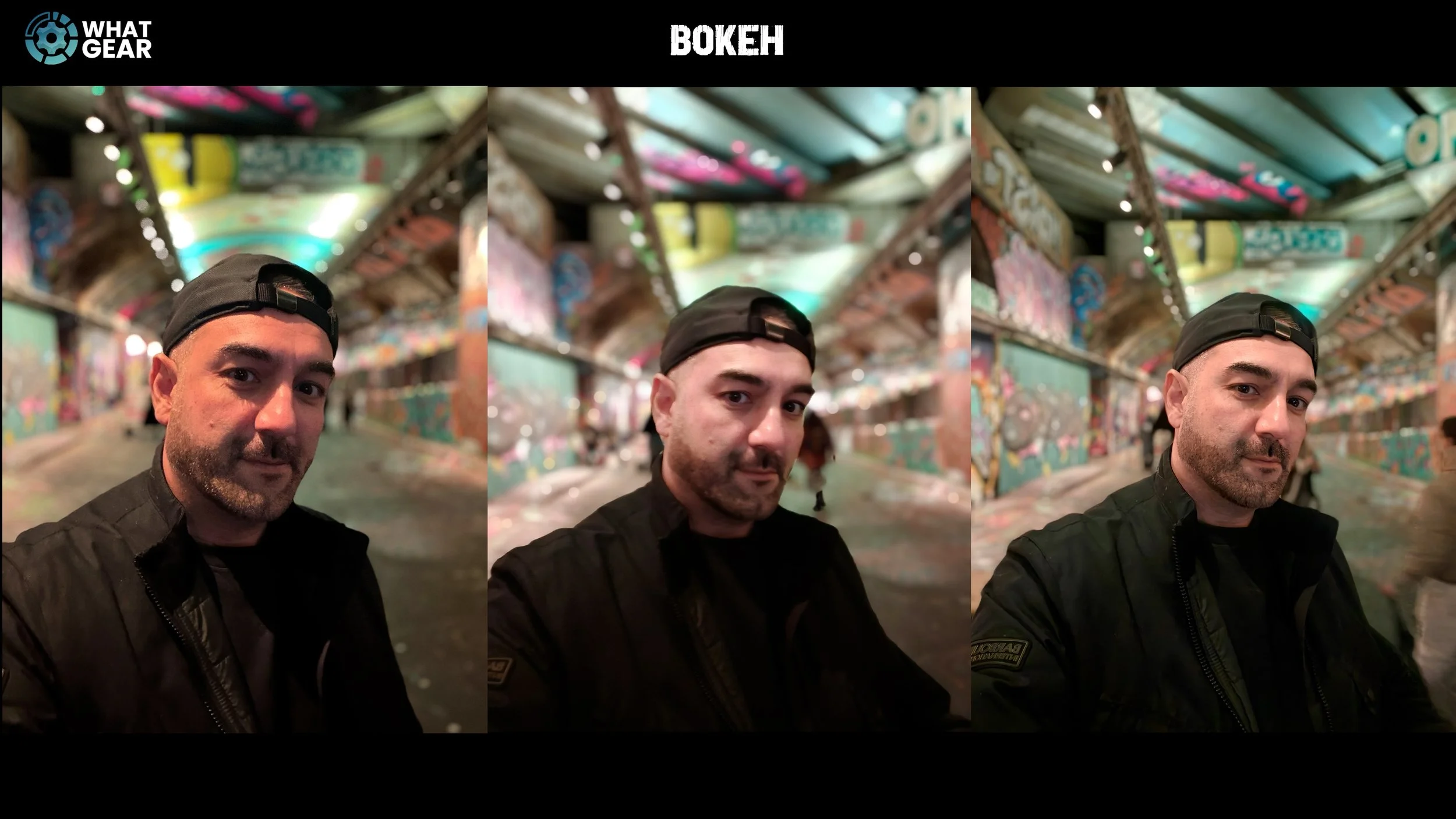
I think the real key to success here is making the subject of the image not look like a sticker on top of a background. And I think there is one phone here that's kind of doing that, and there's also another one that's doing surprisingly well. I'm sure you can figure out which ones I'm talking about anyway. It's not up to me now — it's up to you.
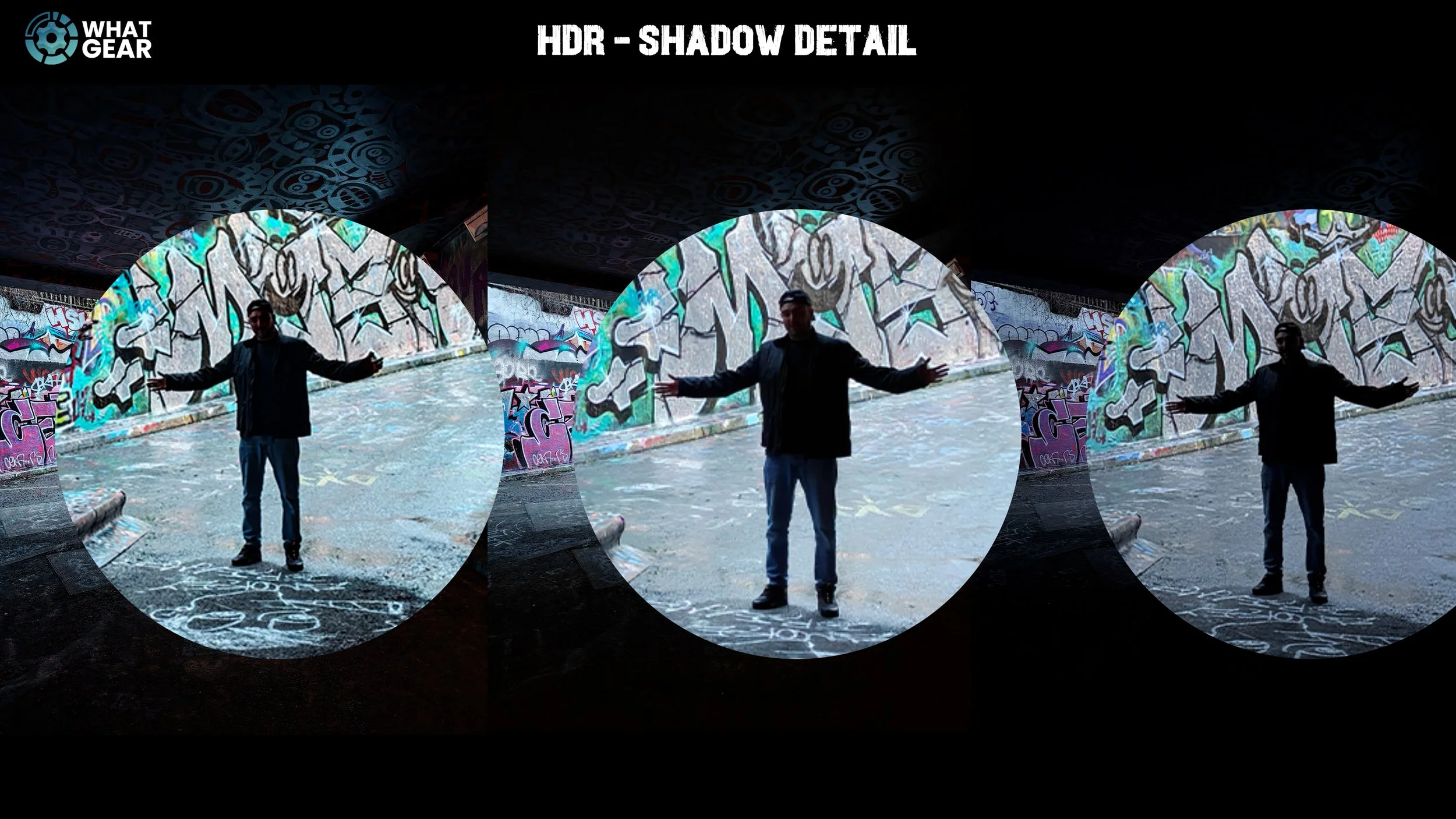
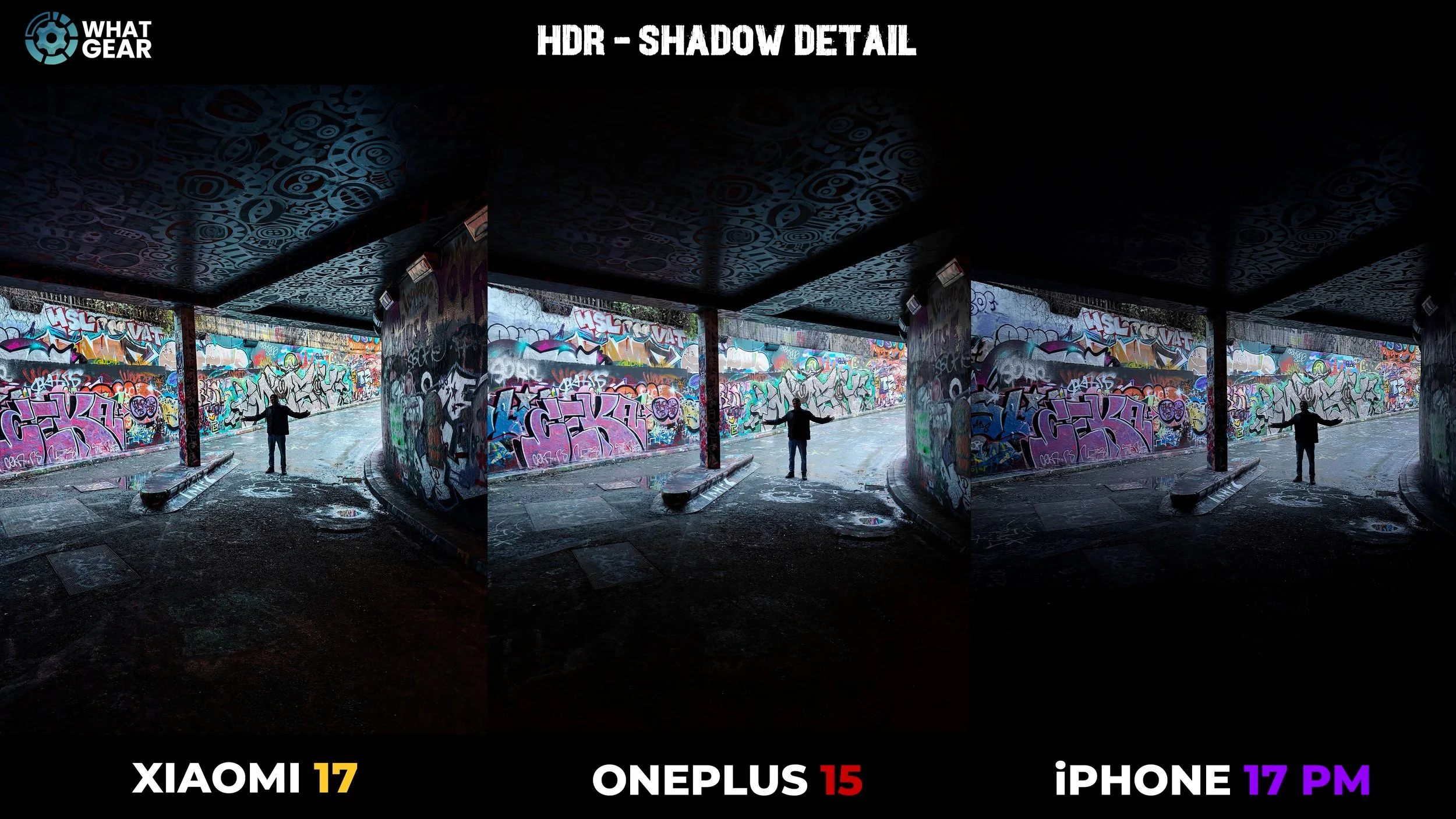
So this one is a fantastic test of the three phones' HDR abilities. It's also a great test for the sensitivity and the quality of those primary sensors. And I'm going to draw your eyes to a few things to consider. Look at the shadow detail on the ceiling — there's a big difference there. Also, look at the details on the tarmac. You can see the points at which the details start to fade and disappear altogether into the darkness. And the reality is, there are a number of reasons why this could happen. It could be less light intake through the lenses, a less sensitive sensor, or it could actually be a creative choice by the brands to crush the shadow details and create this more contrasty look.
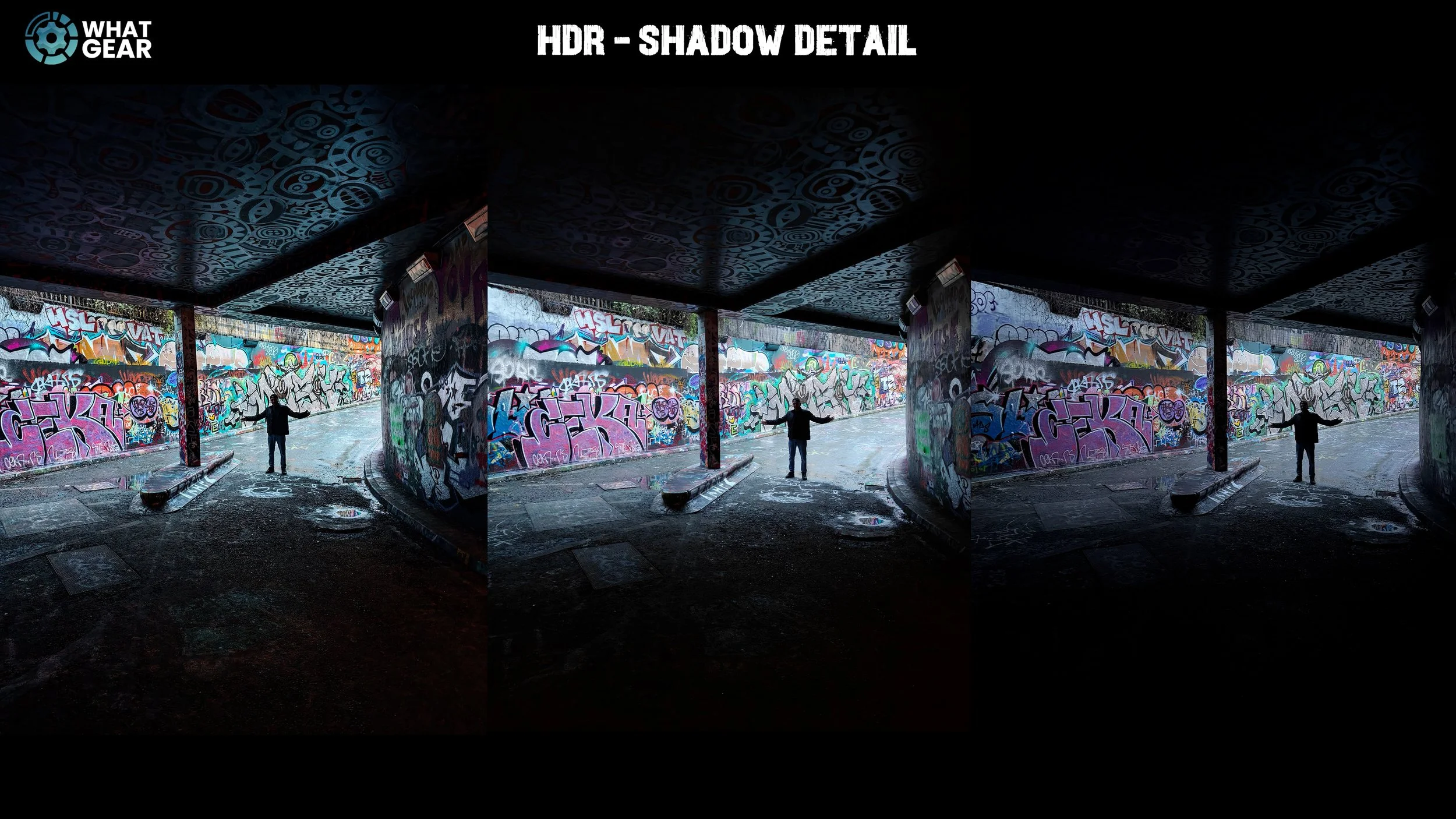
Also, zoom in to where I'm standing in this image so you can see how much detail has been retained on me and my clothing, because phones that have better HDR processing will typically look better in these kind of areas.
Here's a lower light ultra wide, and I think generally speaking, they all look really good to me. Here are some of my thoughts: Maybe the highlights are a bit too bright in the image on the right. I like the wider field of view in the centre image, and maybe the colours in the photo on the left are a little bit too warm. That's just my personal opinion. What about you?
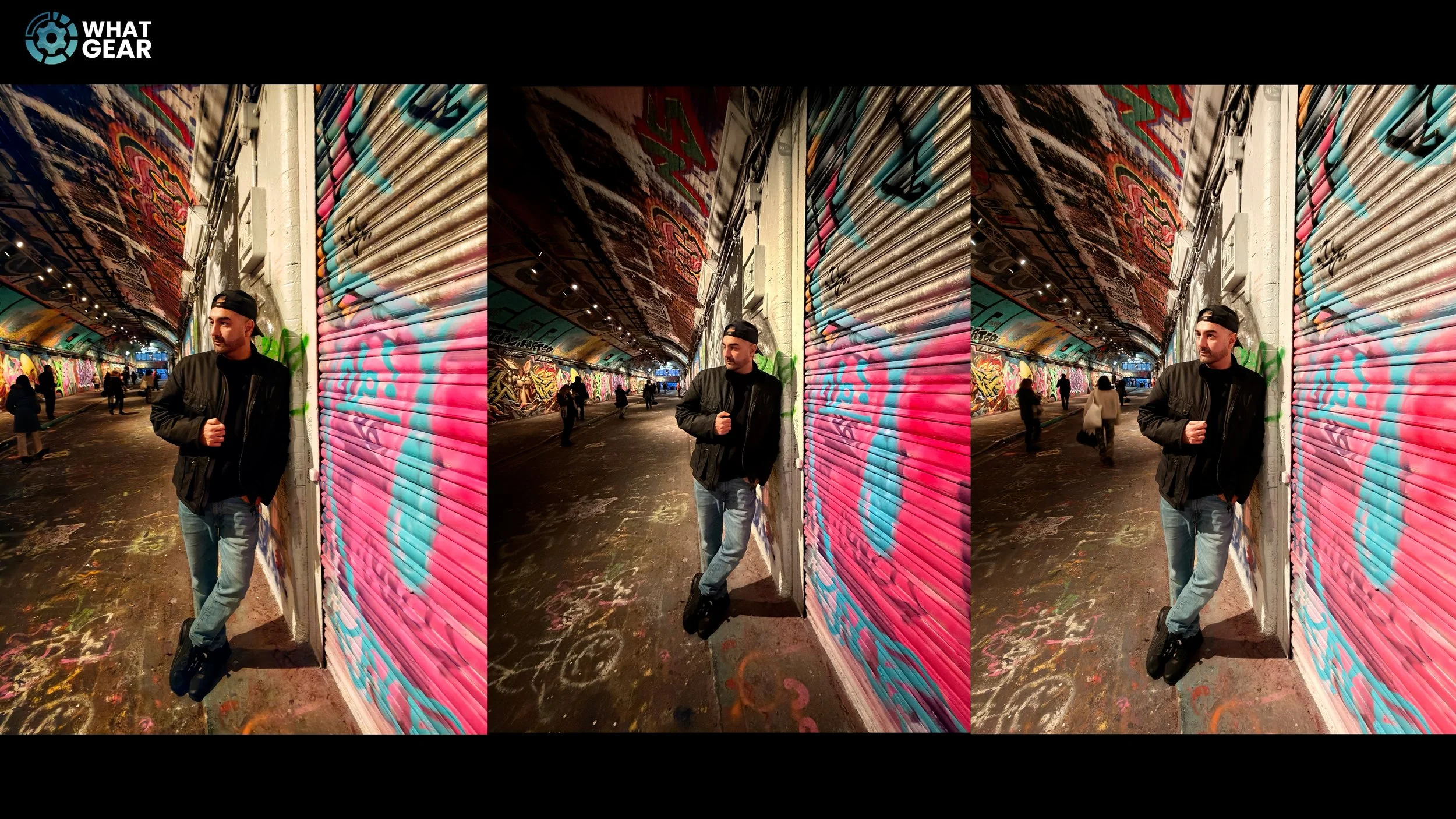
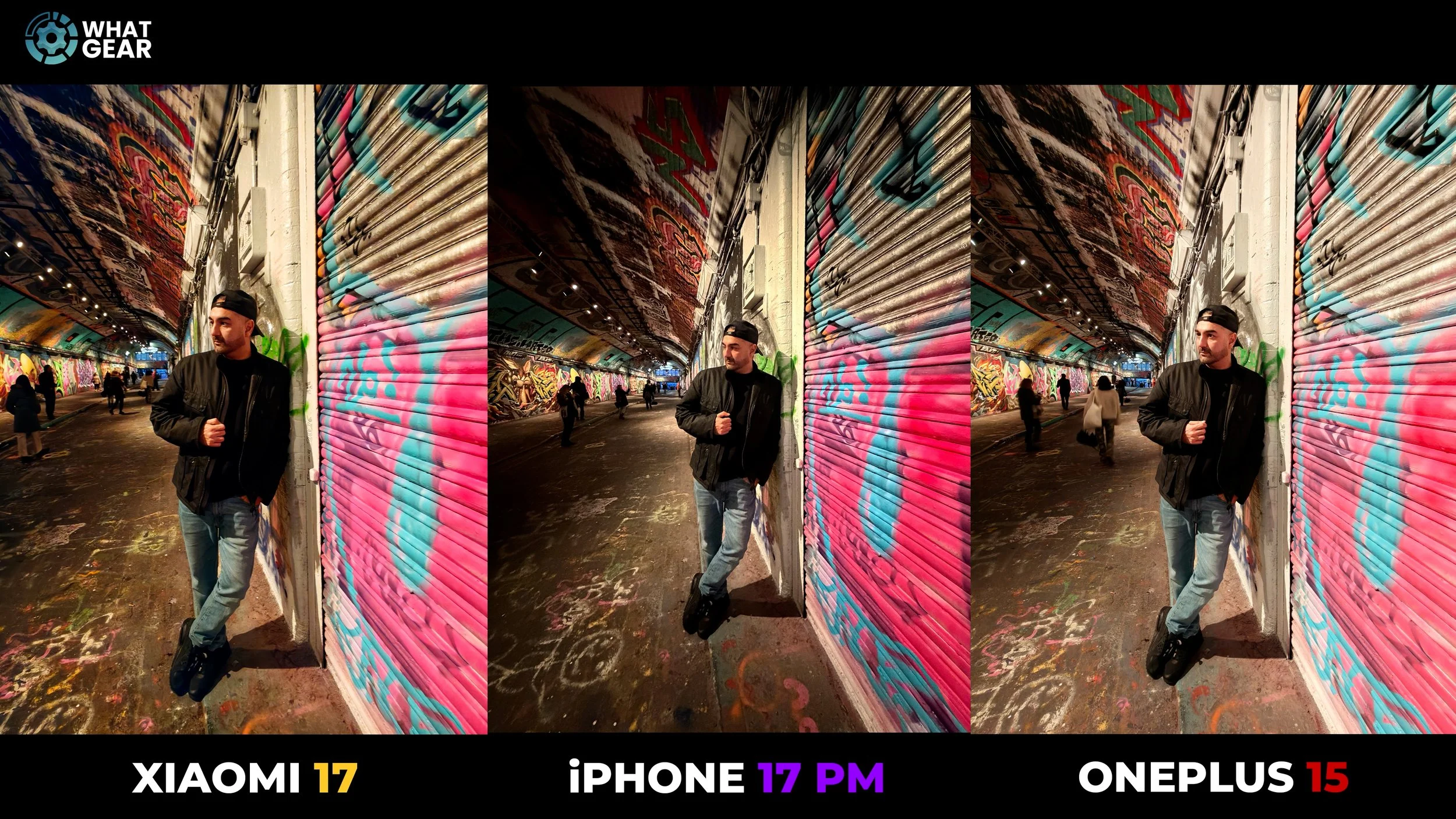
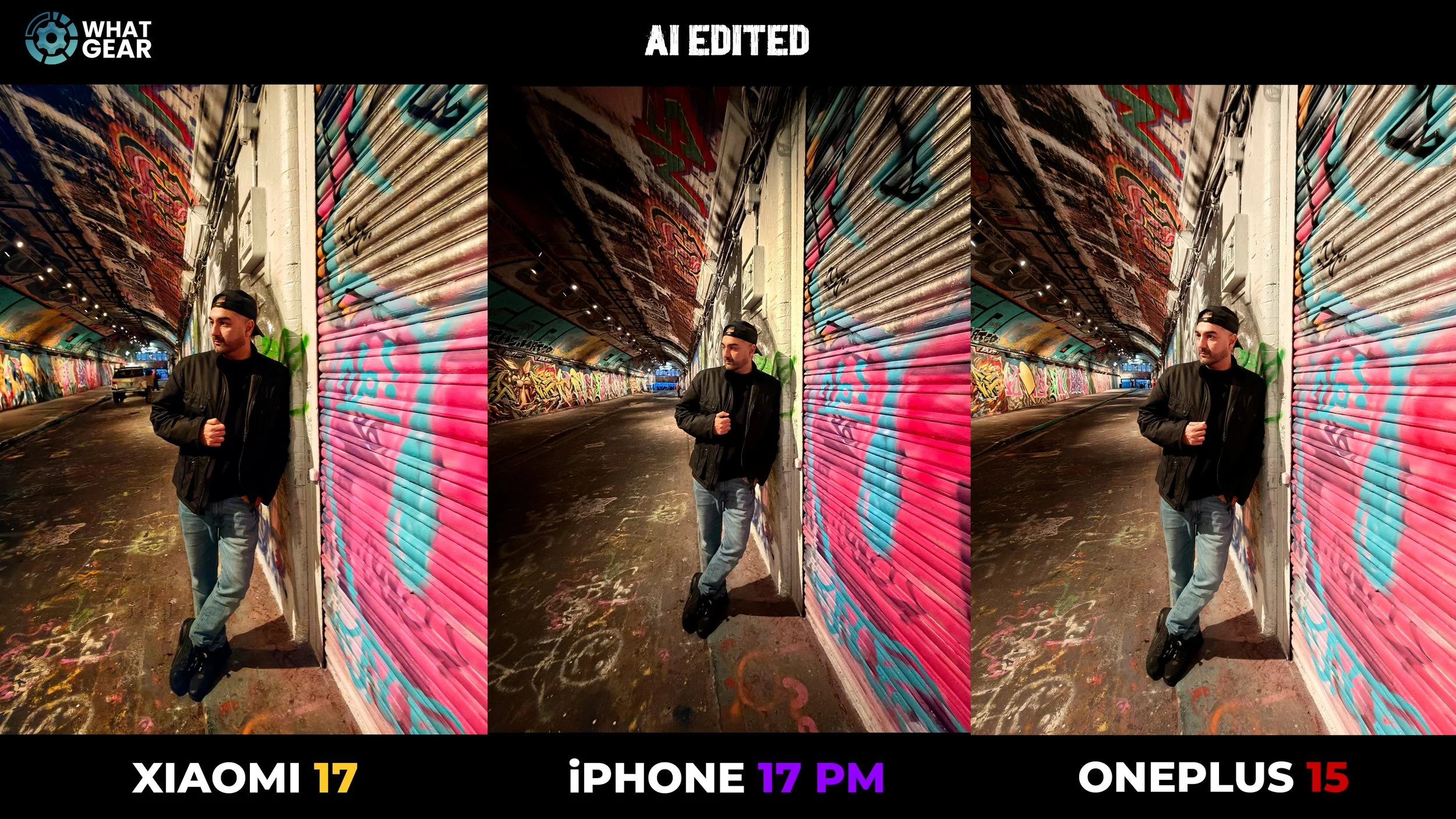
Now this photo is pretty decent, but you know what would make it a lot better? It would be a lot less people. So let's test out the AI eraser features on the three phones real quick and see which one does it best.
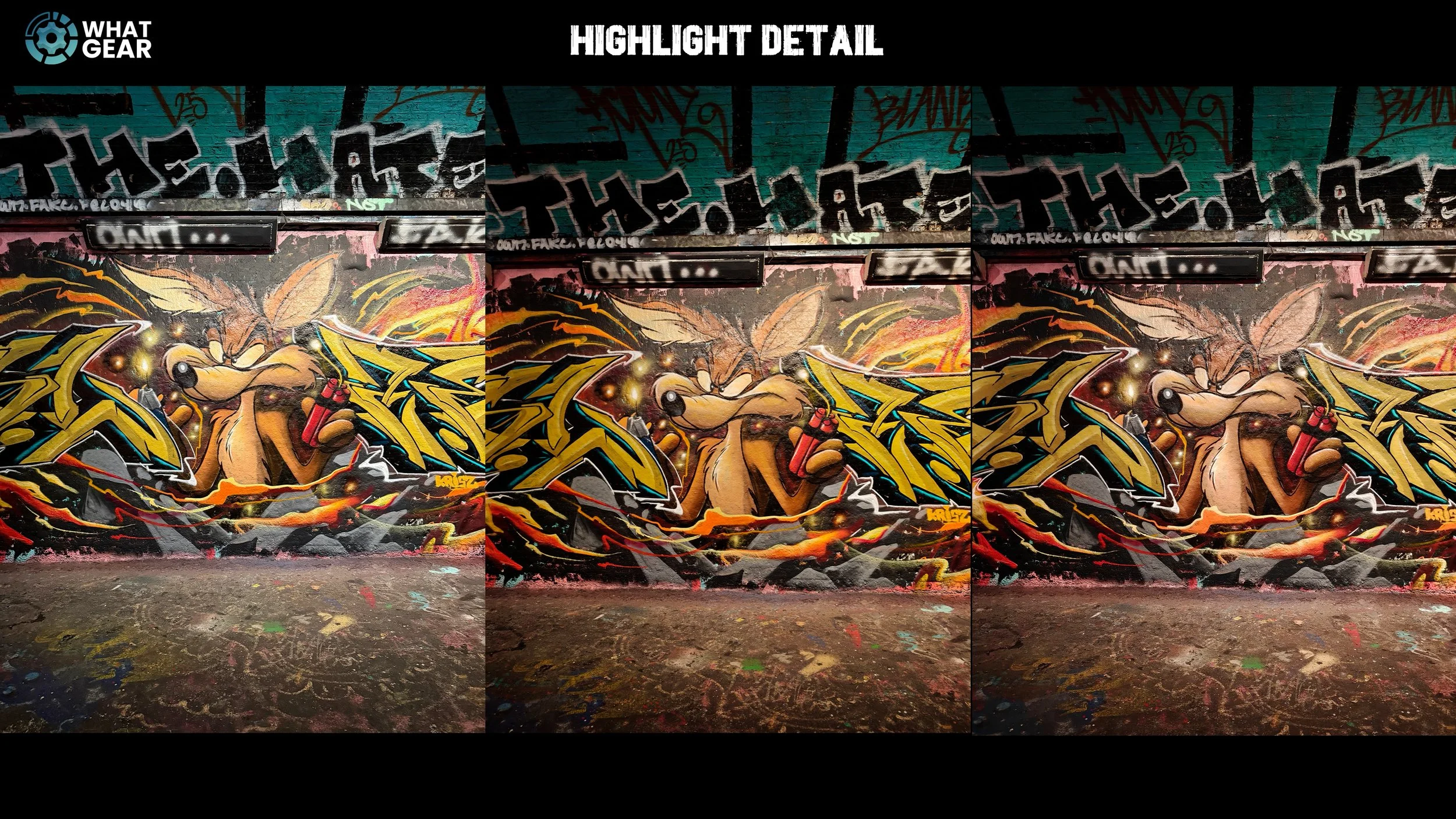
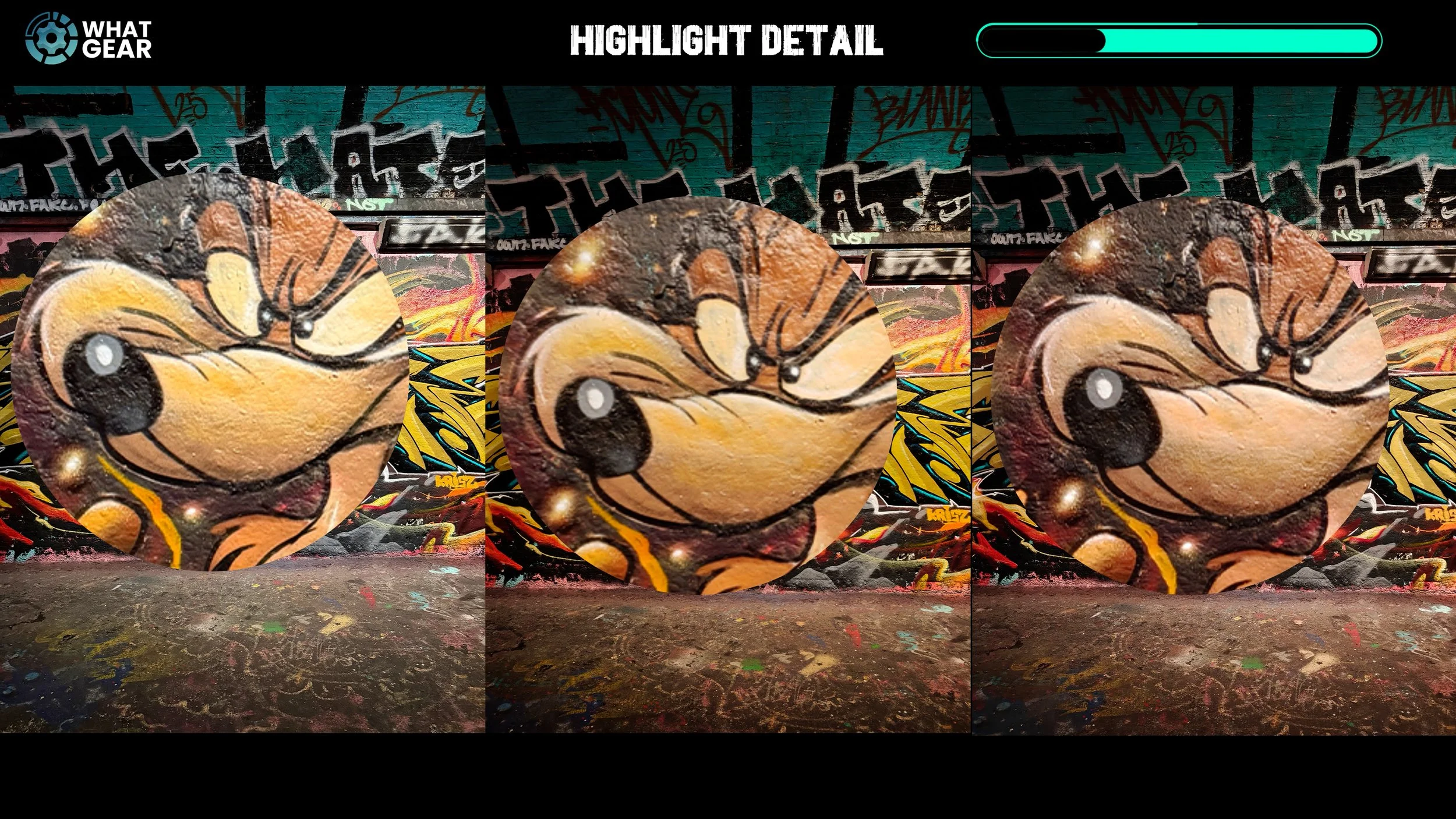
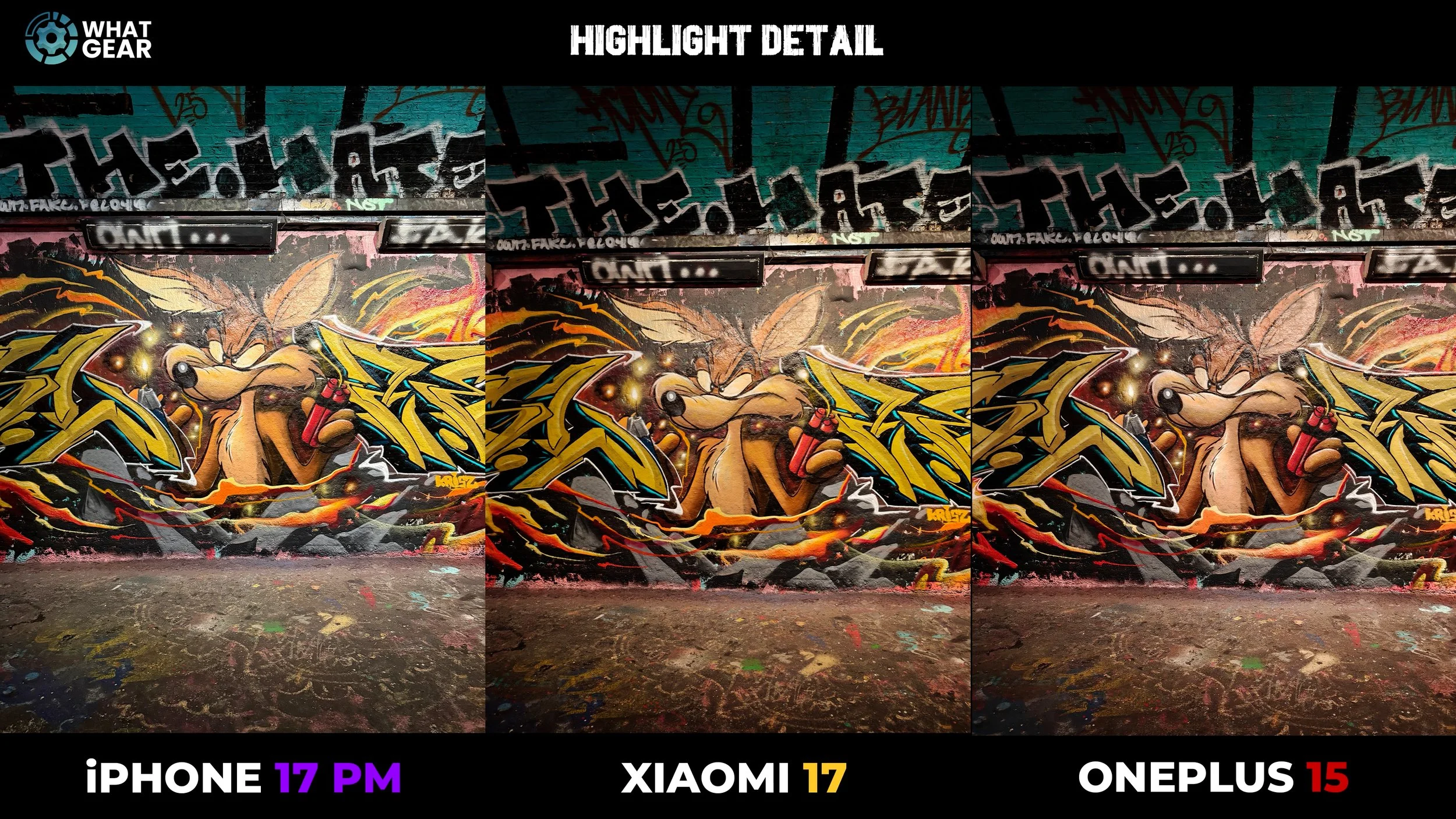
Allow me to introduce this genius work of art. It is a pretty awesome piece, and there is, in fact, a light shining down onto it, which could completely disrupt the colours, but actually, the colours are pretty close in all three. Let's get a zoom in, get a good look at the details, and then you can decide which one wins.
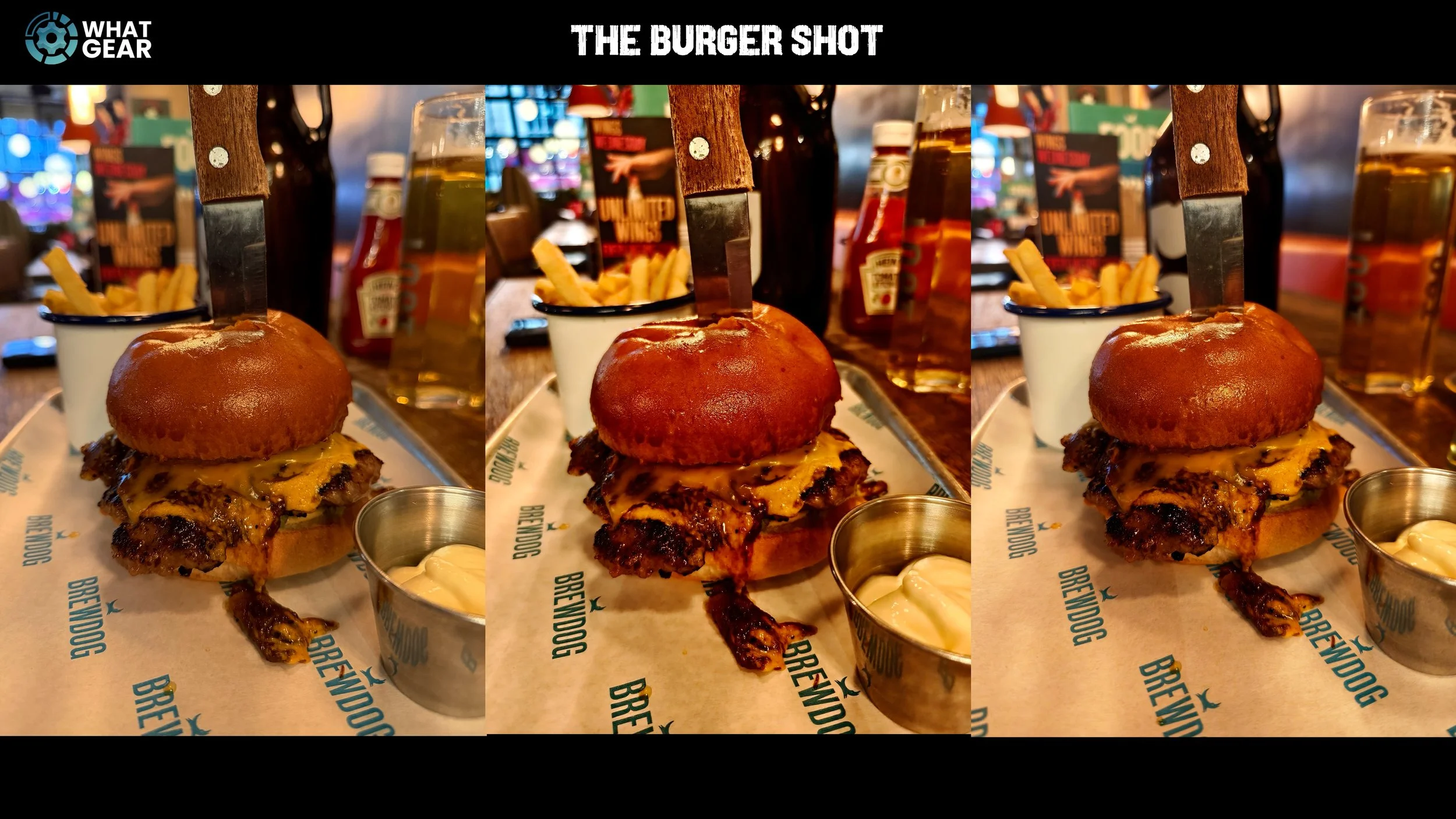
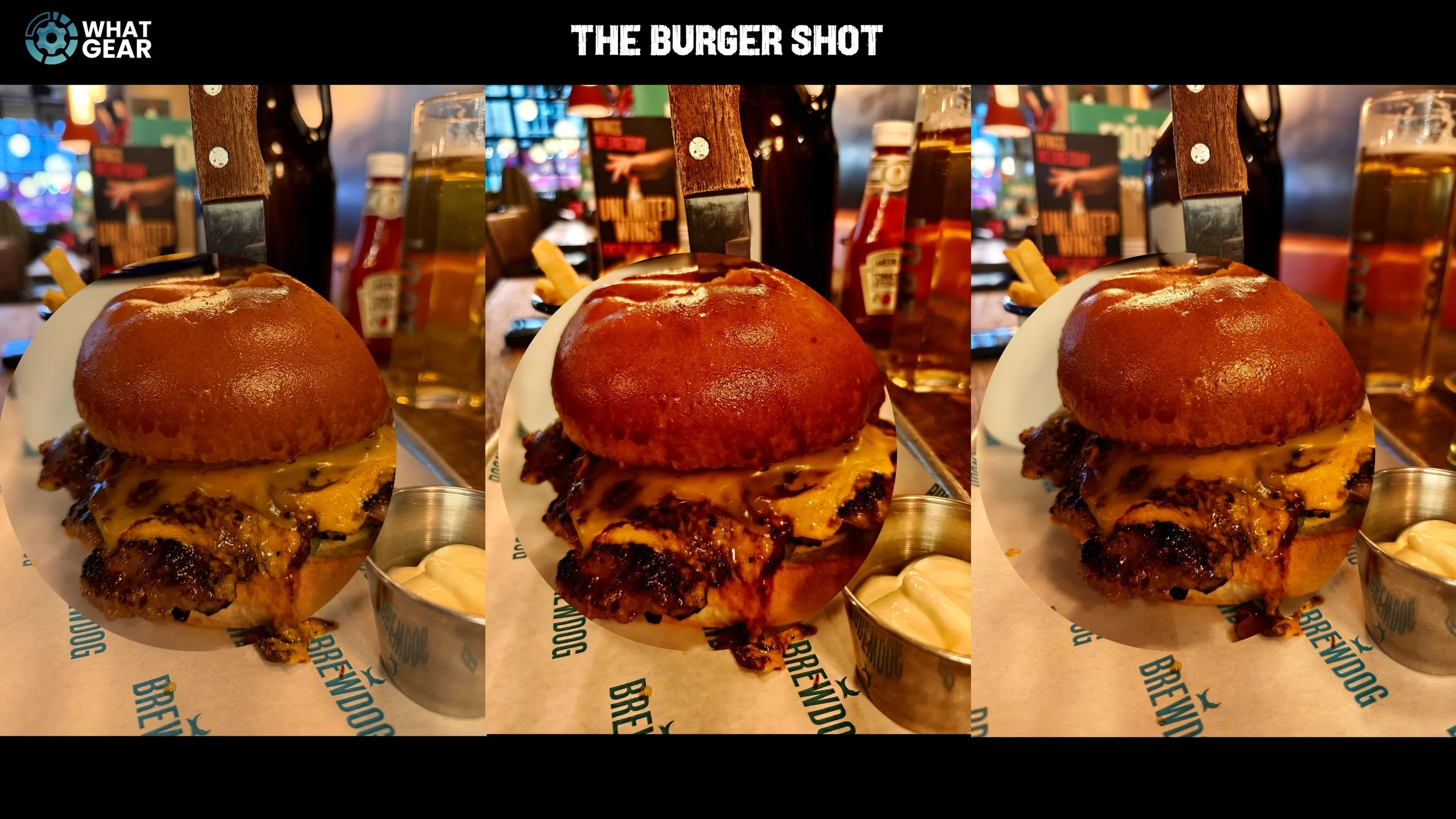
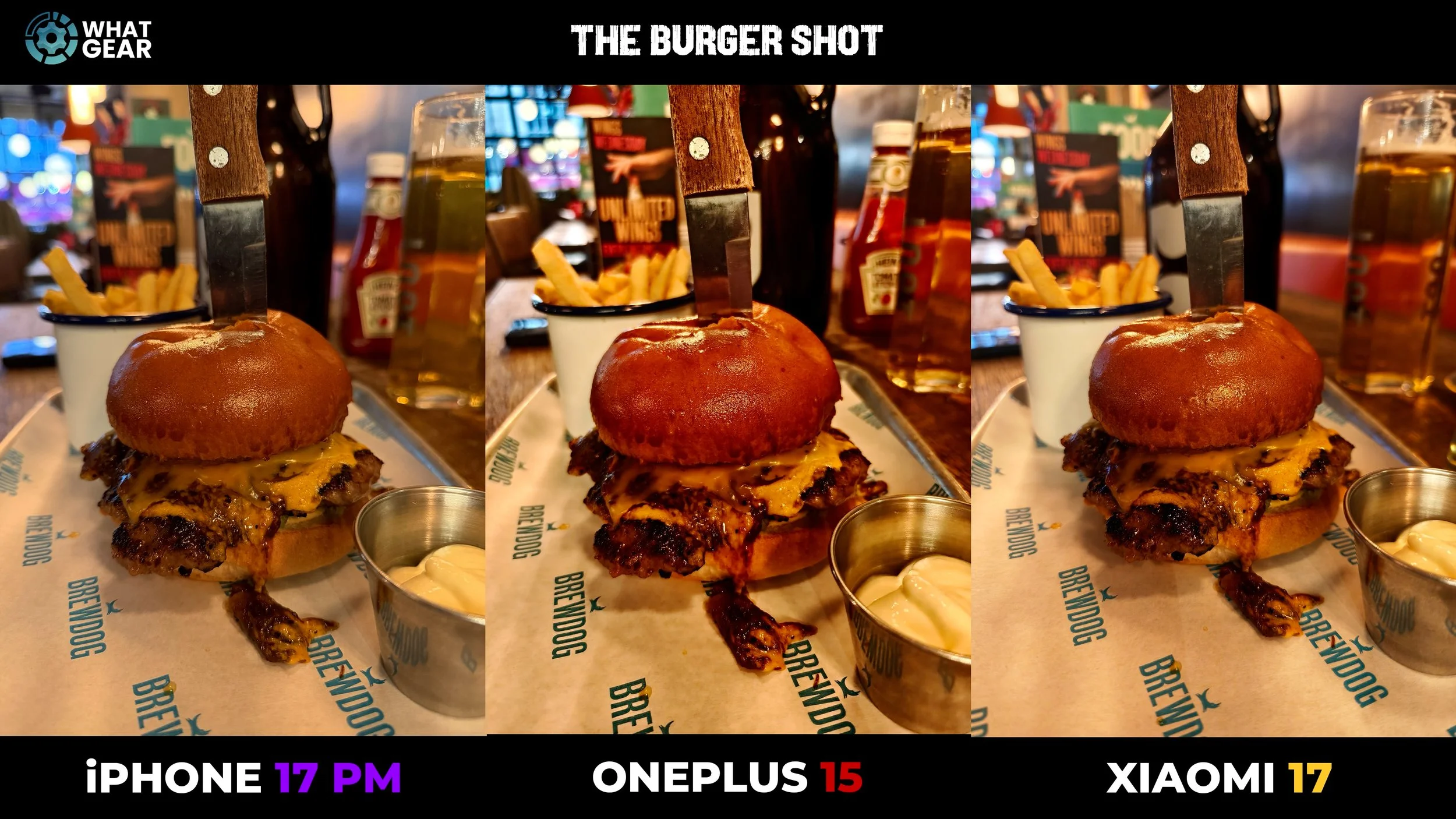
If you've watched any of my other camera comparisons in the past, you know it wouldn't be a great camera comparison without a burger shot, because everybody takes photos of their food from time to time. So this is the BrewDog Oklahoma burger. In terms of colour accuracy, I know which one I like. However, in terms of which looks the tastiest overall, well, that's another question. So I'm going to leave this one to you. Once you've decided, add up your scores, and then you'll find the answer to which phone won this camera comparison.