Don't Buy the Wrong POCO! X8 Pro vs X8 Pro Max
Welcome to WhatGear Reviews for a side-by-side comparison between the Poco X8 Pro Max and the Poco X8 Pro. You might be trying to decide which one of these would be better for you. And by the end of this video, you will know. So let's start with price. The Poco X8 Pro starts at £289 and goes all the way up to £349 if you need that additional storage. The X8 Pro Max is, of course, a bit more expensive. It starts at £359 and goes all the way up to £400.
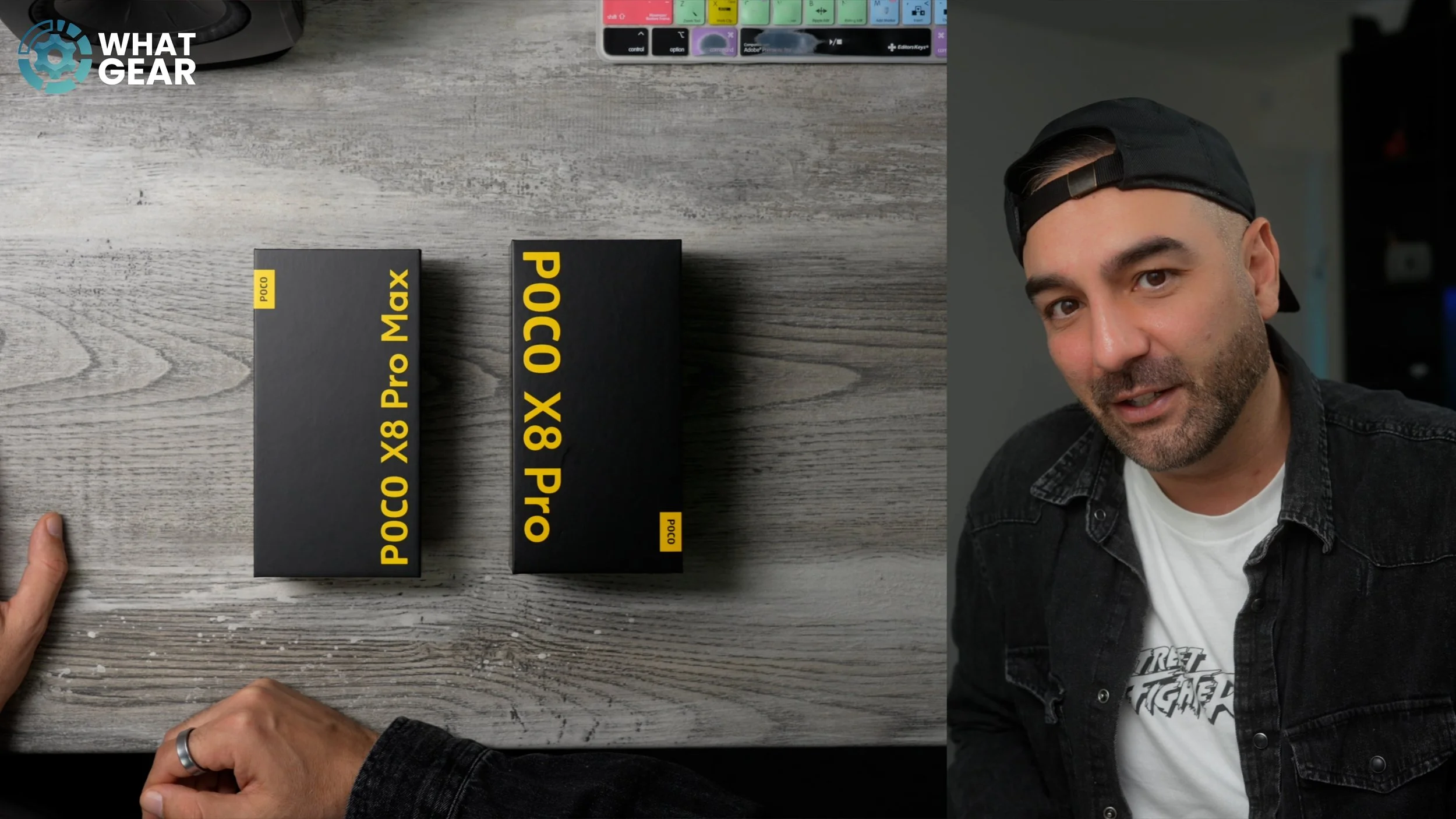
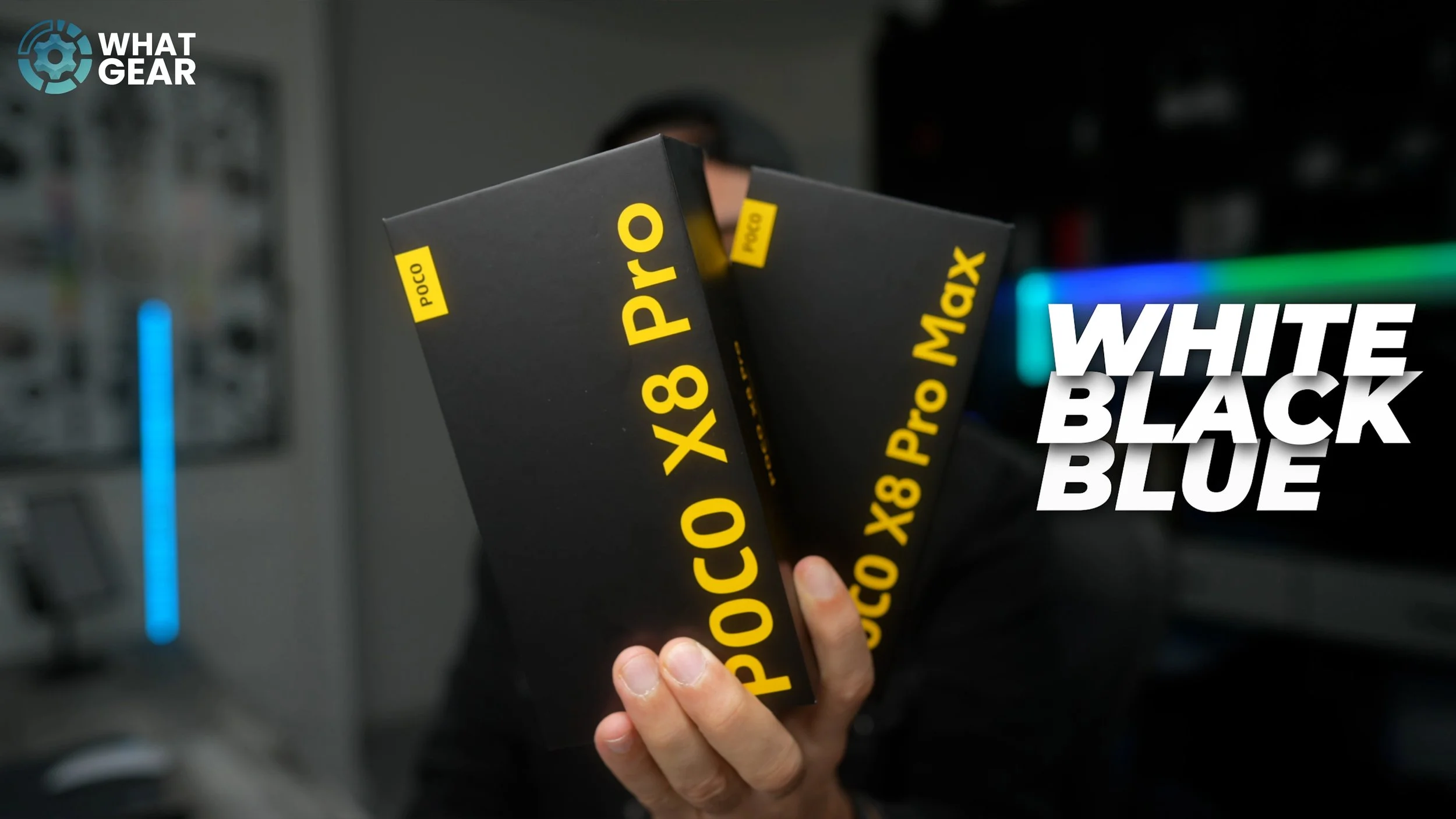
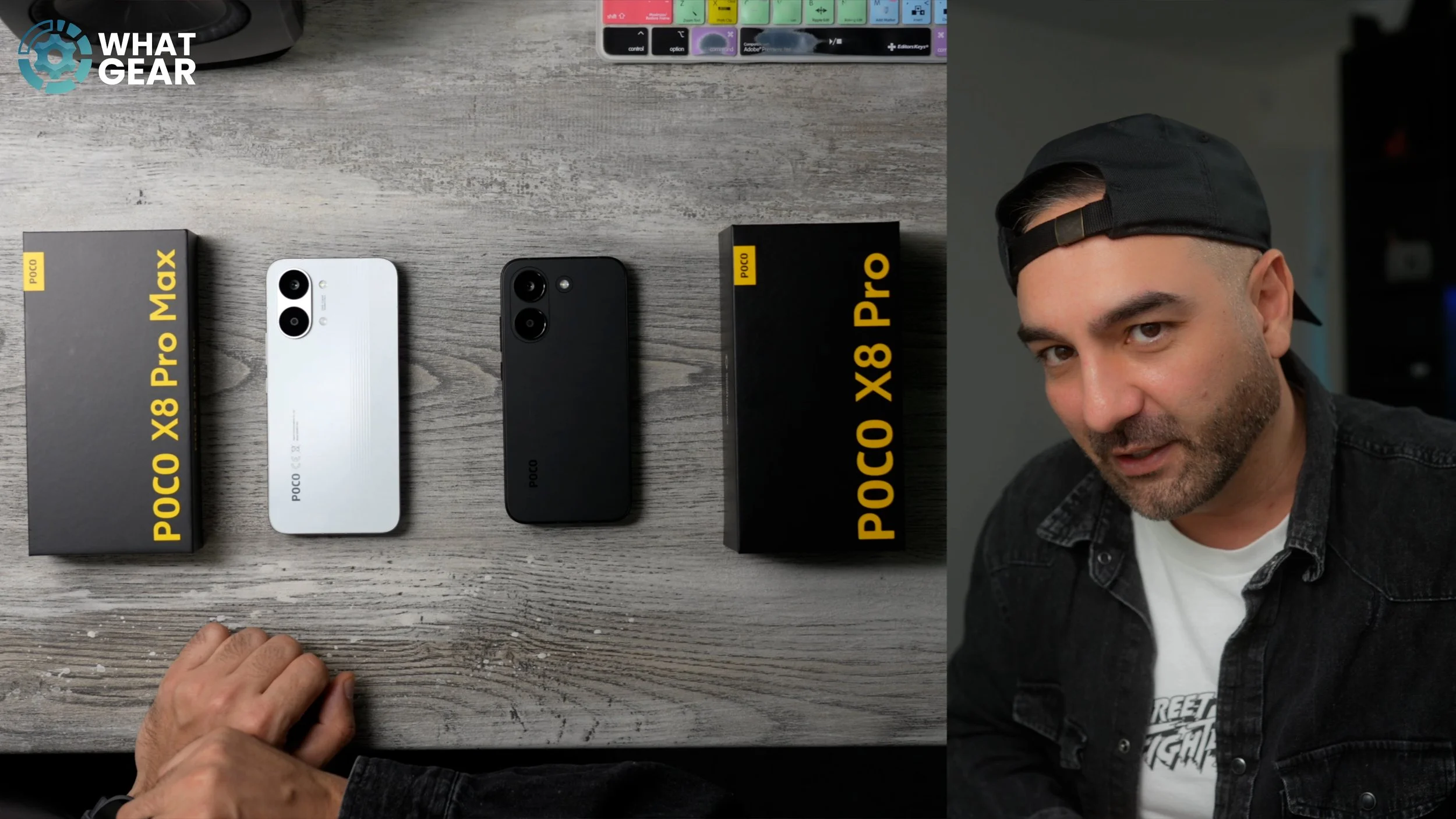
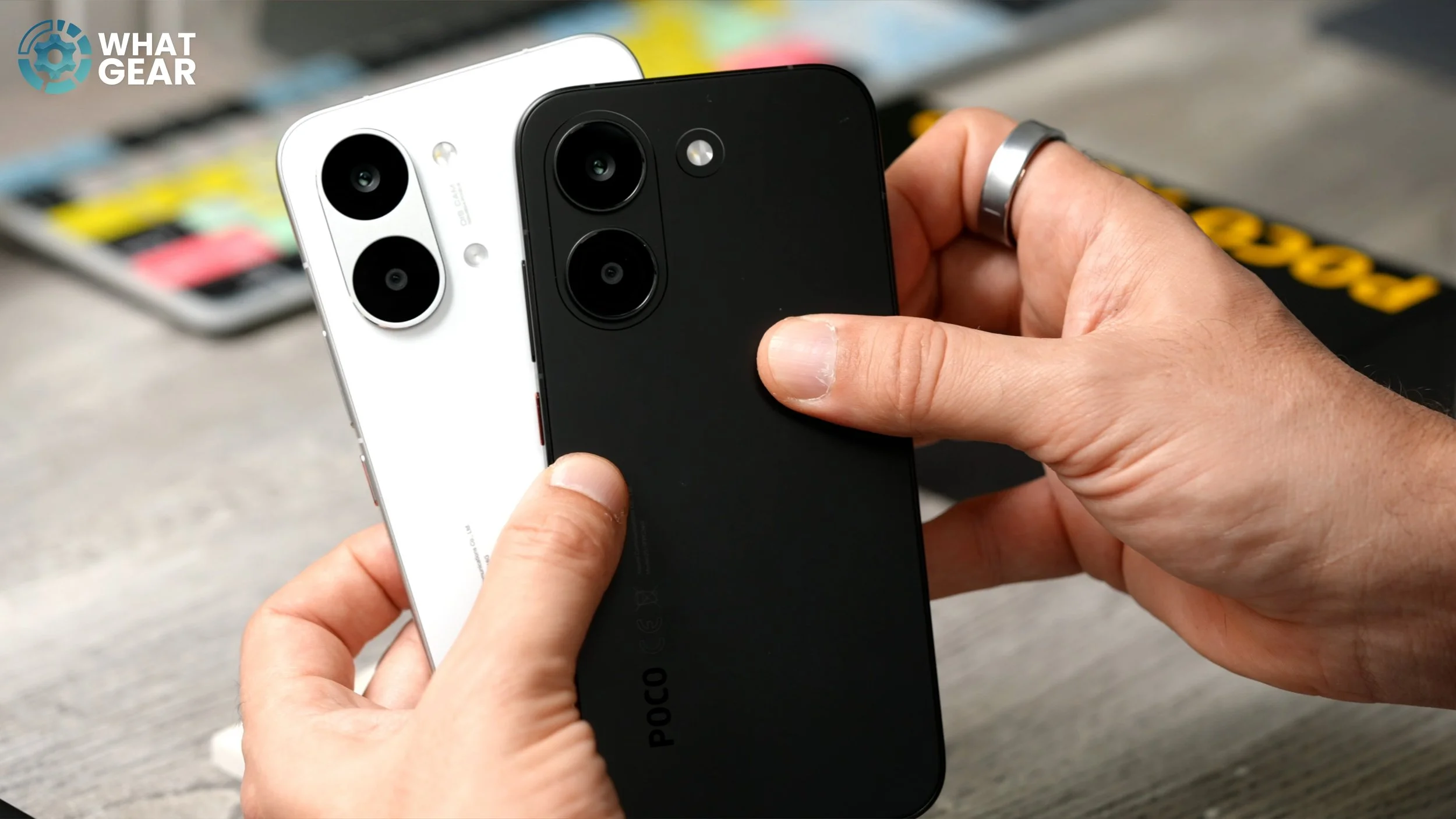
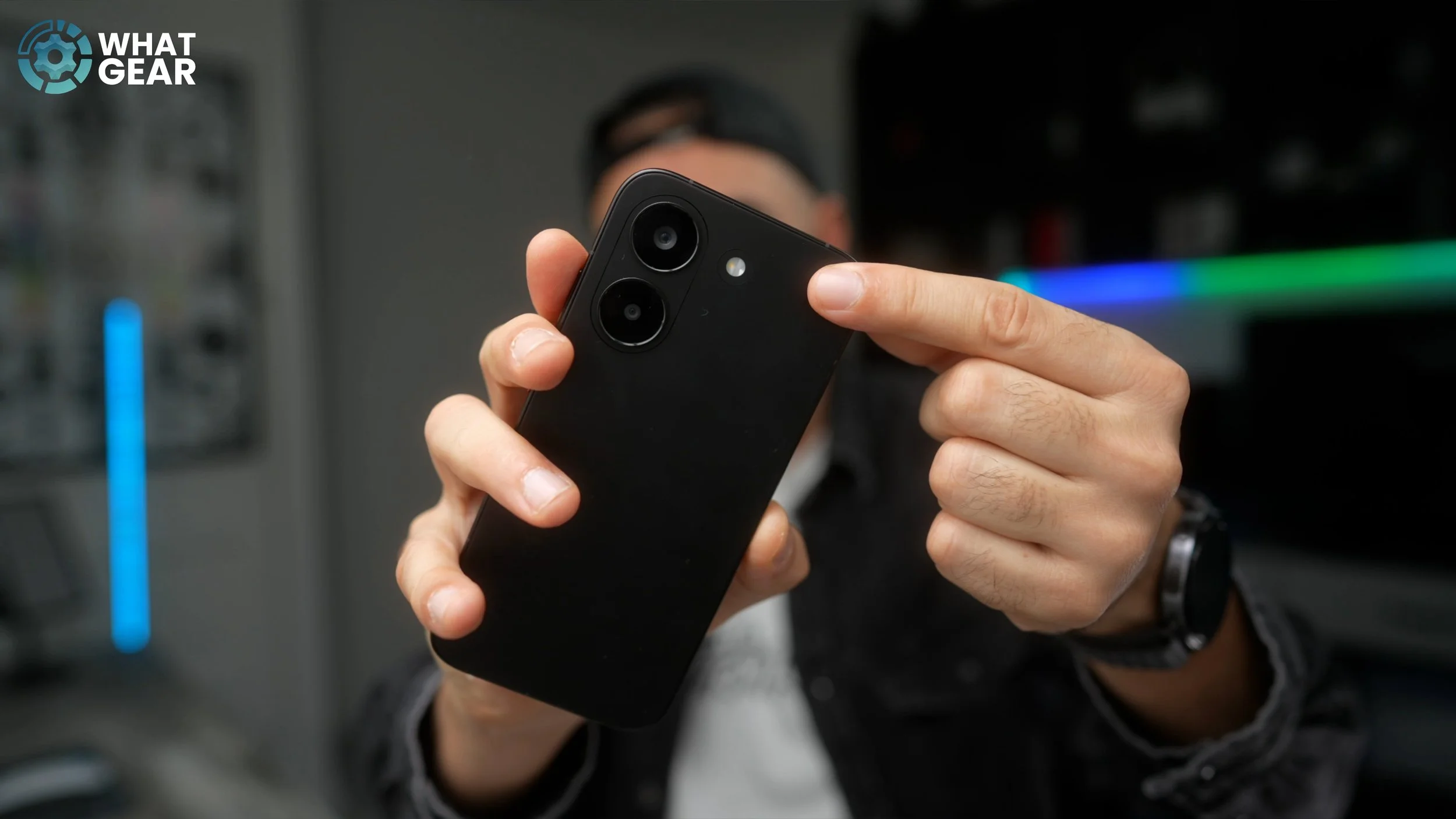
Colourways available here are white, black, and blue, and Poco have very kindly sent me the X8 Pro Max in white and the regular Pro in black. So both phones have metal frames, which is quite surprising, especially on the more affordable one. But there is a difference when it comes to the material on the back. So the Pro model actually has a glass back. Again, this is quite a surprise for a phone at this price, but the back on the more expensive Pro Max is, in fact, fibreglass.
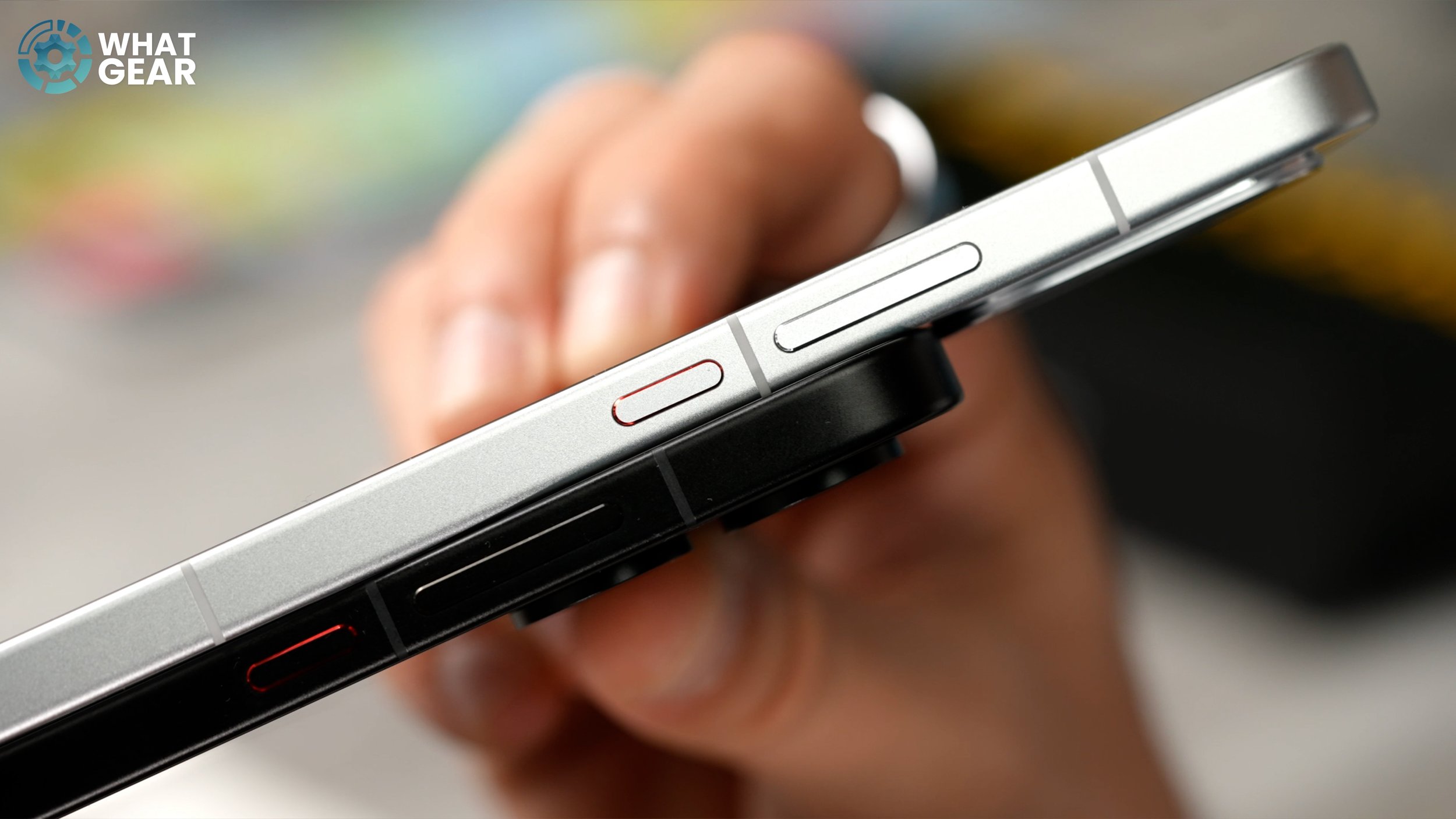
When it comes to dimensions, the X8 Pro Max is slightly wider. It's also slightly taller. But interestingly, the Pro Max, with the natural metal frame that you see here, is a tiny bit thinner than the Pro. And Poco have done a really good job of keeping the build quality and the design language pretty much the same on both phones despite the price gap. Both phones have this really nice red accent colour on the power button. I think it looks really nice on the black model. Both models have this rounded corner design, which is pretty much identical. So you'll notice the camera modules are pretty much identical. However, there is an additional flash here on the Pro Max. And also, if you look closely at the Pro Max, there are these really nice and subtle racing lines embedded underneath the surface that you can only really see when the light hits it a certain way, whereas the Pro is just completely matte black, or one colour. And actually, just looking at the two phones right now, I do kind of prefer the look of this one with the black and red accent on the side.
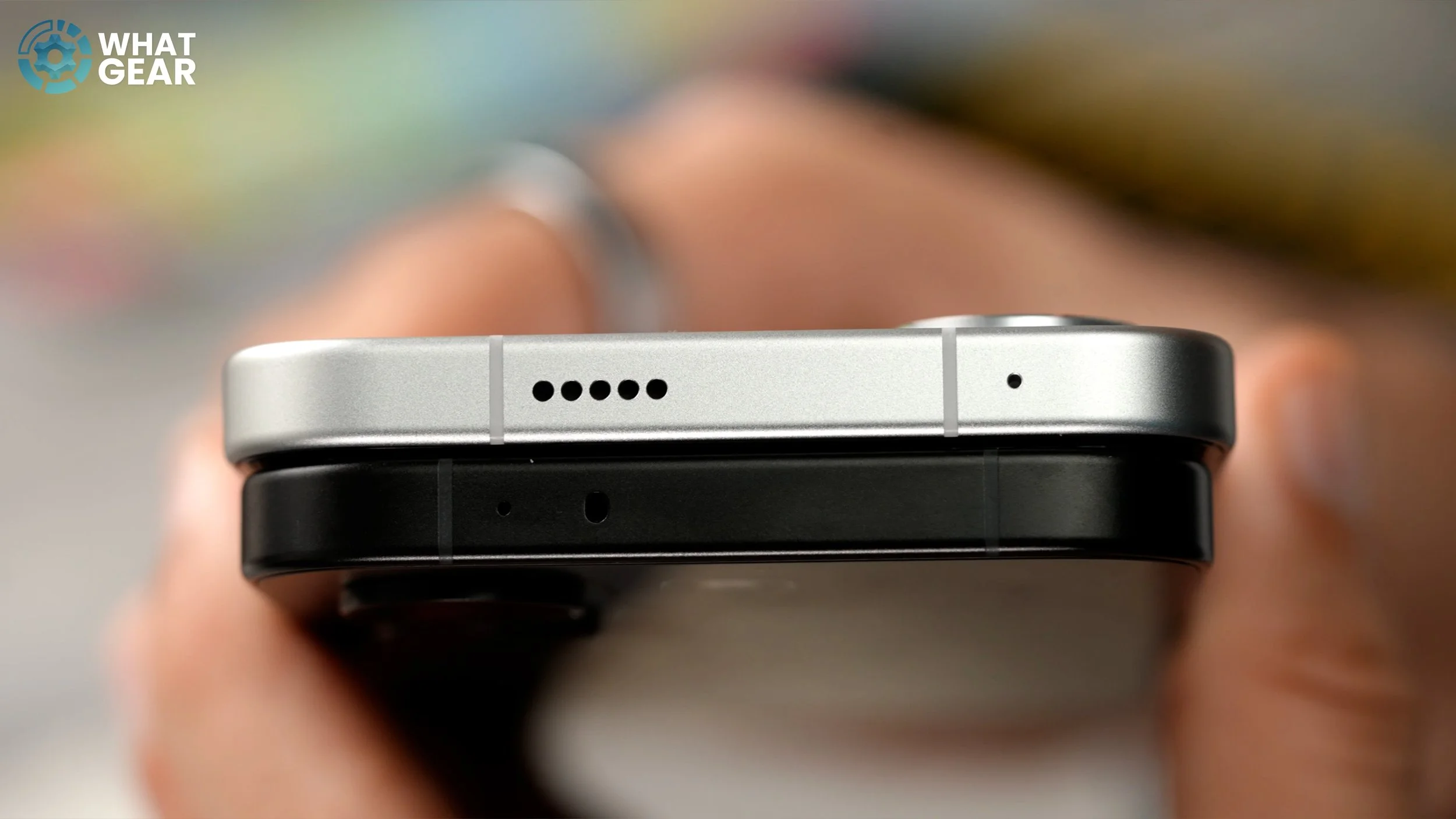
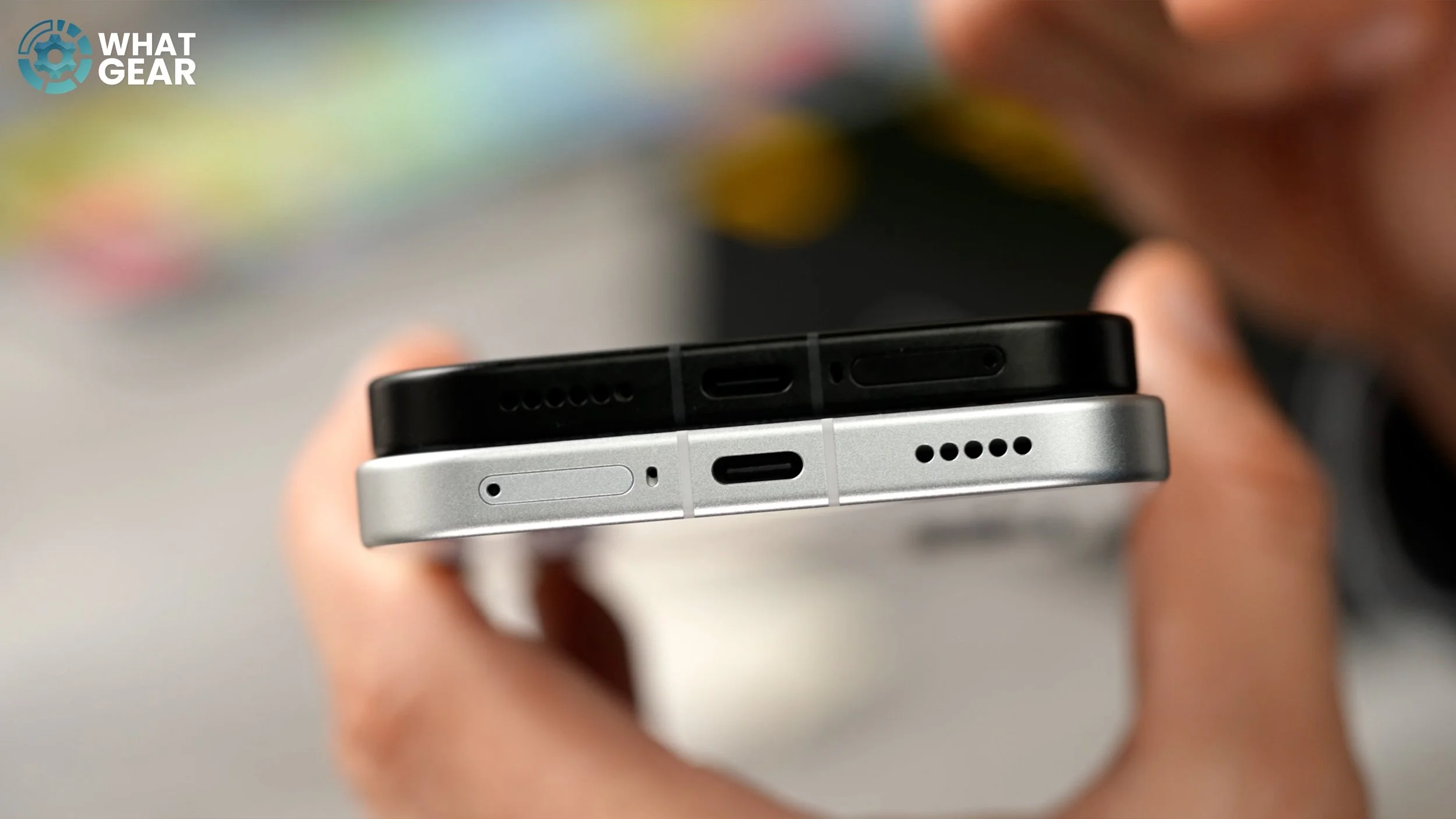
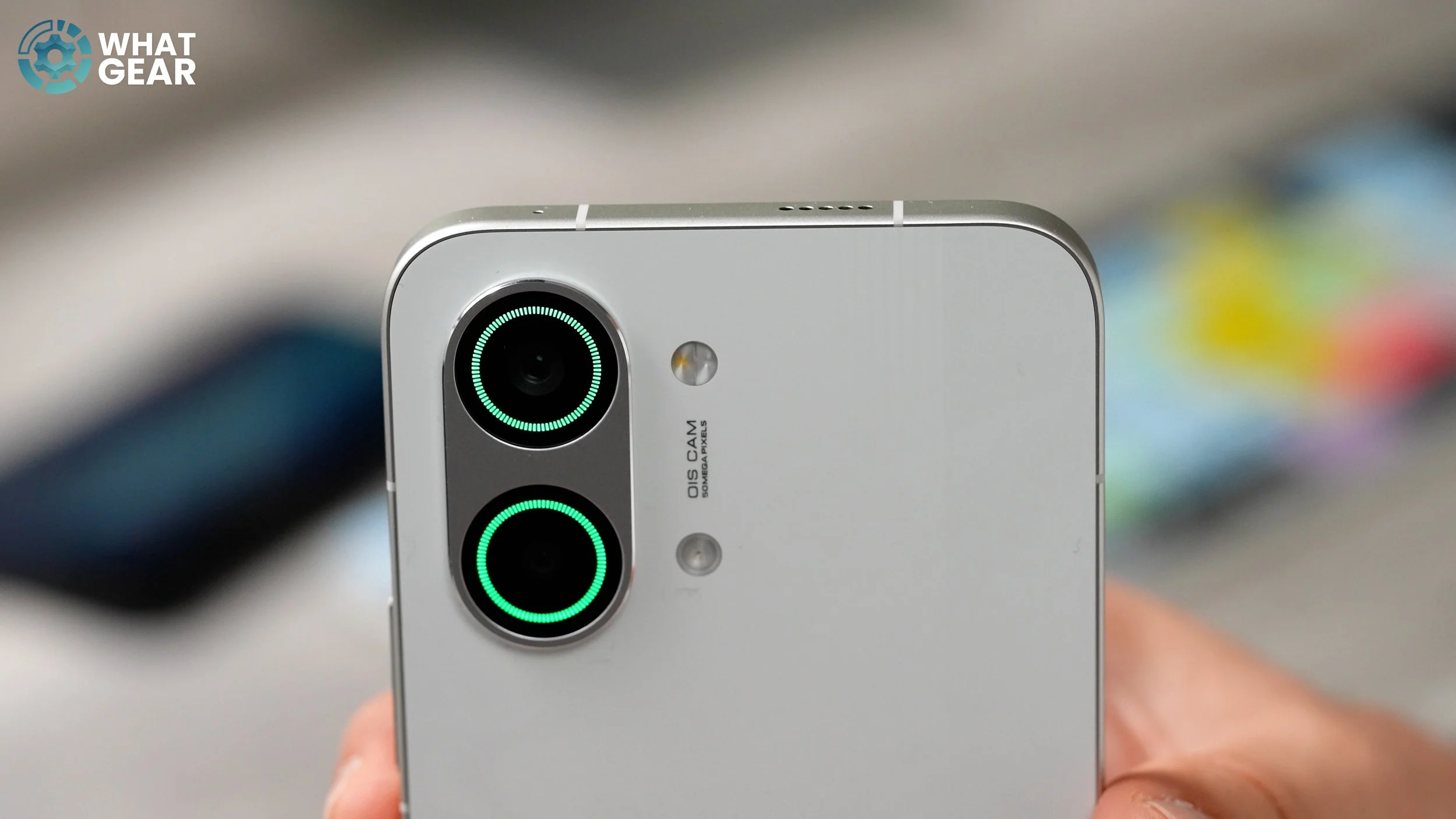
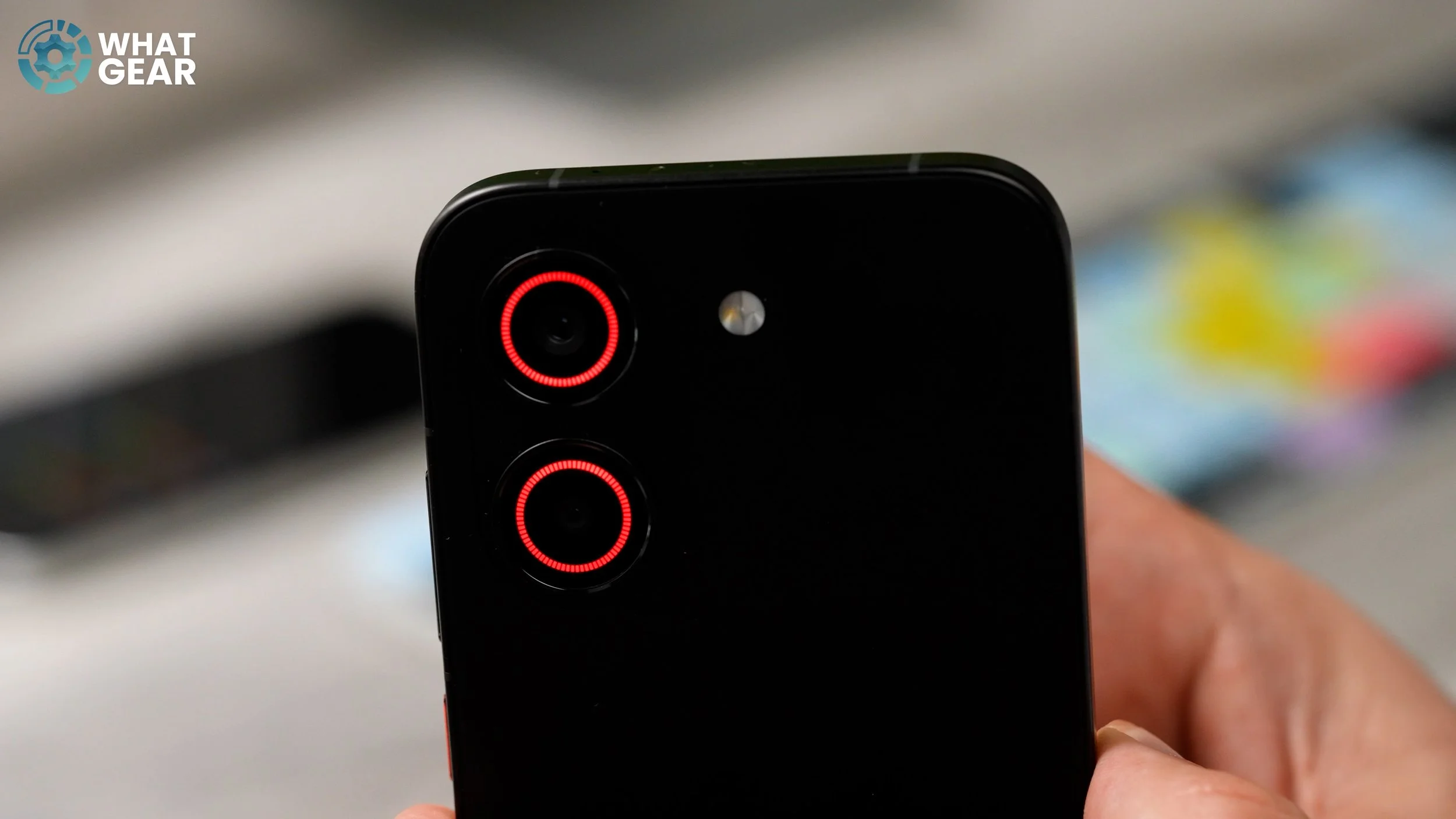
Now, here's an interesting difference. This is the top of the phone. You'll notice on the Pro Max that there is a speaker grille and a mic hole. On the Pro, there's in fact an IR blaster and a mic hole. And despite the fact that it doesn't have a speaker grille, it does still have stereo speakers. The difference here on the Pro is, of course, the fact that the speaker is the earpiece, whereas the Pro Max does have that dedicated element.Now, on the base of the phone, you'll notice there is another speaker grille, and both phones have this. They both have the same USB-C port and the same SIM tray. However, there is a difference on the Pro Max because this phone does support eSIM, whereas the Pro doesn't. And there's a really awesome design feature here built into the camera module on both phones. It is the RGB backlighting system that can be customised with eight different colours. It can work with notifications when you're gaming, and they can even keep in rhythm with music playing on the device.
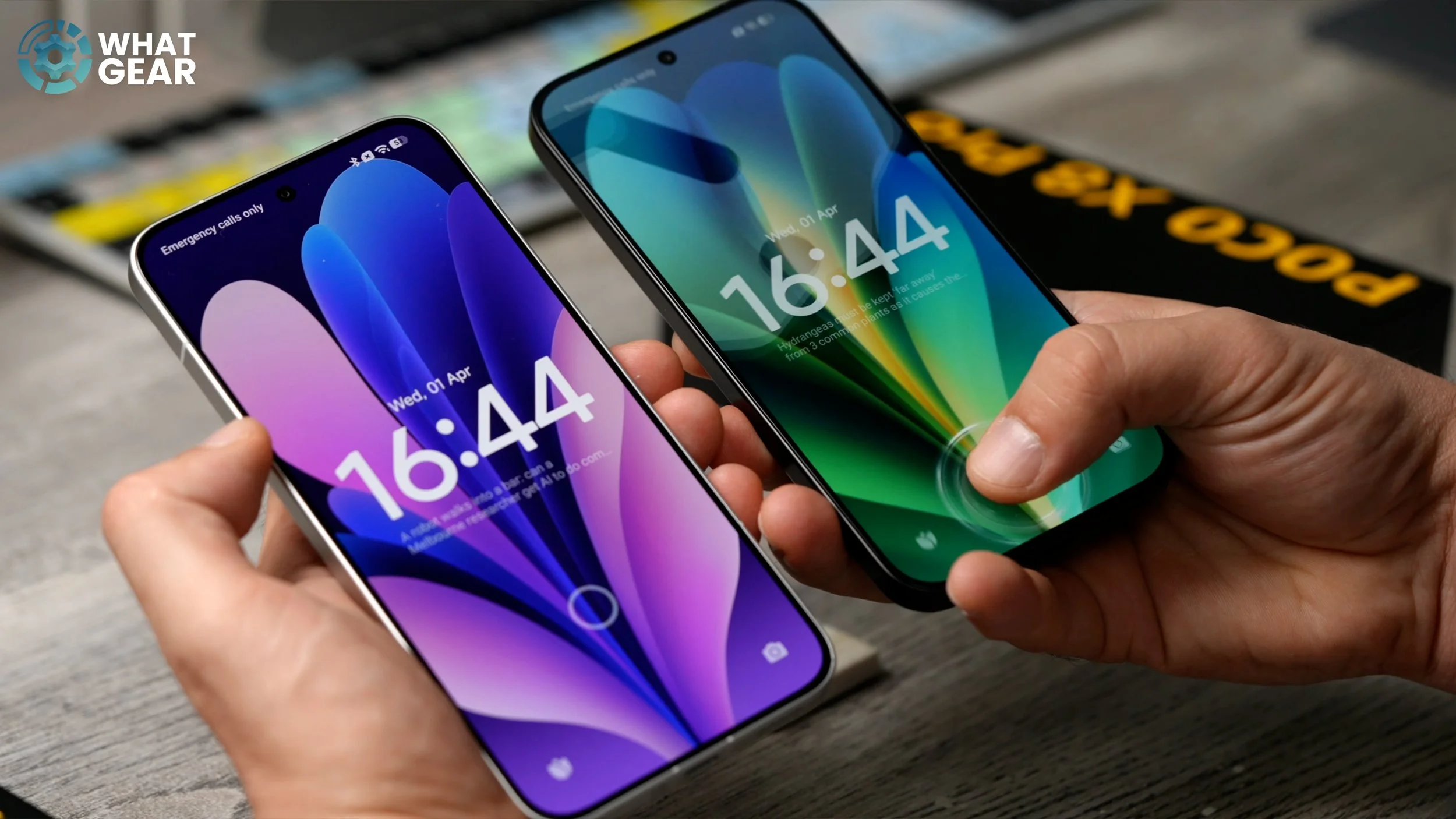
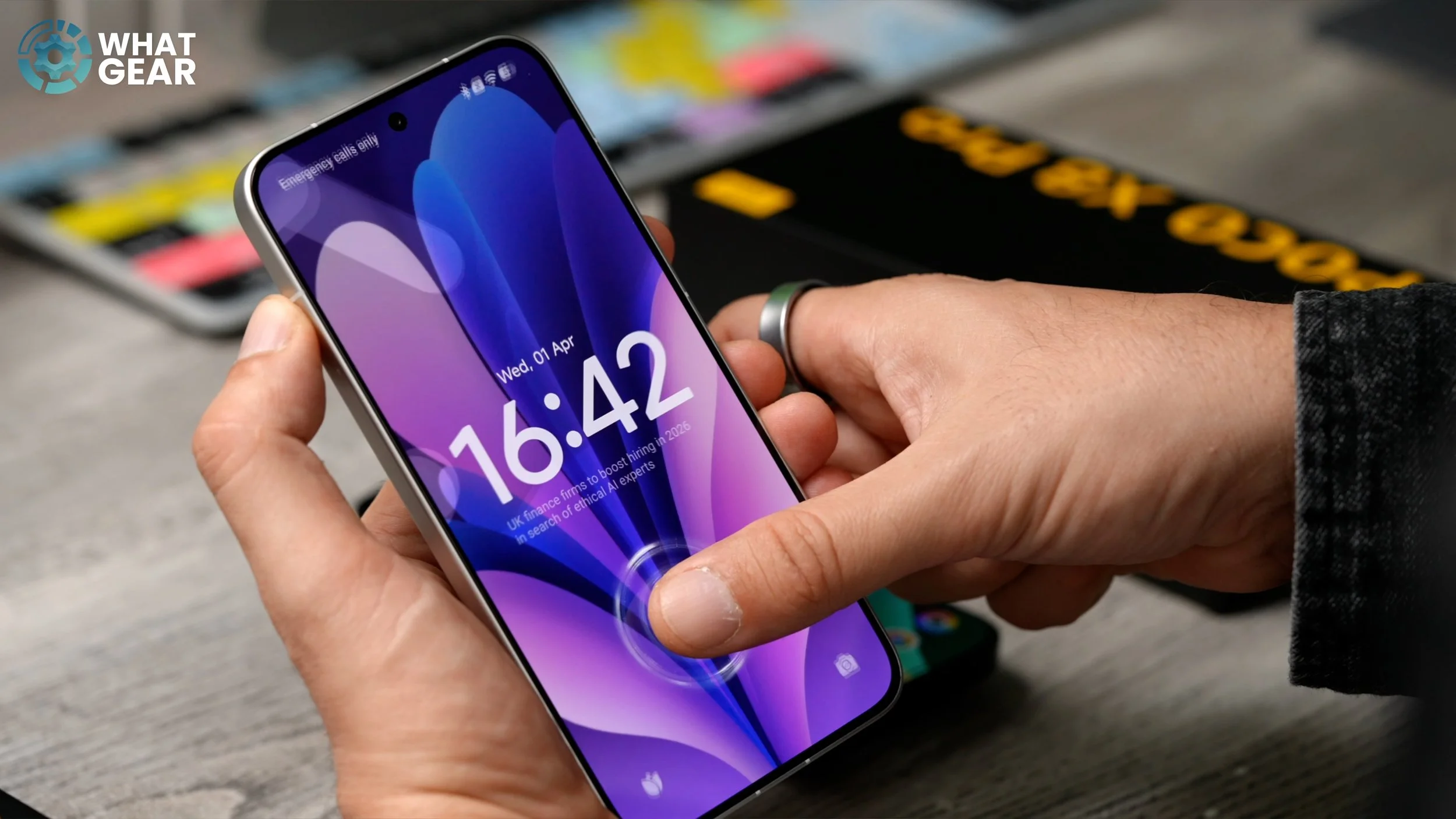
And big props to Poco because both of these phones are very durable. They have the SGS five-star rating for crush, bend, and drop tests. So here is a significant difference that you need to know about. On the Pro Max model, you do get an ultrasonic in-display fingerprint scanner, which is much more secure and superior to the optical scanner used on the Pro model. Also, when you look at the two devices, you'll notice the optical scanner on the Pro is much lower down, whereas the ultrasonic scanner is higher up. Also, I have noticed that the ultrasonic seems a bit quicker and a bit more reliable than the optical scanner in the Pro. Let's talk about the displays. Straight away, you'll notice there is, of course, a difference in screen size. Also, you'll notice the bezels on the Pro model are slightly wider, especially near the lower end of the phone, where the chin is just a little bit thicker than everywhere else. Of course, there's a difference in screen size: 6.83 inches on the Pro Max and 6.59 inches on the Pro model. Surprisingly to me, both displays are 12-bit with 68 billion colours supported. And check this out — both panels are 120Hz. They both support HDR10+, Dolby Vision, and 3500 nits when measured in a 25% window.
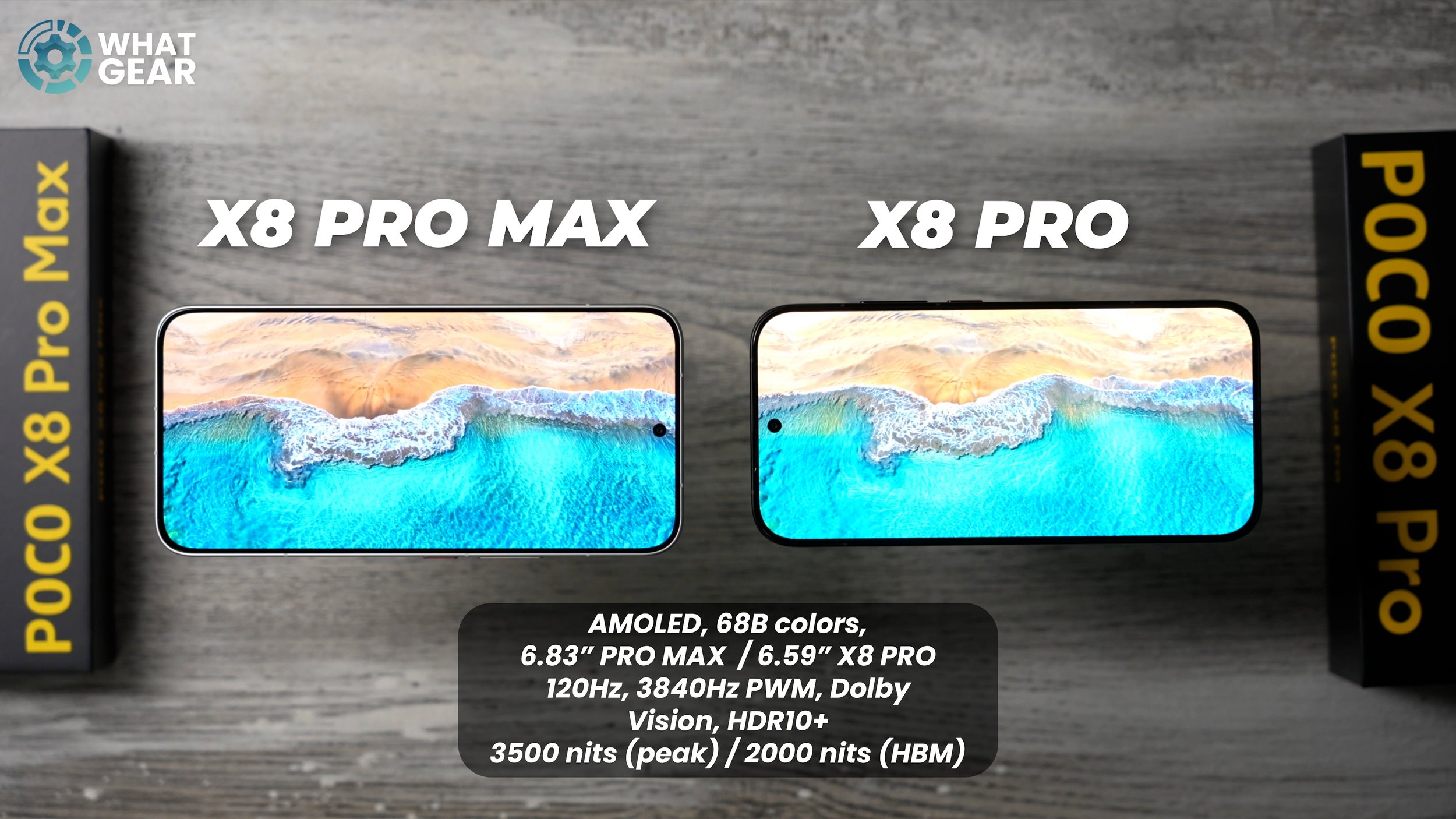
And when it comes to eye strain, there are a bunch of TÜV Rheinland certifications, as well as 3840Hz PWM dimming, and they also support Wet Touch 2.0. So if your hands are wet and you're trying to touch the screen, there is some software to counteract any mistakes on the display. I have heard some people say that off-axis viewing is different on the two phones, but I personally haven't noticed that on either of these devices. And both of these are M10 displays, which boast a 20% efficiency boost over other AMOLEDs, which, to be honest, these phones probably don't need that much because the batteries are insane. Poco are using silicon carbon batteries here, and the Pro model has a 6500mAh battery, which is impressive, but it's a little less impressive when you compare it to the 8500mAh silicon-carbon battery in the Pro Max, which is just mind-blowing.
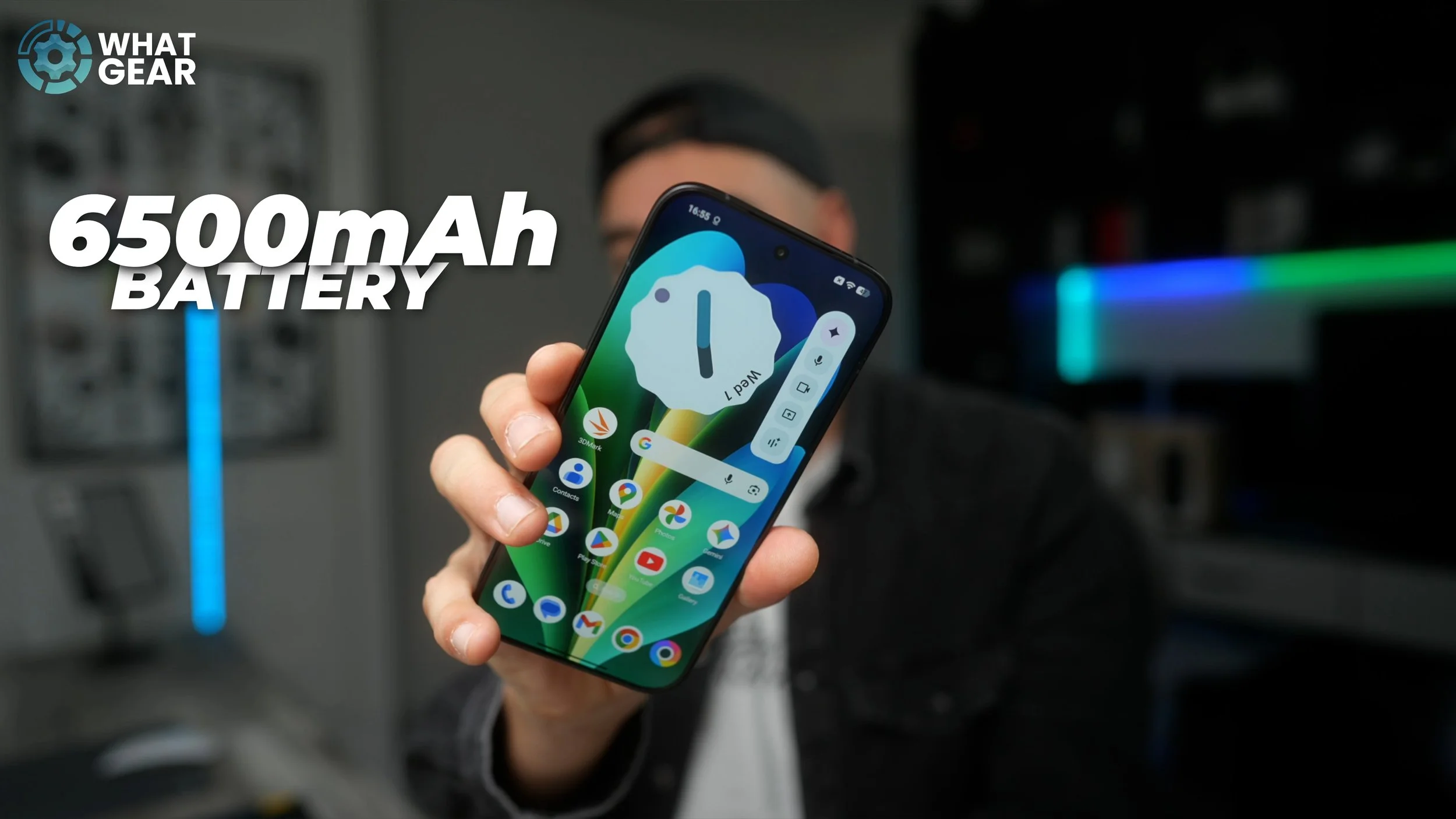
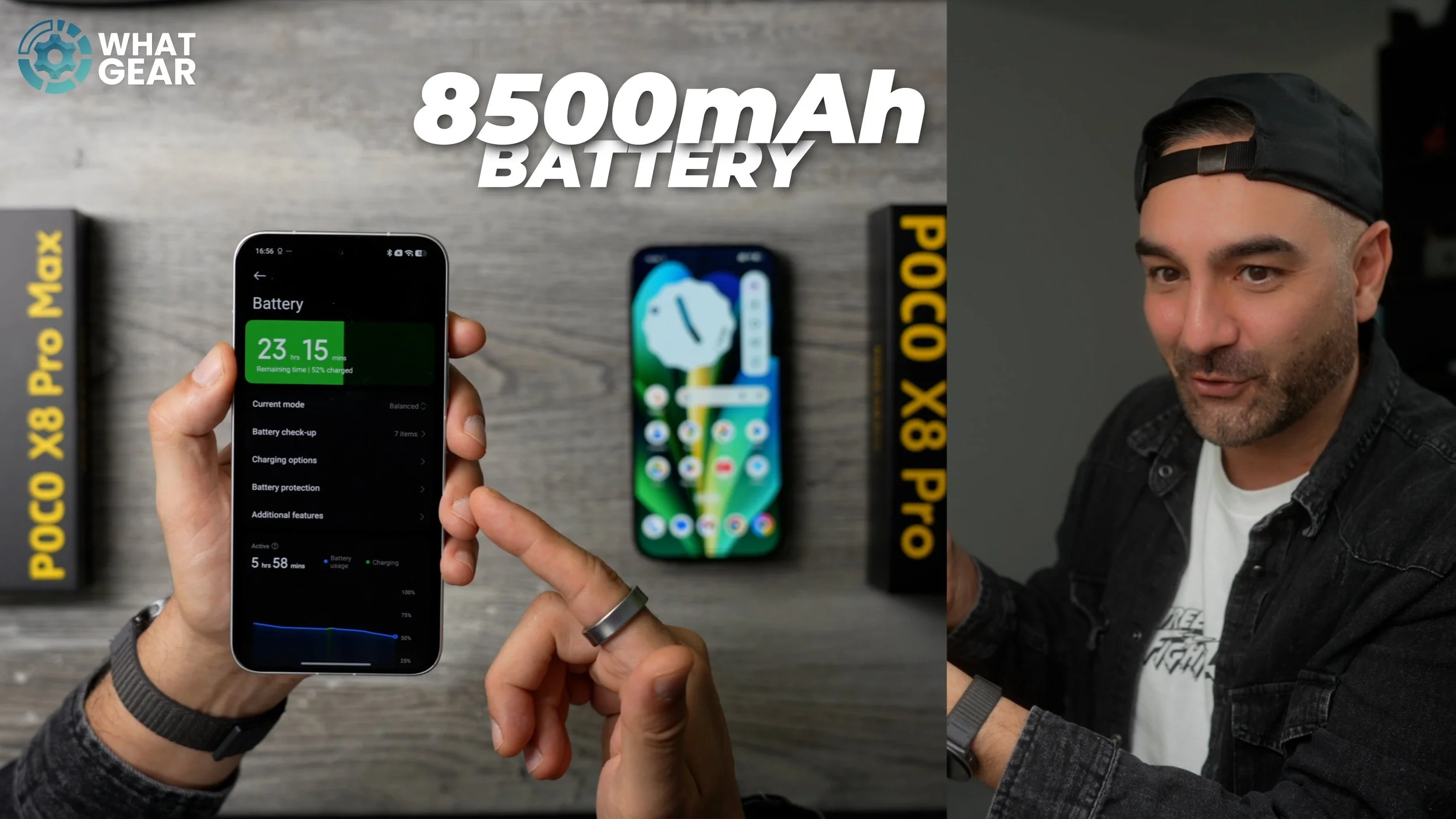
Now, just for context, so you know how impressive the battery size is in here, right here, I have a dedicated power bank. This one is 5300mAh. And yeah, that's significantly less than what's in this phone. And look how chunky this is. And it's also pretty damn heavy, too. And this is why silicon-carbon batteries are so good. They can pack so much power into such a thin frame. And we're literally at the point where phone batteries are rivalling dedicated power banks. Now, here are some more similarities. Both phones support 100W fast charging and 27W wired reverse charging. However, it is a little bit unfortunate that neither phone supports wireless charging. I guess that's one of the things they had to scale back in order to keep the costs low. So it's been a pretty close contest at this point, but this is where the Pro Max starts to widen the gap, and it is in regard to the chipset. So the Pro Max uses the MediaTek 9500S, which is second from the top, I believe, in MediaTek's lineup right now. It is a 3nm chip with a clock speed of 3.75GHz. The Poco X8 Pro uses the MediaTek 8500 Ultra. This is a 4nm chip and is still very powerful and very efficient, but the clock speed is significantly lower at 3.4GHz.
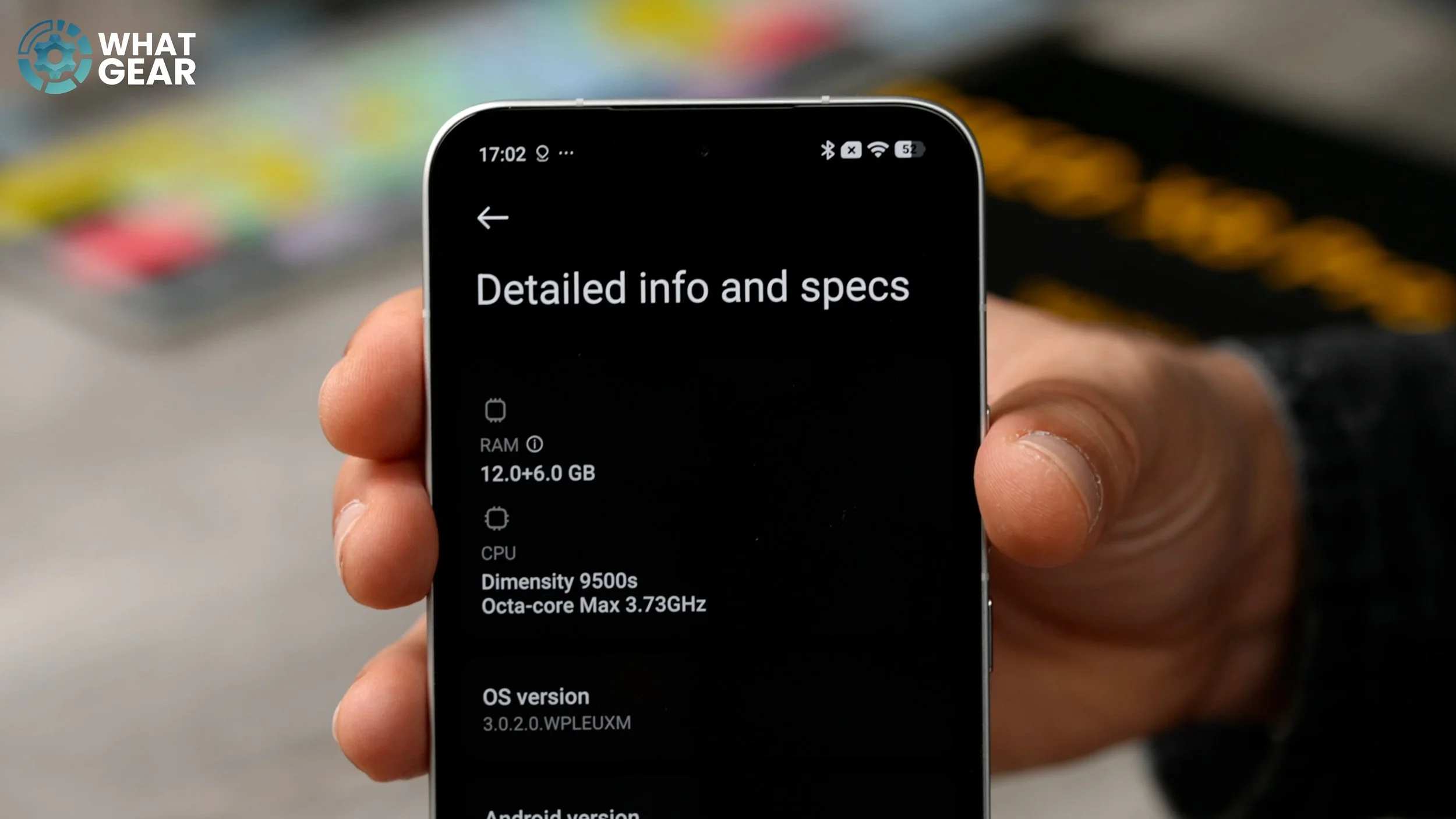
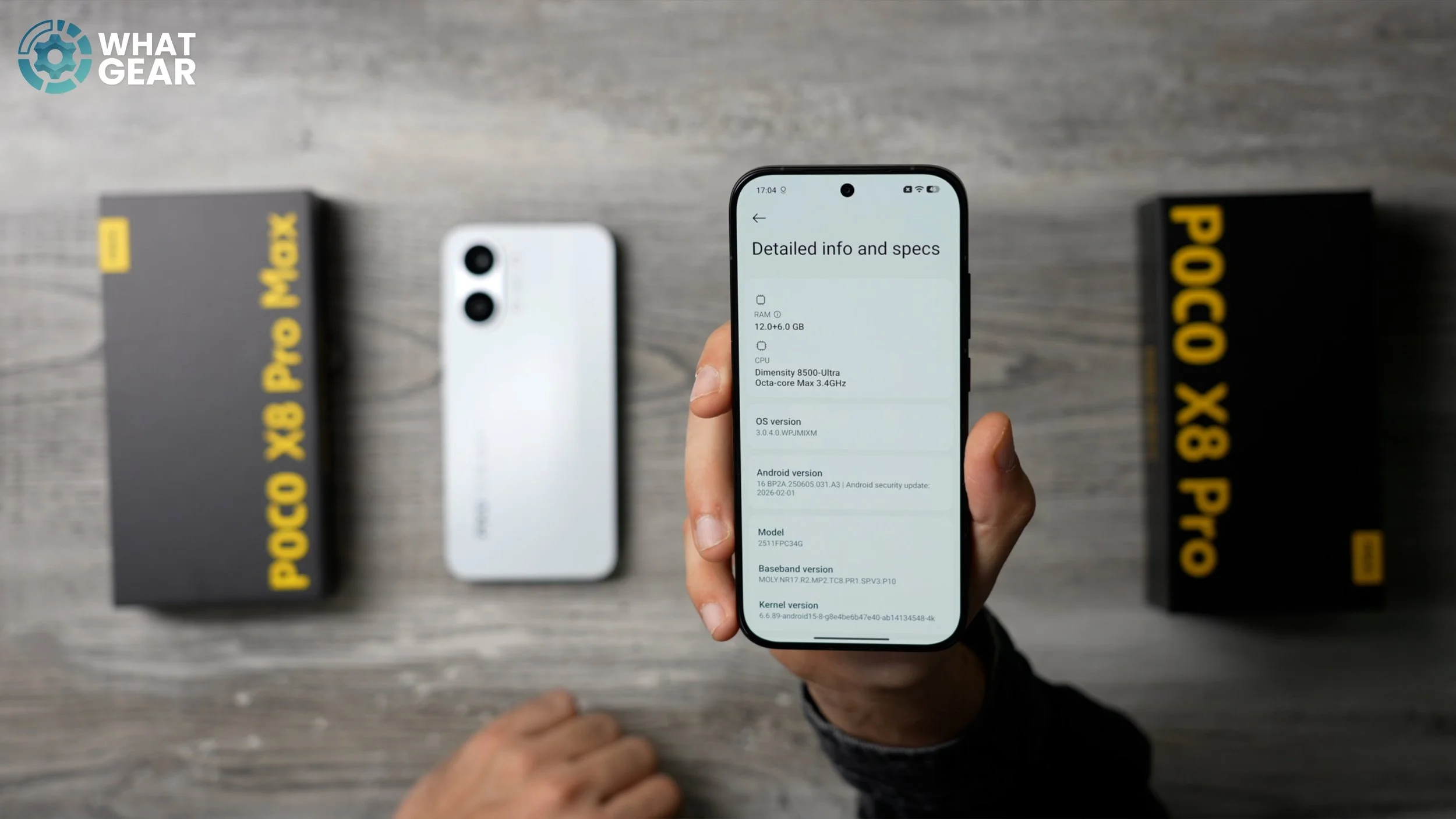
And to give you a better understanding of the difference between the two chips, the Pro Max performs 36% better in an AnTuTu benchmark, and on a single core, it is 56% faster than the Pro's chip. Also, the GPU in the Pro Max is considerably better, and it also has a better name. It's called Immortalis. Now hidden from the human eye is the same LPDDR5 RAM and UFS 4.1 storage. Also, beneath the surface, there is a difference which probably nobody's told you about yet, but I'm going to show you with this. The 3D IceLoop cooling system on both these phones is the same. However, the Pro Max 3D cooling loop is around 9.4% bigger. So what I'm going to do is run a 3DMark 20-minute benchmark test on both of these phones at exactly the same time, and then do a thermal scan afterwards so you can see the difference in heat dissipation.
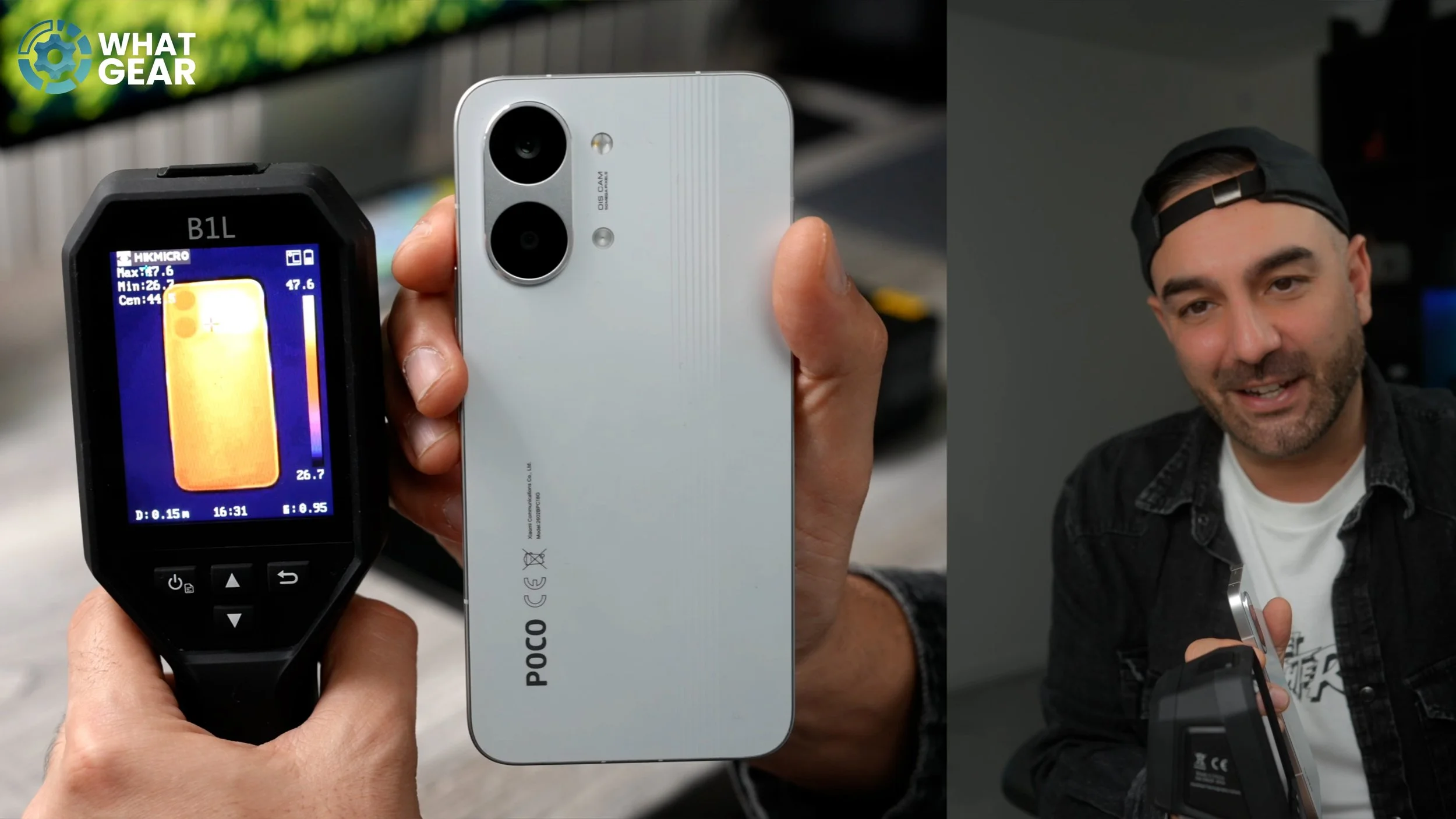
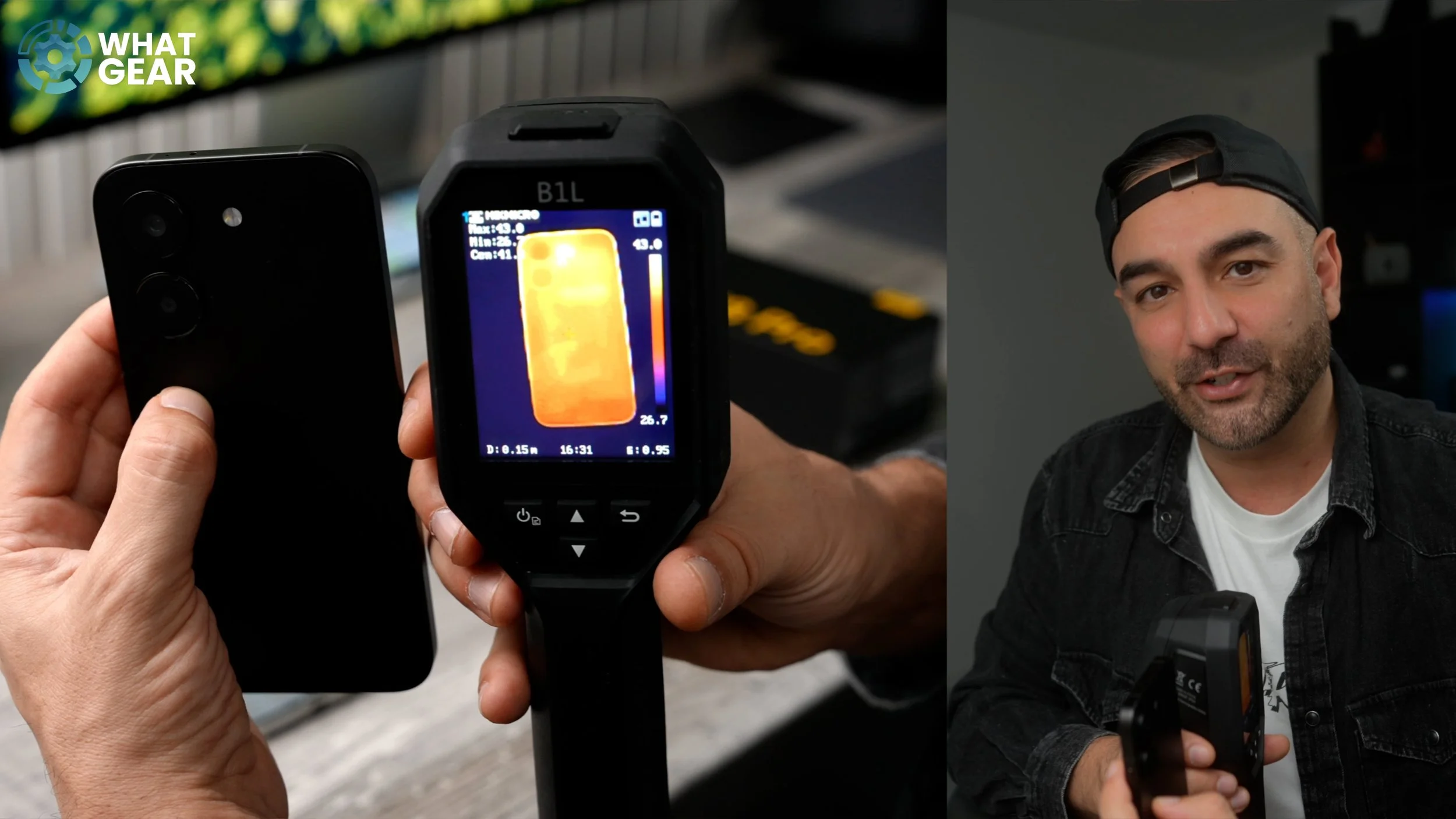
Now, something to keep in mind is that the more powerful chip will likely get hotter because it is more powerful. So maybe the slightly lower performance on the Pro model will balance out the results when it comes to thermals. But yeah, there's only one way to find out. Let's run the benchmark. Okay, so with the thermal readout on the Pro Max phone, it did get very, very hot — 47.6 degrees — and heat is spreading down, but not as quickly as you would want. But of course, it did still outperform the Pro model. Now let's get a look at the thermals on the Pro. So interestingly, the temperature didn't rise quite as high on the Pro model. It reached just 43 degrees, and the heat seems to be spreading down a bit quicker. Also, you'll notice when you look at the graphs here, after the second loop, the Pro actually throttled the performance, and then again around the ninth or tenth loop it throttled again to keep the heat as low as possible, whereas the Pro Max was running consistently faster and therefore generating more heat.
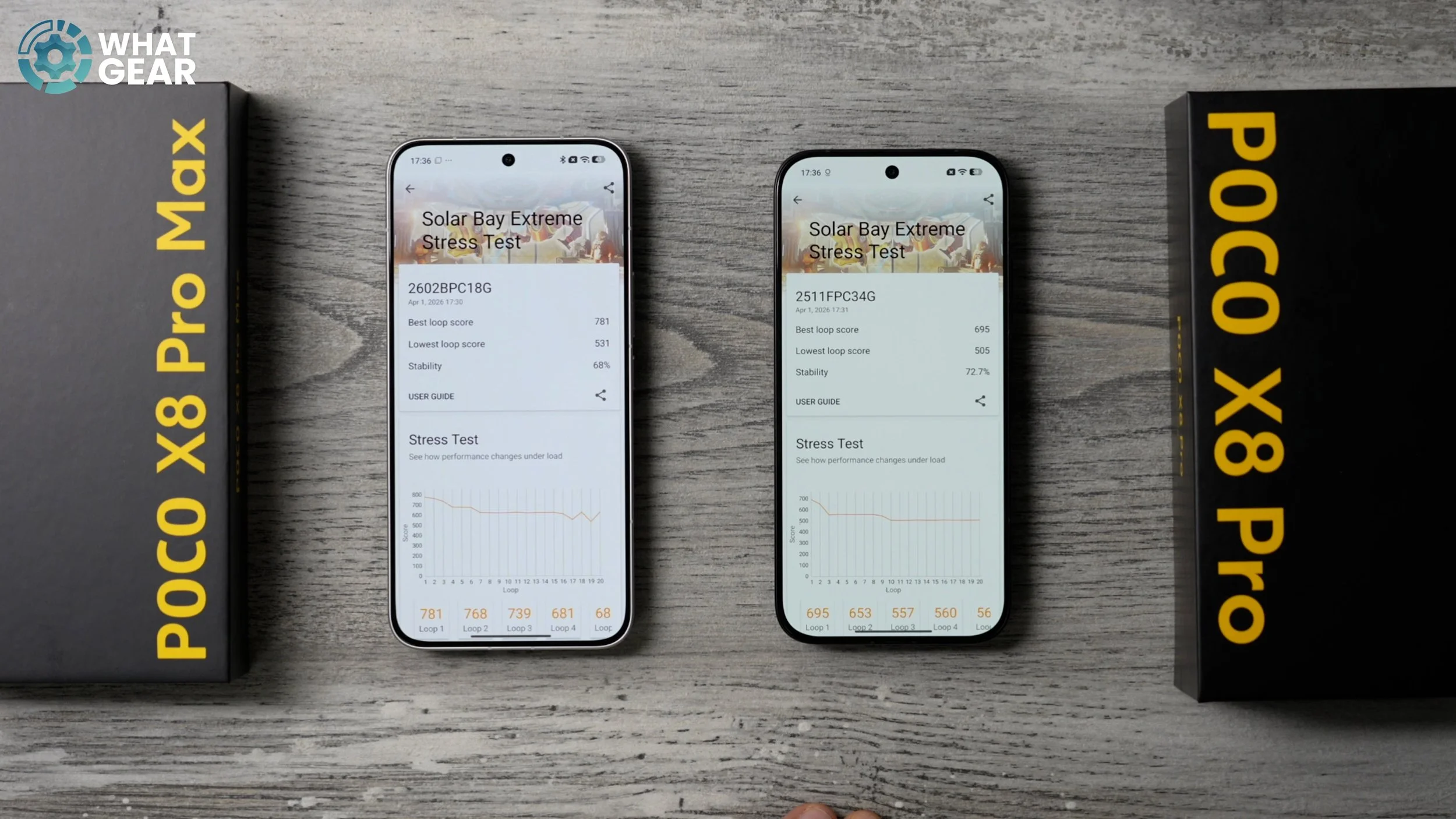
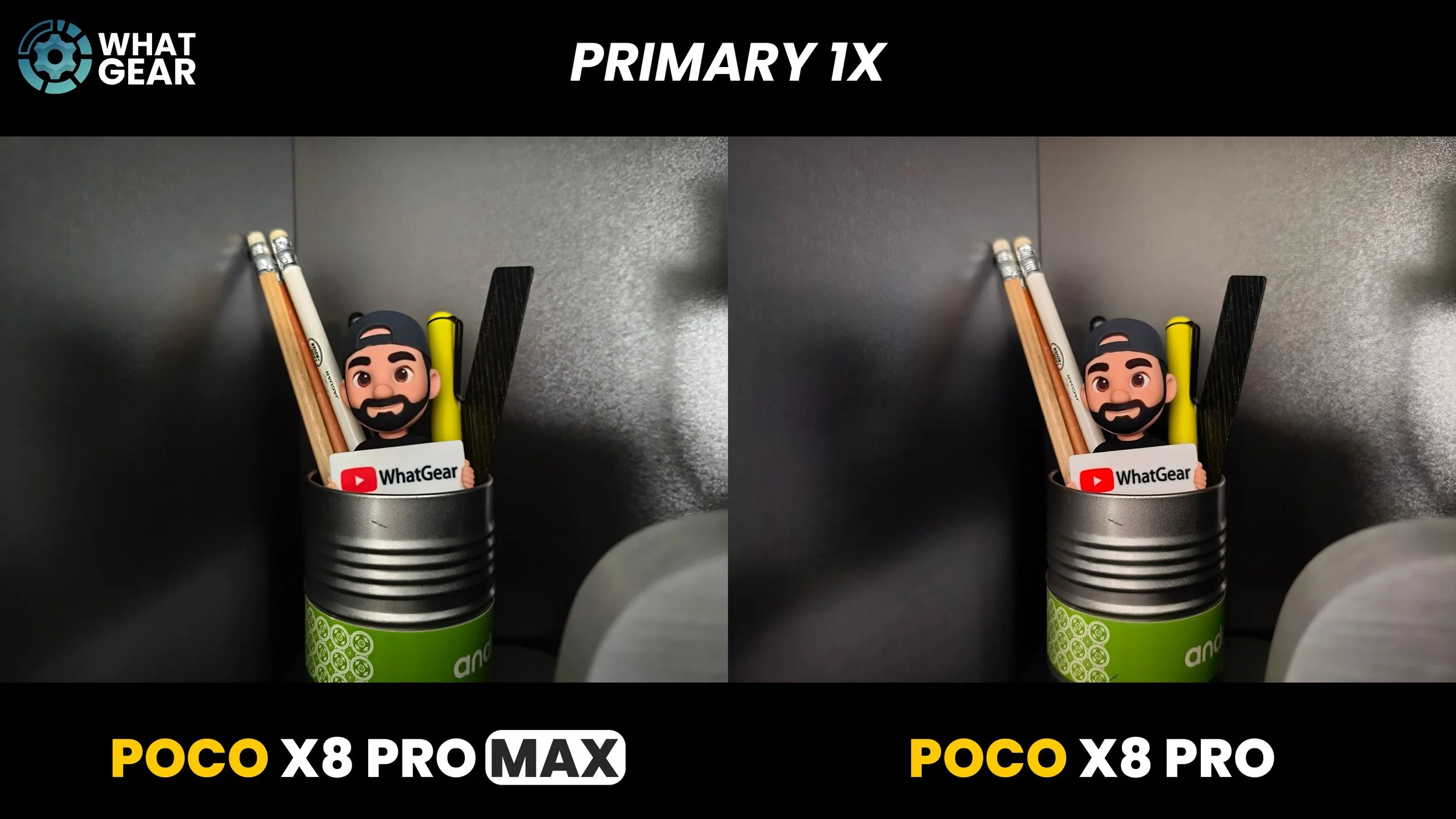
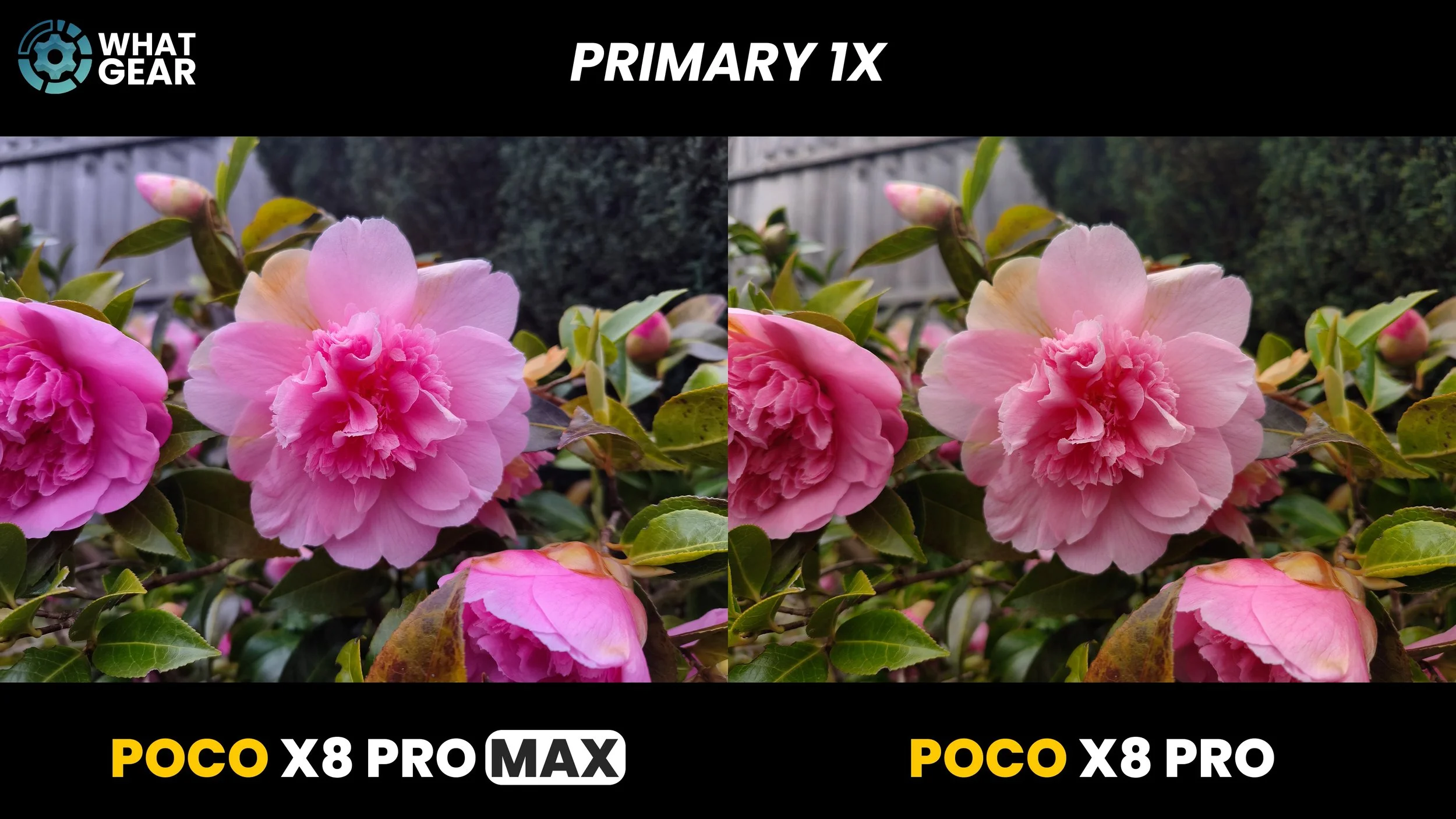
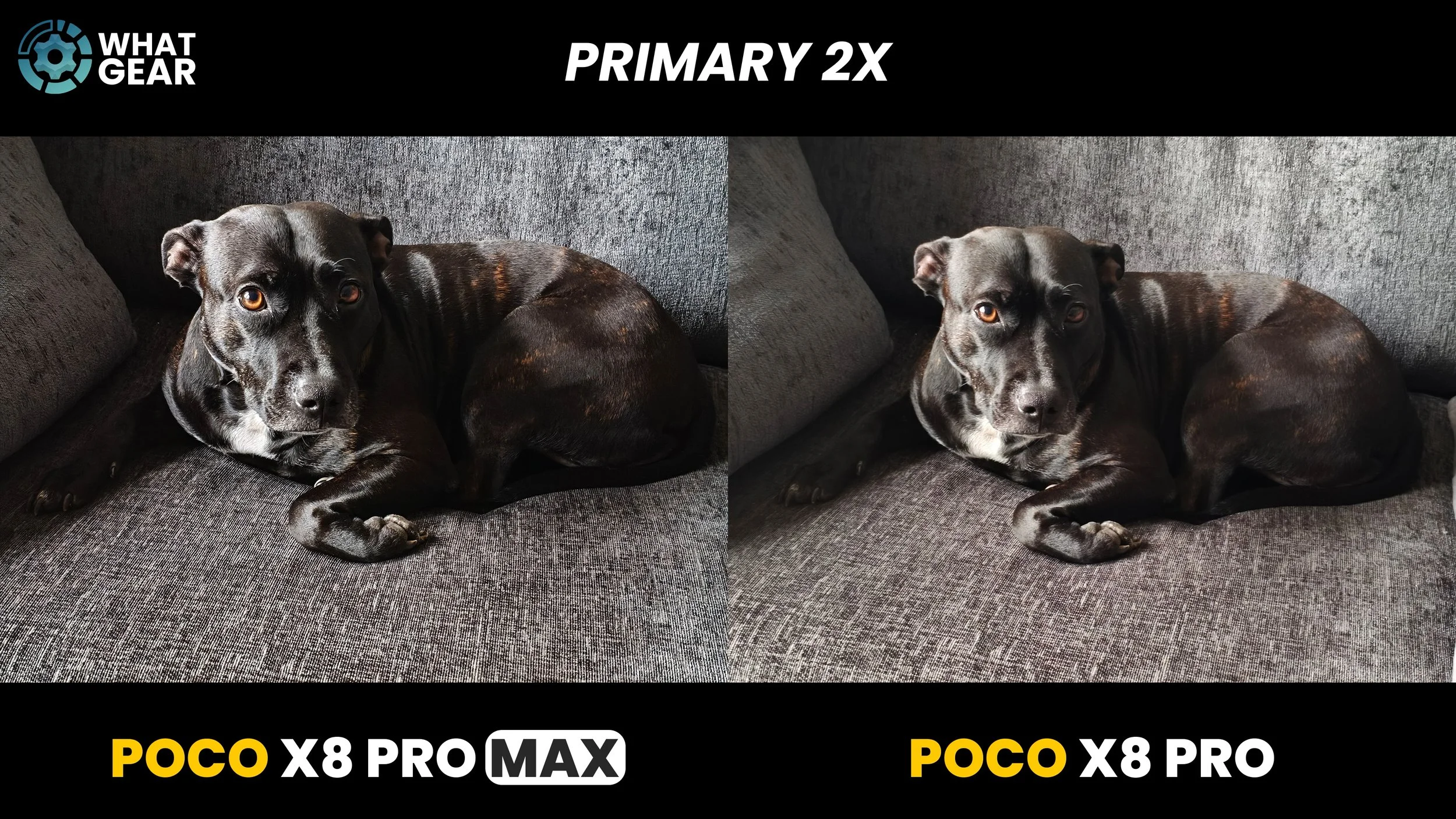
Something else that might have played into this is the different material used on the back. Maybe the glass dissipates heat better than fiberglass. So long story short, the Pro Max is definitely more powerful, and it can run faster. However, it does run hotter than the Pro. Now let's talk about the cameras. So there is a difference. Even though both phones have 50MP sensors on the primary camera and both have an aperture of f/1.56 with six plastic lenses, and both can shoot 4K 60fps video with that main camera, the actual sensor itself is different. So on the Pro Max it's a more premium Light Fusion 600 image sensor. The image sensor on the Pro is the same size, same aperture, same number of lenses; it is the Sony IMX882. The selfie cameras on both phones are 20MP. And something else you need to keep in mind is the chipsets actually play a part in the image processing, so that can affect the camera performance.
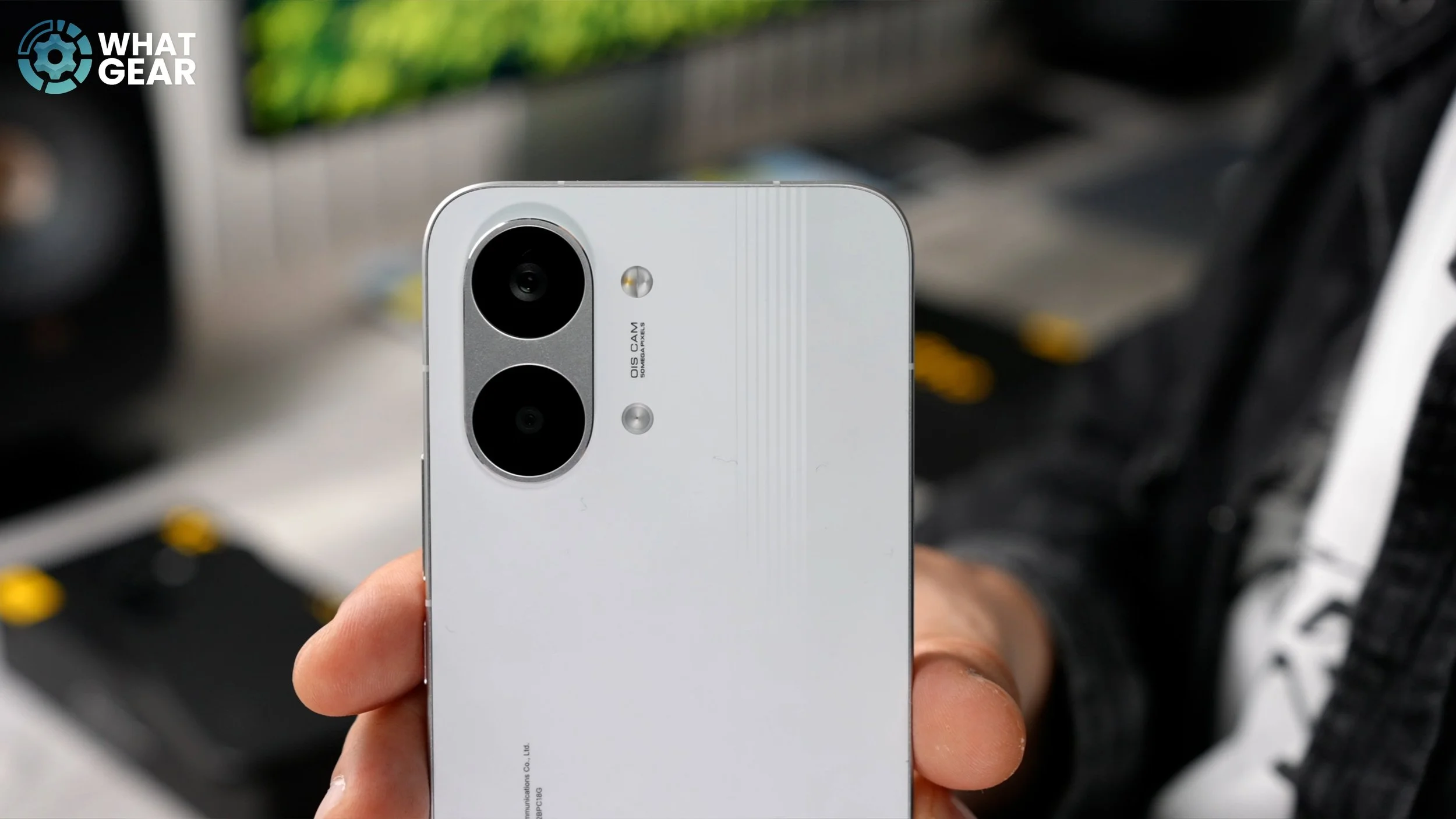
So here are a couple of side-by-side shots with these two phones so you can see the difference for yourself.
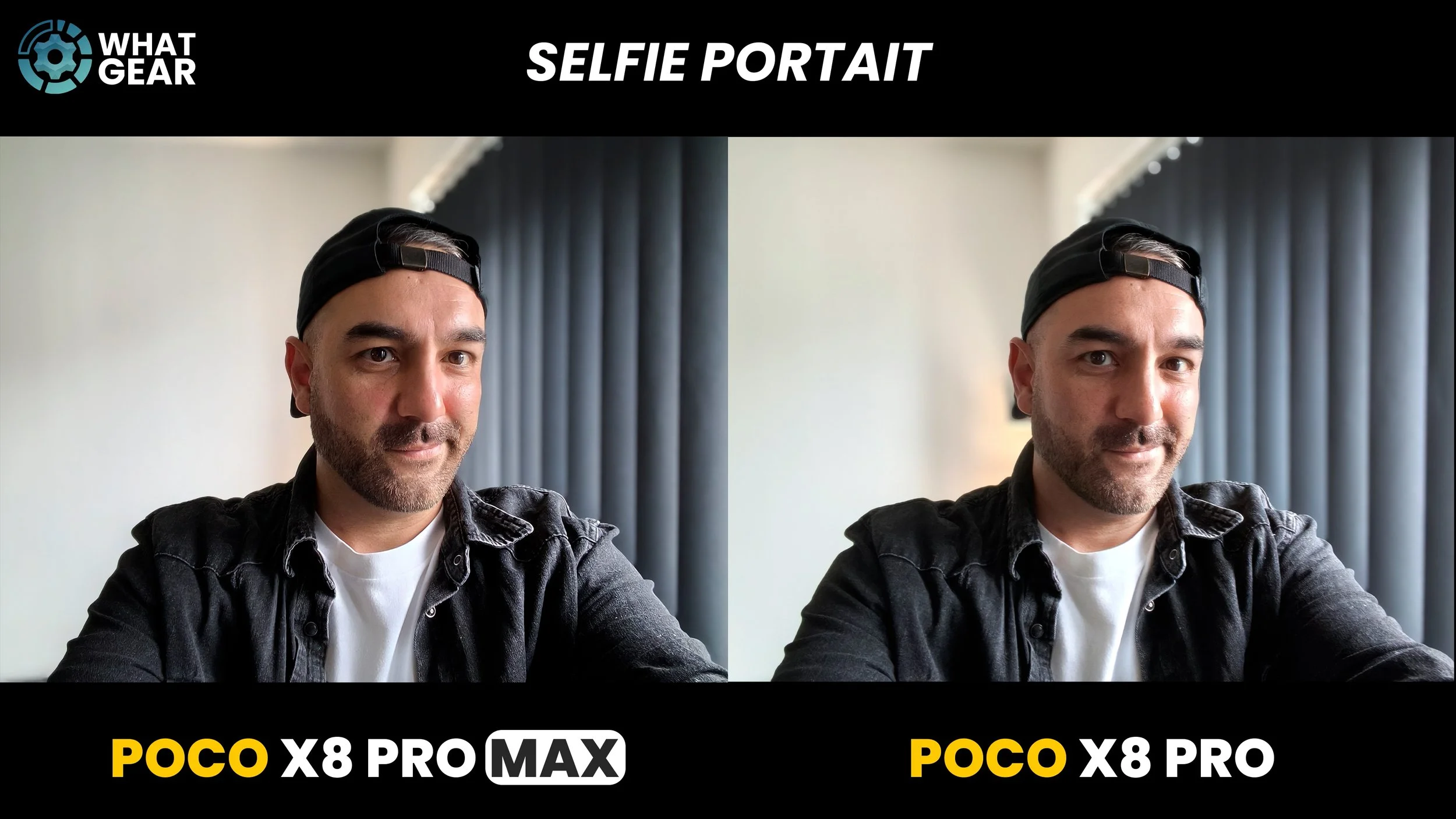
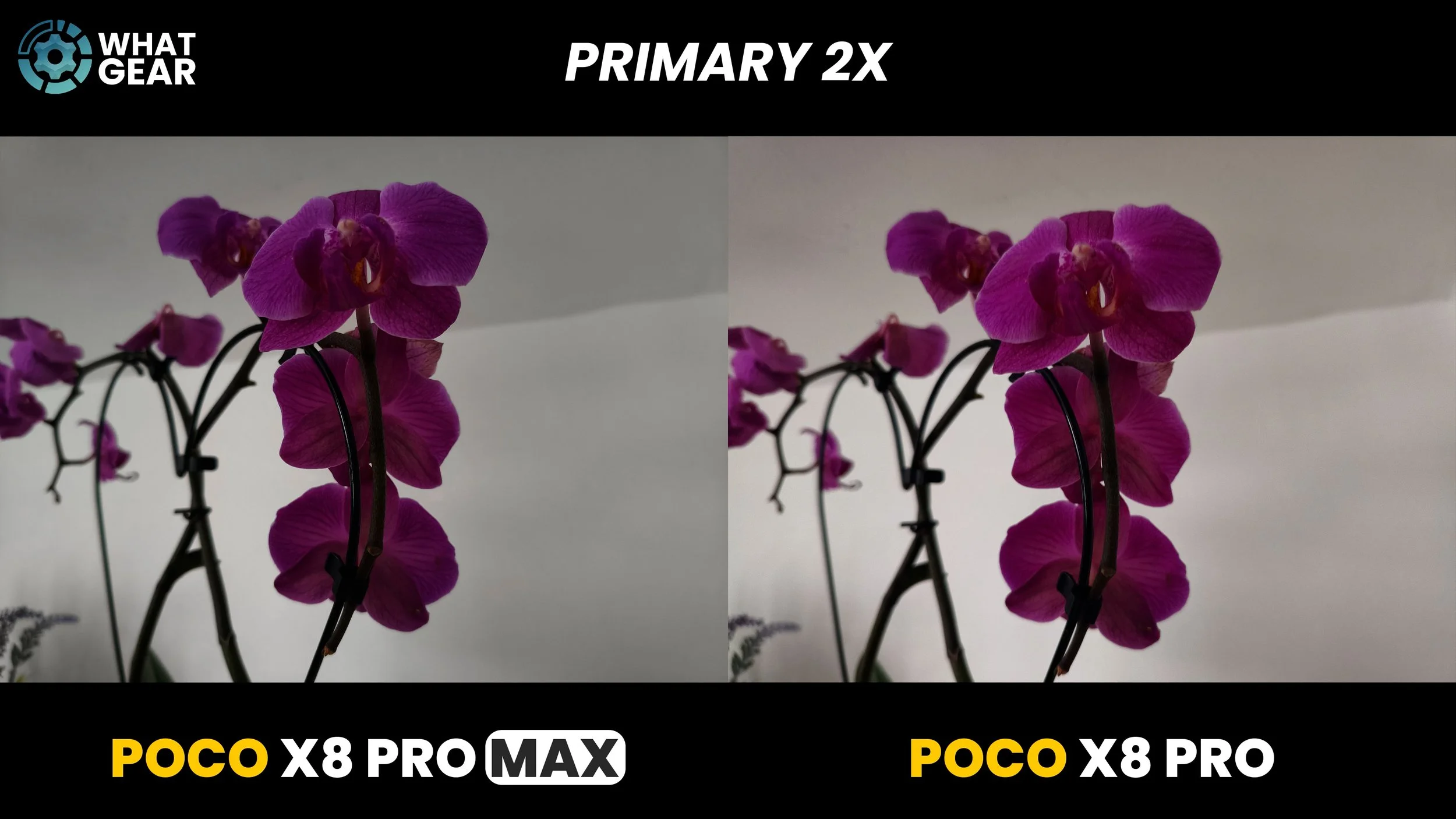
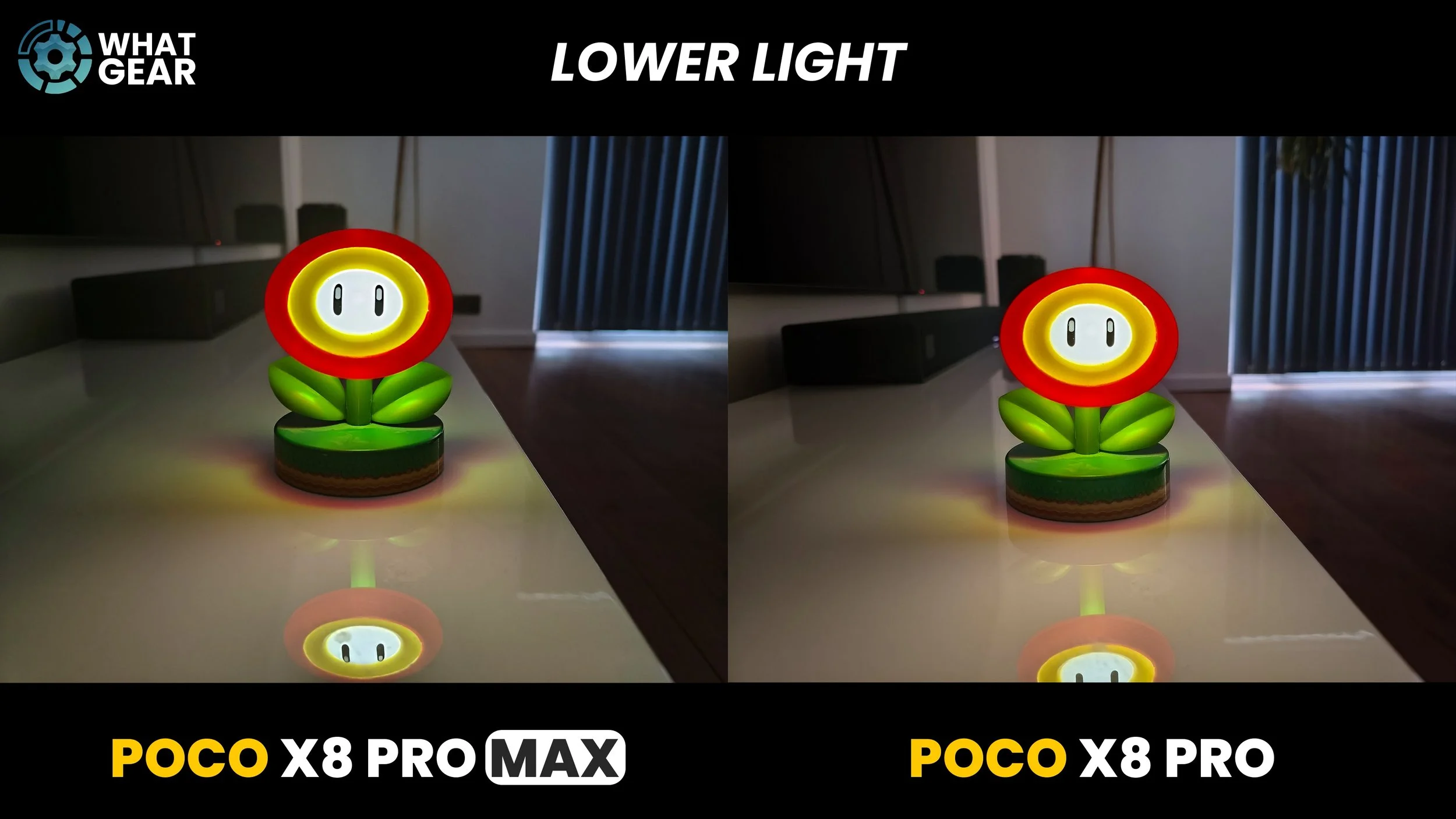
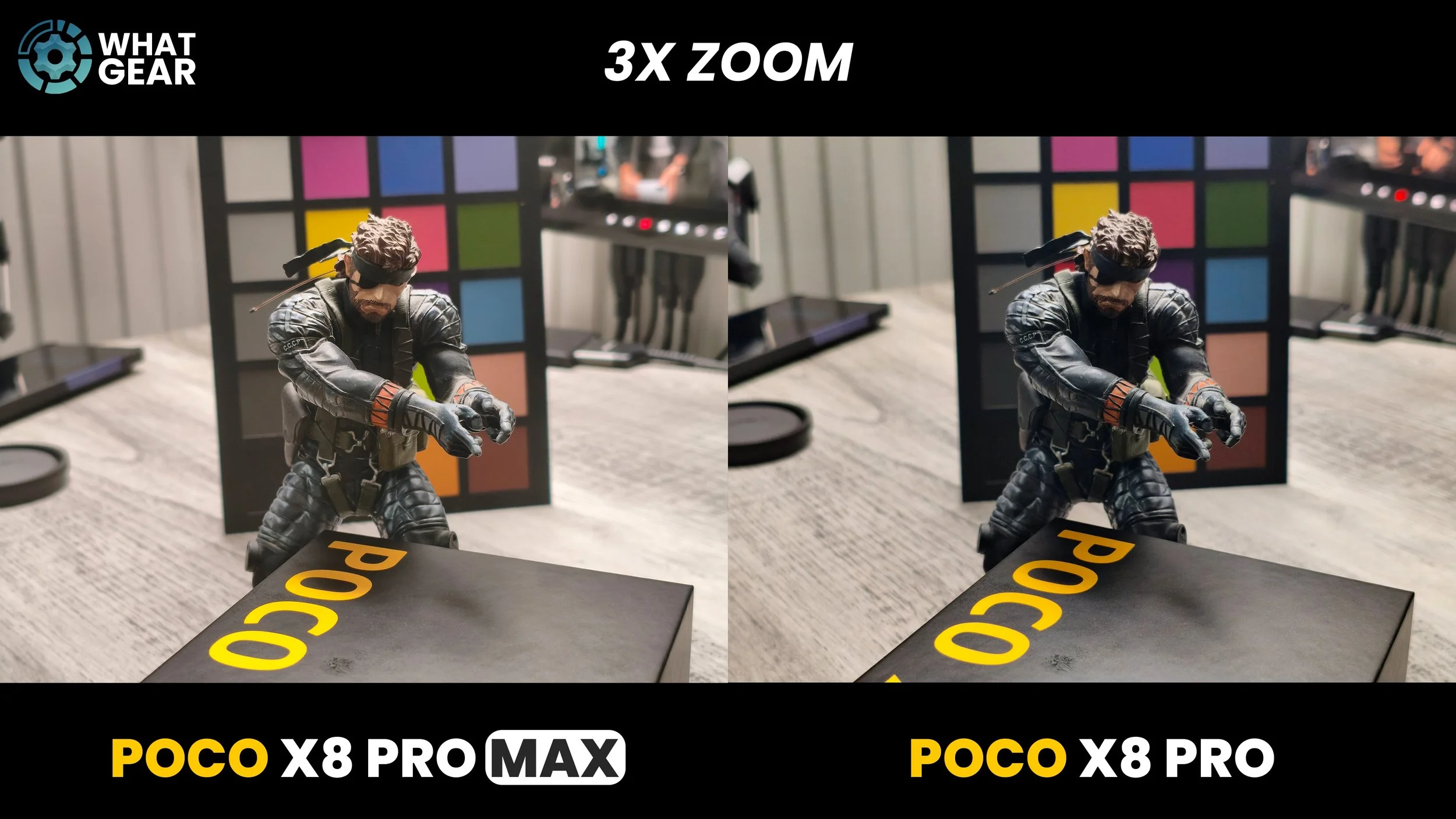
Now, when it comes to software, out of the box, both phones are rocking HyperOS 3, which is running on Android 16. And both phones will get four years of OS updates and six years of security patches, which means you could keep either one for a pretty long time without ever having to worry about security or missing out on some of the latest features. And if you'd like to see a more in-depth camera test with these phones versus other phones, do let me know about that in the comments, and I will try my best to make them for you. Now, here are my final thoughts when it comes to deciding between these two phones. The price gap is £80 at the low end, but just £50 at the top end. And for that extra £50 you get better performance, a much bigger battery, better cameras, and a slightly more refined design. However, something you won't get with the more expensive phone, which you do get with the more affordable one, is this: the 100W charging brick. So you might want to factor the cost of one of those into your decision. I like both these phones. I'm really impressed with what Poco have done with the design.