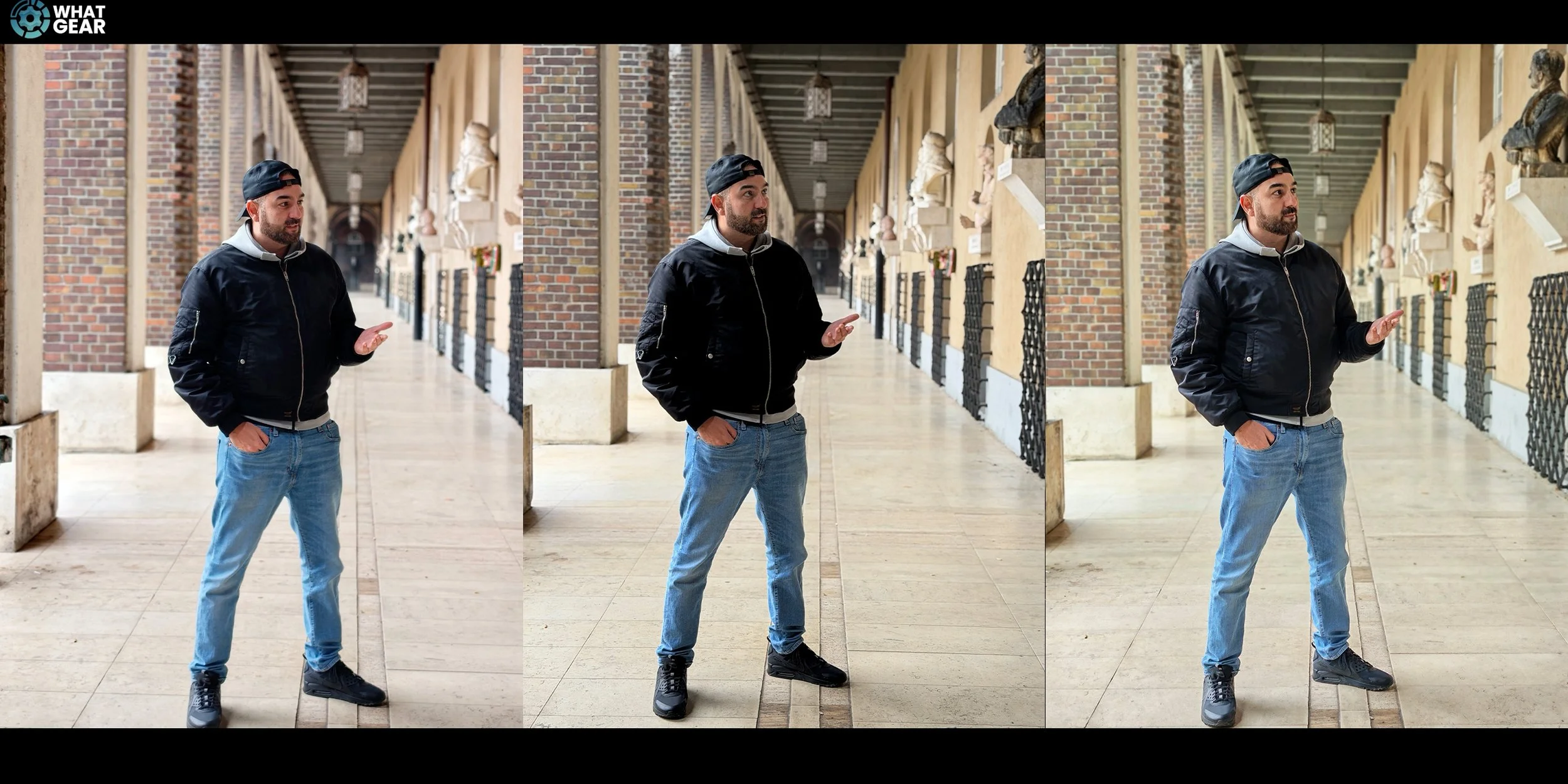
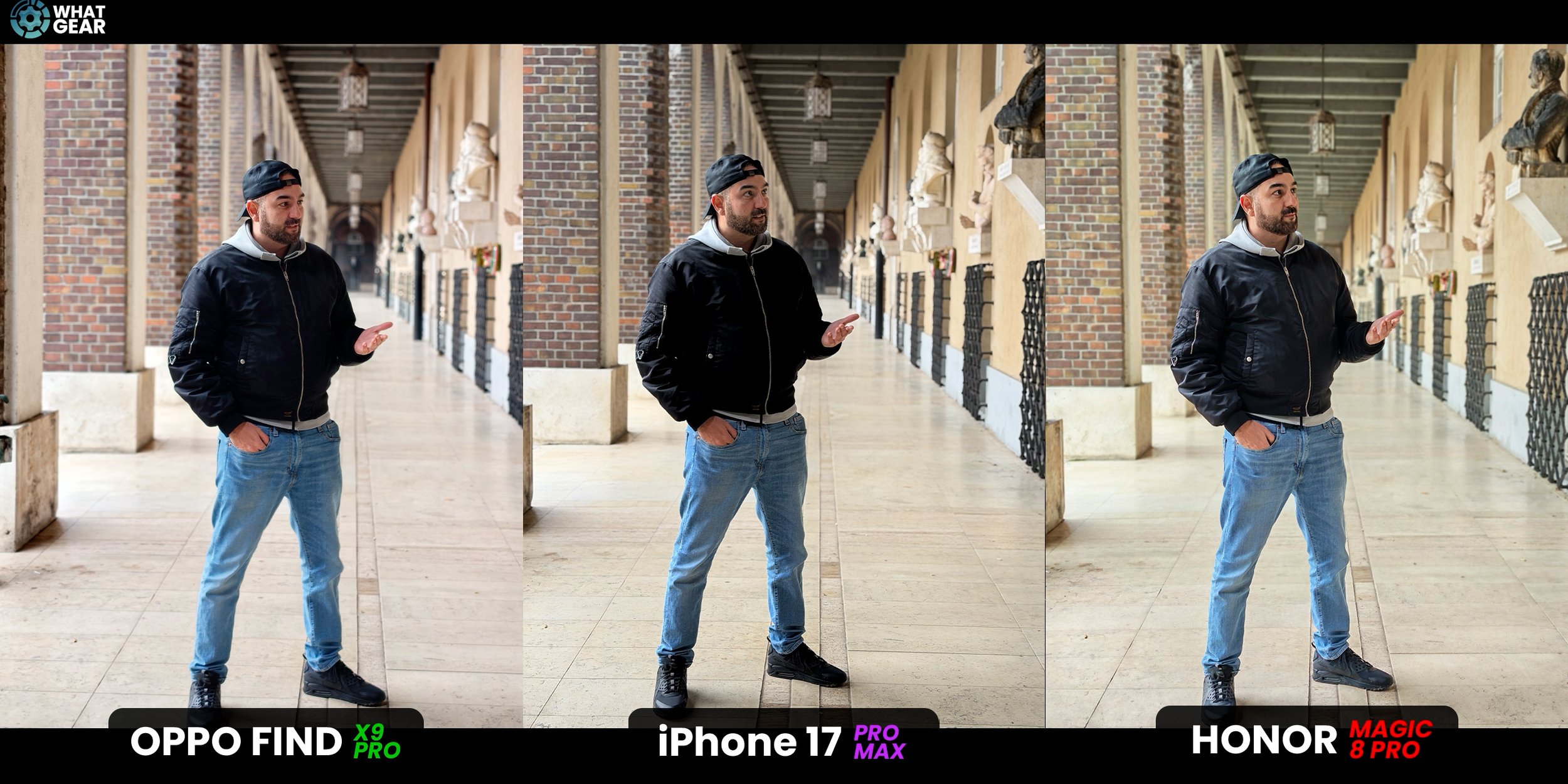
Honor Magic 8 Pro Vs Oppo Find X9 Pro - Blind Comparison 📸 ( Budapest, Hungary )
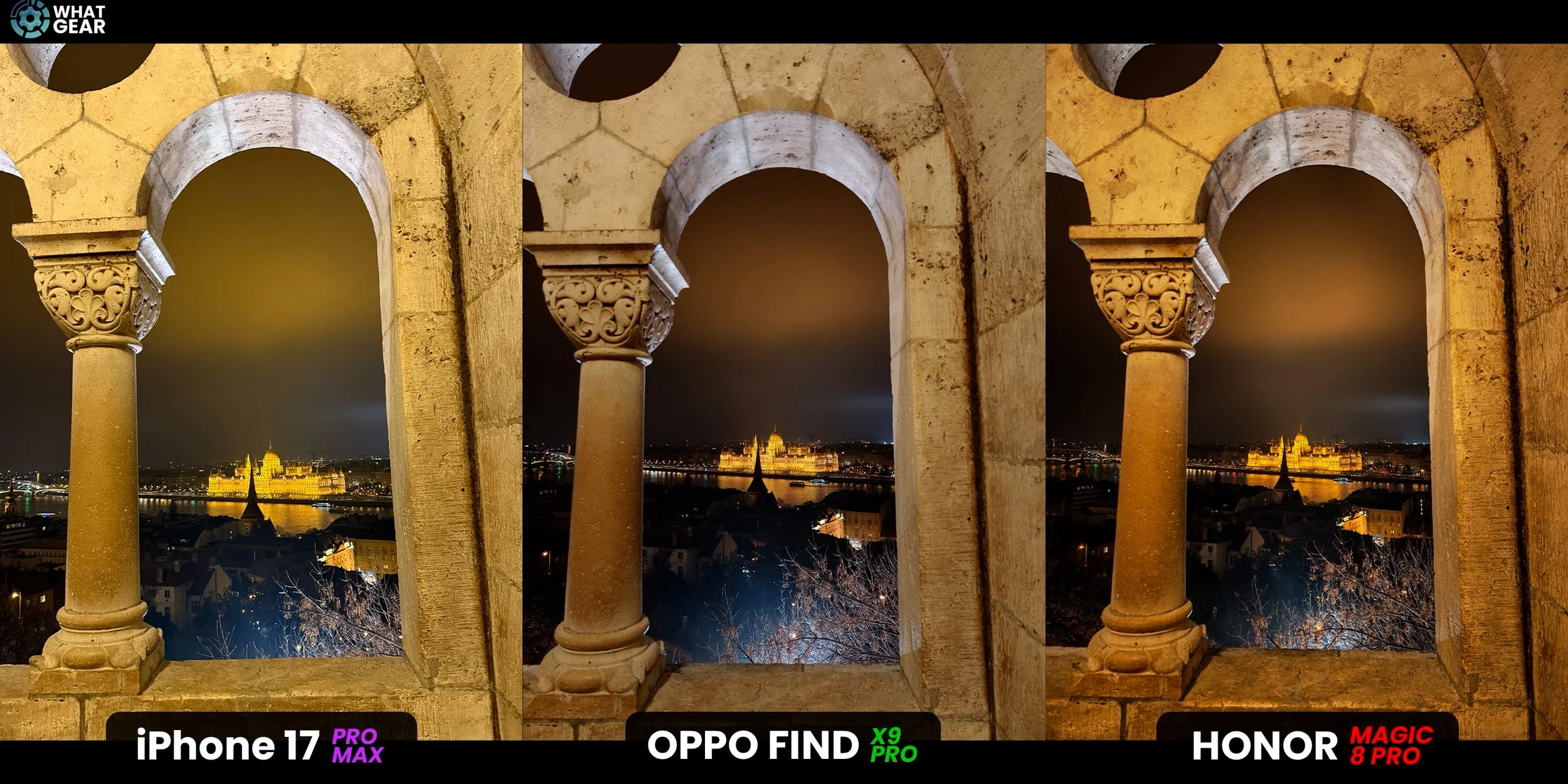
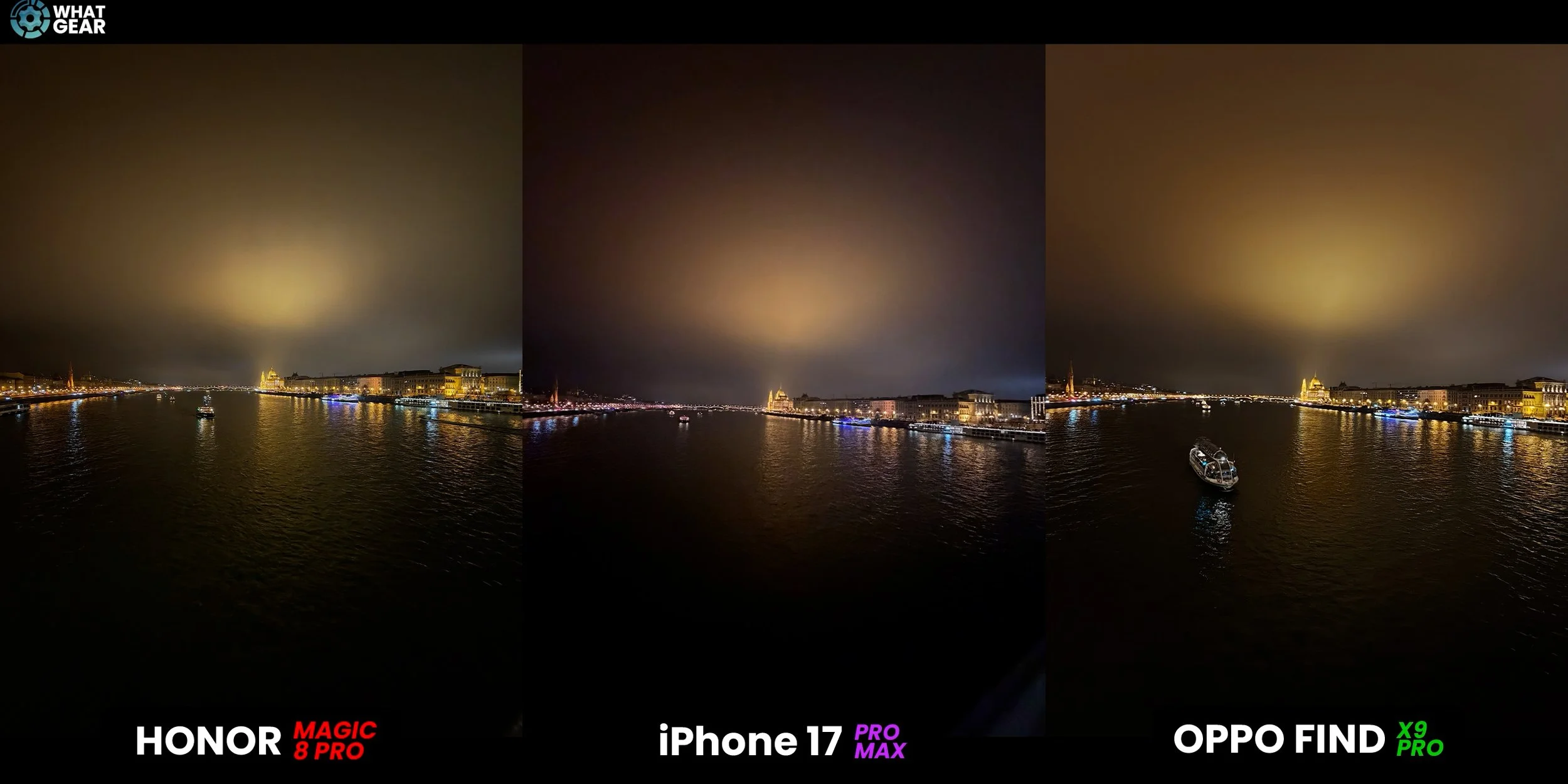
I am in Budapest, and I have three top-performing phones for 2026. This one right here is a brand-new device for 2026 from Honor — the Honor Magic 8 Pro. Of course, I also have the mighty iPhone 17 Pro Max, which many people consider to have the best video quality on any smartphone. But we’re about to test that. And then we have what many YouTubers consider to be the best camera smartphone of 2025 — the Oppo Find X9 Pro with Hasselblad cameras. So let’s kick this off with a 1× shot, taken from the top of a cliff on the Buda side of Budapest. What you can see out there in the distance is, in fact, Pest — and that is where the Budapest Parliament building has stood since 1885.
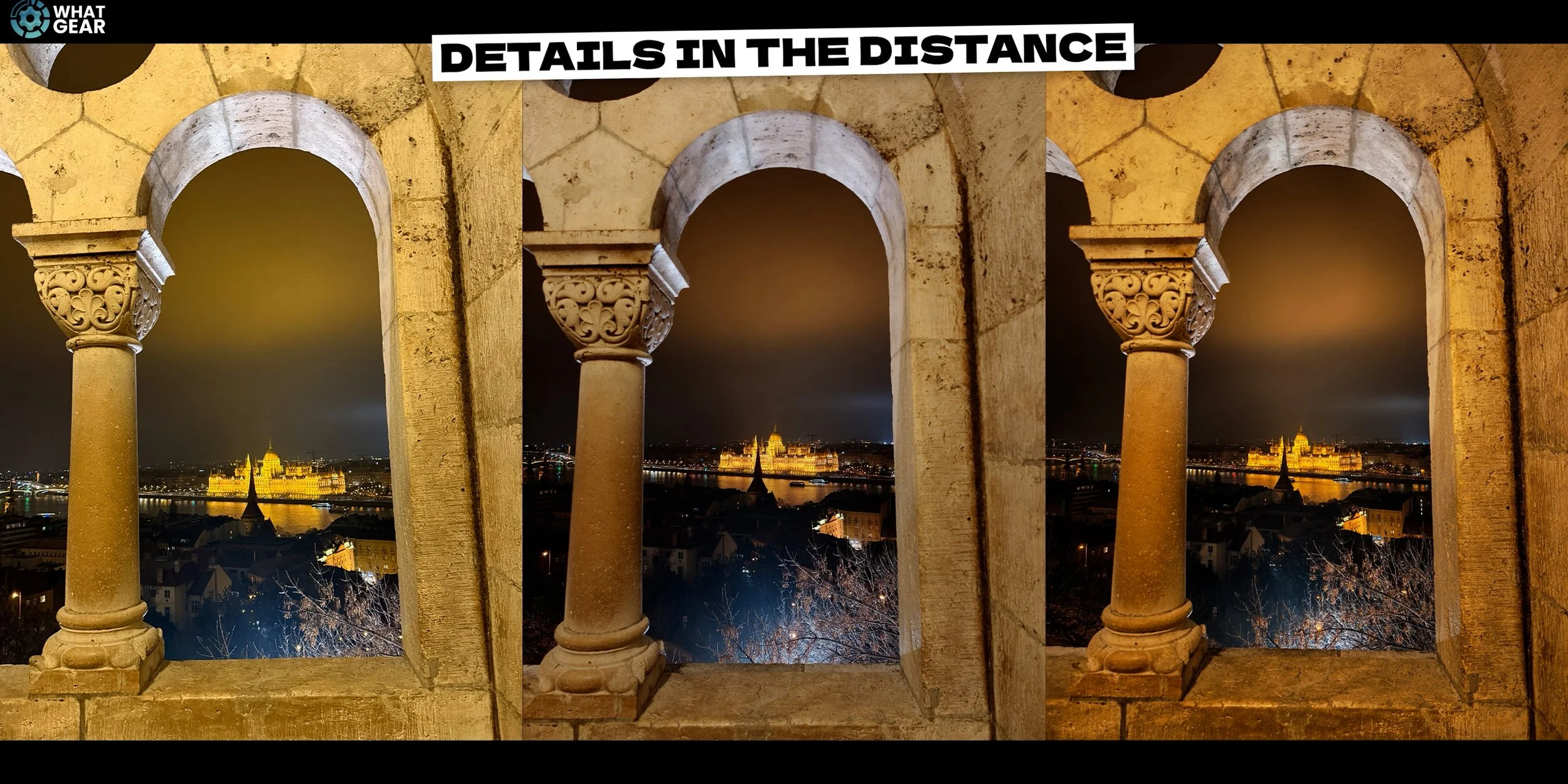
Before I reveal which phone took which picture, let me highlight a few things first so you can better decide and choose your winner based on which phone performed best. The white balance differences here are dramatic. There was warm orange lighting right where I was standing, and the Parliament building — which is also the focal point of this image — is uplighted with very strong warm lighting. When the three phone cameras see a scene like this, there are a few different approaches, and I think we’re seeing all three here. Some phones try to bring down the warm tones and adjust the white balance to make it look more like daylight. The problem is that sometimes the algorithm overcorrects, which I think is happening here in the image on the left. The center image is much more well-balanced and overall does a really good job. Interestingly, the photo on the right might actually be the most true-to-life, because it hasn’t applied additional white balance corrections. That is genuinely how it looked when I was standing there. But does that make it the best picture? That’s the question. Let’s zoom in a little and check the details to see which phone actually captures the most information, even at a long distance like this using the primary sensor.
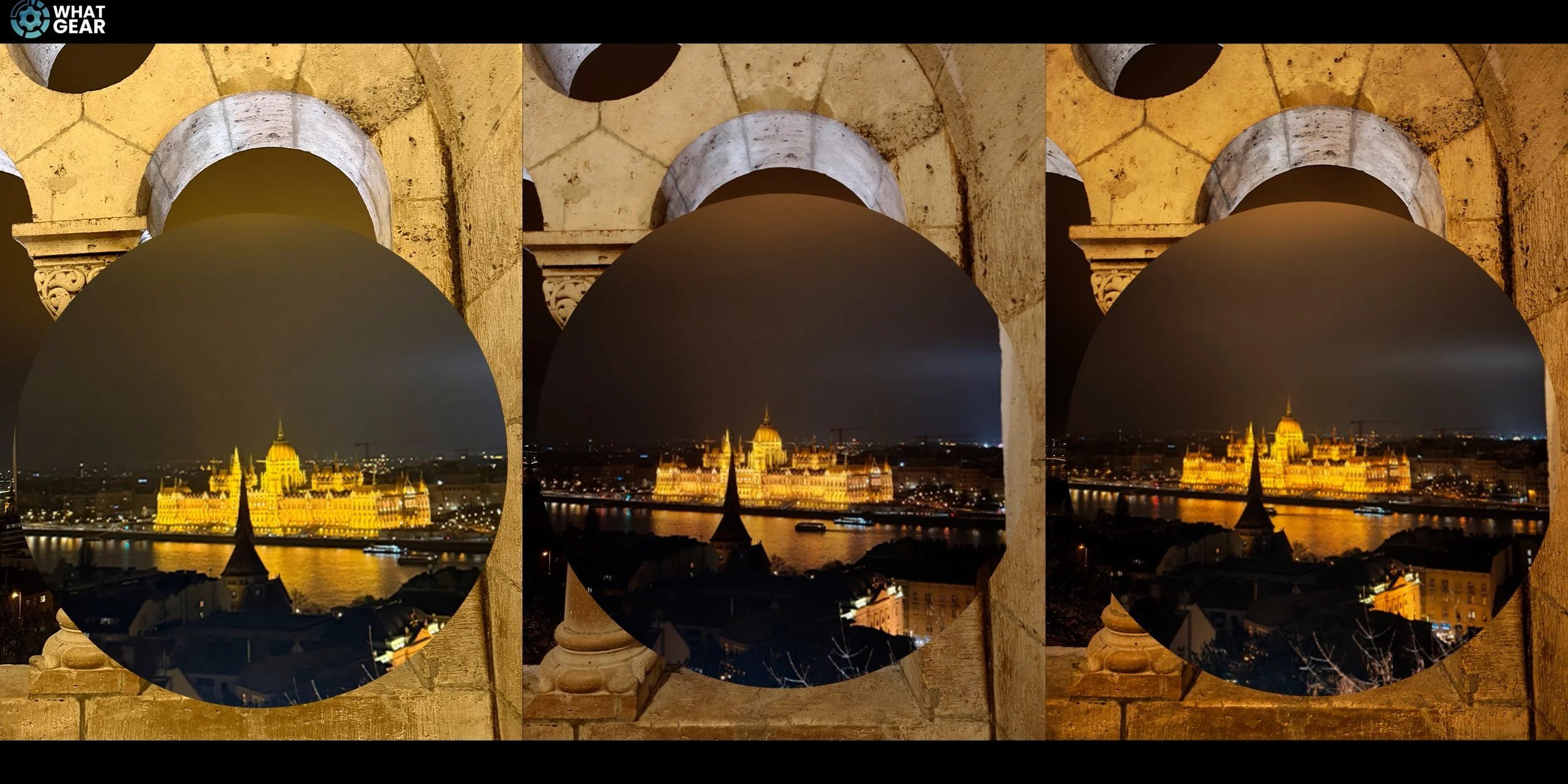
Now it’s your time. When the timer runs out, I’ll reveal which phone took which photo.
4× Telephoto
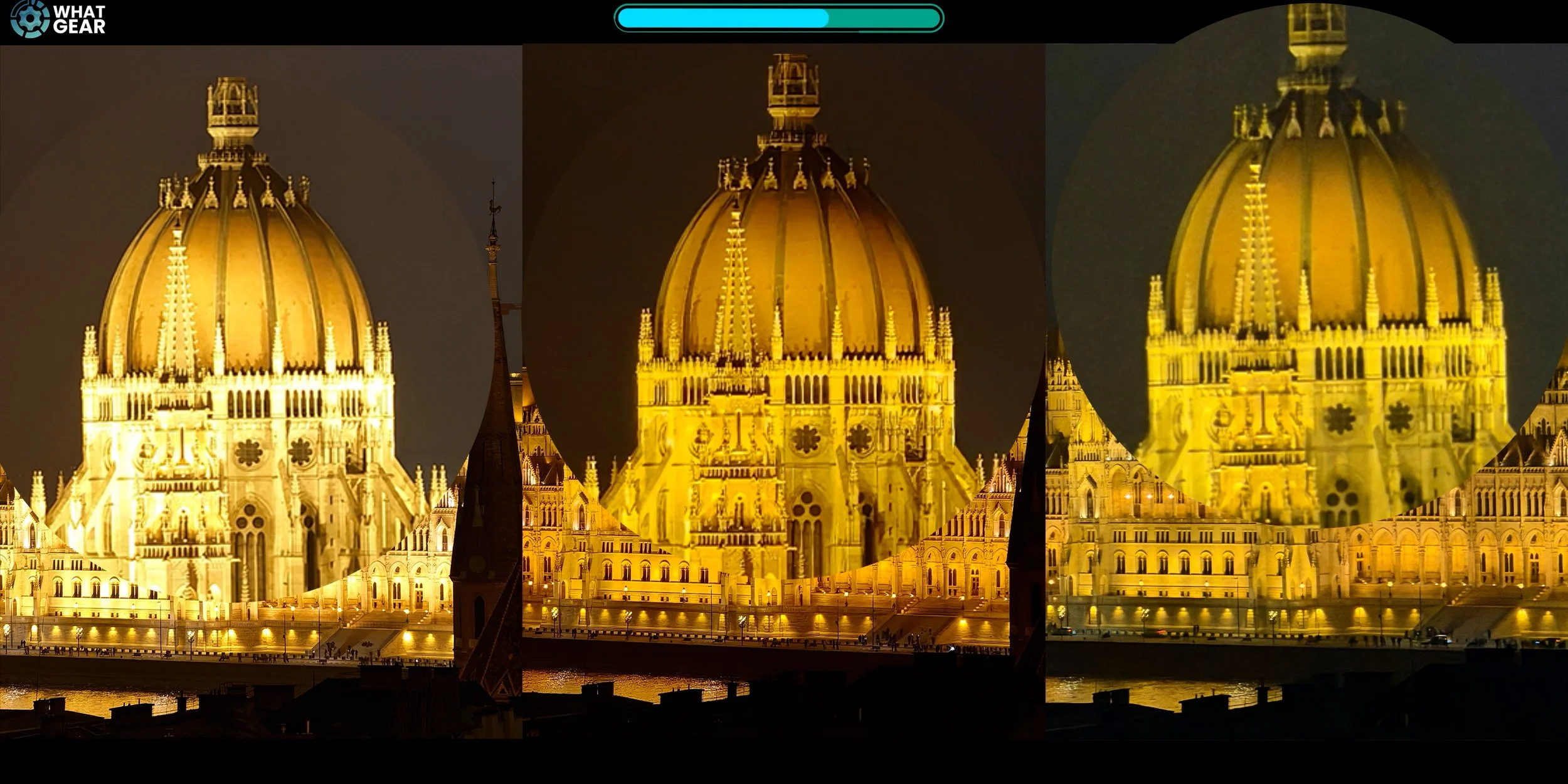
Now it’s time to take this one step further — or, more accurately, four times further. Here is a 4× shot (100 mm equivalent focal length) from that same spot. Now you can really appreciate the Gothic style of the Országház, which is the Hungarian name for the Houses of Parliament in Budapest. The phones are making use of their telephoto sensors here, and quite often they’re not as good as the primary cameras. You can see a pretty big difference in exposure.
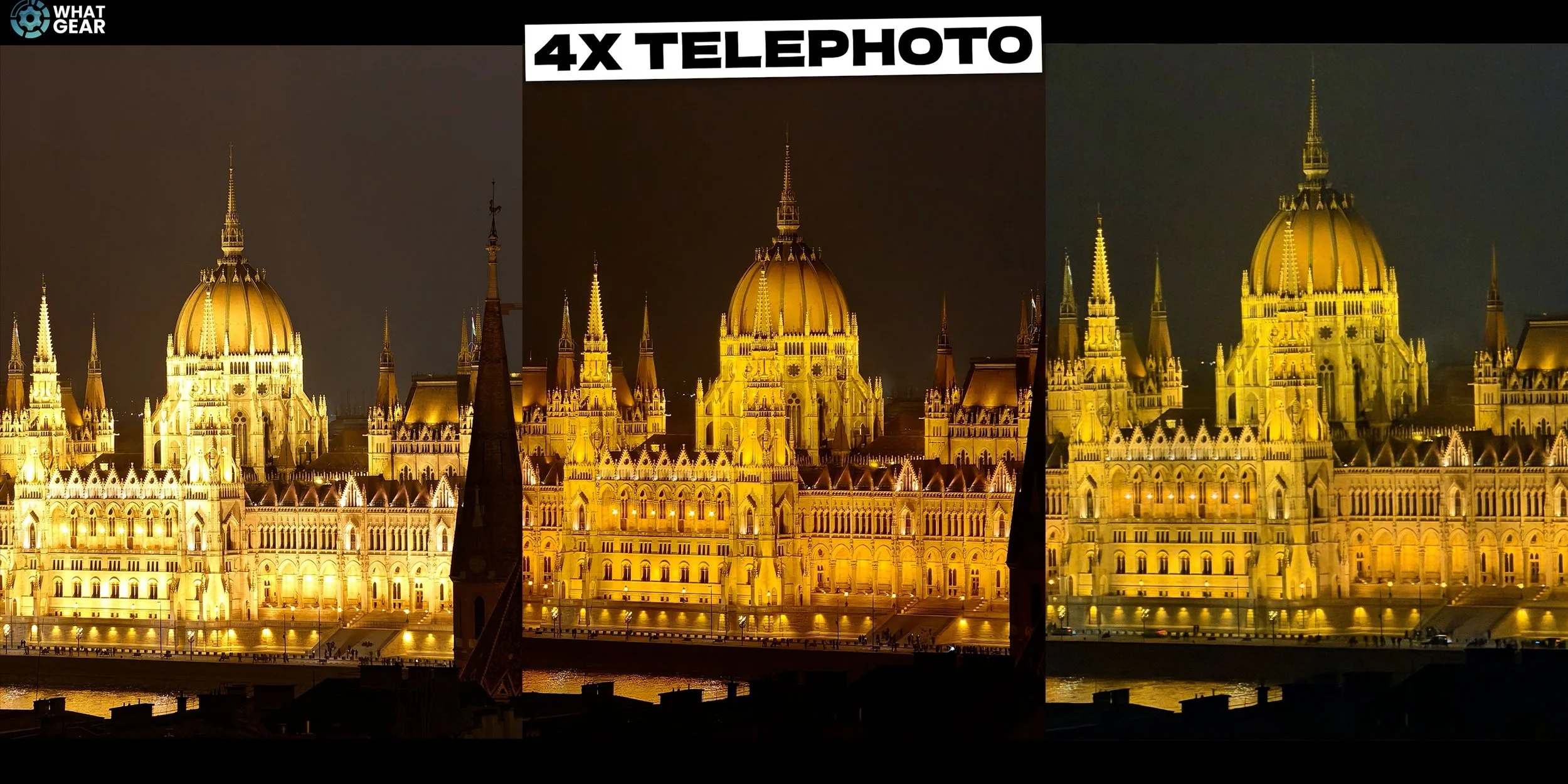
The image on the left is unfortunately overexposed, with highlights blowing out slightly. The other two are more balanced. However, the image on the right becomes much softer when you crop in. There’s a lot of digital noise and artifacting happening, which doesn’t look good to me. If I had to pick one, I think I know which one it is. Let’s zoom in and check those details — and now, let’s start the clock.
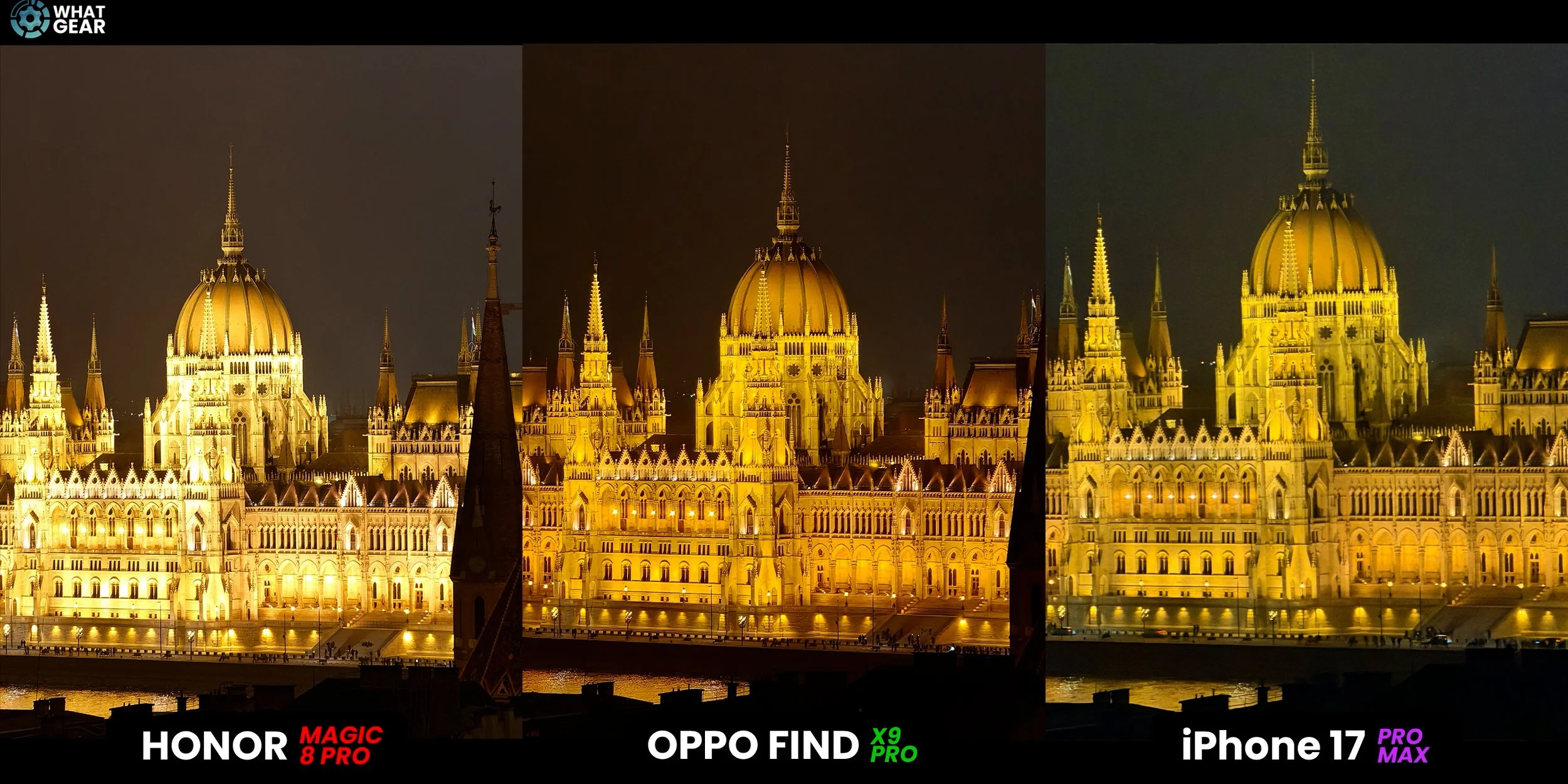
Architecture – Matthias Church (Low Light)
Here is another 1× shot of some architecture, but this time taken at a much shorter distance and again in low-light conditions. This is Matthias Church, and it’s a very challenging colour test for all three phones. There’s natural darkness in the sky, artificial lights illuminating the building, and some really nice, colourful details on the rooftops. Let’s get a closer look so you can pick your winner more decisively.
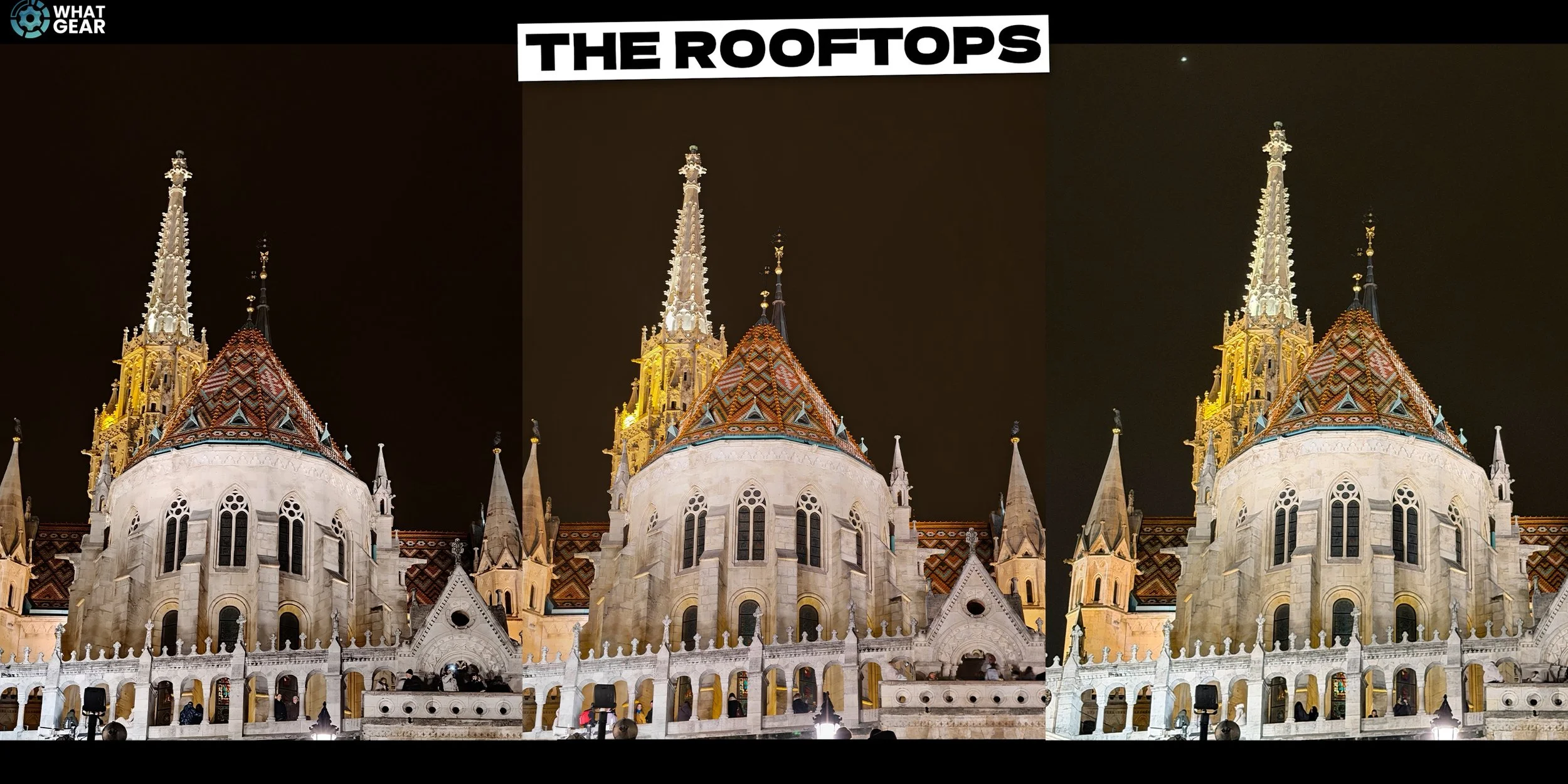
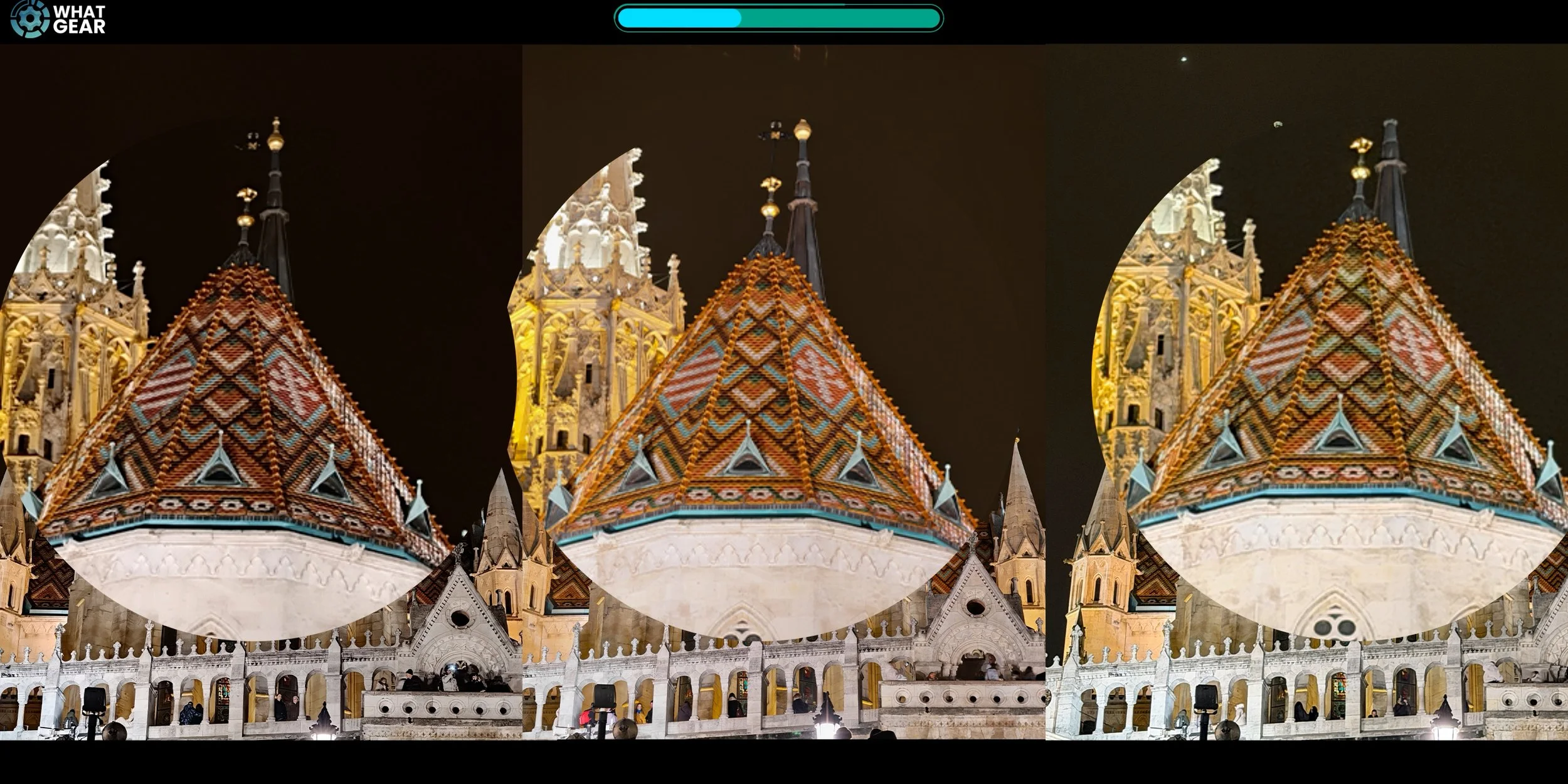
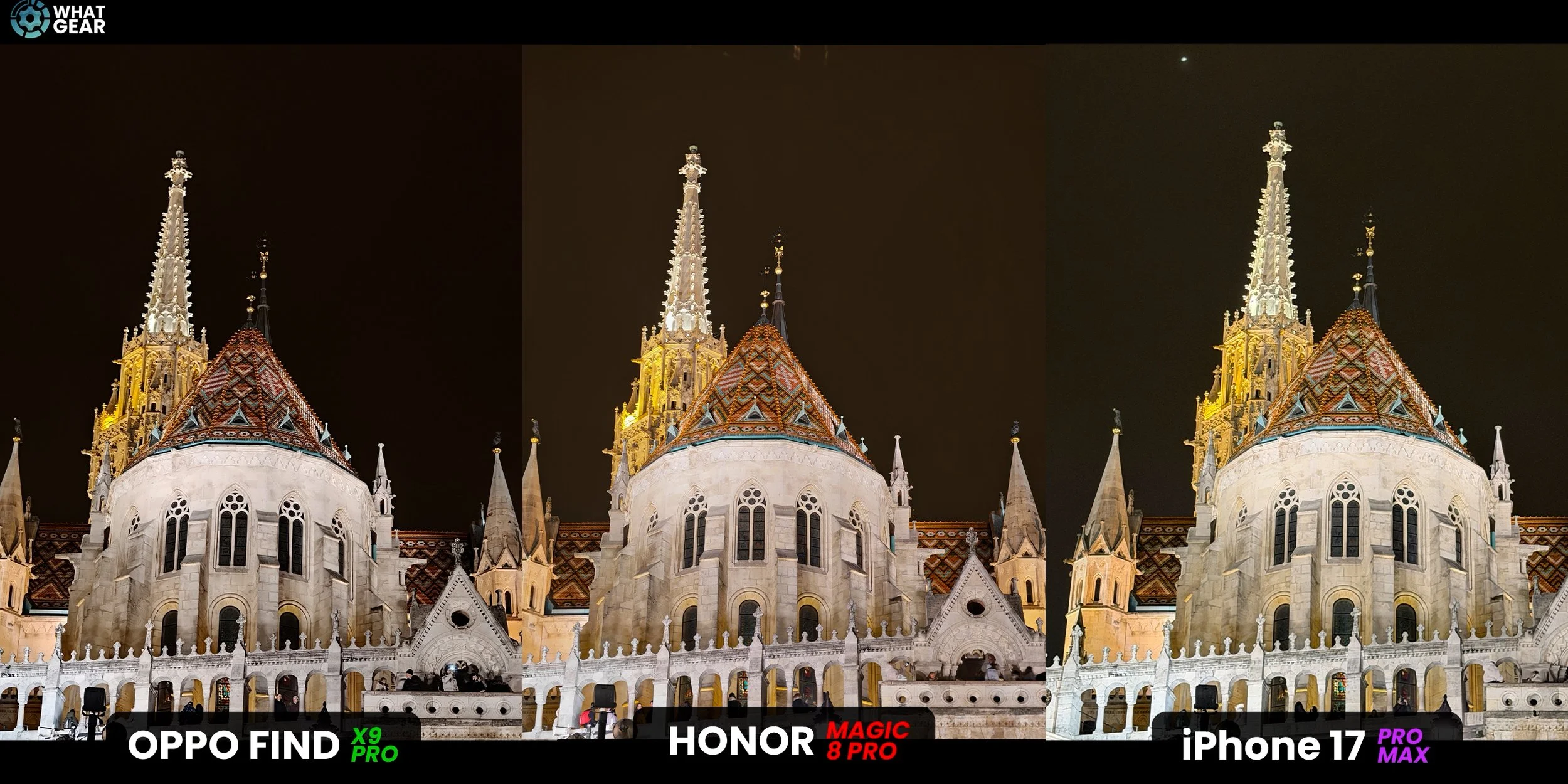
I know what you’re thinking — this building looks like something out of Assassin’s Creed. I thought the same when I saw it. And to reinforce this idea floating around in my head about Hungary possibly being the real-life origins of Assassin’s Creed, I stumbled across this.
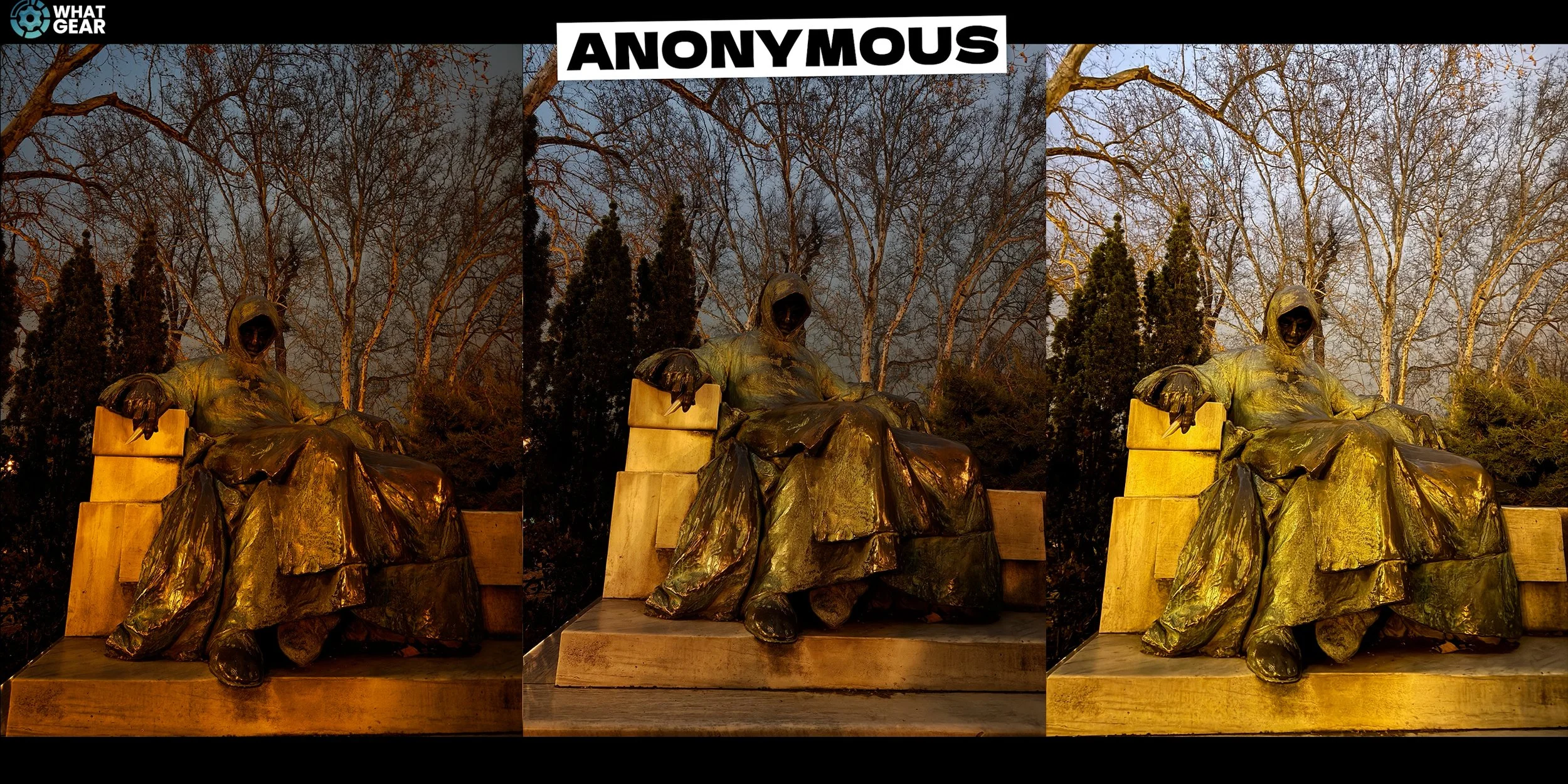
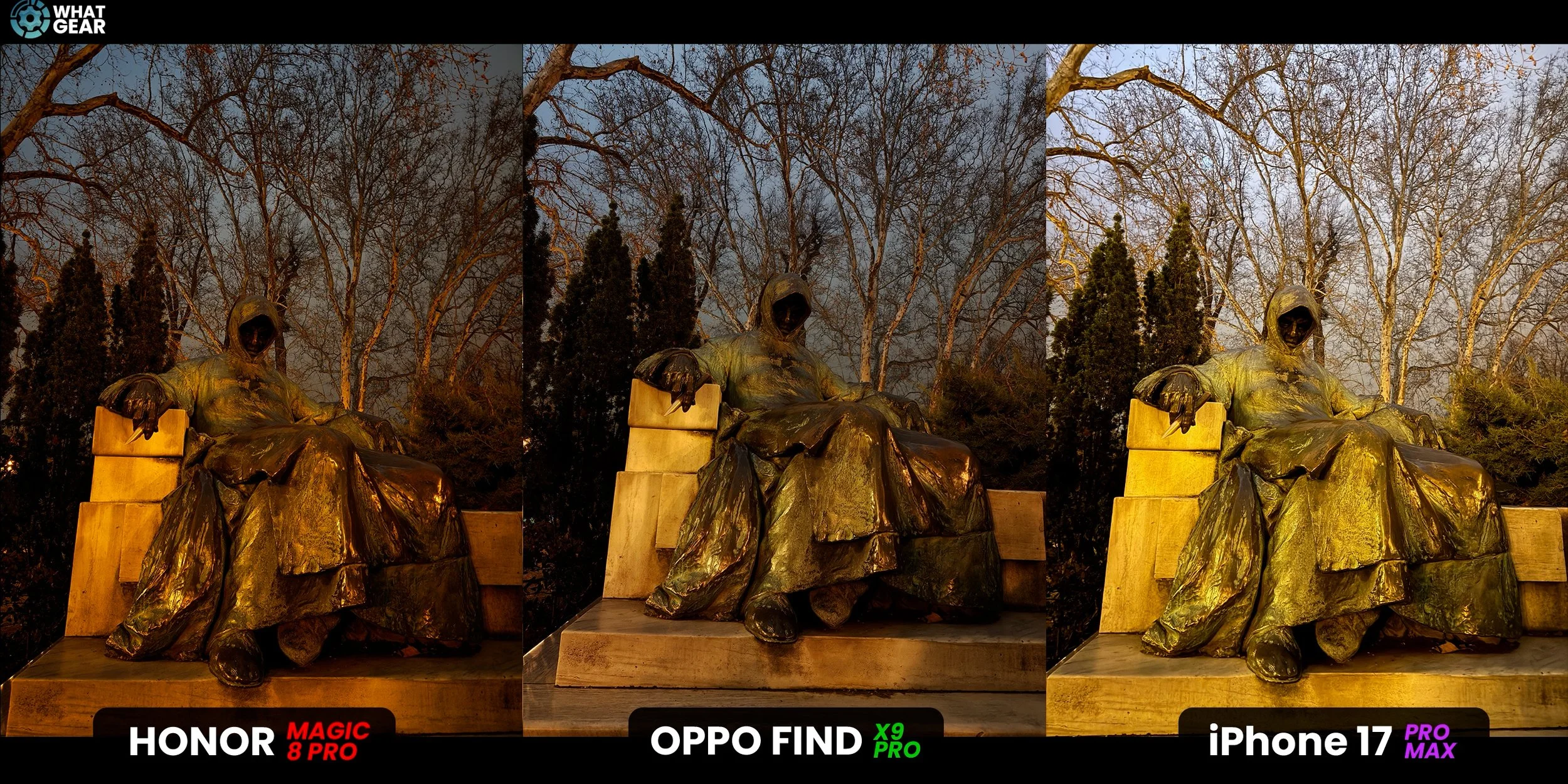
Now, I’m not saying this famous statue of Anonymous is an assassin from the game — but he certainly dresses like one. Once again, white balance is what makes or breaks these photos. Choose your winner. I’ve been keeping a running scorecard throughout this comparison, and I’d be very interested to see how you scored this one — especially since things might change once we move into daylight shots.
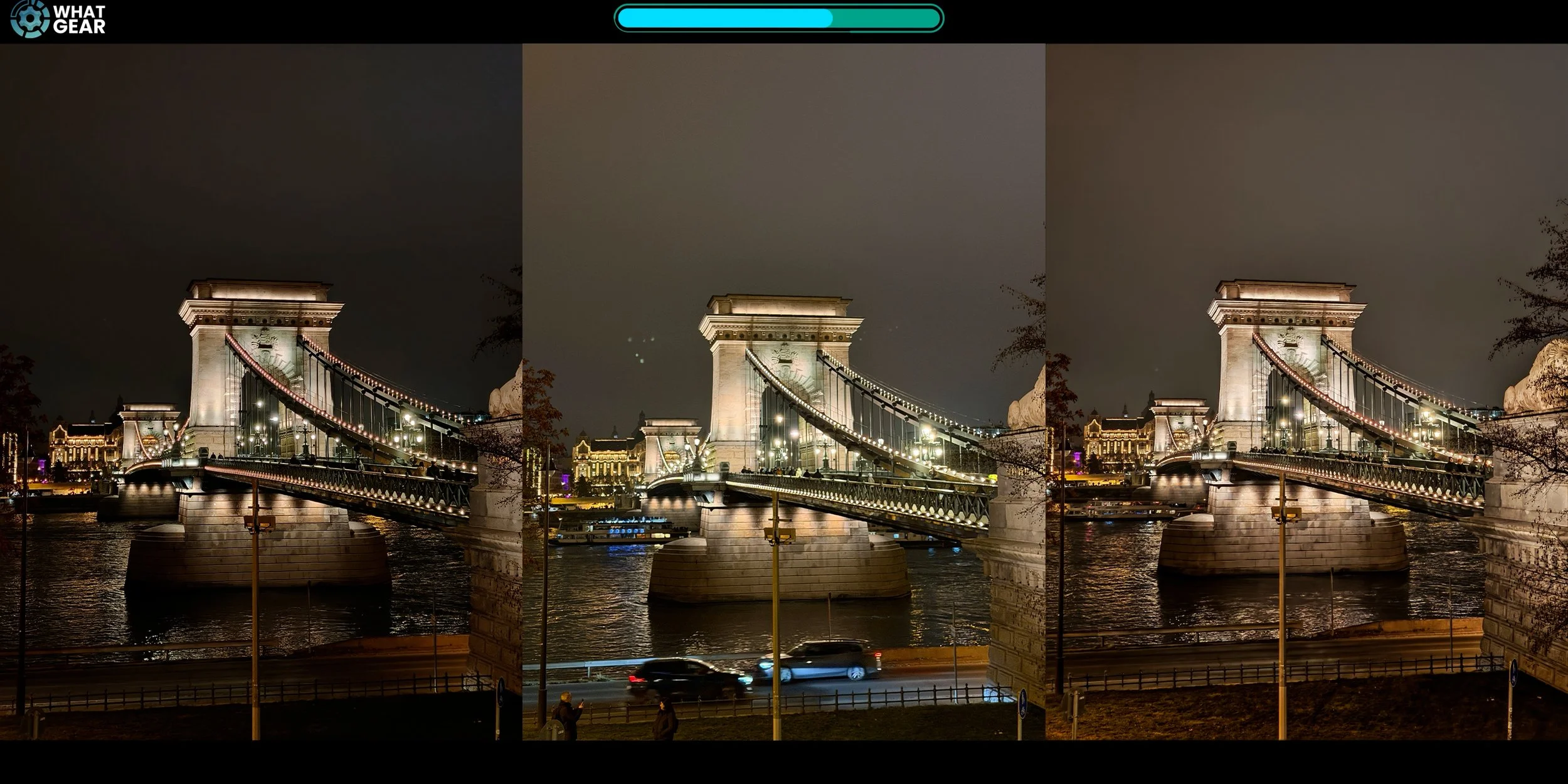
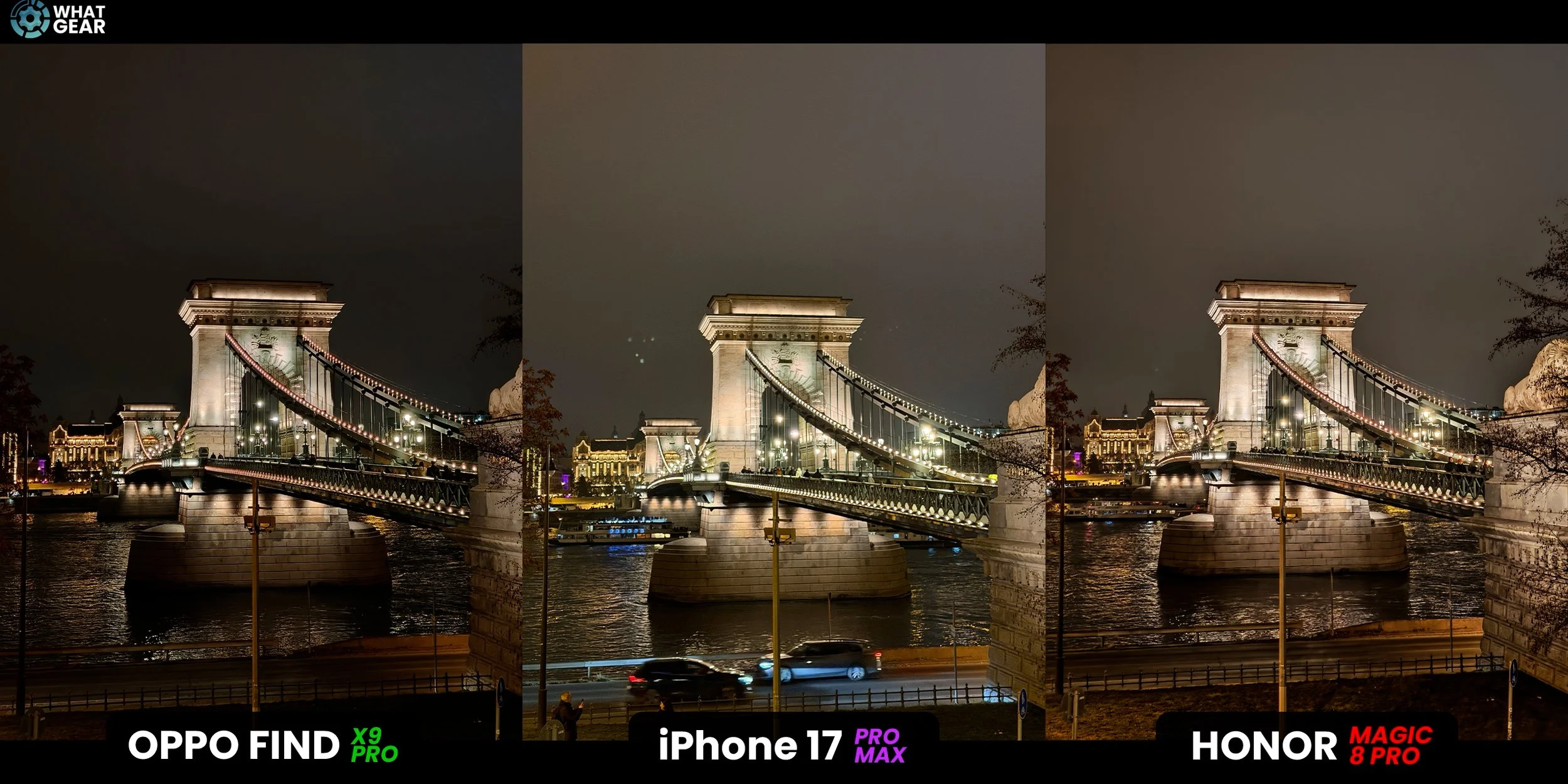
More Low-Light Shots
I’m going to stop my jibber-jabber for a bit, grab a cup of tea, and leave you to decide on the next few low-light shots. After that, we’ll do a proper daylight zoom test, followed by daylight photography.
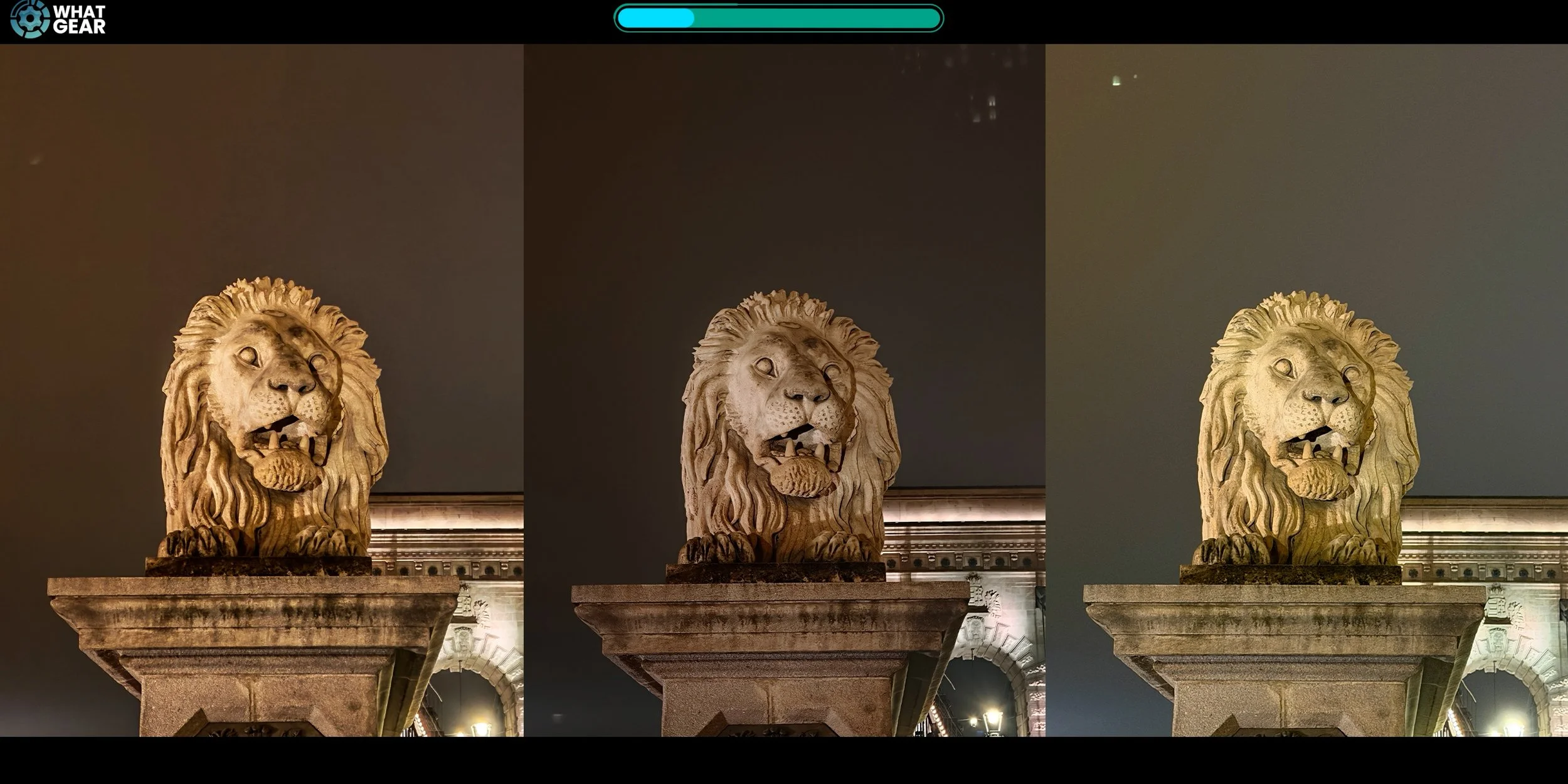
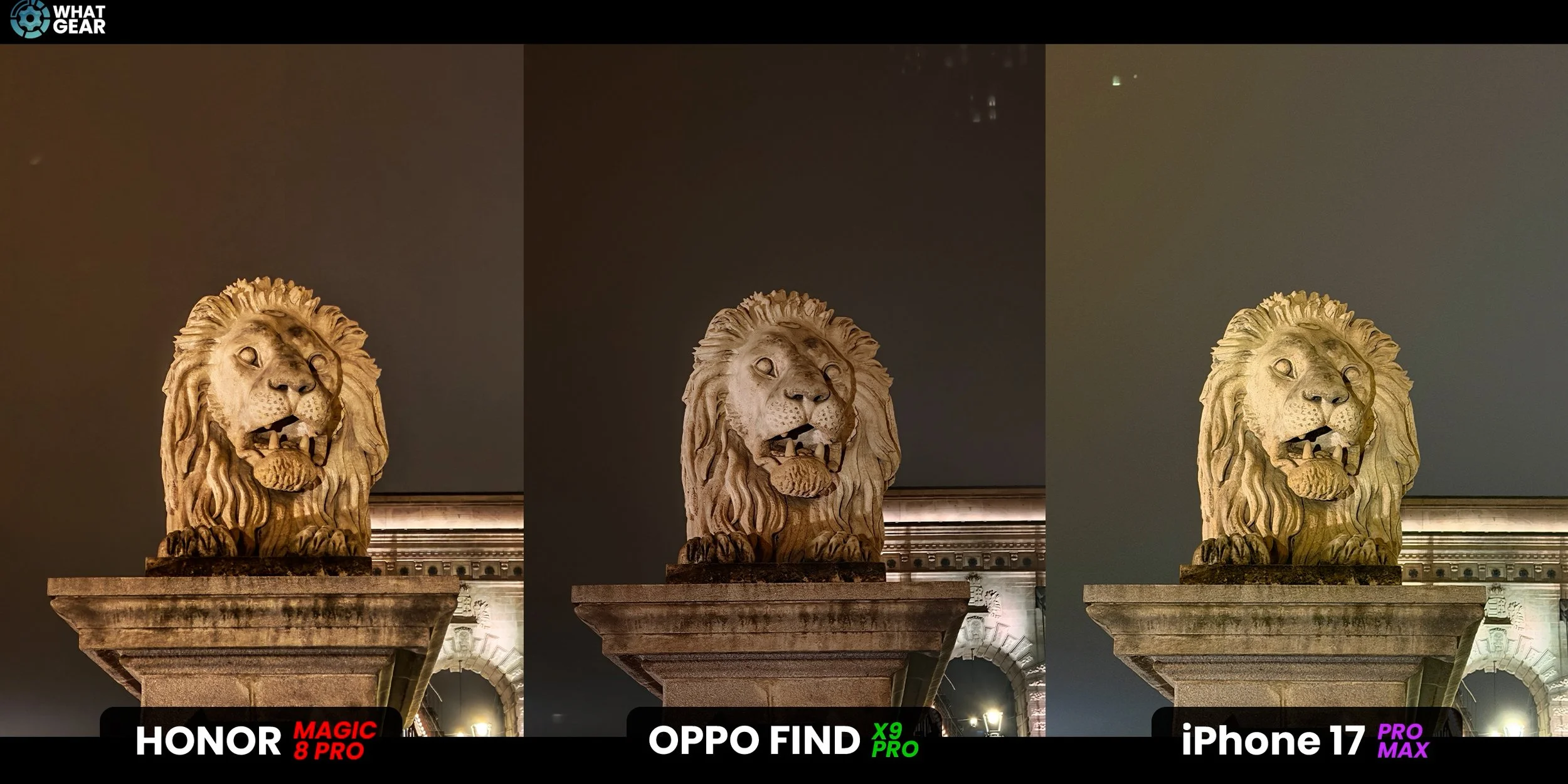

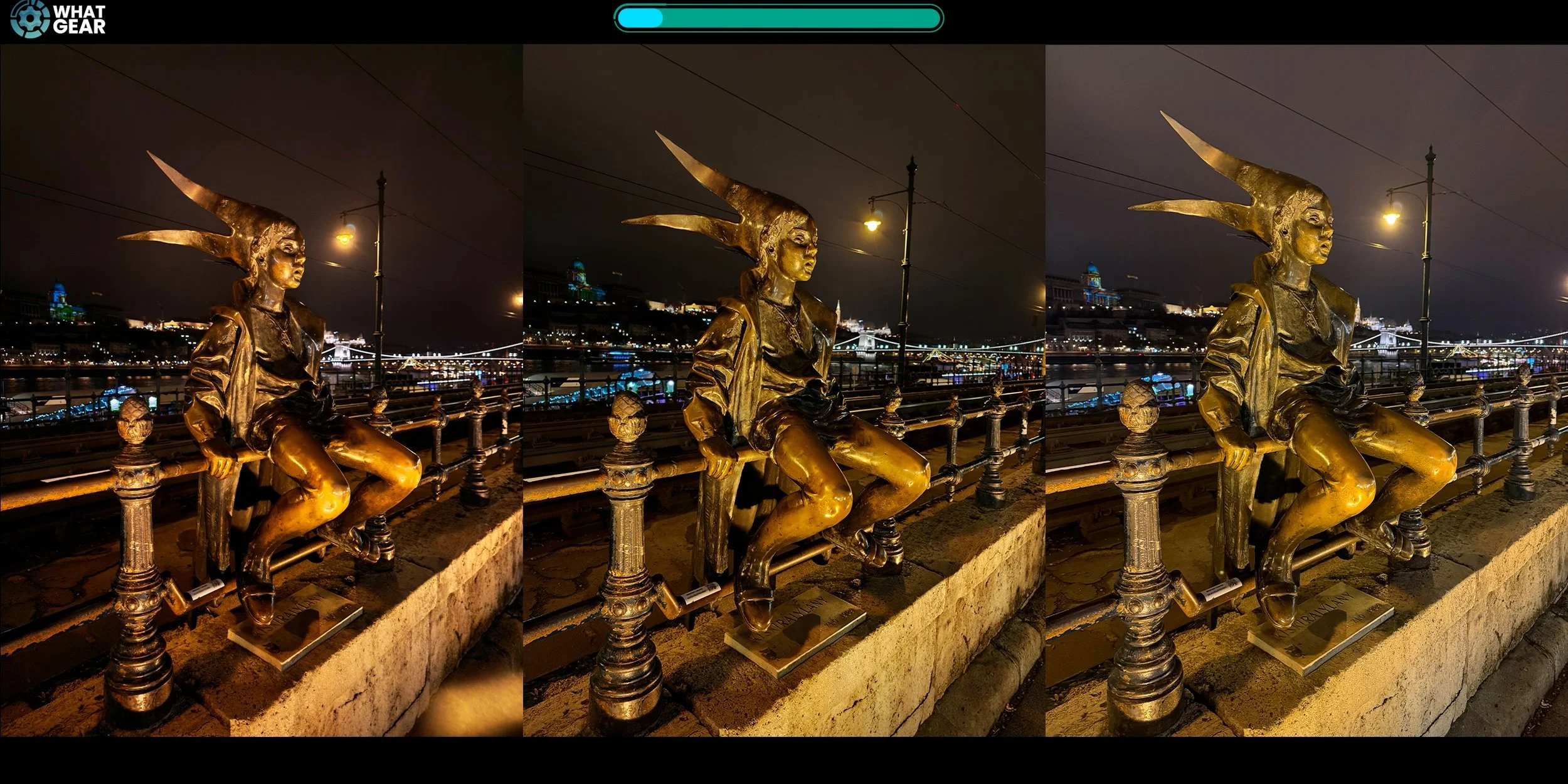
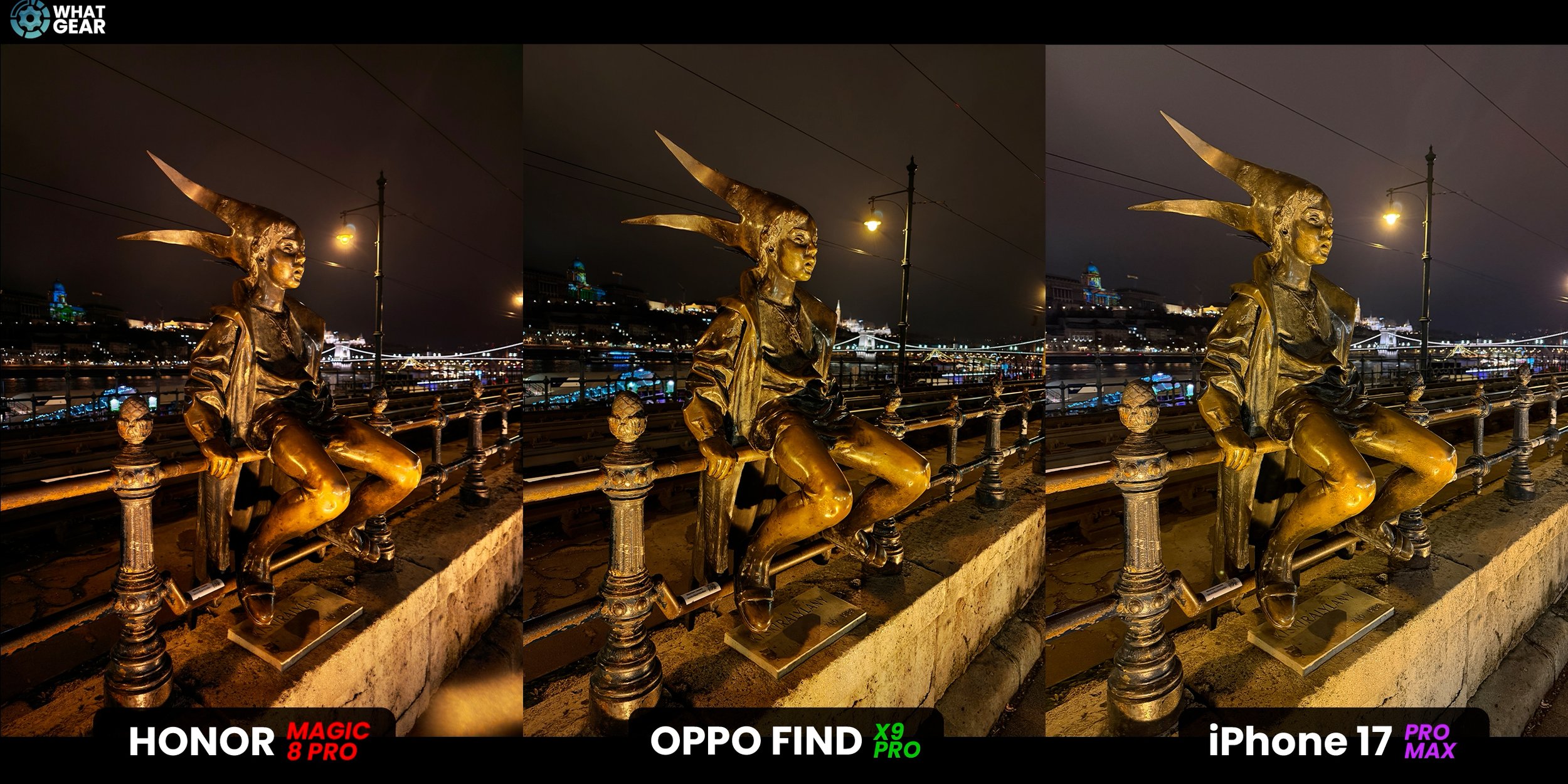
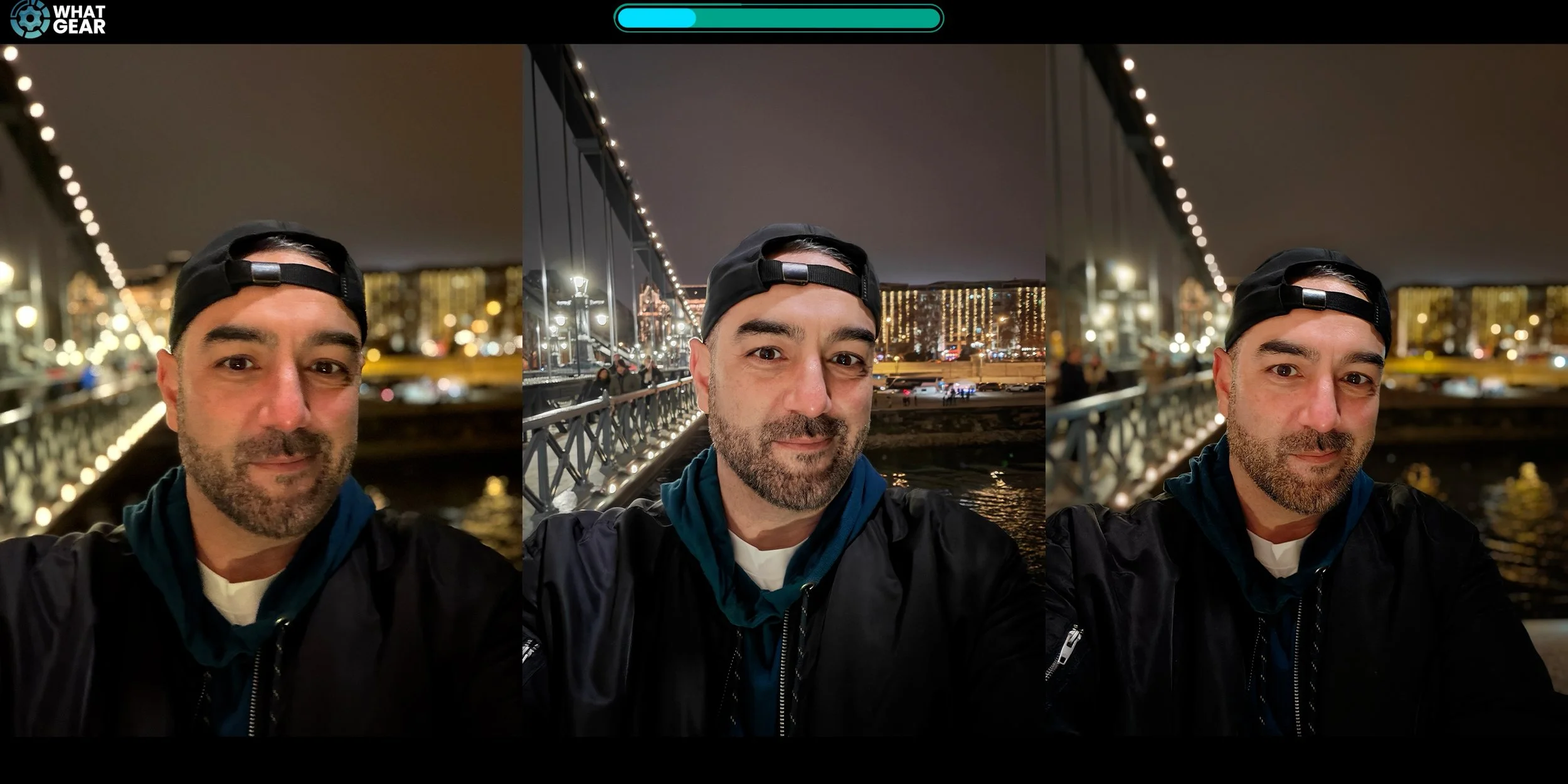
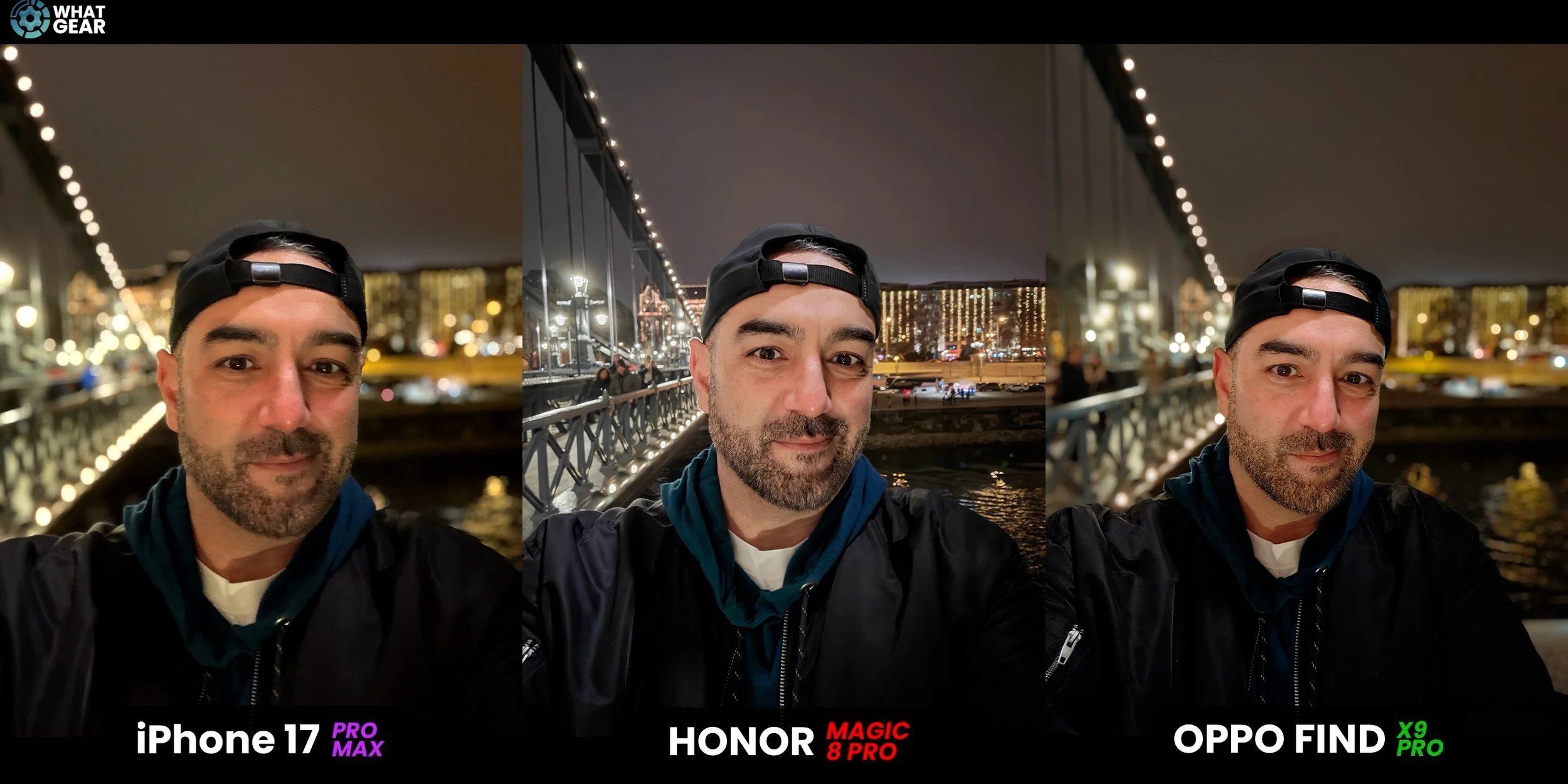
Daylight – Ultra-Wide
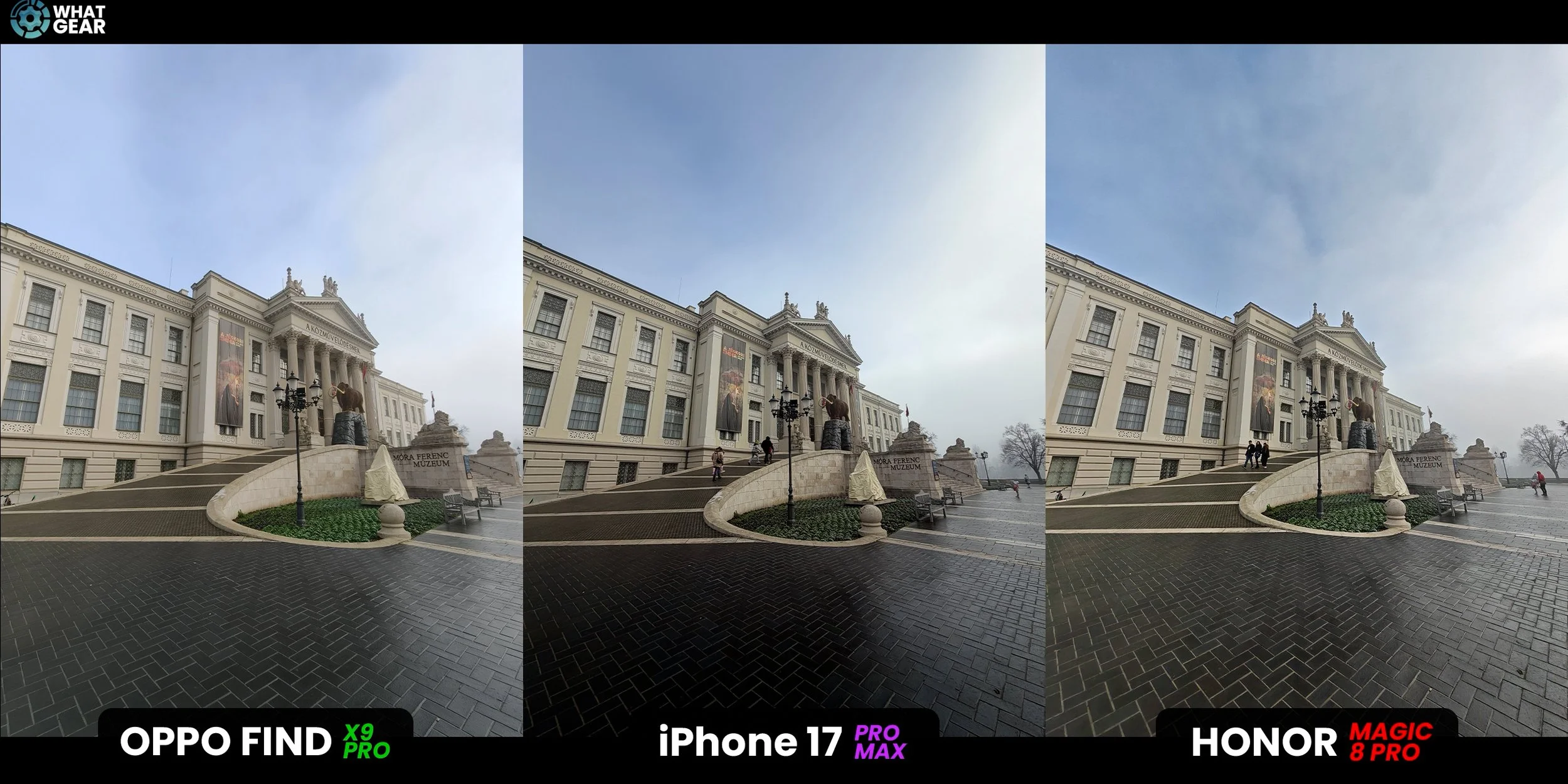
Let’s kick off the daylight section with an ultra-wide shot.
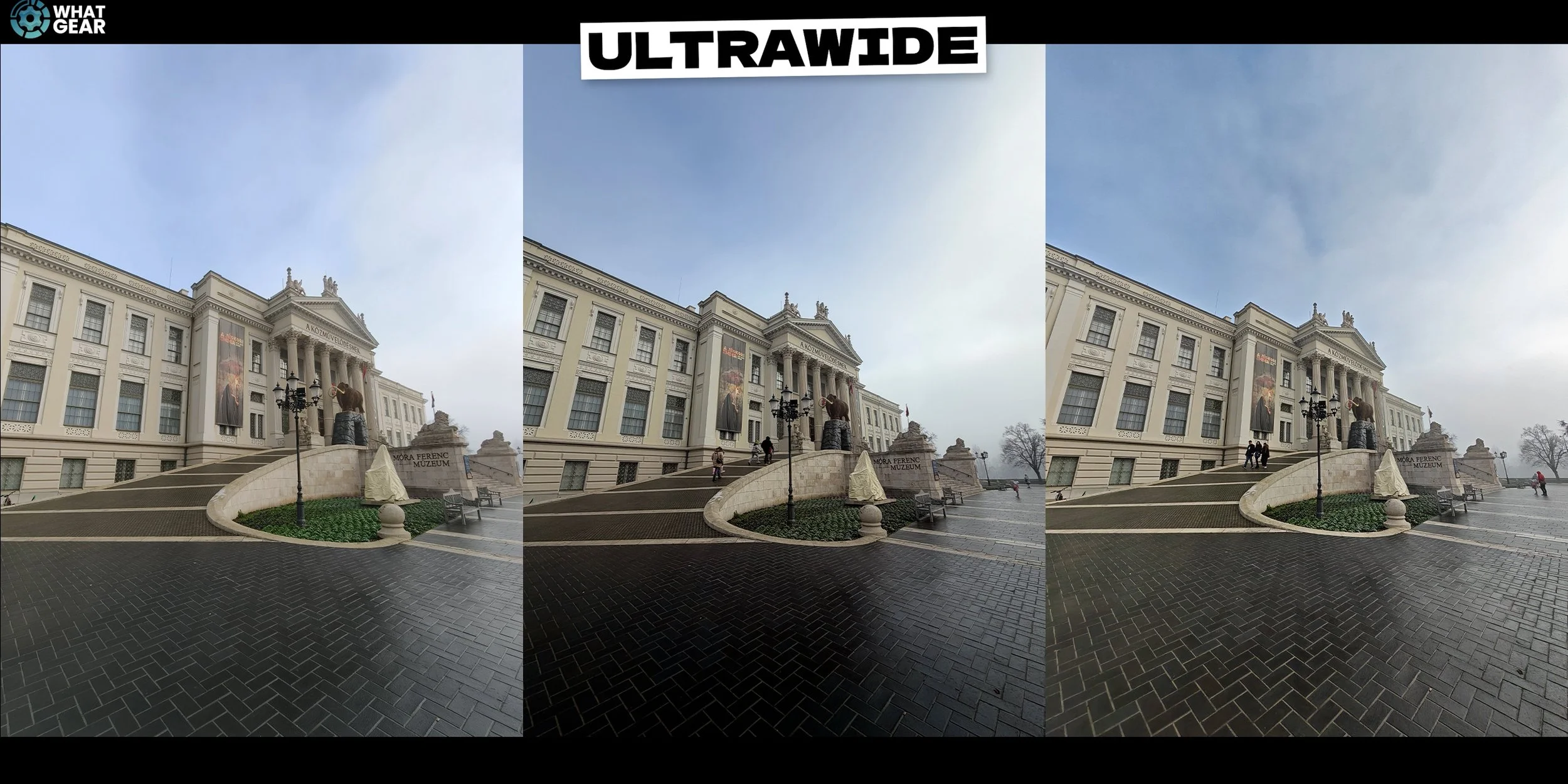
Here are my initial observations:
The center image is quite contrasty, with deep blacks and darker shadows.
The image on the left is the brightest of the three — but is it too bright?
The photo on the right is slightly warmer than the other two, decently bright, and hasn’t artificially smoothed the sky details, which I like. What do you think? Let’s start the clock.
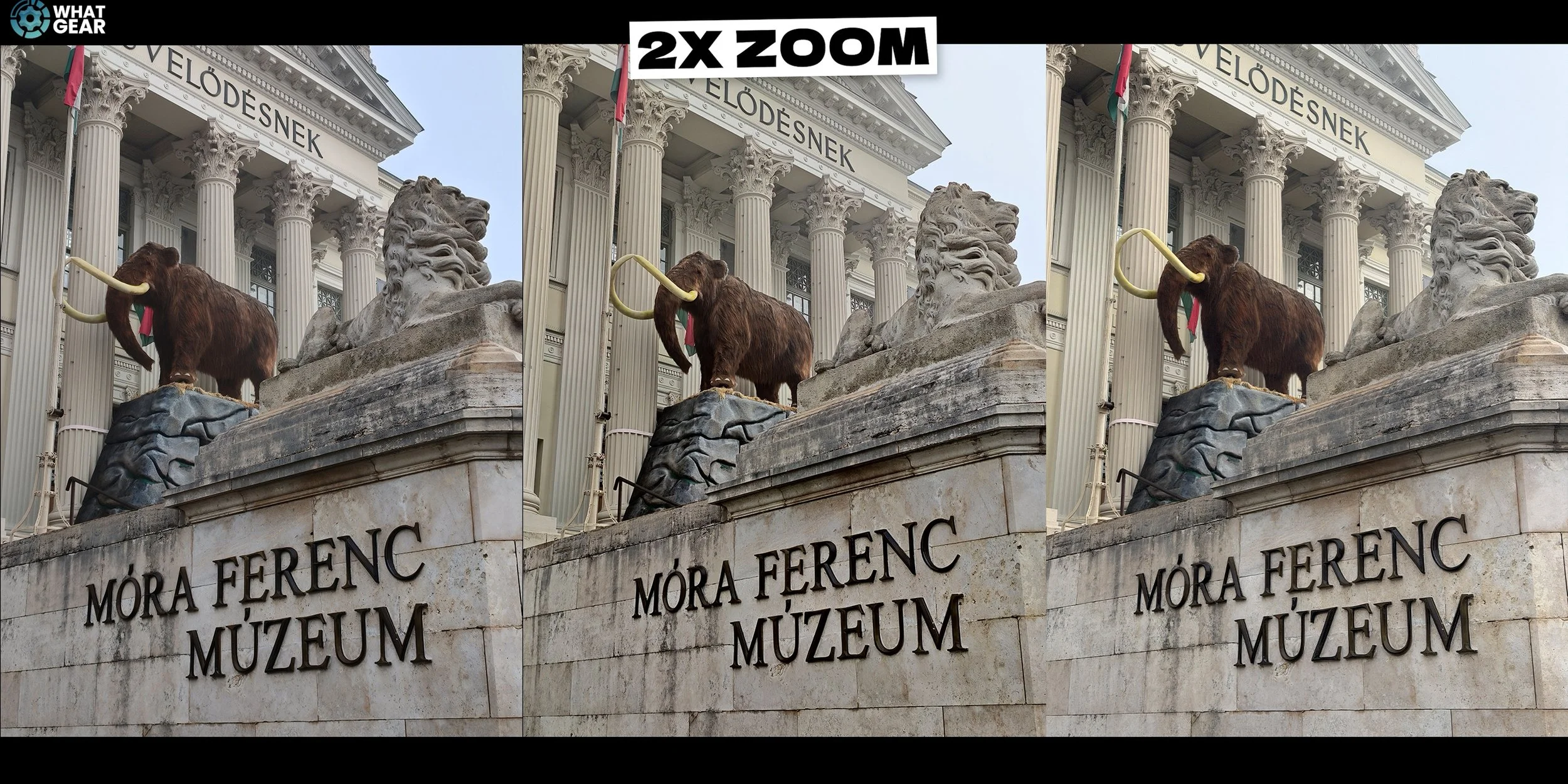
2× Crop – Mammoth Sculpture
A friend of mine who grew up in this part of Hungary always says it’s like the town is 20 years behind London. And you know what — it might be even more than that. Here is a photo of a woolly mammoth from the Ice Age. This is a 2× shot, likely a crop on the primary sensor. There is definitely a difference in clarity here. I could tell you what I think, but that wouldn’t be fair. You have to call it. Which one wins?

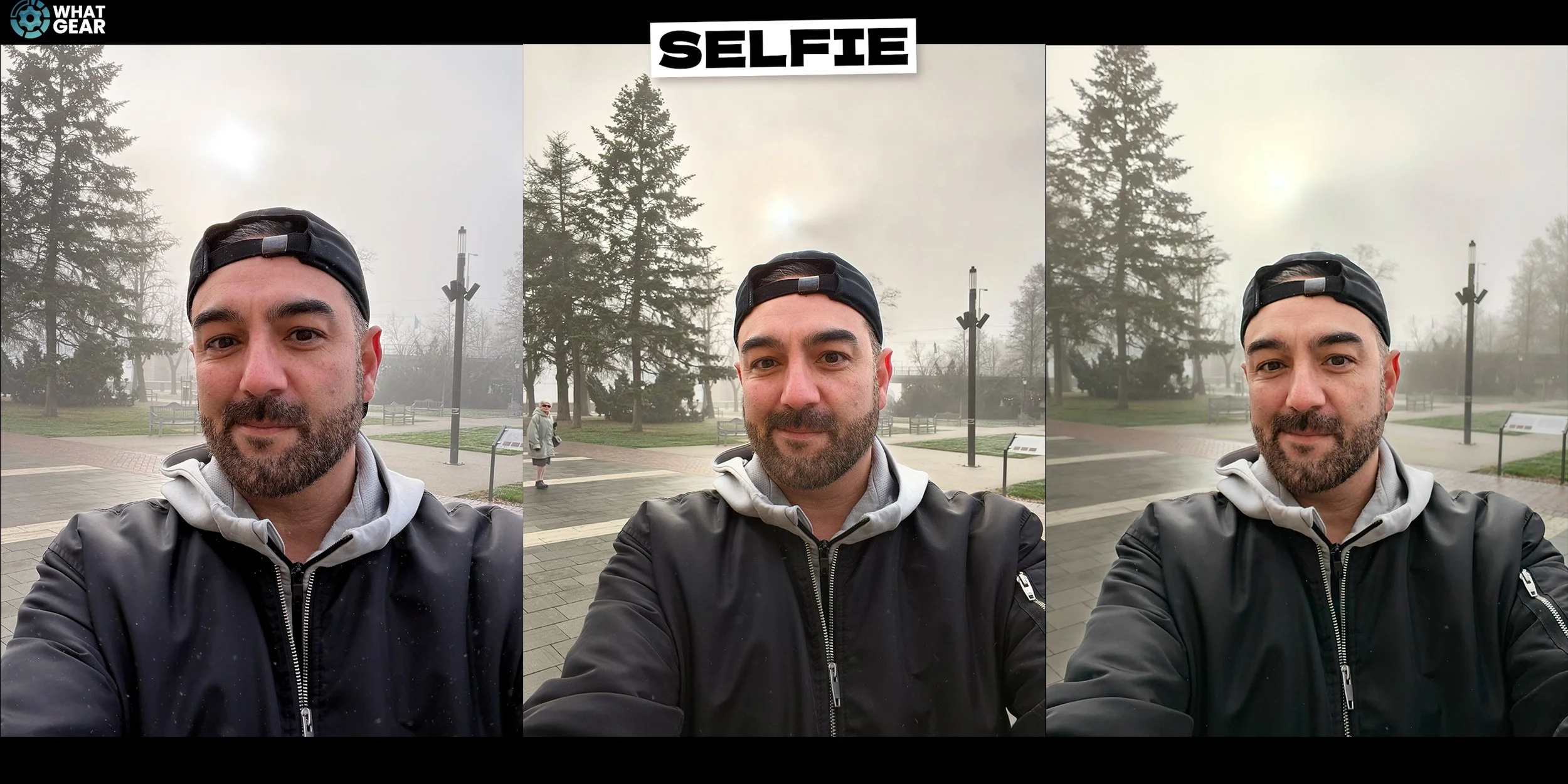
Selfie HDR Test
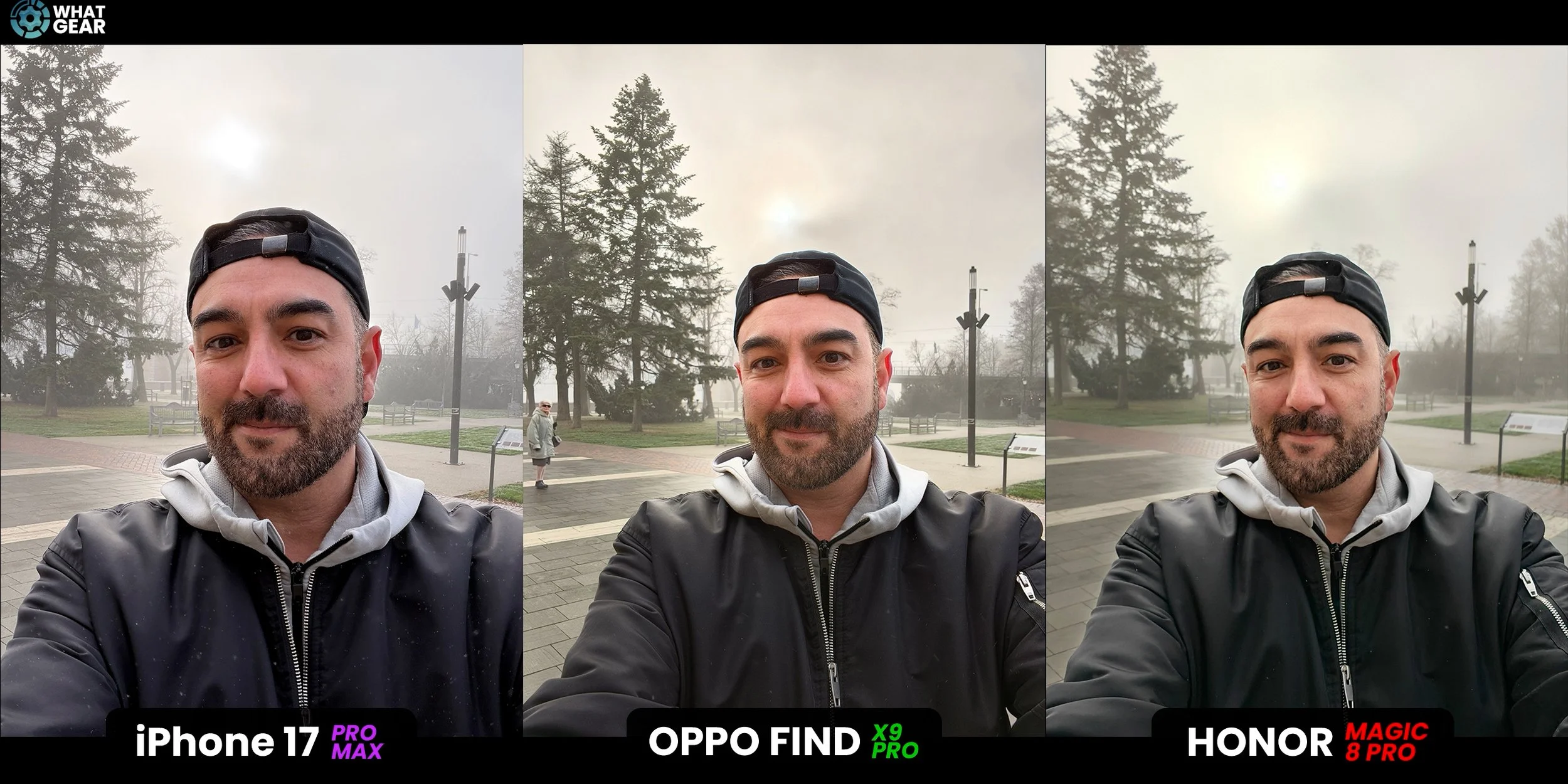
Here’s a classic selfie. It was particularly foggy that day, which was annoying. Even more annoying was an old lady behind me who thought it would be funny to photobomb the shot. Just above my head — you might not notice it — is the sun. Despite the heavy cloud cover, it was very bright. This makes for a great test of selfie HDR performance. I’ll be honest — it was cold. Really cold. And there was even a bit of snow. But my face was not as red as it looks in the image on the left.
That said, I do like how you can see the snowflakes and the texture of my jacket in that shot. Looking at the trees, the most colour-accurate image to me is the one on the right. It also makes me look less hungover, which I definitely was. This was taken after several days of Christmas eating and drinking, so I apologise for the bags under my eyes.
Macro Test
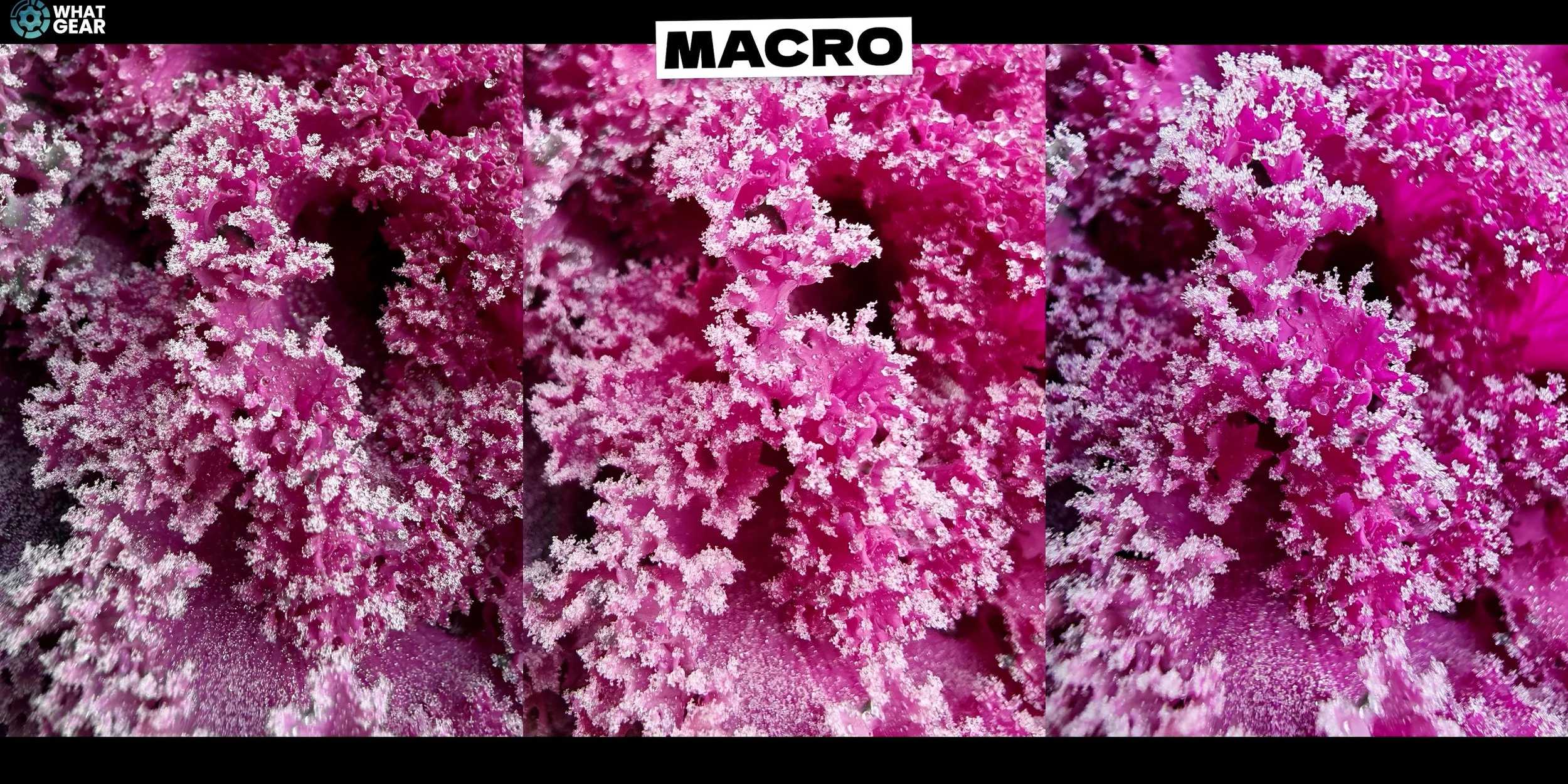
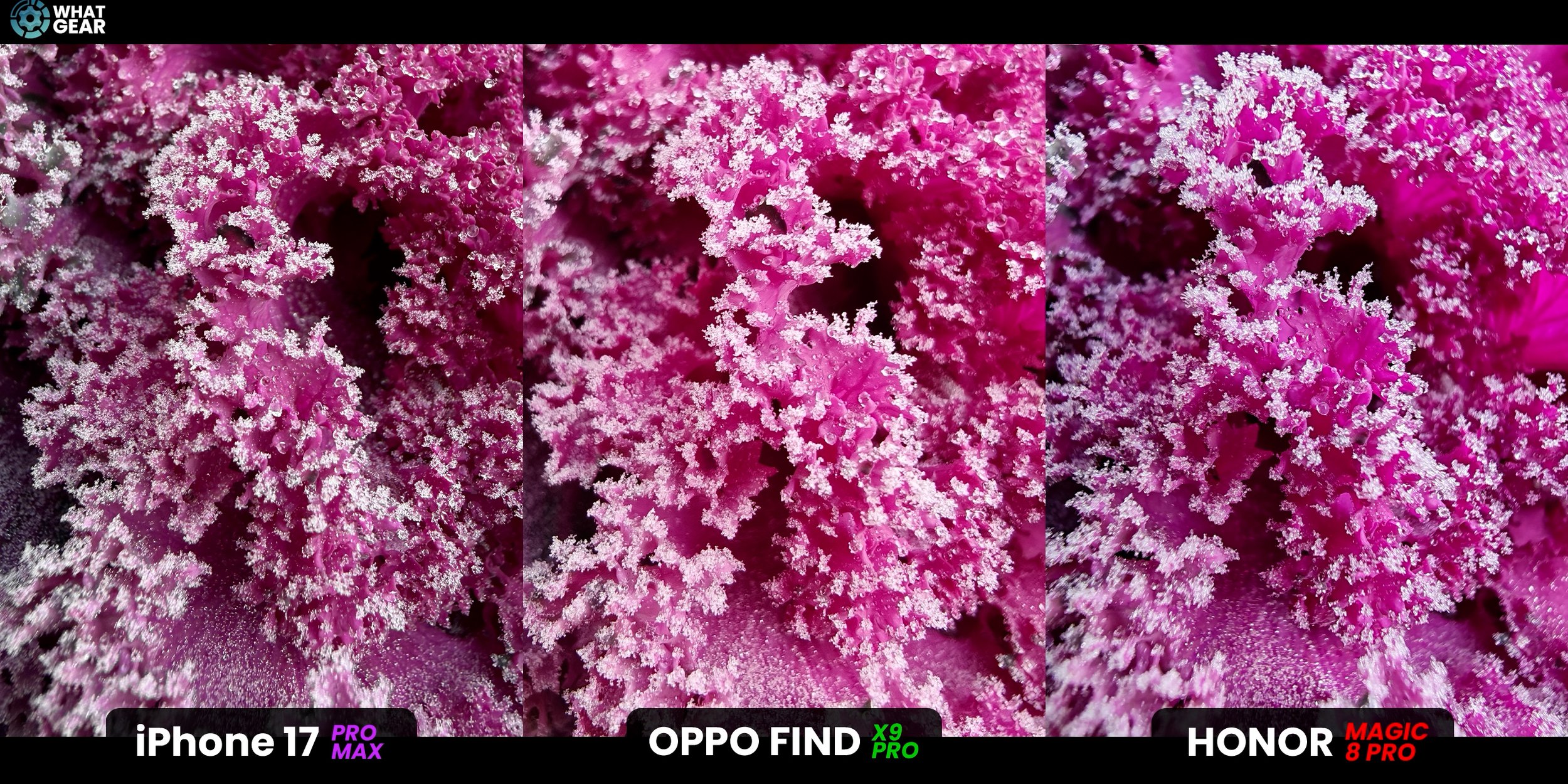
Now let’s test macro performance. This is a 1× macro shot, taken as close as possible without losing focus. There are obvious colour differences, but for this one, let’s focus purely on fine detail. Which one looks best to you? I’ll step out again and let a few more photos roll so you can decide. Try to make your choice before the timer runs out — and don’t forget to let me know at the end which phone takes the throne.
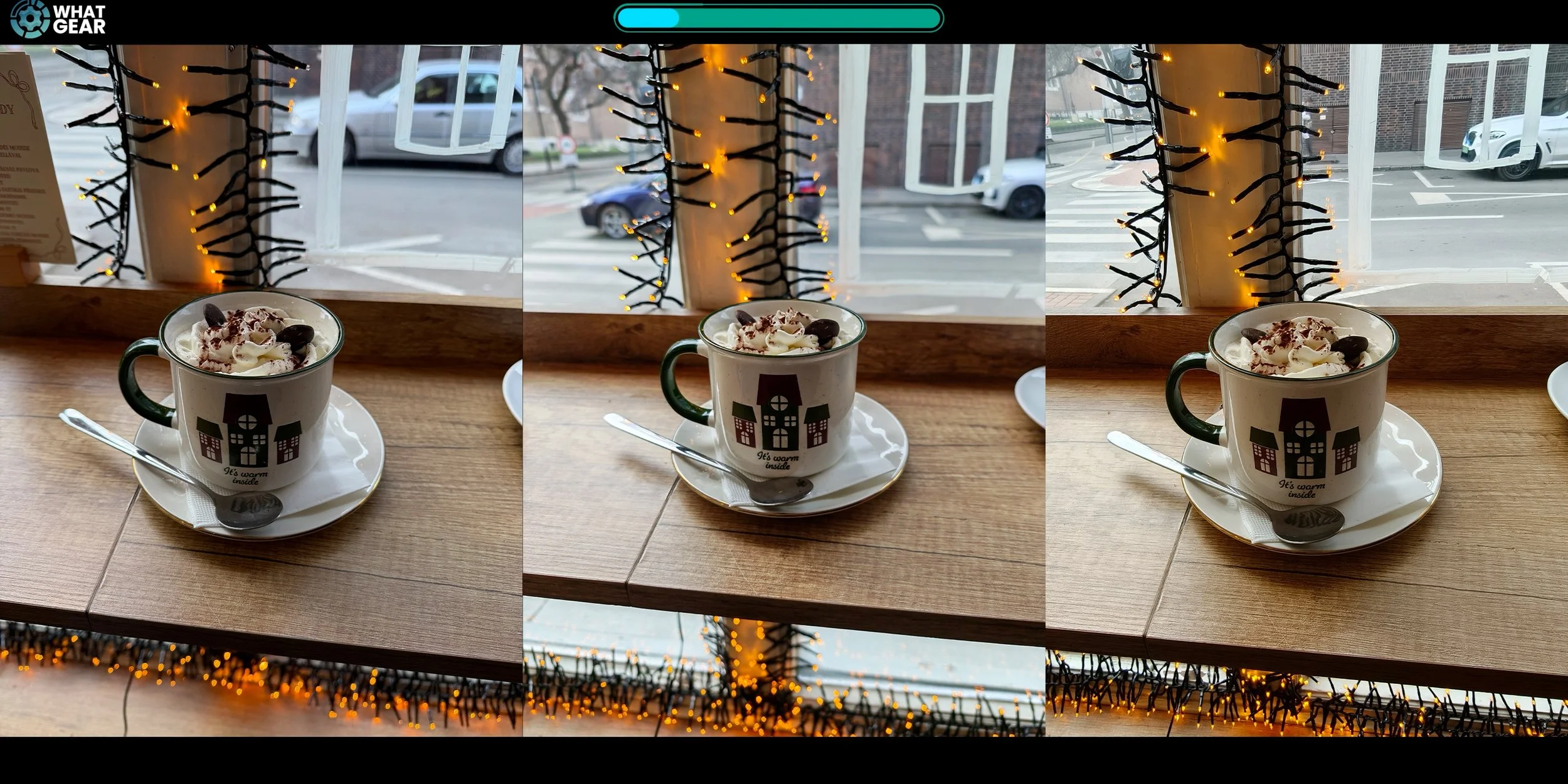
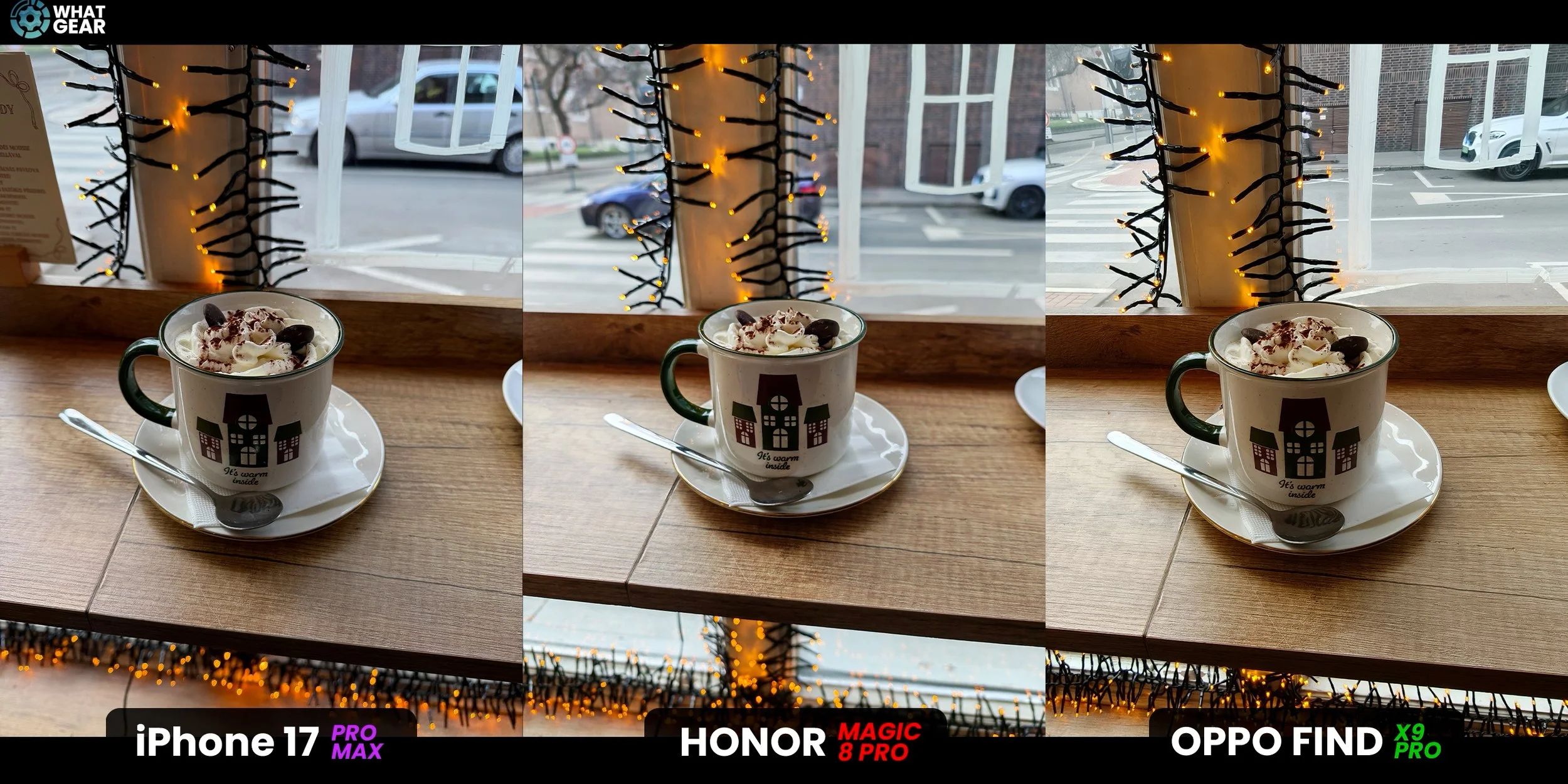
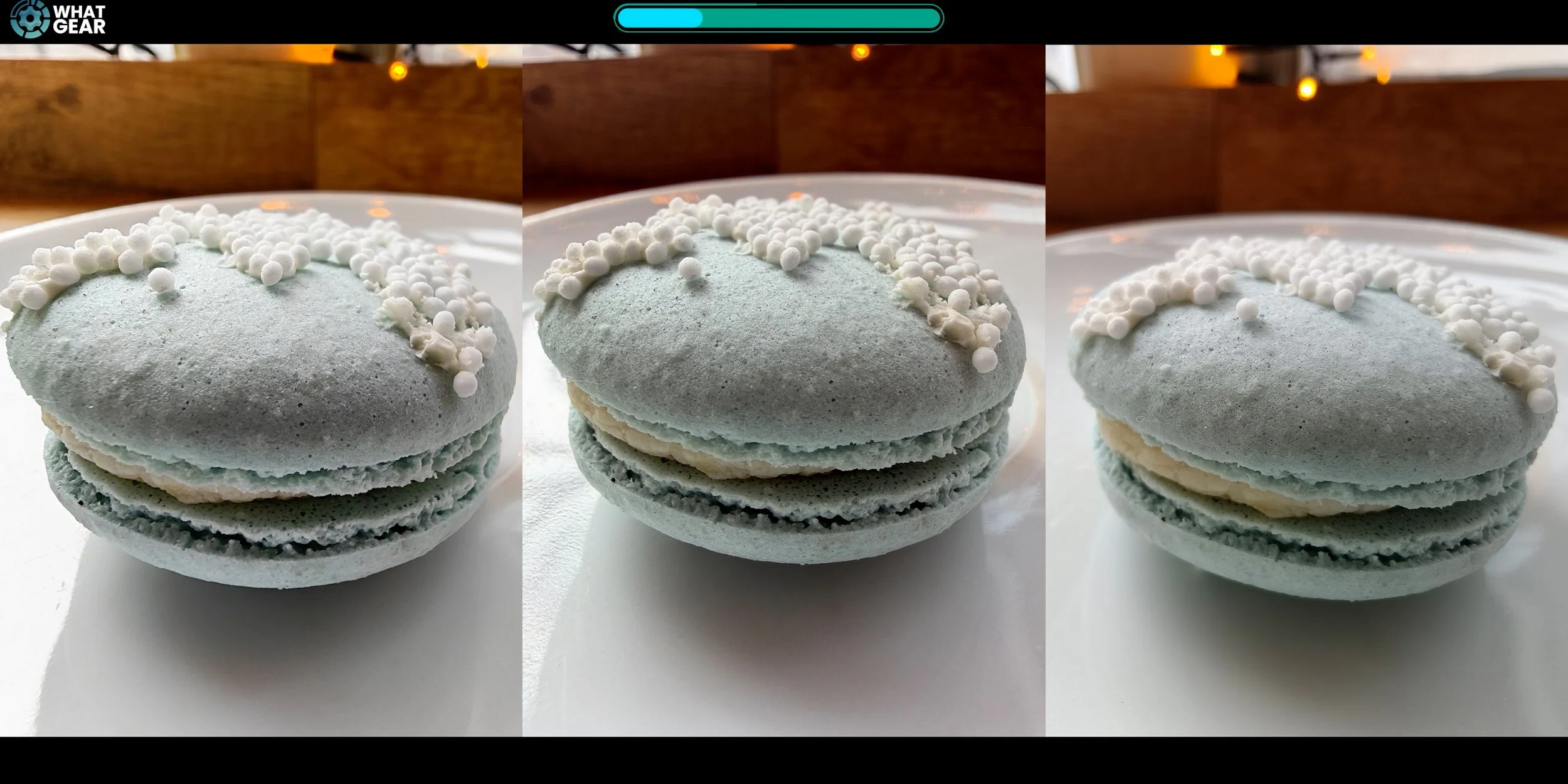
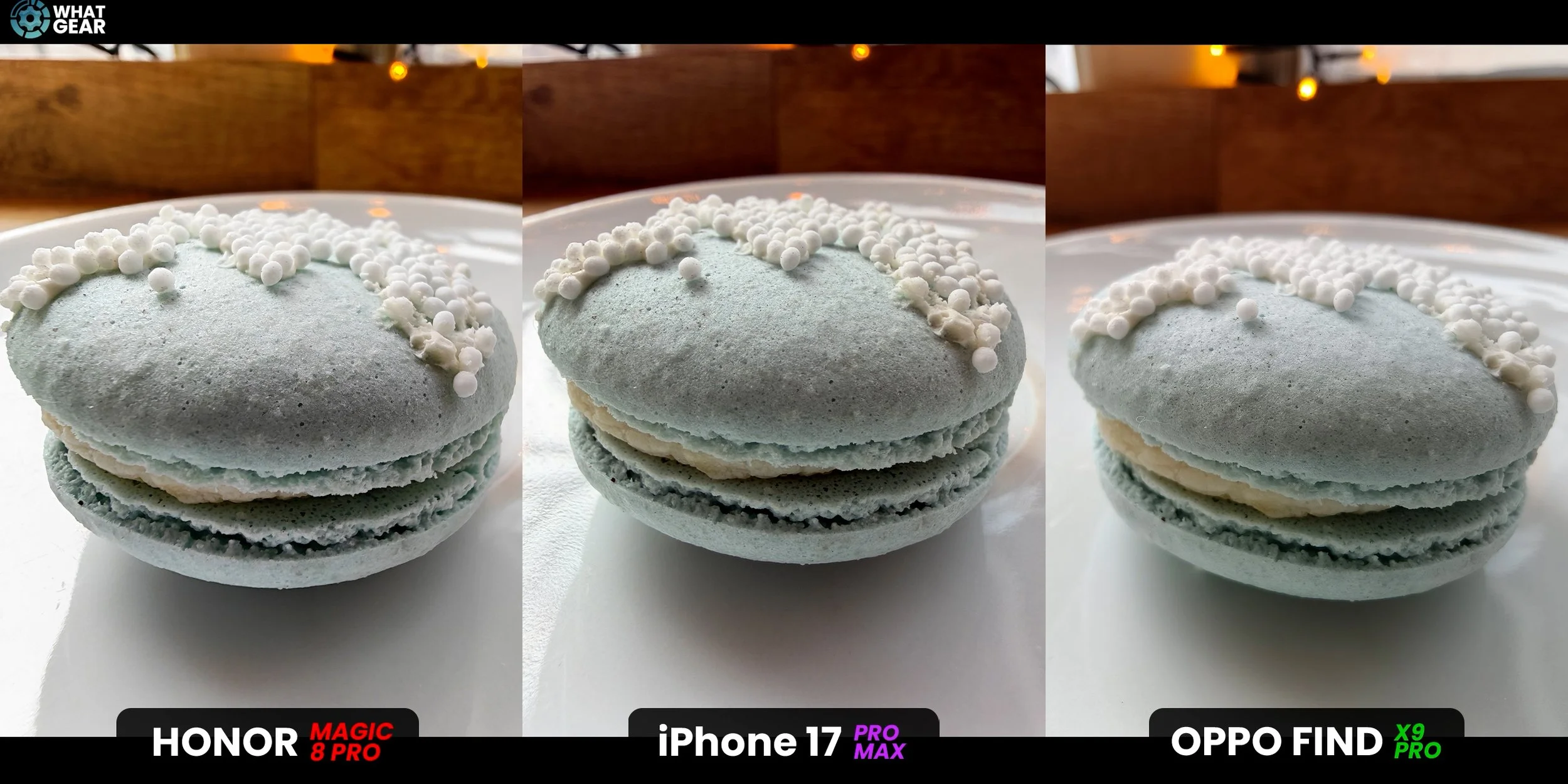
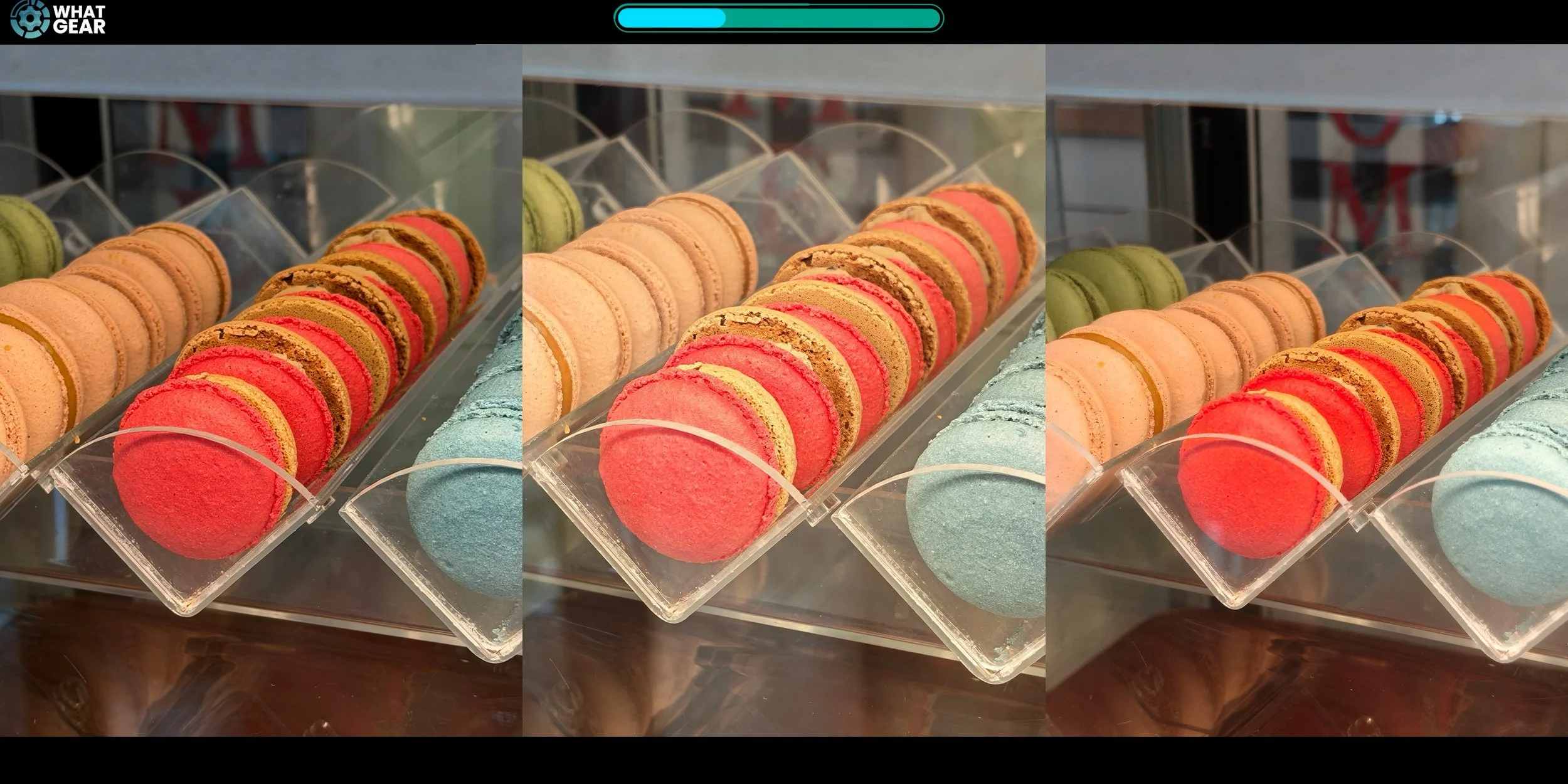
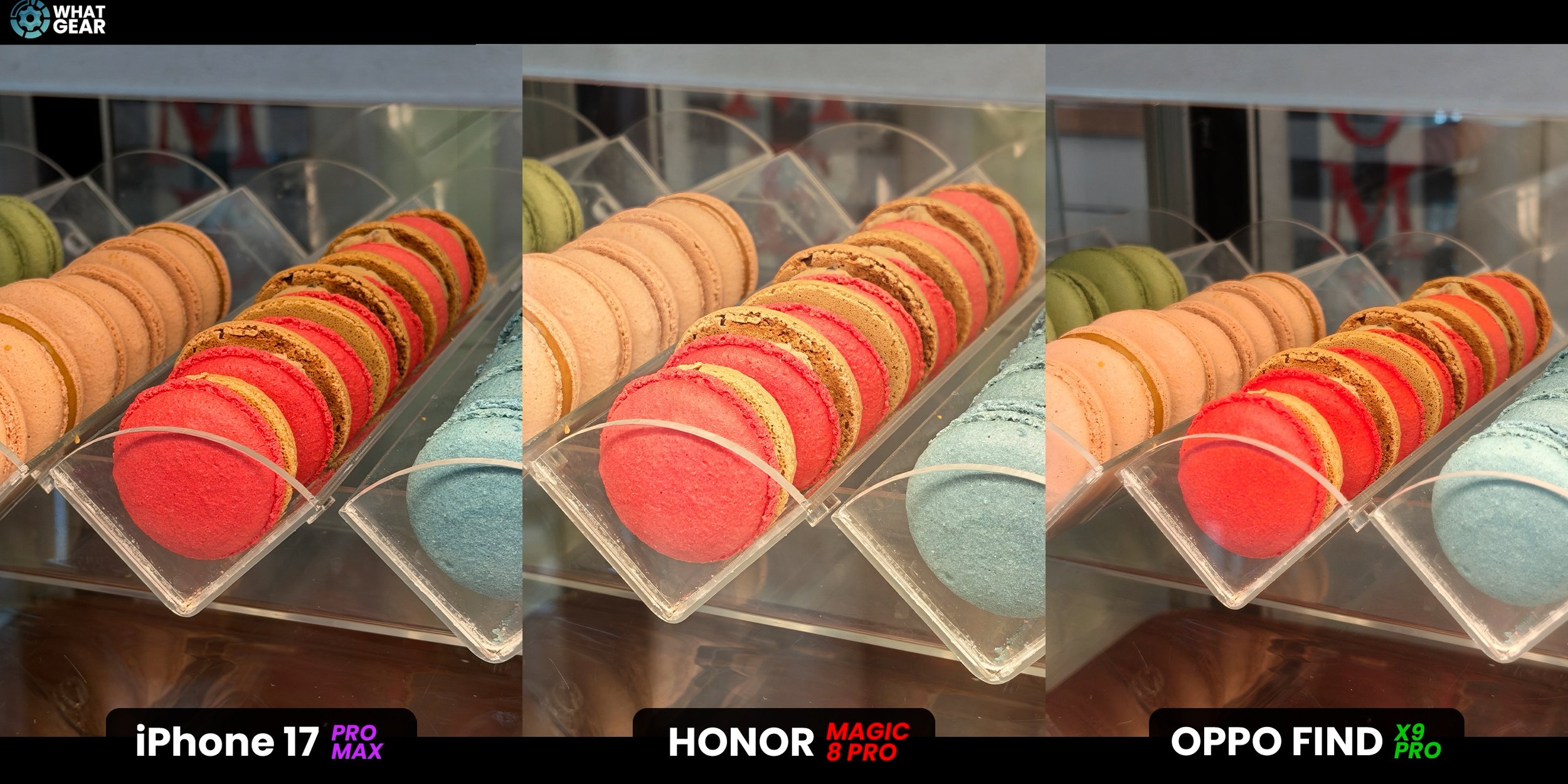
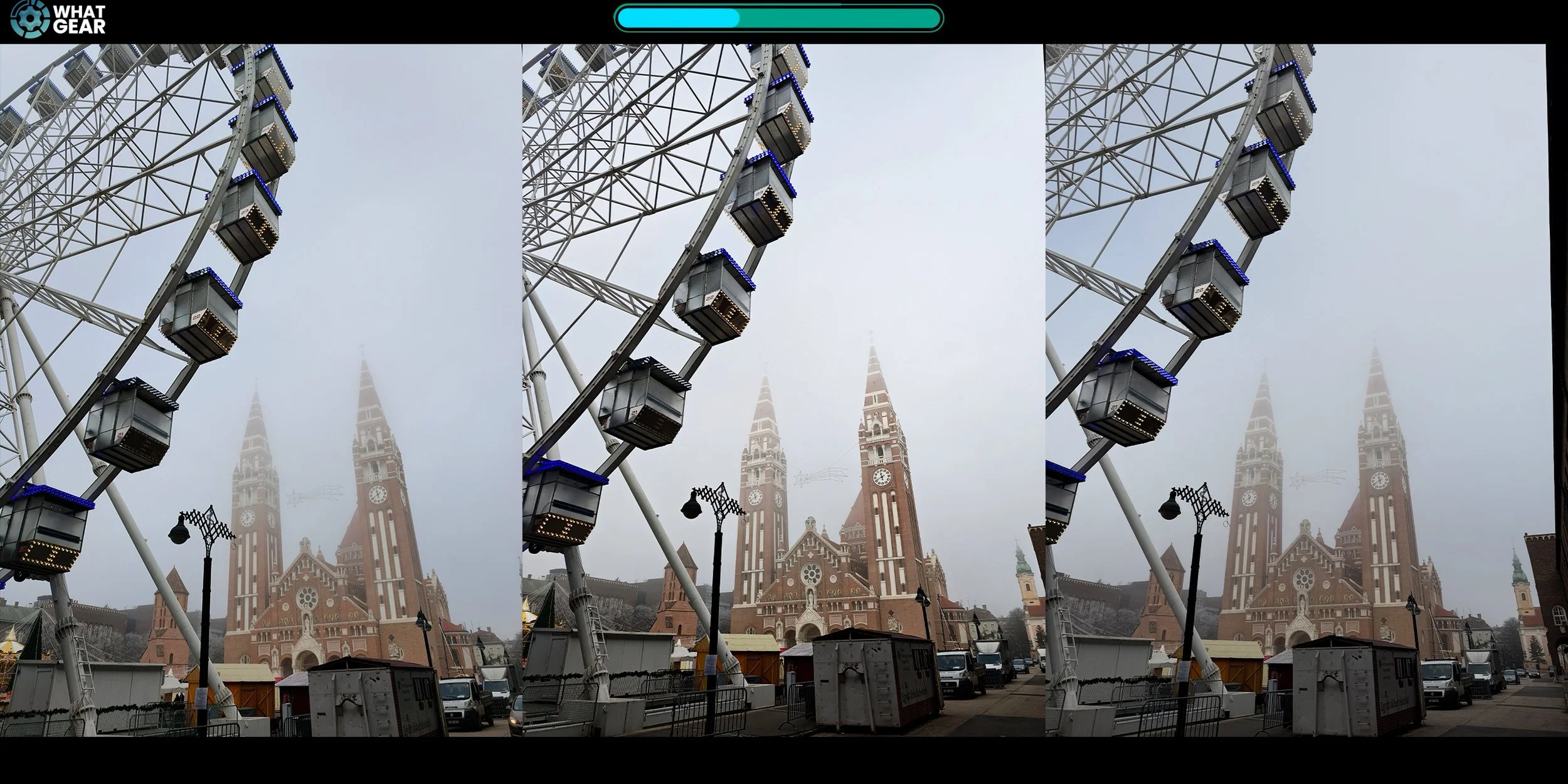
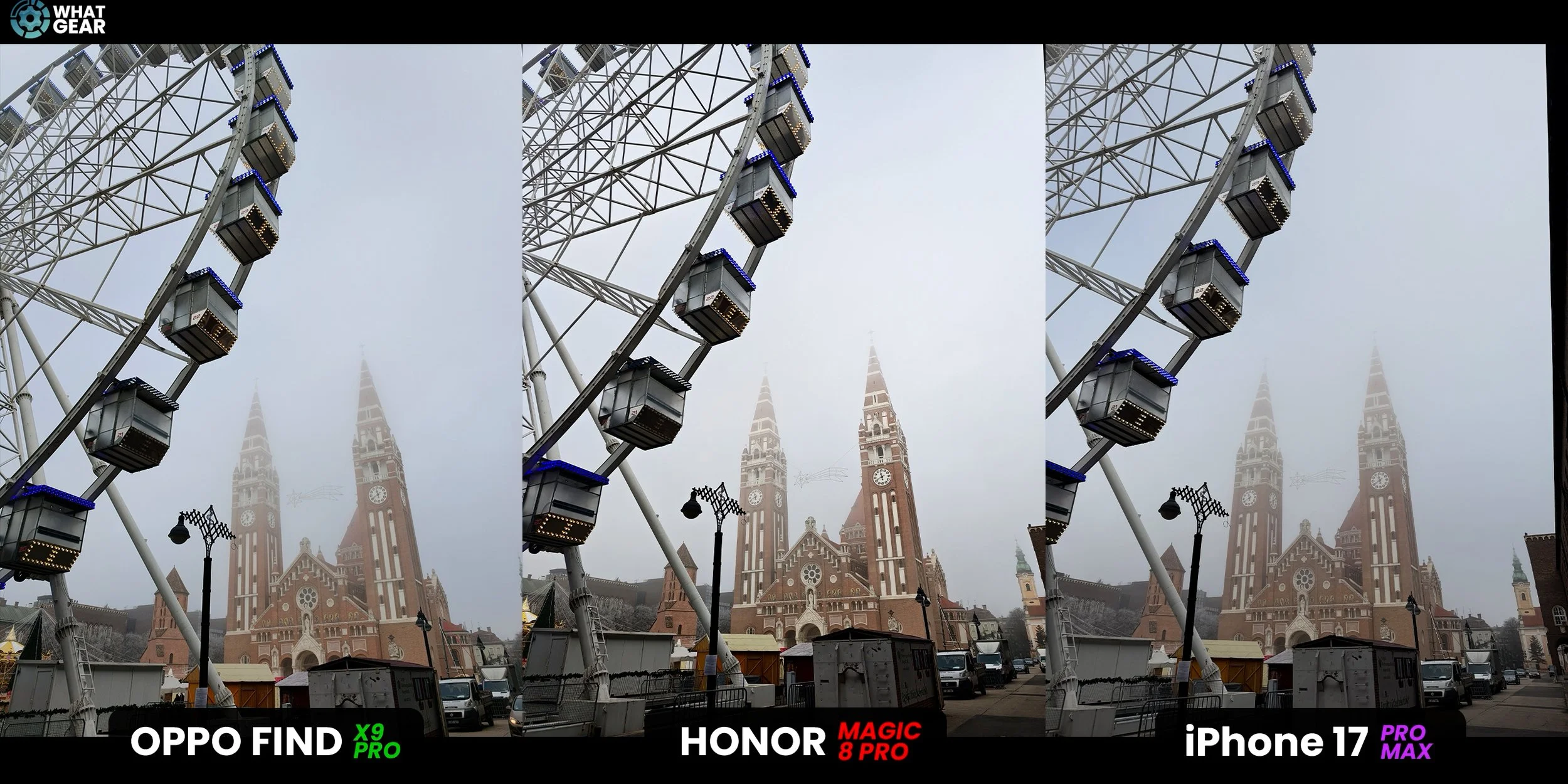
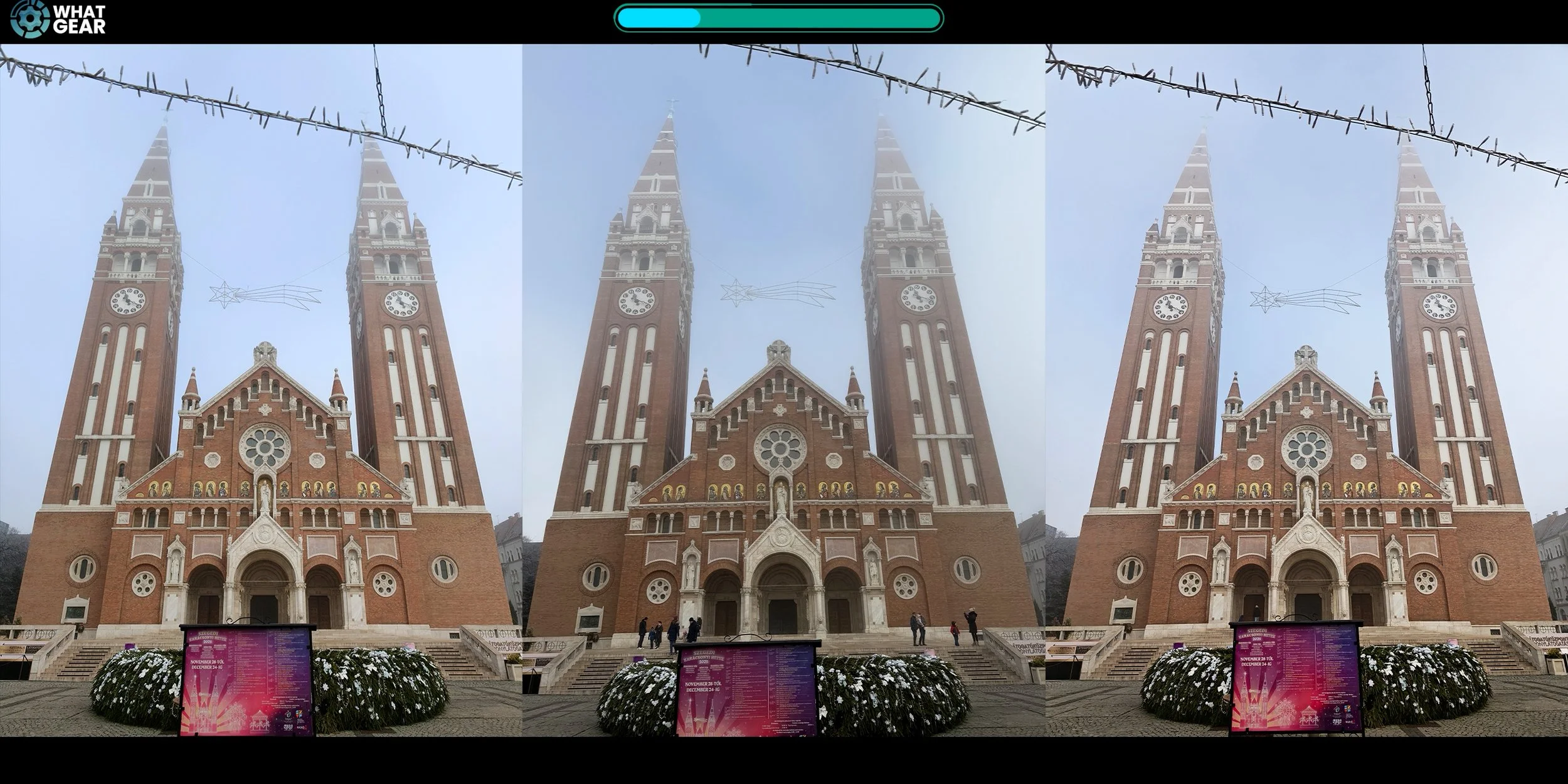
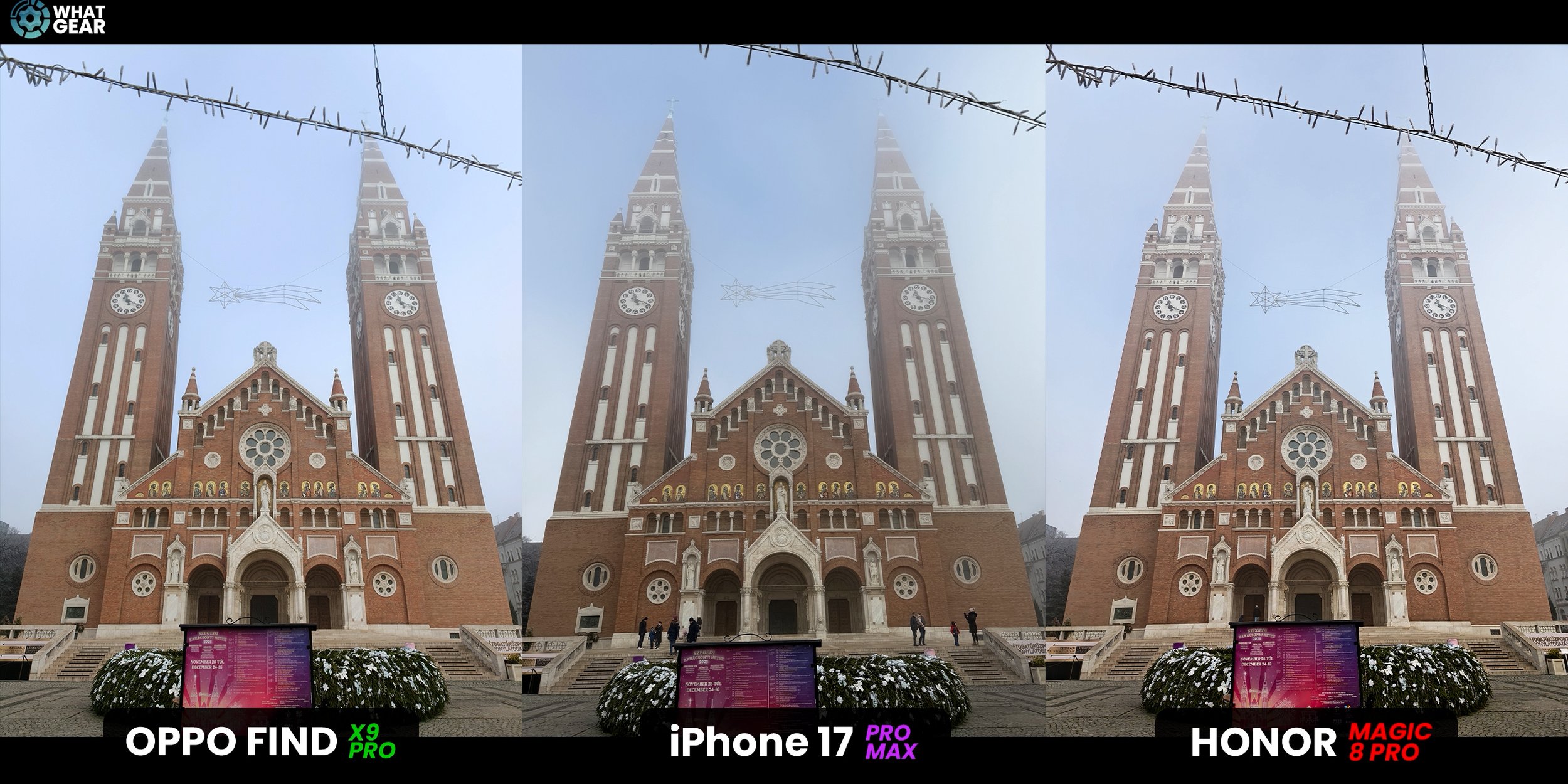
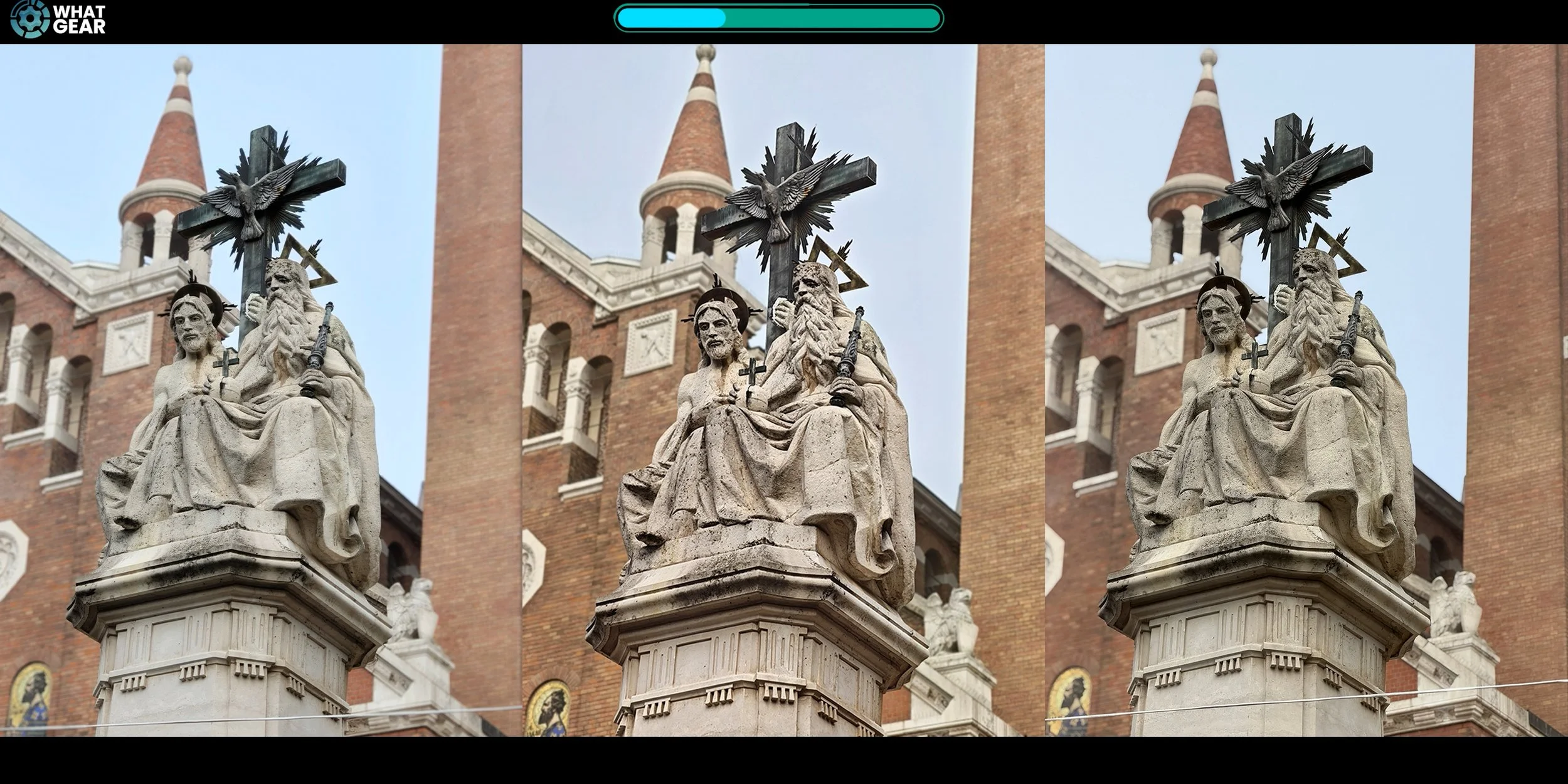
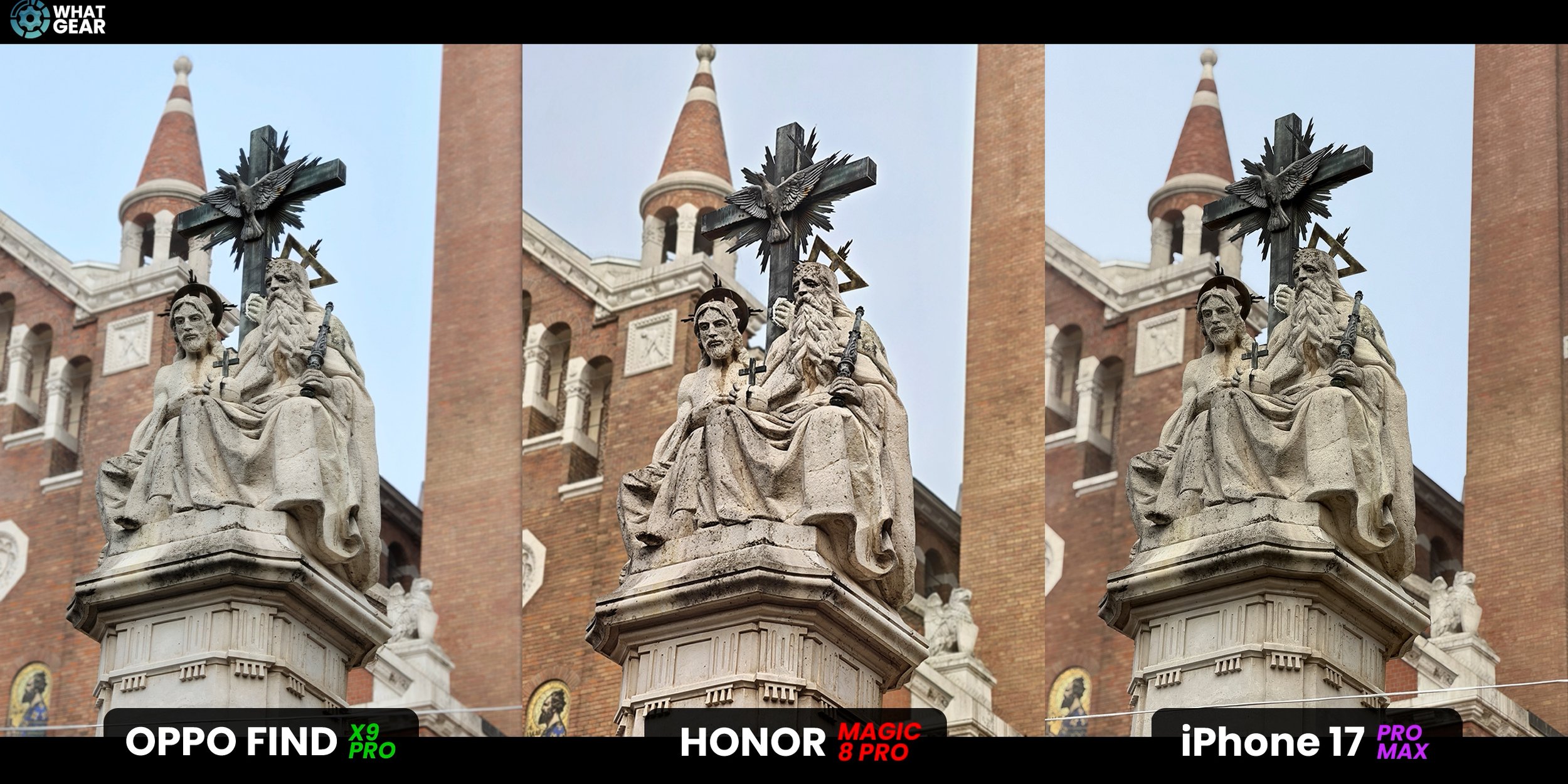
Portrait Mode
This is a selfie portrait. I did take one during the night segment, but the Oppo phone requires an extra tap to enable blur, which is frustrating. This time, I got it right. The key to good portraits, in my opinion, is natural separation between foreground and background. The blur should gradually increase with distance, not look like the subject was pasted on. I think one phone has done this particularly well. Again, we see noticeable colour differences, but when it comes to portrait blur and edge handling, which one looks best to you?
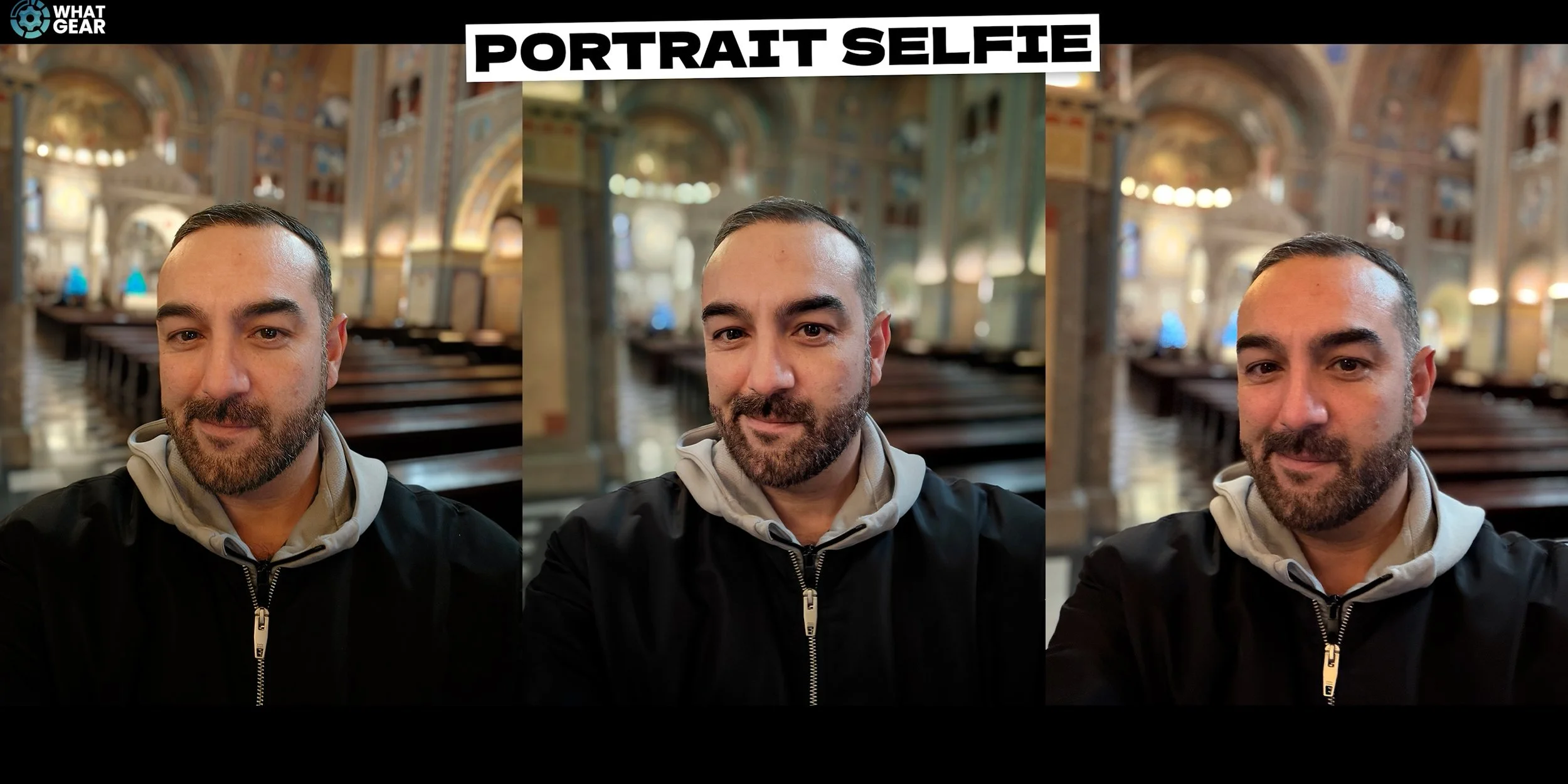
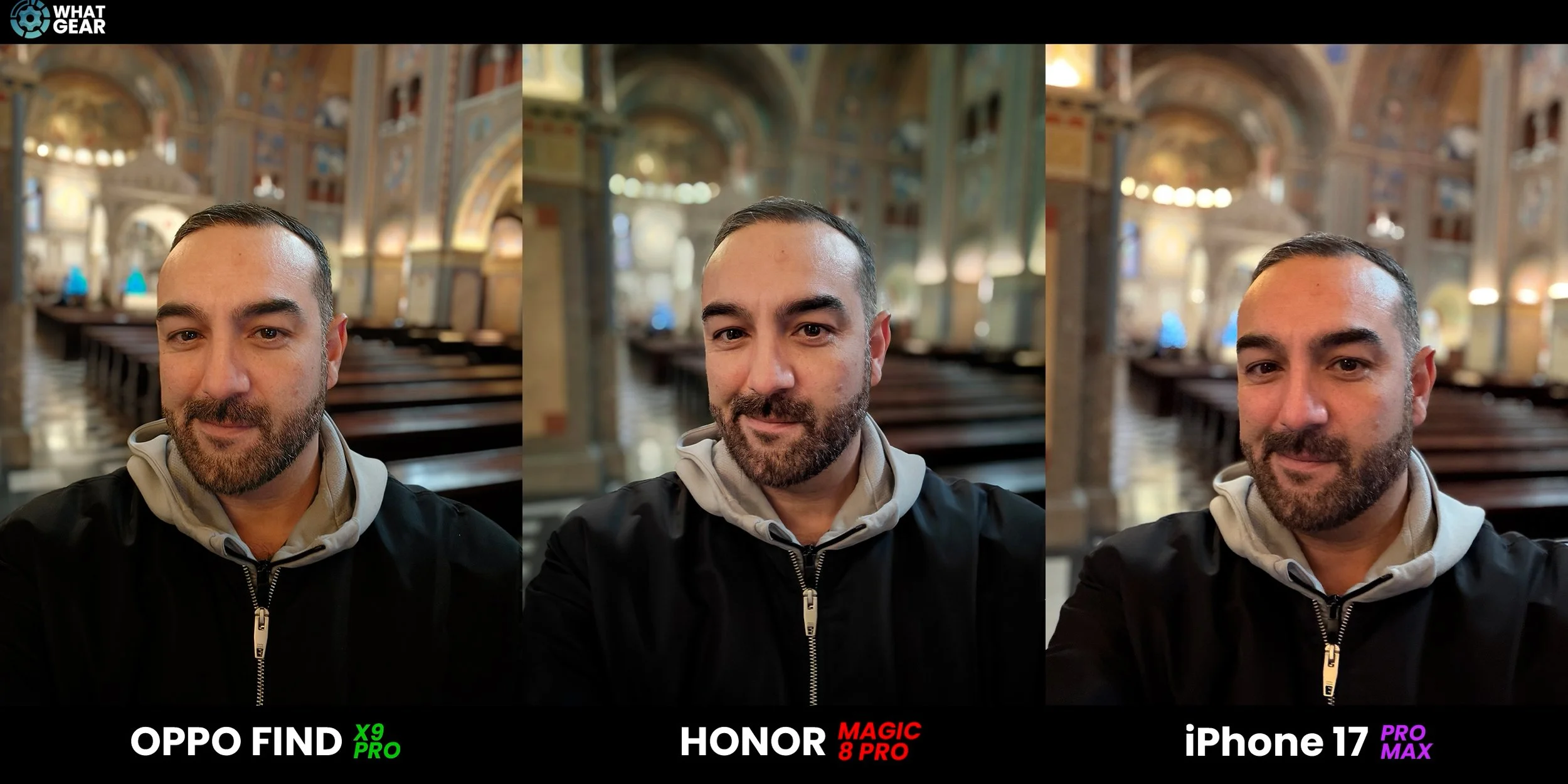
Interior Architecture & Dynamic Range
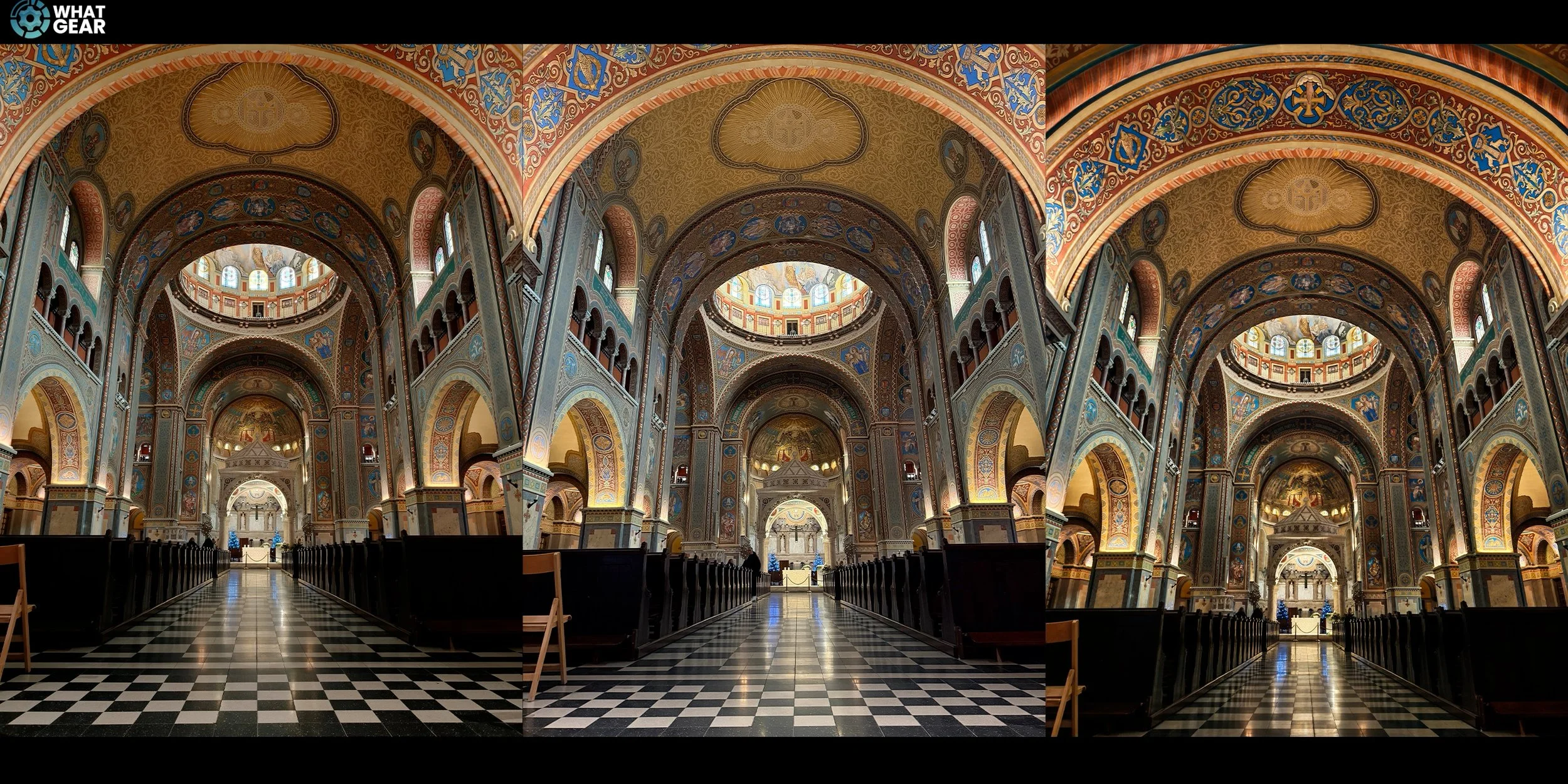
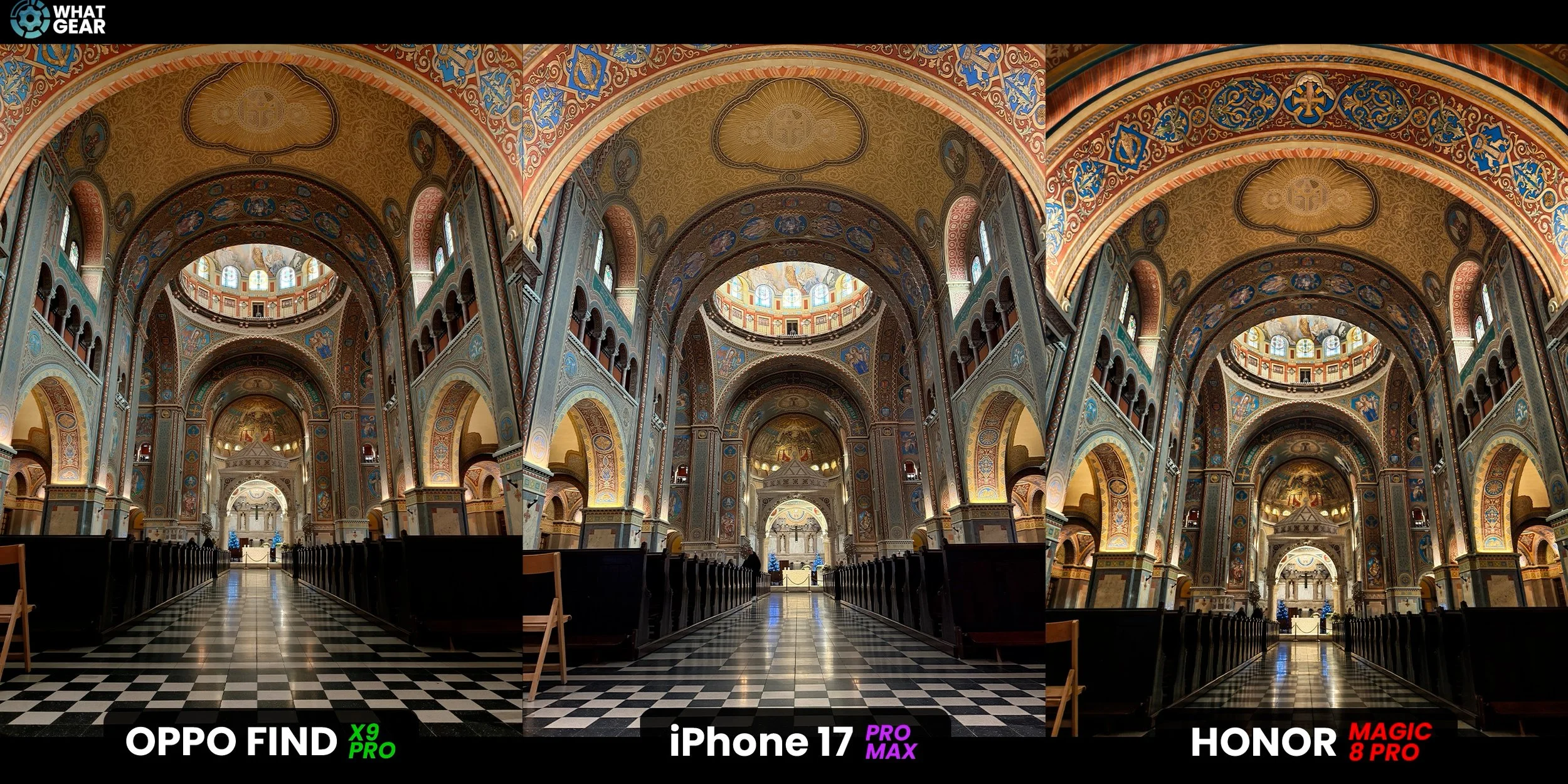
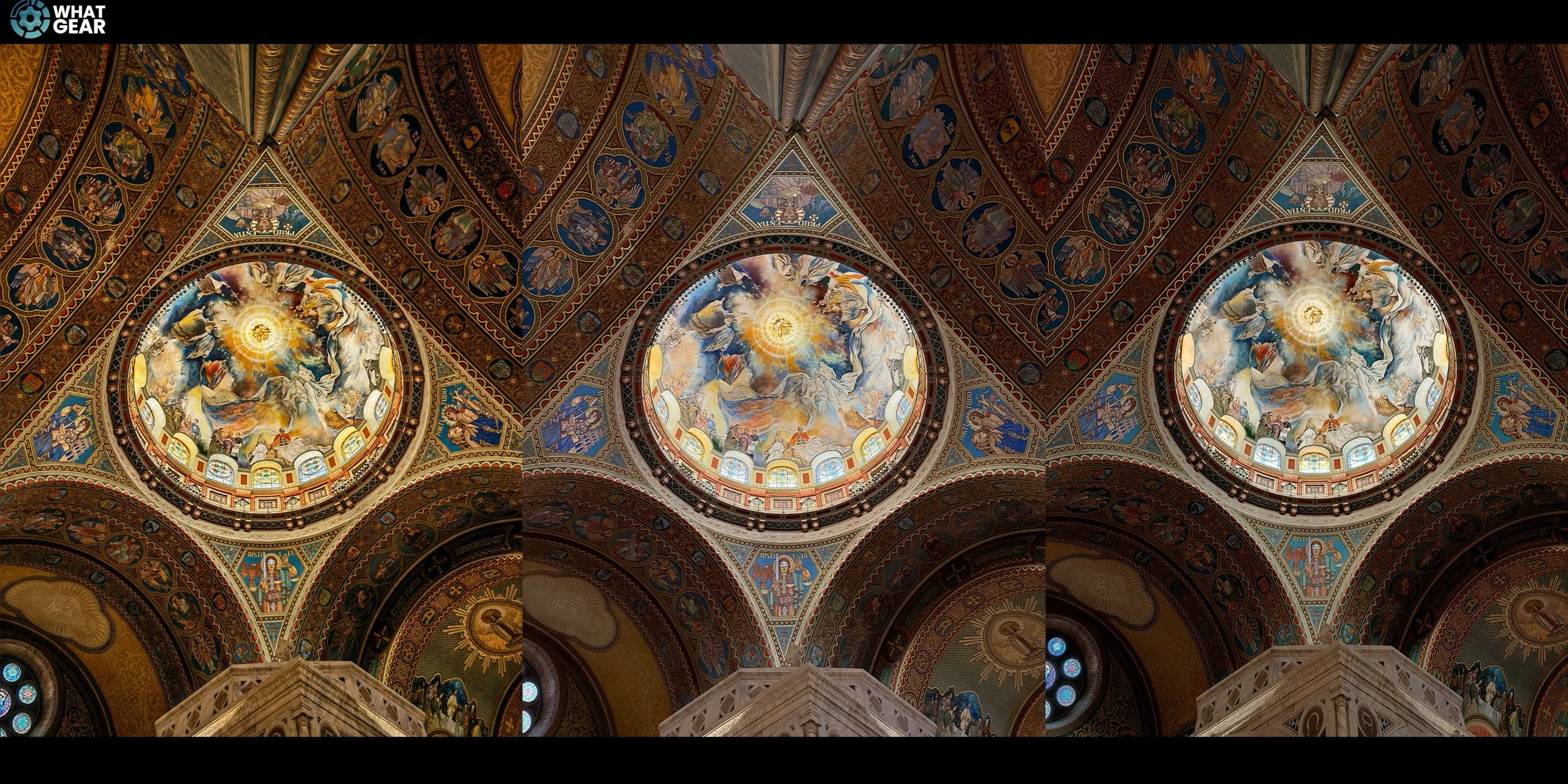
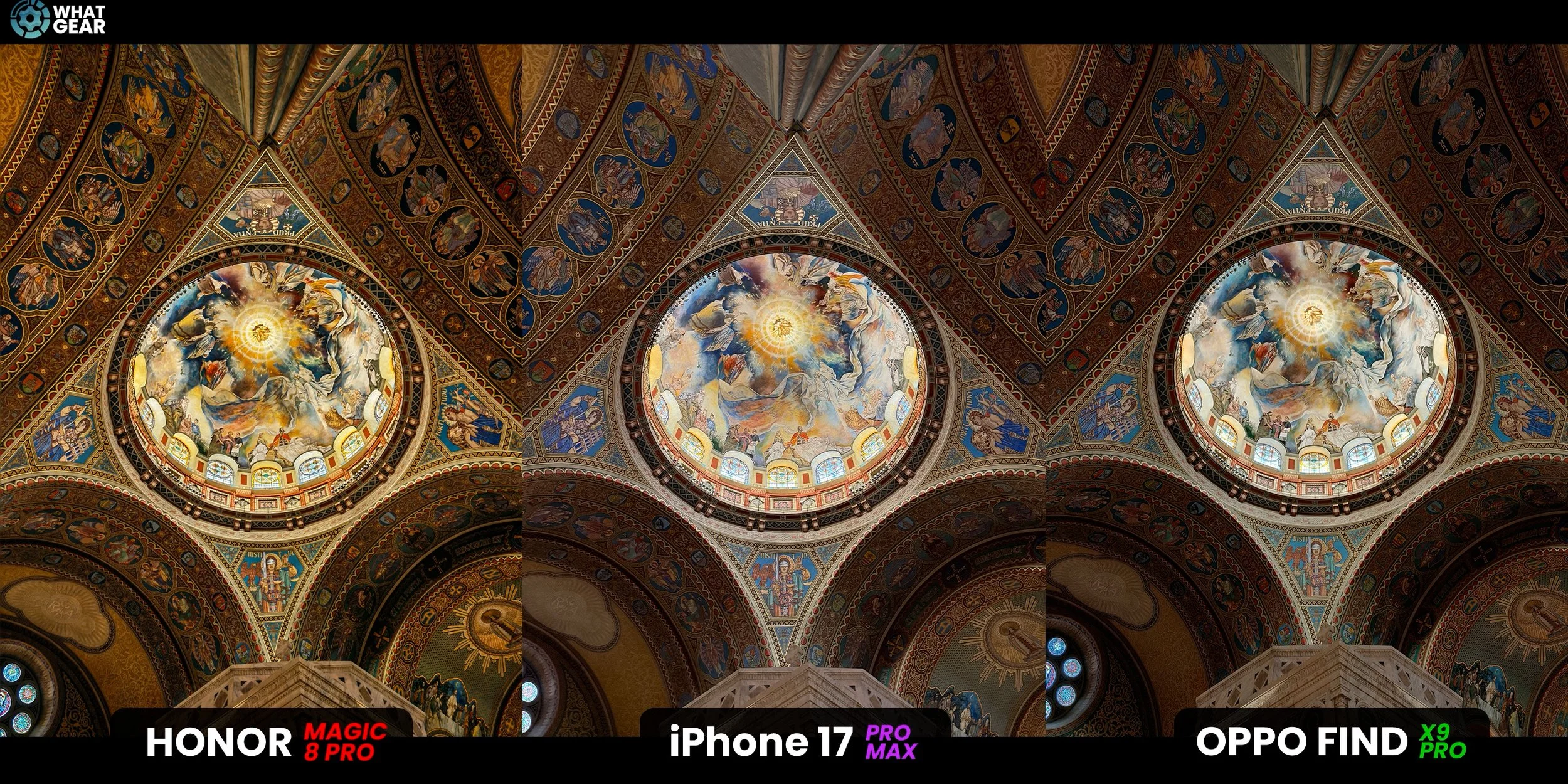
Here’s another daylight shot, taken inside a church interior. One phone clearly has a wider field of view, which is a big advantage in scenes like this. The colours in that image are also more eye-catching. I know which one I’m choosing — what about you?
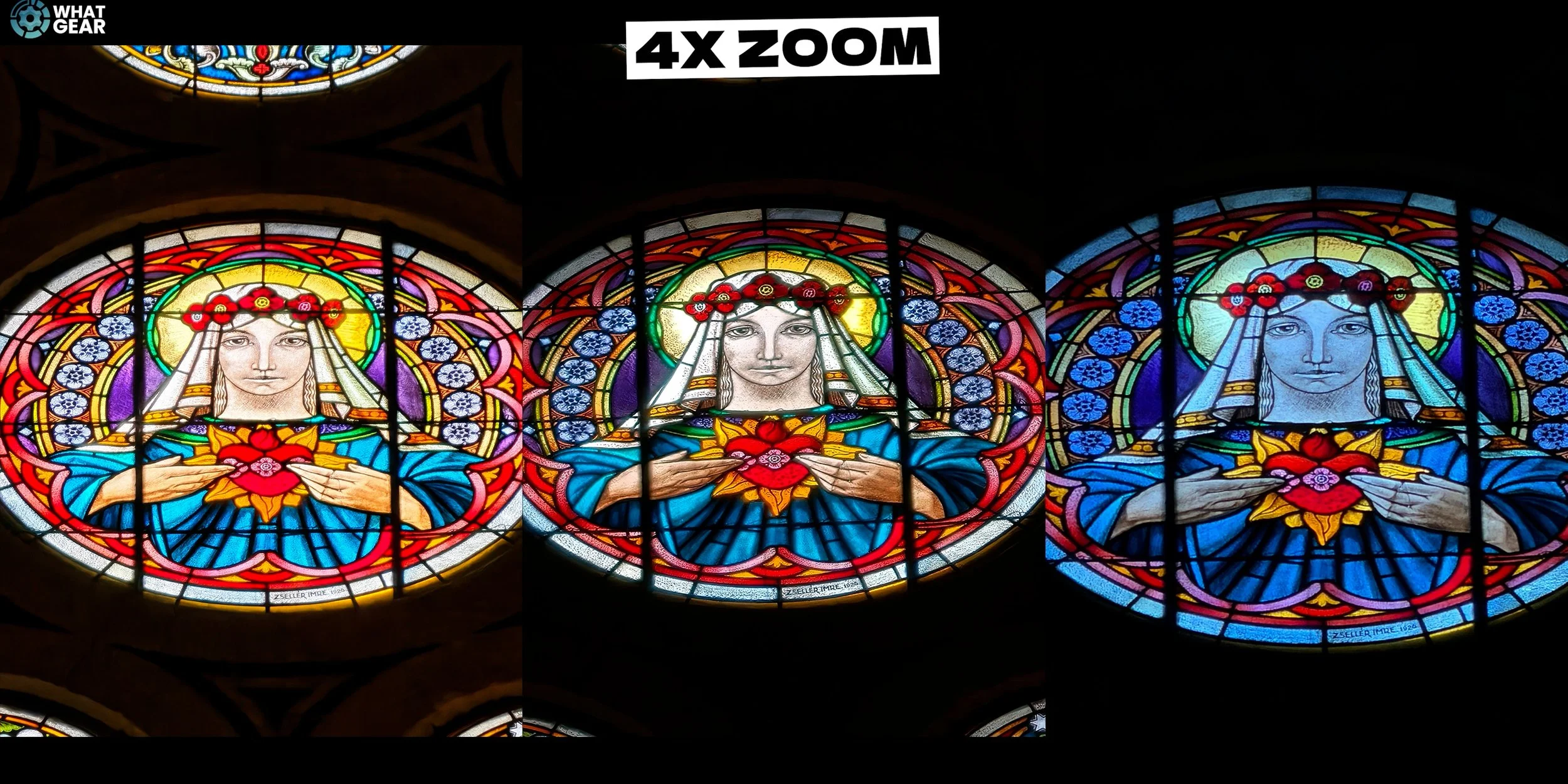
Now let’s push things further with a 4× shot of a stained-glass window. This is a very difficult shot due to strong backlighting. Often, cameras expose for highlights and lose shadow detail. The centre image retains more shadow detail while still making the stained glass pop. However, the phone on the left clearly has the best dynamic range — but has it sacrificed colour quality? Let’s zoom in and check the details before deciding.
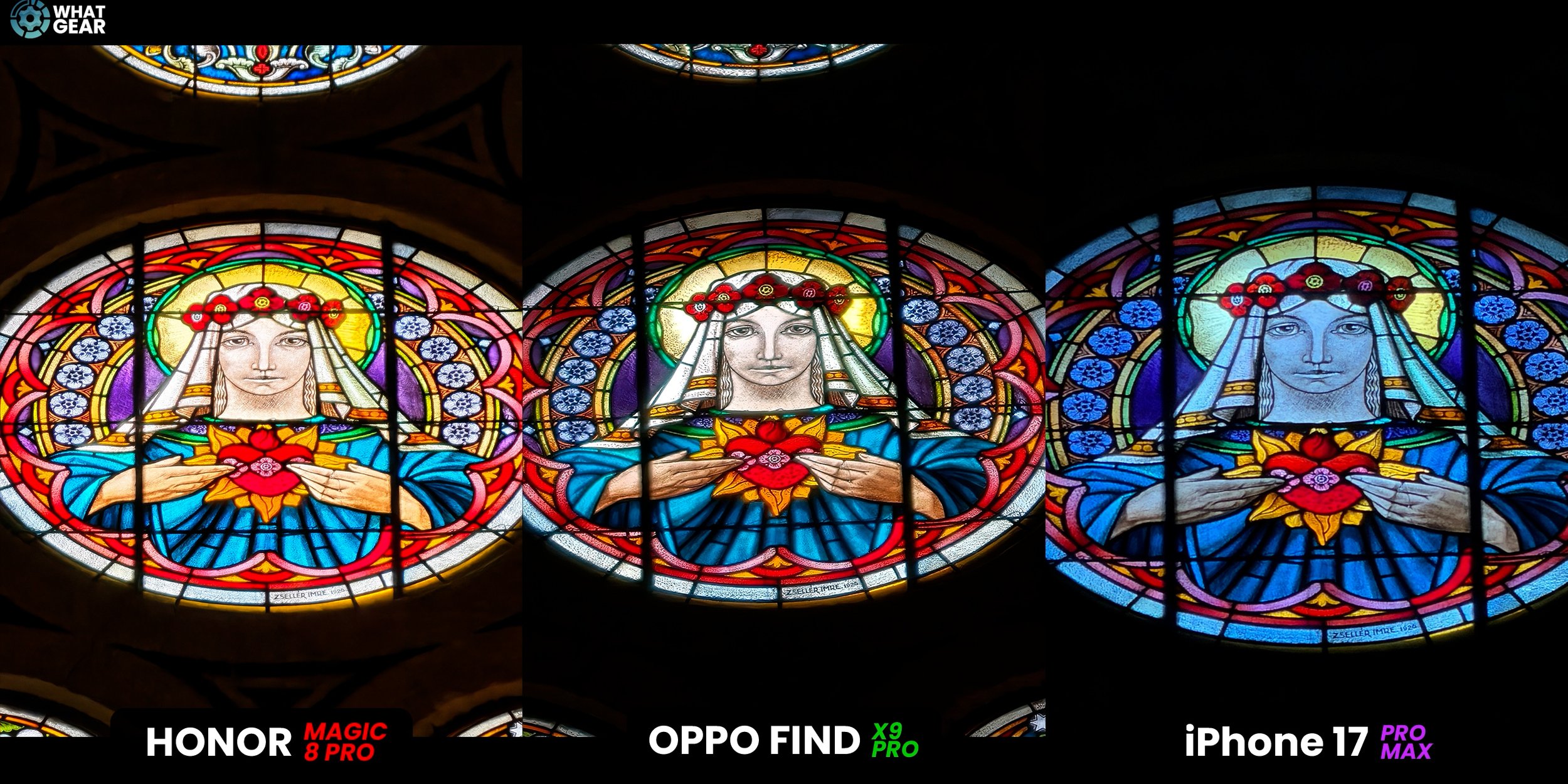
I’m stepping out one last time — and rejoining you for the iconic shot that every great camera comparison needs: the burger shot.
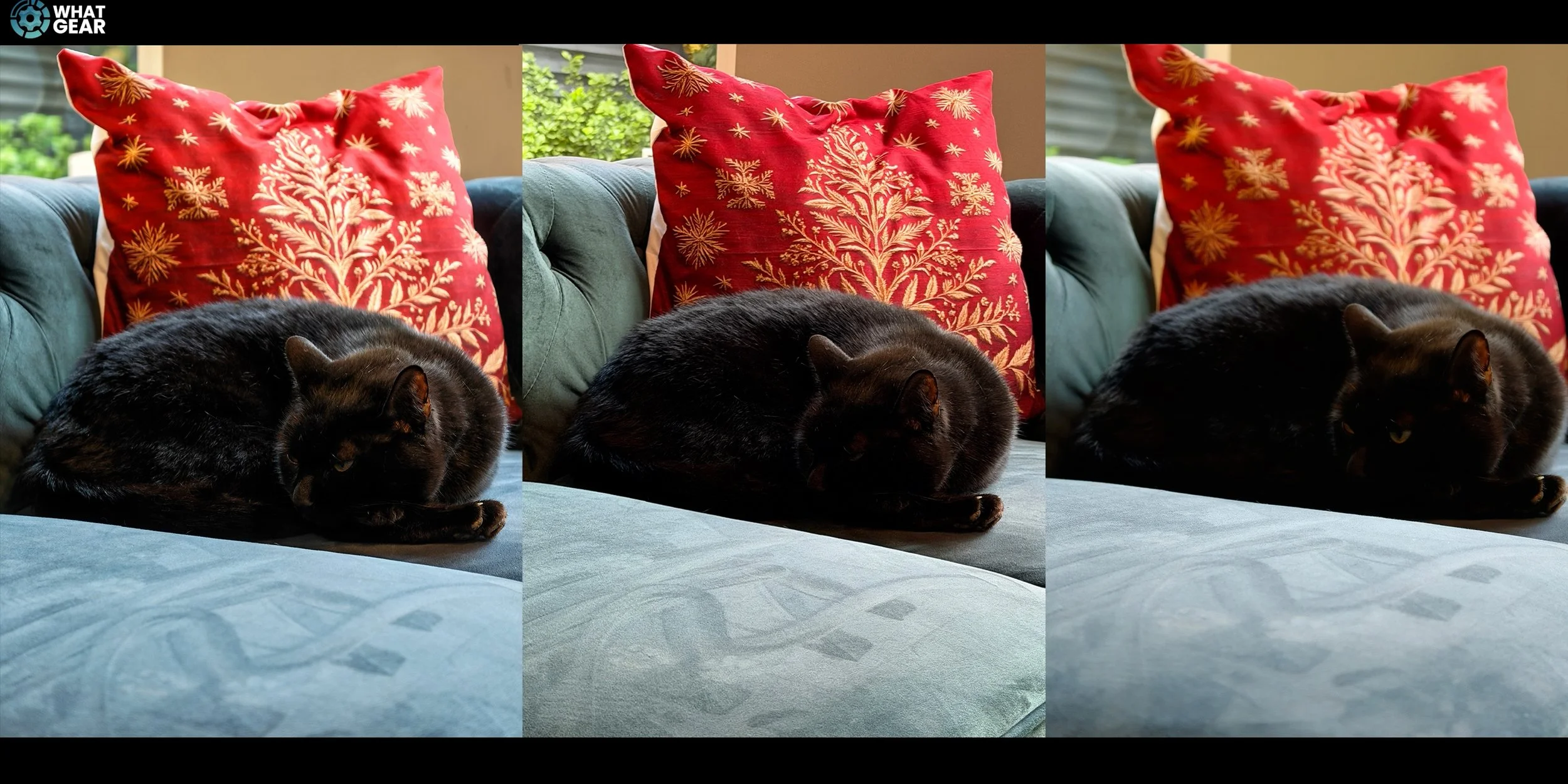
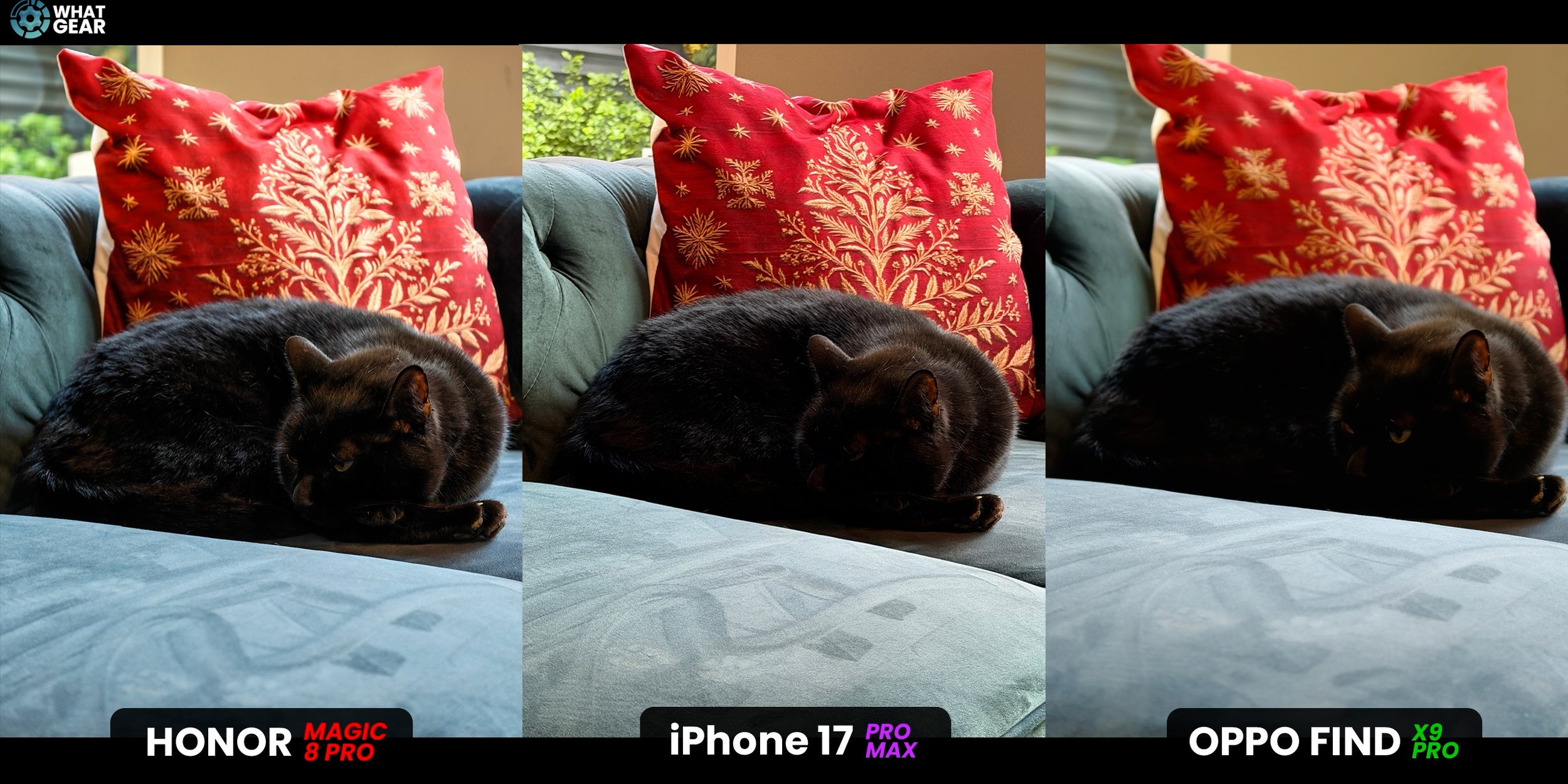
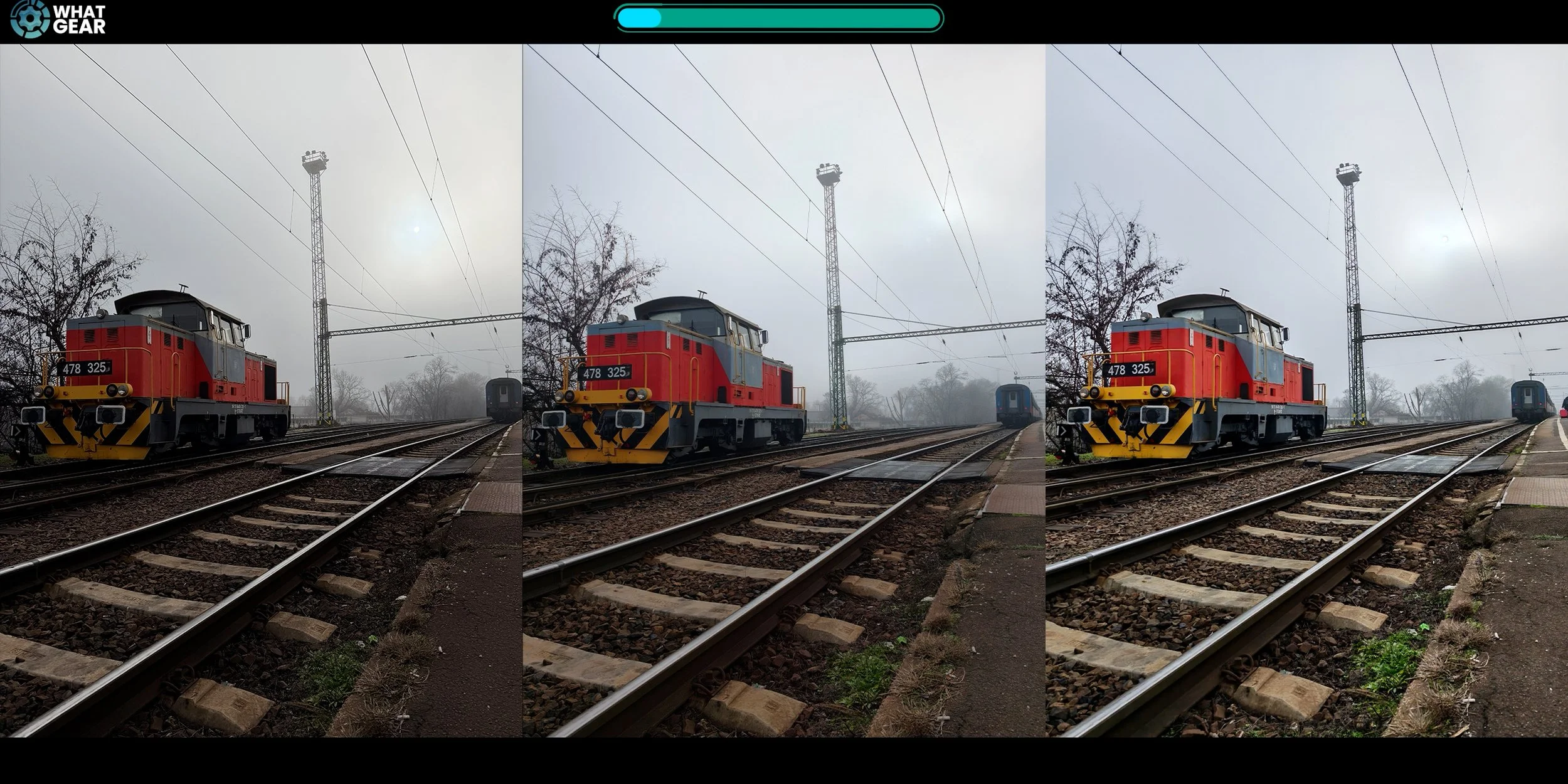
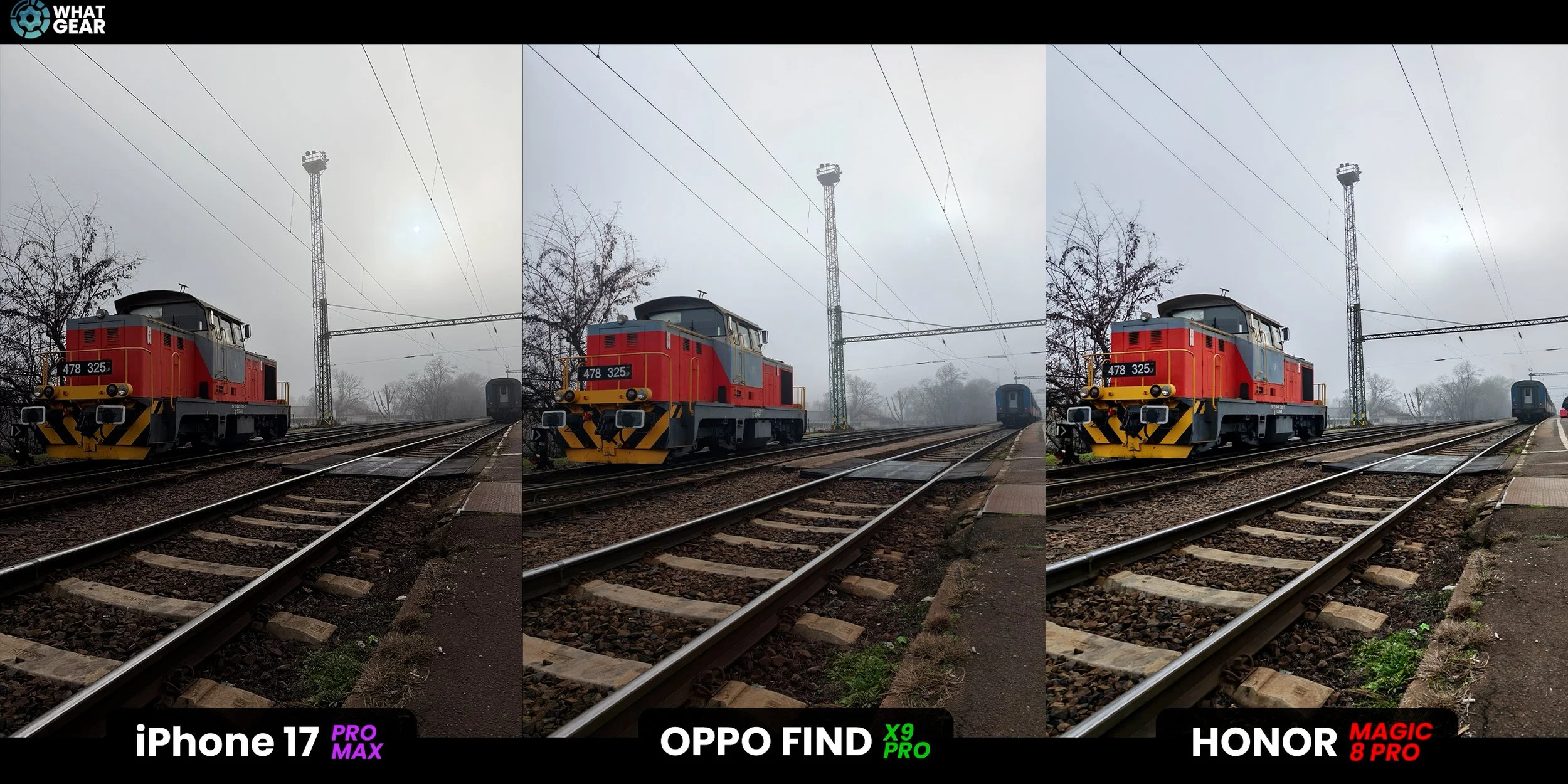
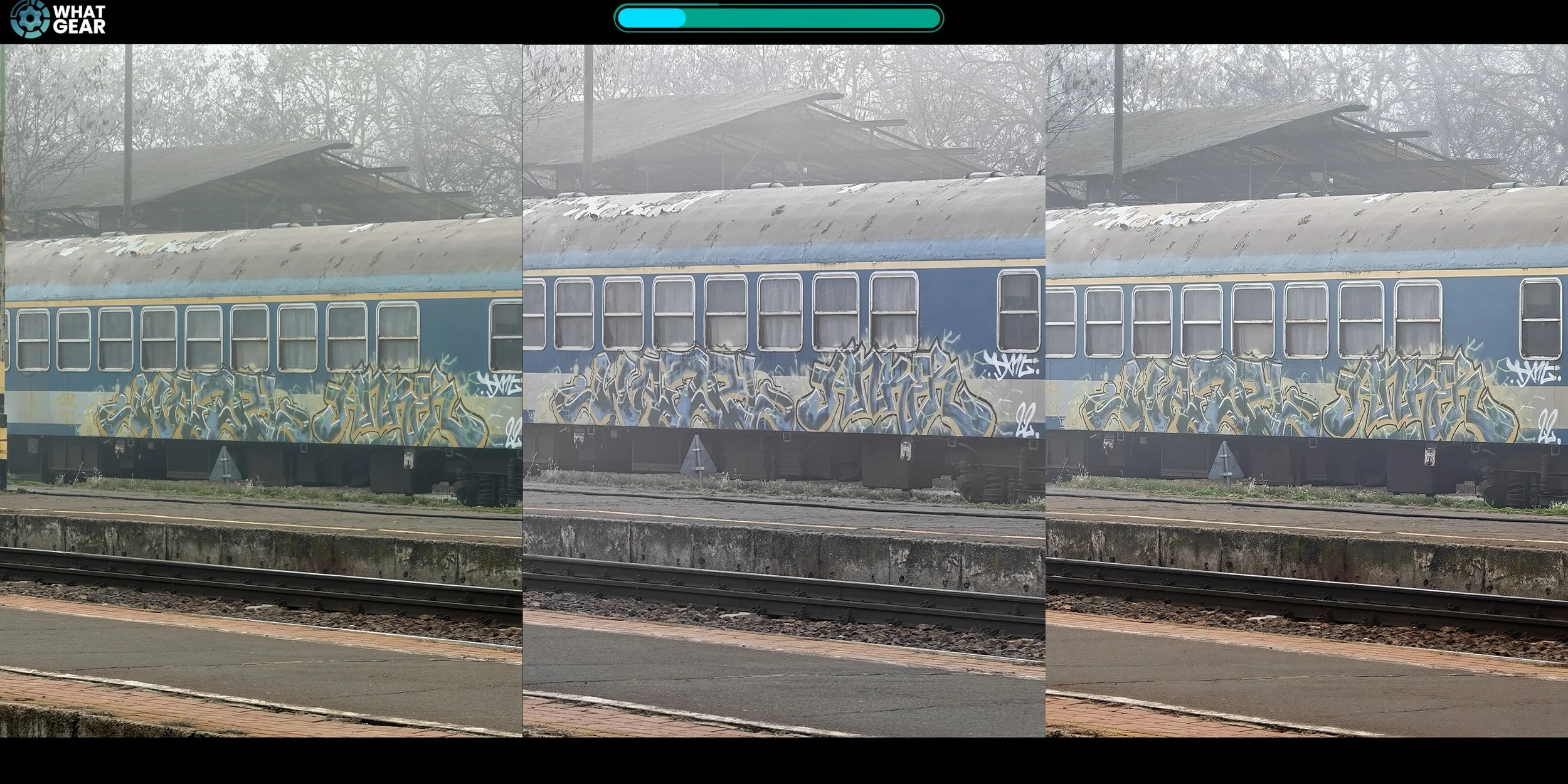
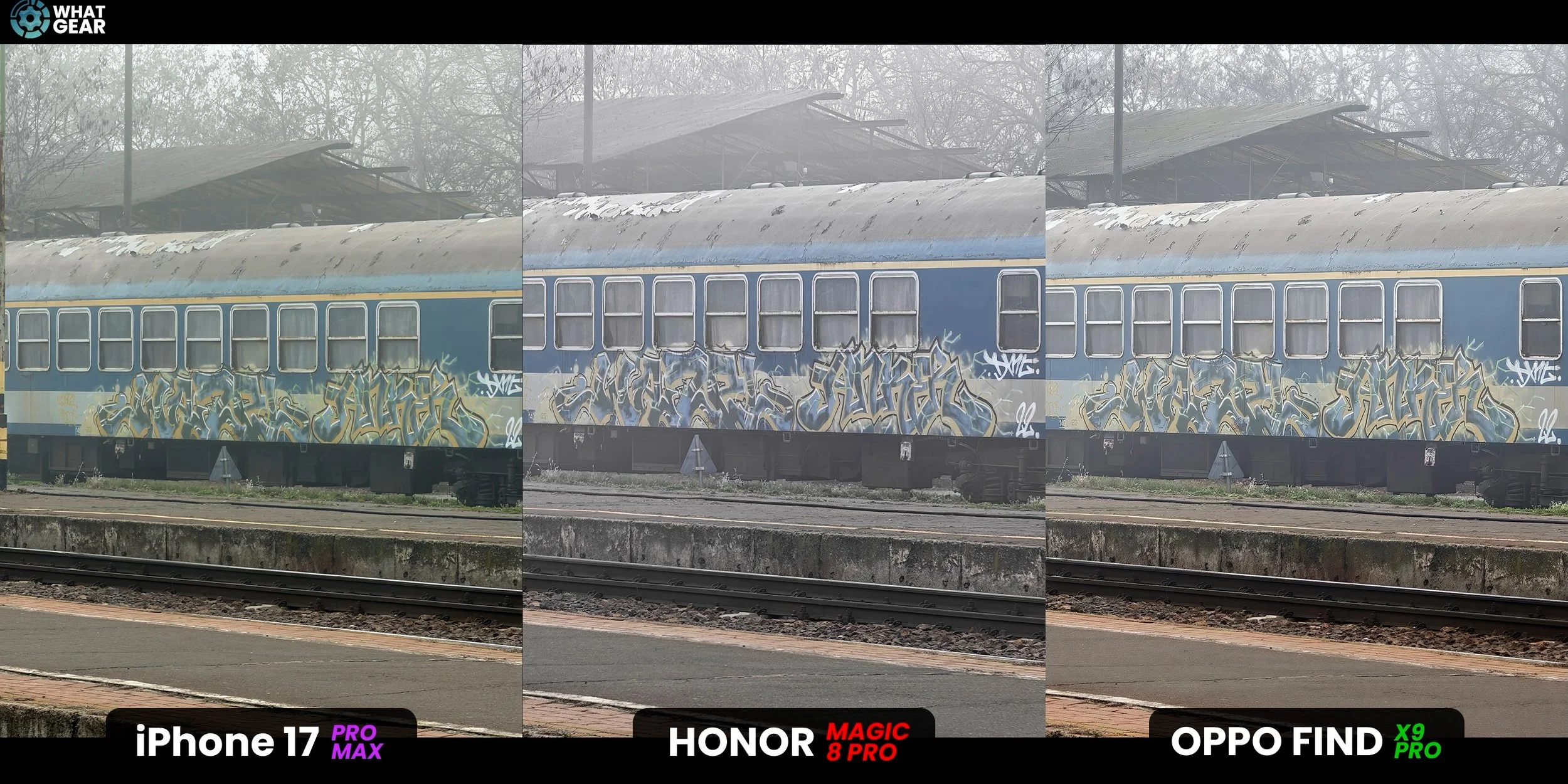
The Iconic Burger Shot
Everyone photographs food, and it’s also a great excuse to order a burger. This was taken at Budapest Airport at a place called Leroy’s — and this is the Leroy Burger. Honestly, it wasn’t the best burger I’ve ever had. Too much bread, and the meat tasted like it was cooked from frozen. But if the photos make it look better than it actually was, that’s a win.
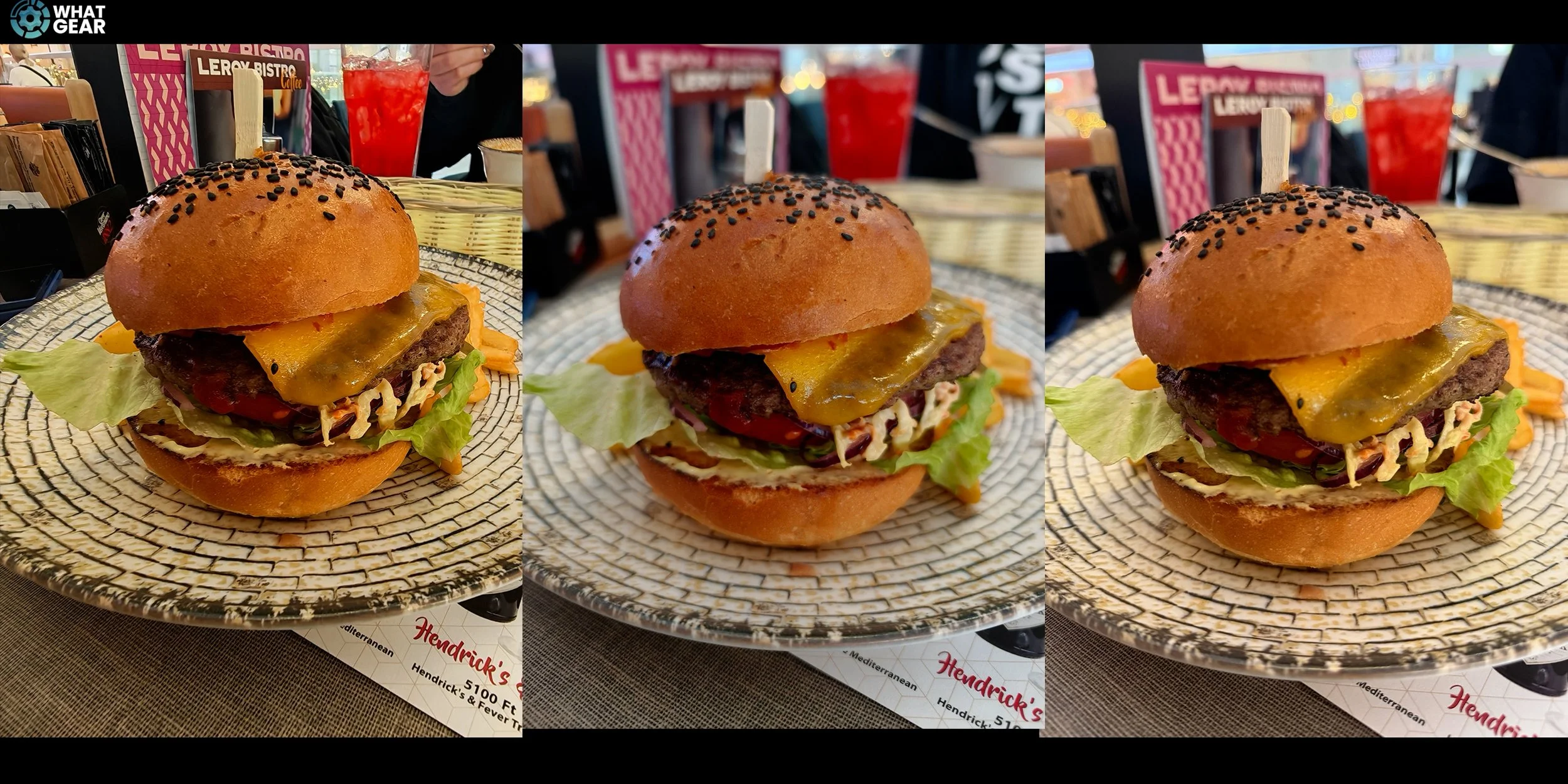
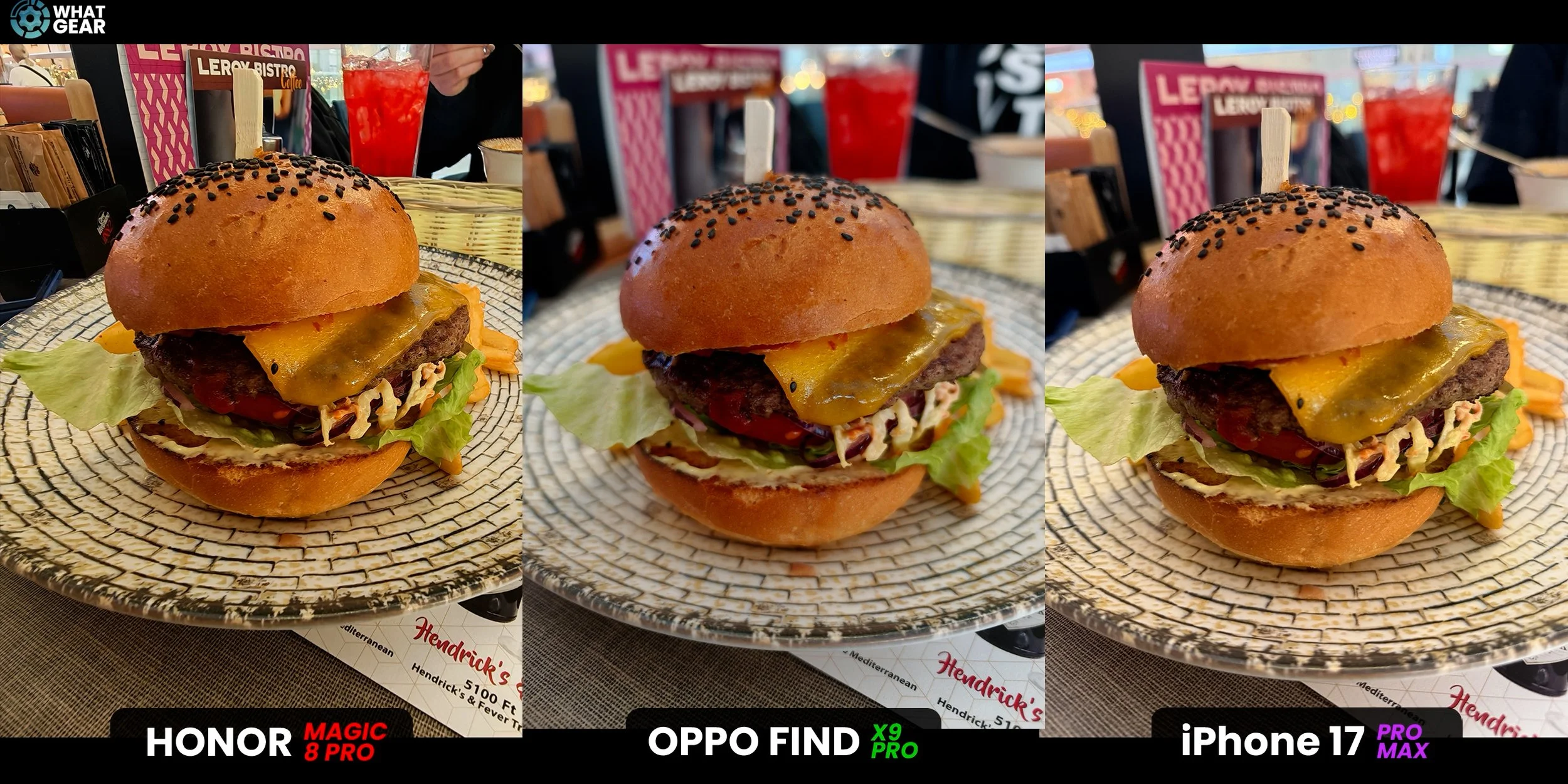
Now it’s time to total up your scorecards and tell me which phone claims the throne in this blind camera comparison shootout. I hope you enjoyed this blind camera comparison and found it more useful and eye-opening than traditional comparisons.