Galaxy S26 Ultra Vs Pixel 10 PRO Vs iPhone 17 PRO MAX - Camera Comparison
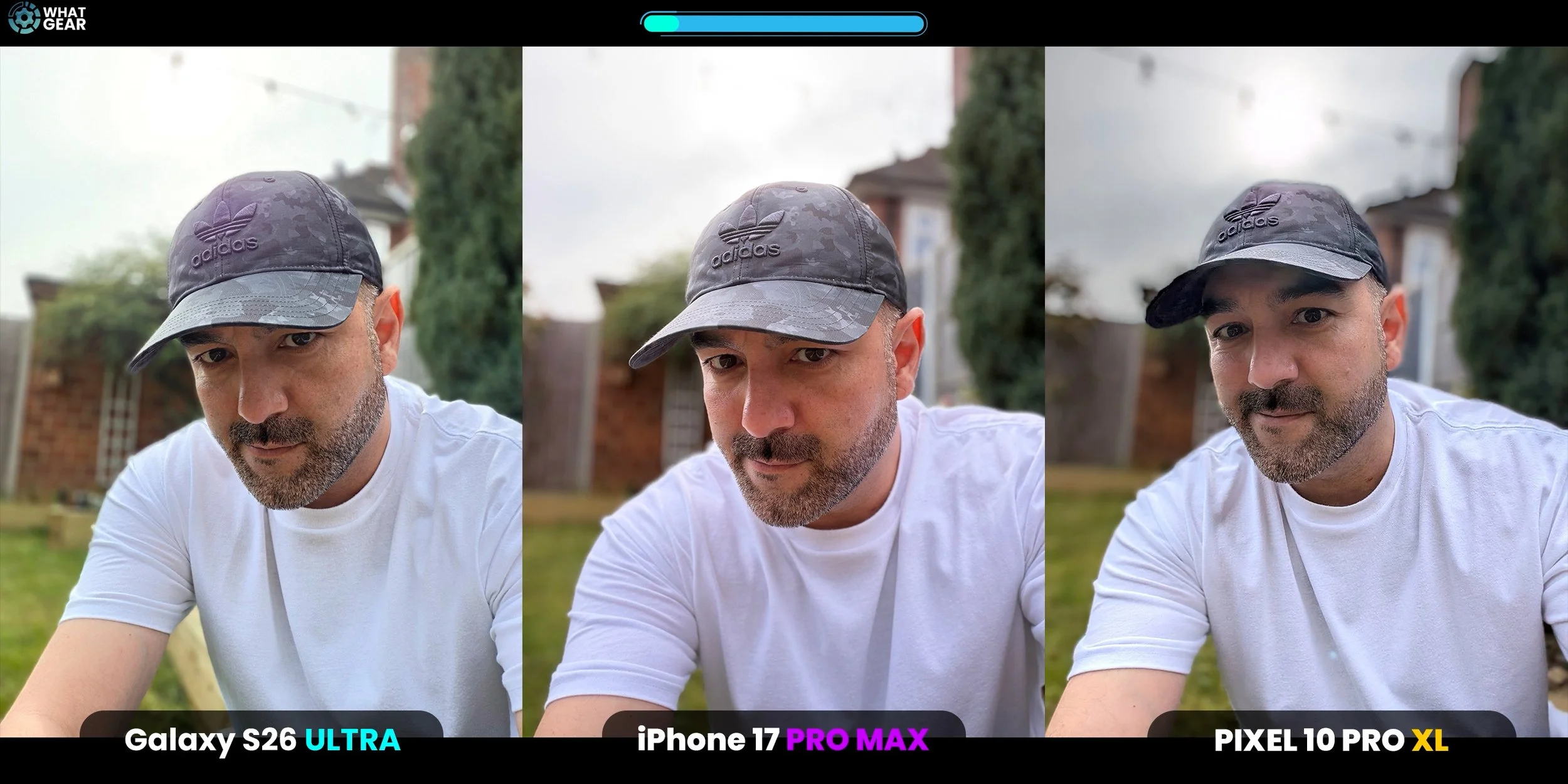
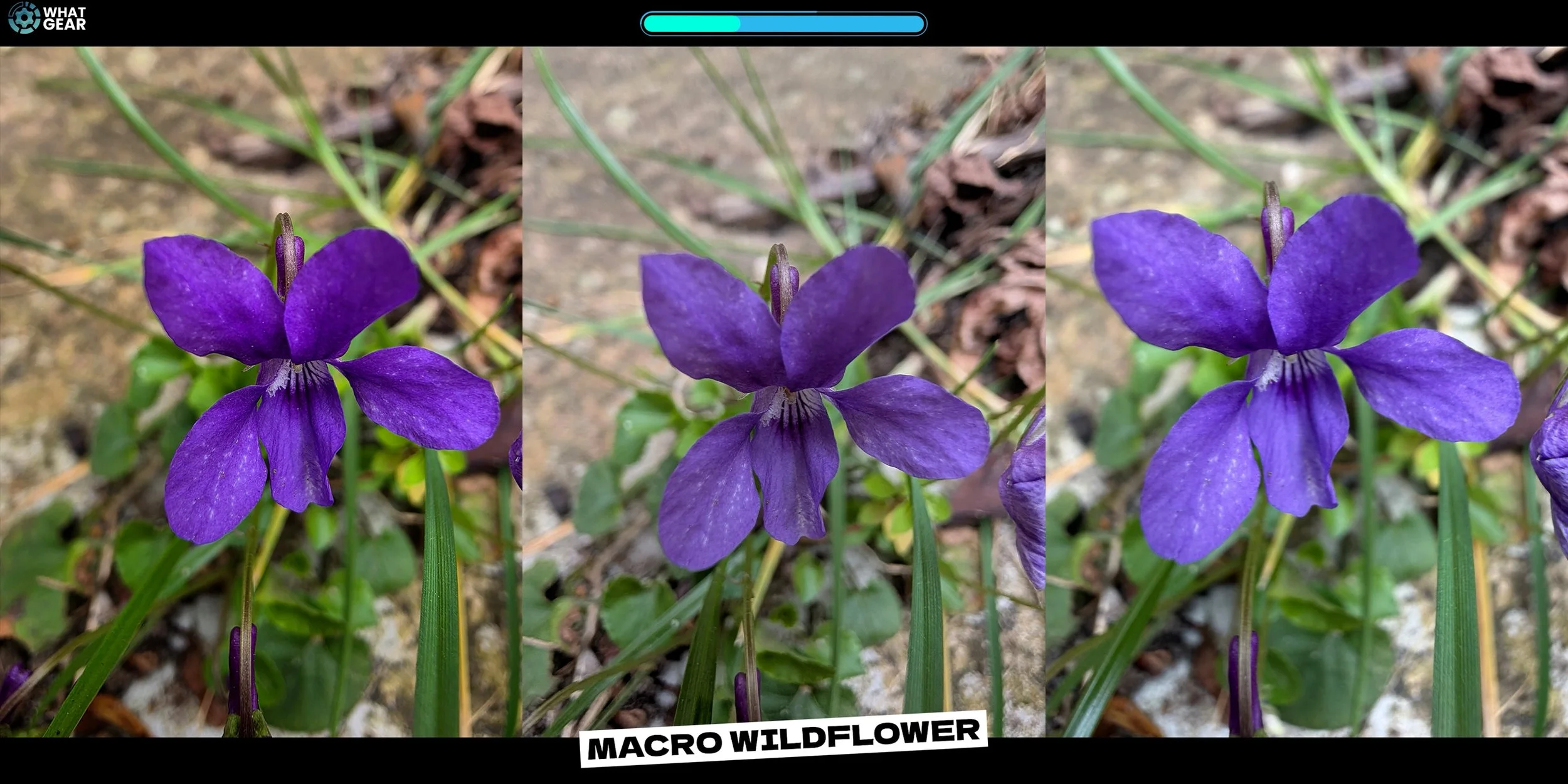
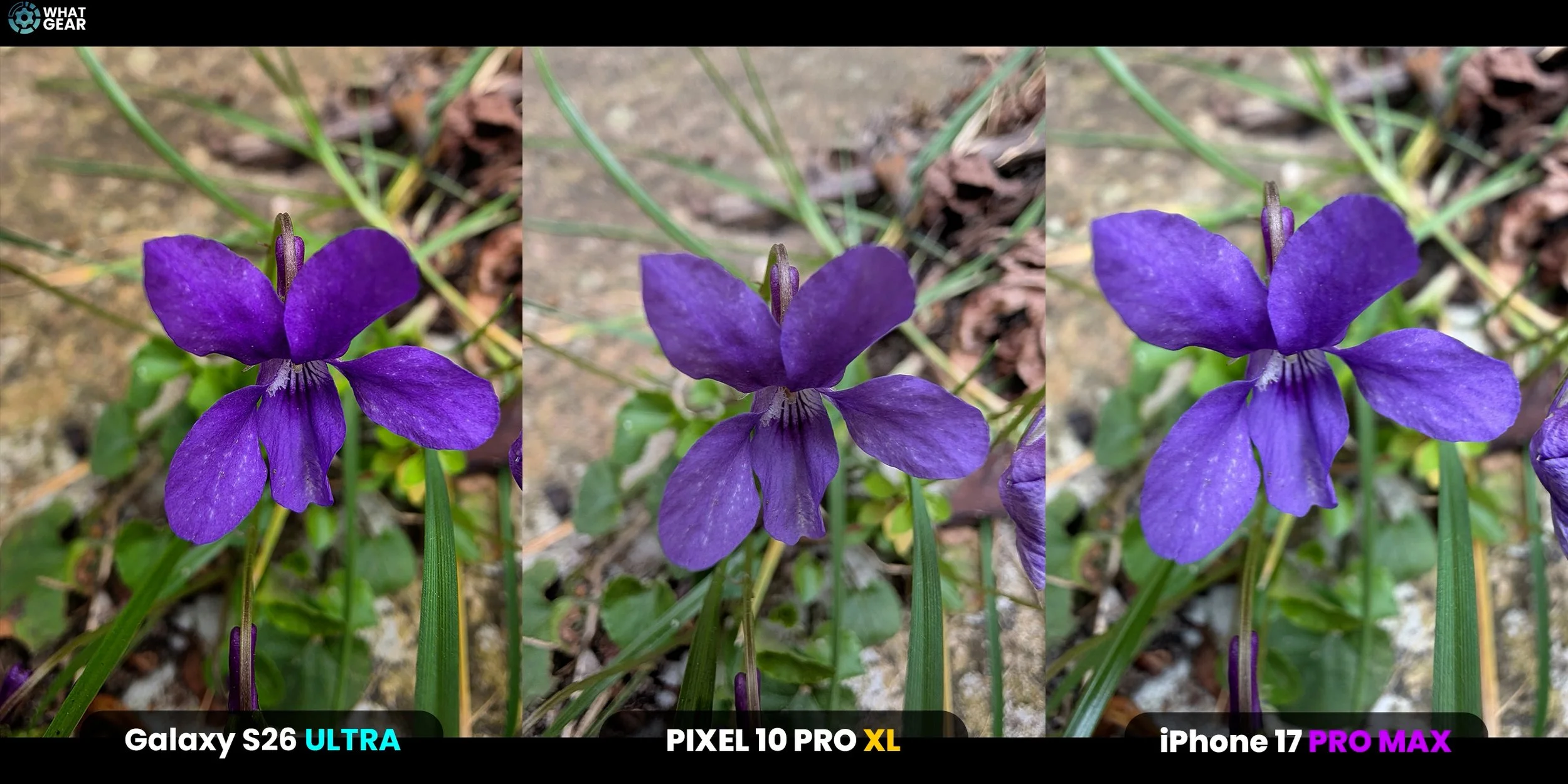
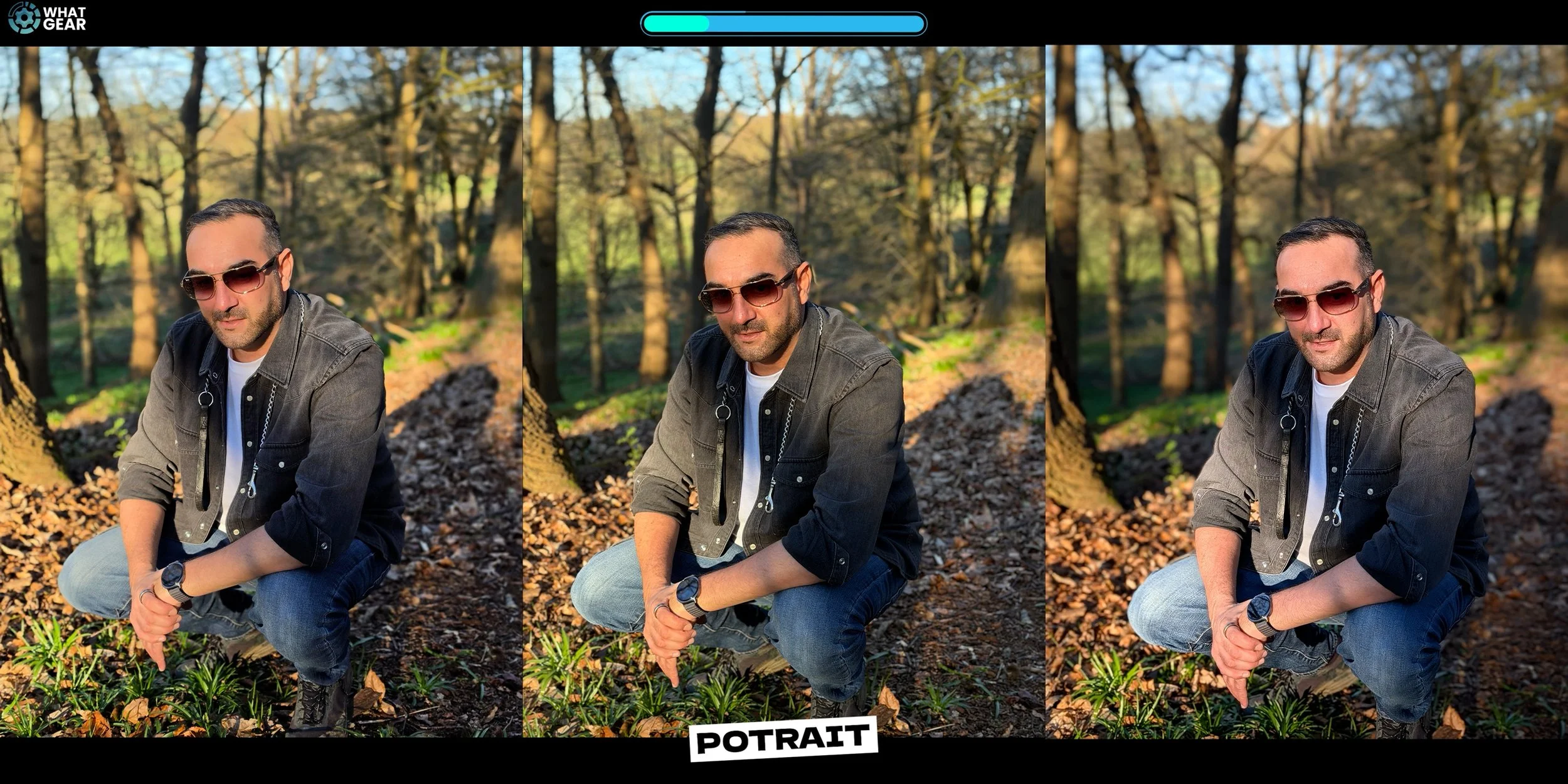
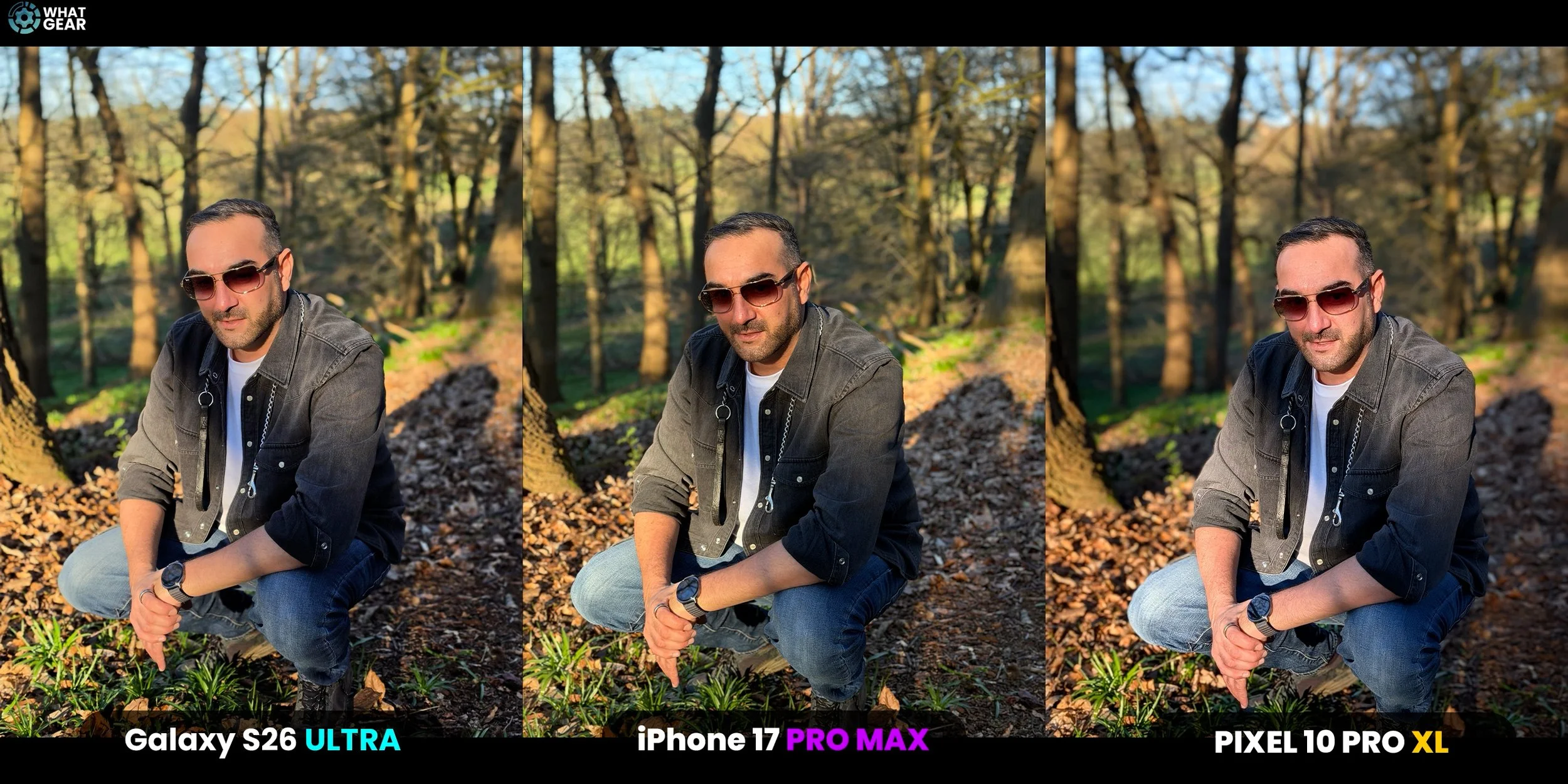
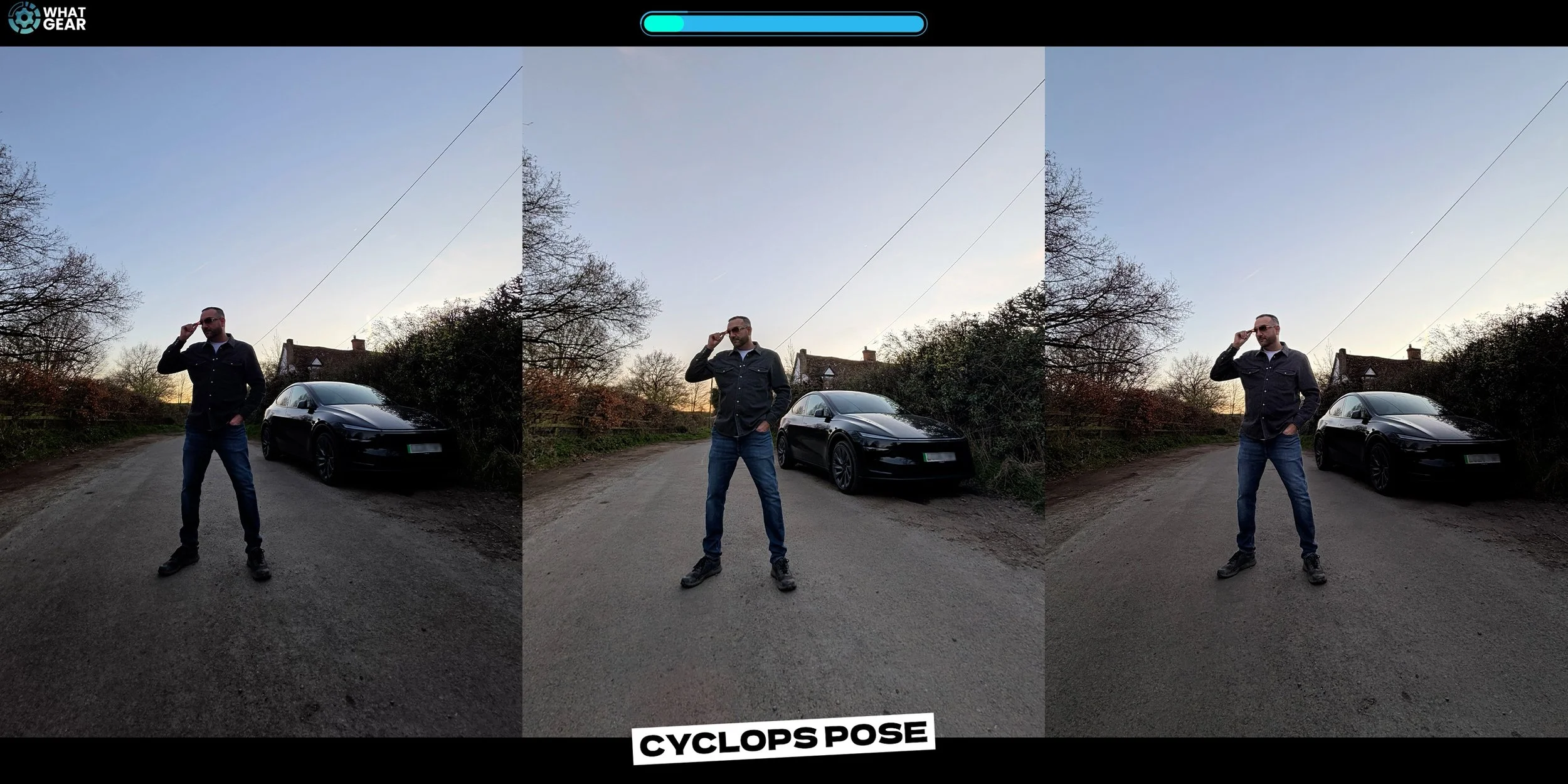
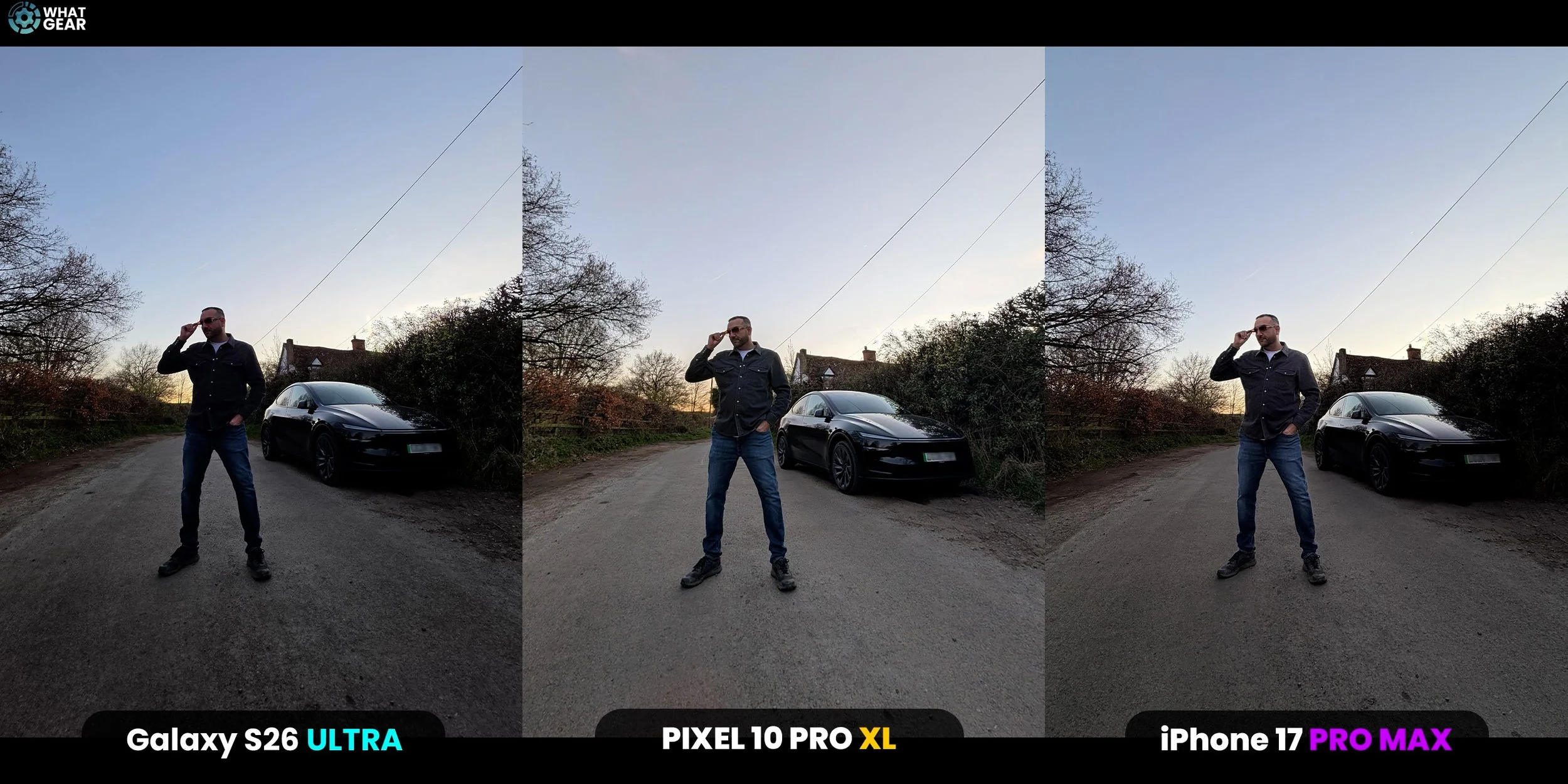
You are seeing through the eyes of three flagship smartphones in 2026. We have the Pixel 10 Pro XL, the iPhone 17 Pro Max, and the Galaxy S26 Ultra. So what you need to do right now is choose which one you think looks the best when it comes to 4K 30 frames per second video quality. And now I'm going to start this timer, and once that runs out, you will find out which phone captured which piece of content. And I want to encourage you guys to keep a running scorecard through this video, so that by the end, you will know which phone is the best when it comes to the camera. Okay, now you know the rules to this WhatGear-style blind camera comparison. Here's the first picture.
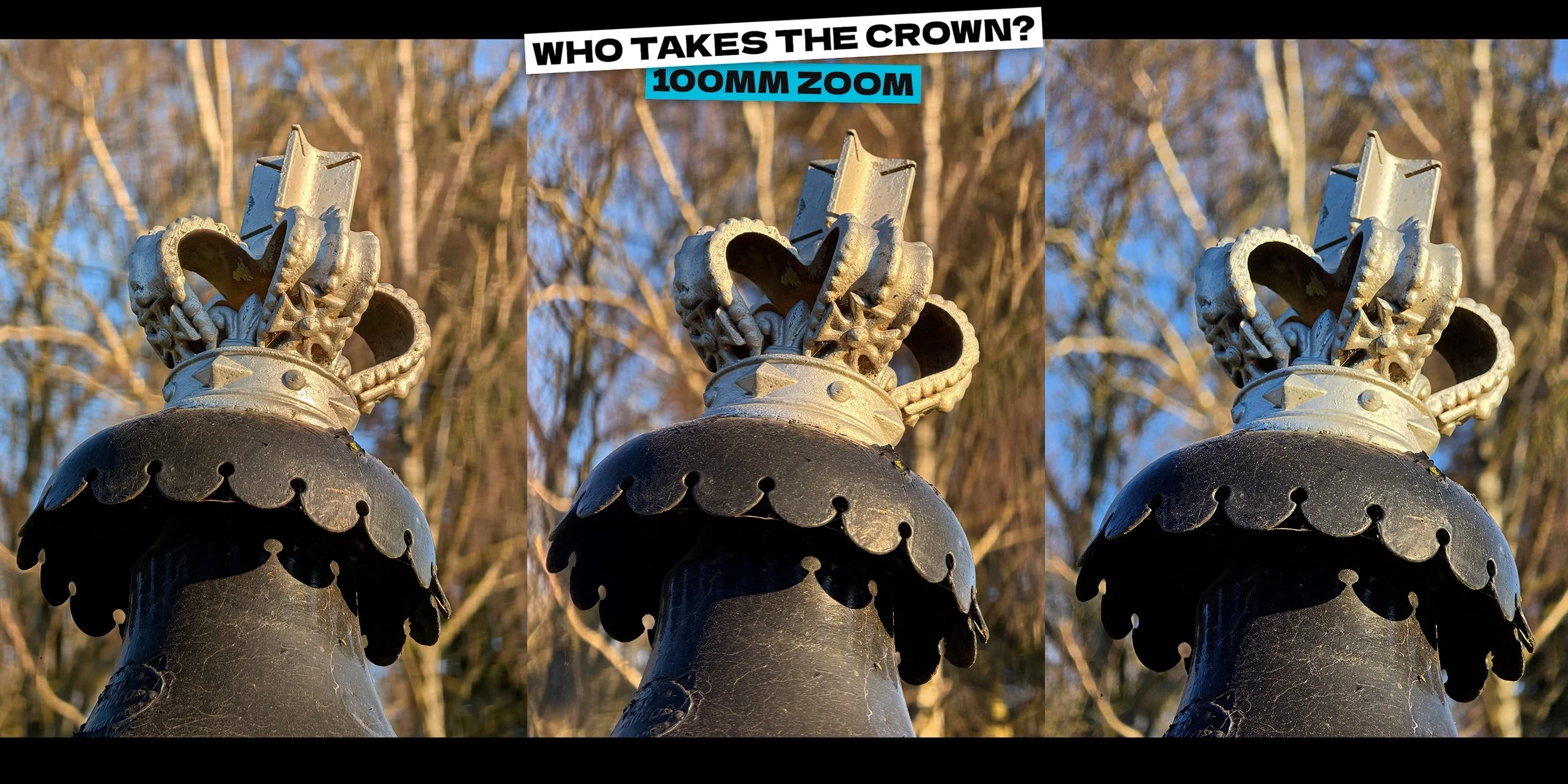
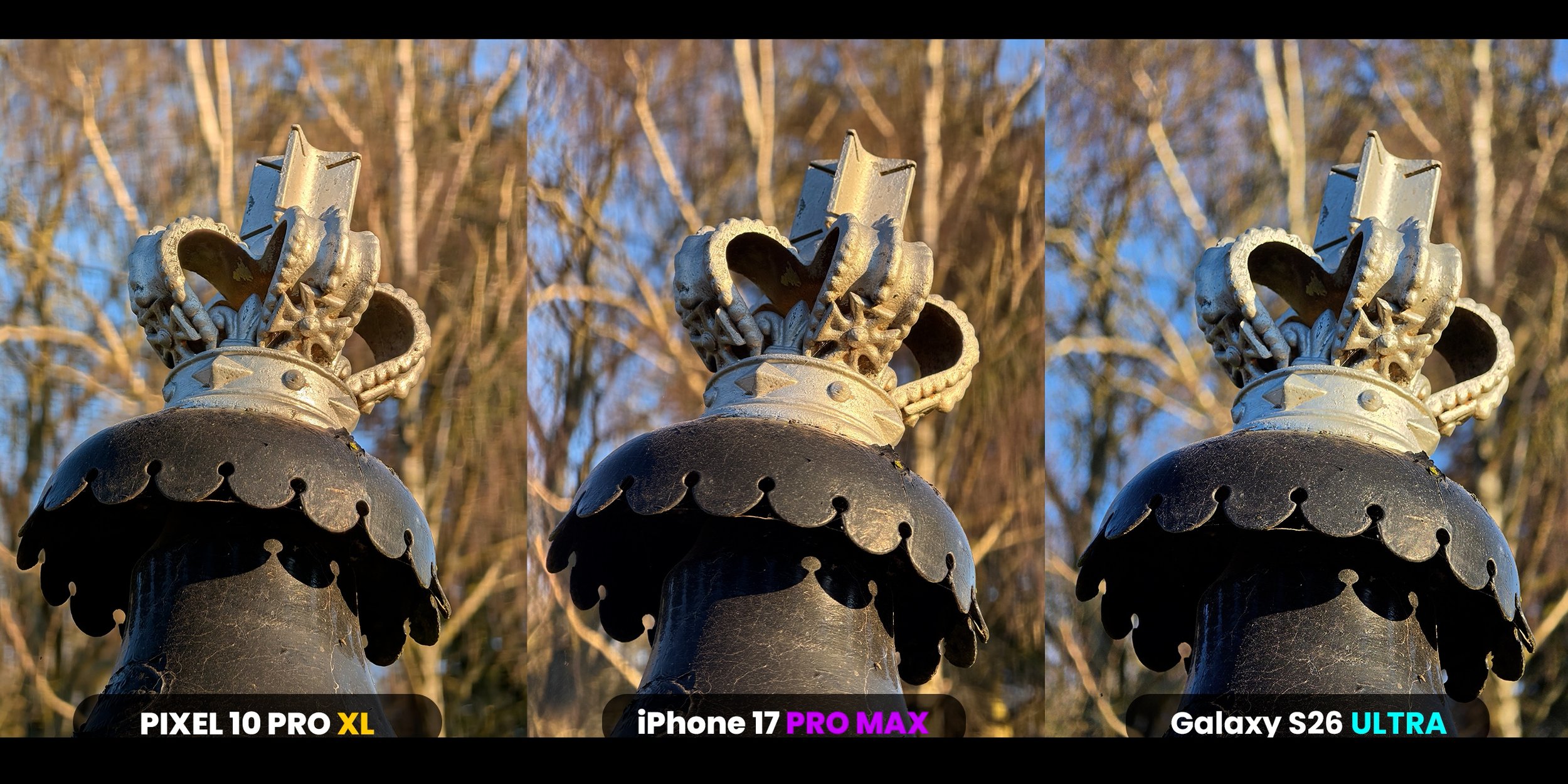
And what I'm going to do is tier each picture for you and give you a few pointers on things to look out for, and then it's entirely up to you to choose which one you think is the best photo. So right here we have a cast iron crown taken with the three phones at 100 millimetre equivalent zoom, which is around 4 to 5x. And at this range, you actually get some nice natural background blur. So you might want to consider which one delivers the nicest background blur. There's also a lot of shadows here and some bright areas. And when we crop in, you'll notice there's really nice detail and texture on this painted metal. So the key to victory here is, of course, the best balance of everything I just mentioned. So take a close look. Pick your champion.
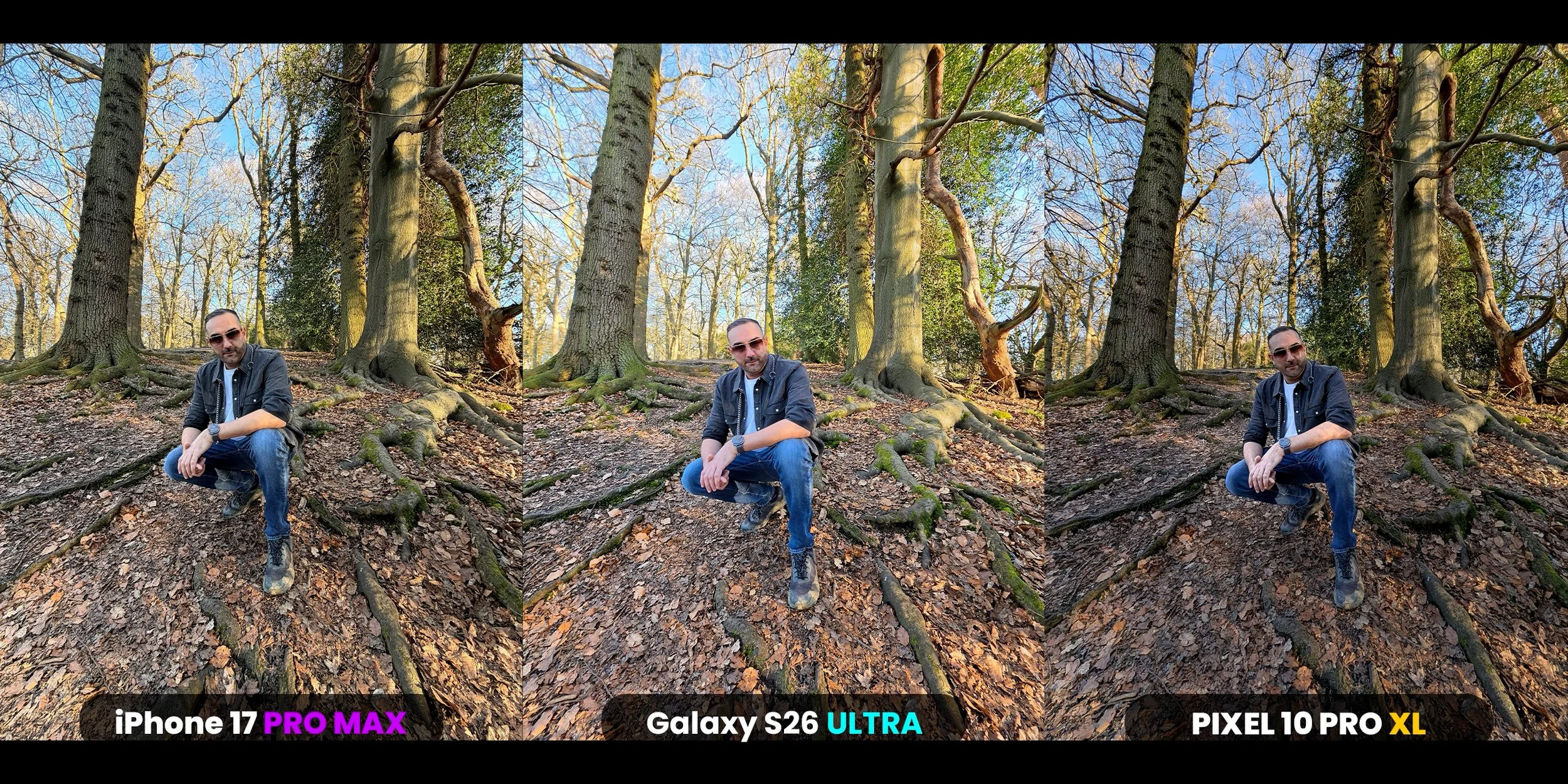
This one was taken with the ultra-wide cameras. Now, typically, the wide-angle lens and camera sensors are not the top priority for smartphone manufacturers. Now, with that said, I do know Samsung have fitted the S26 Ultra with new, brighter lenses this year, so it'll be interesting to see if that's made a difference in your opinion.
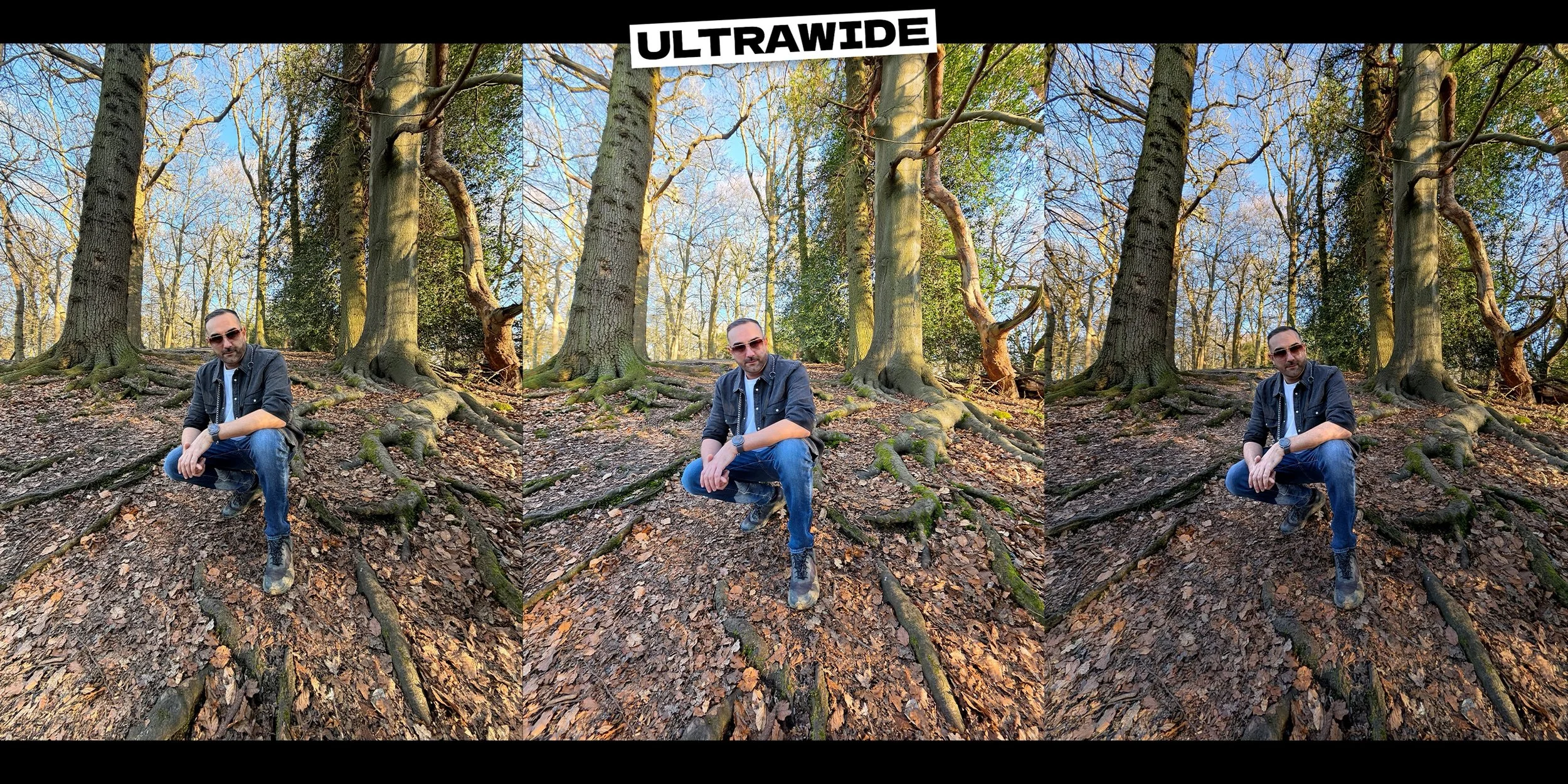
Anyway, there are lots of details here, and it's a very bright scene. And sometimes, when it comes to ultra-wide shots, they can start to distort the image in various places, typically more around the outside. Can you notice any of that happening here? And when you're looking at ultra-wide, you might have also noticed there is quite a big difference when it comes to contrast. Now, this might be just a creative look, but is there one specific look that you like the most?
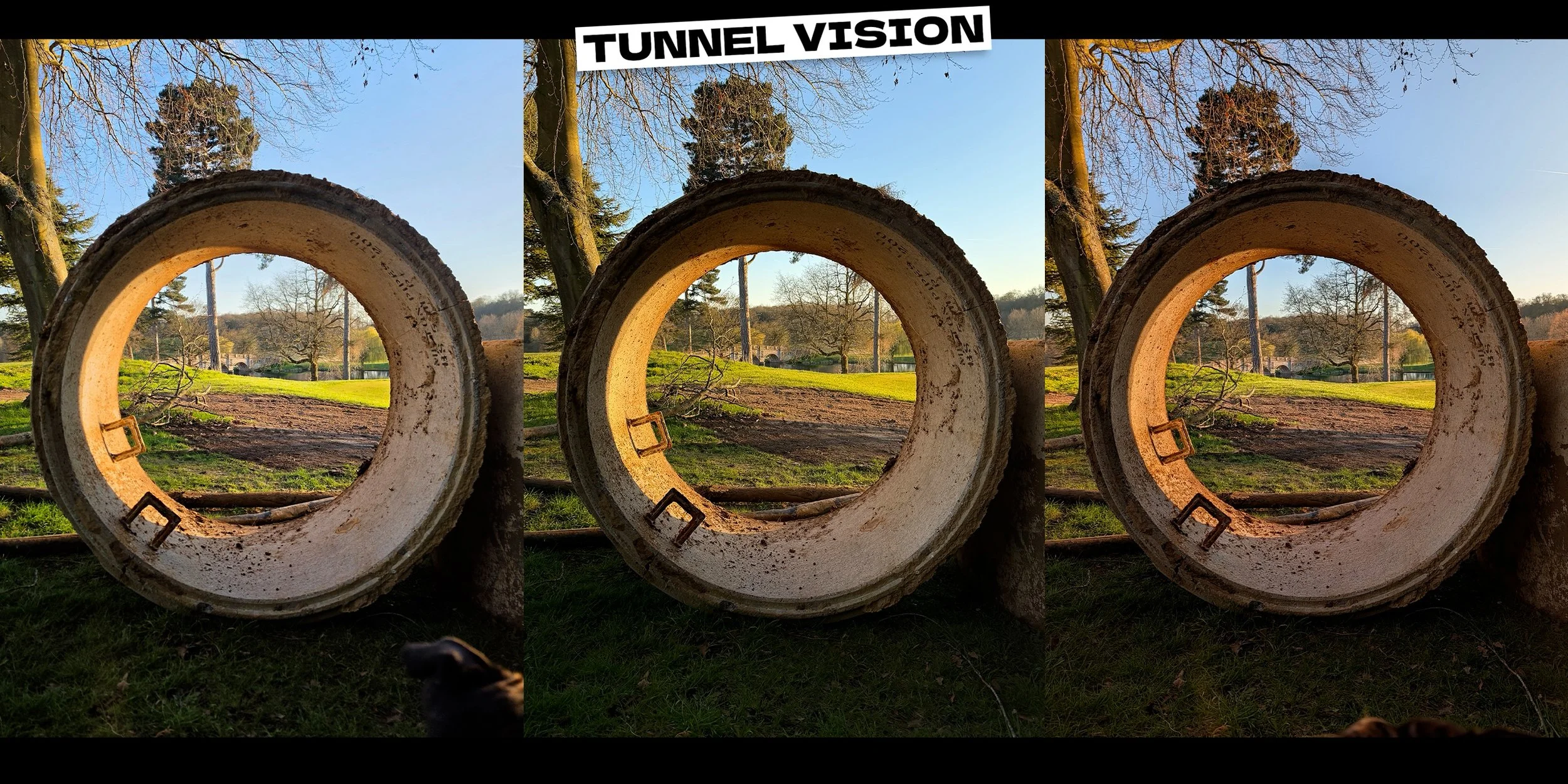
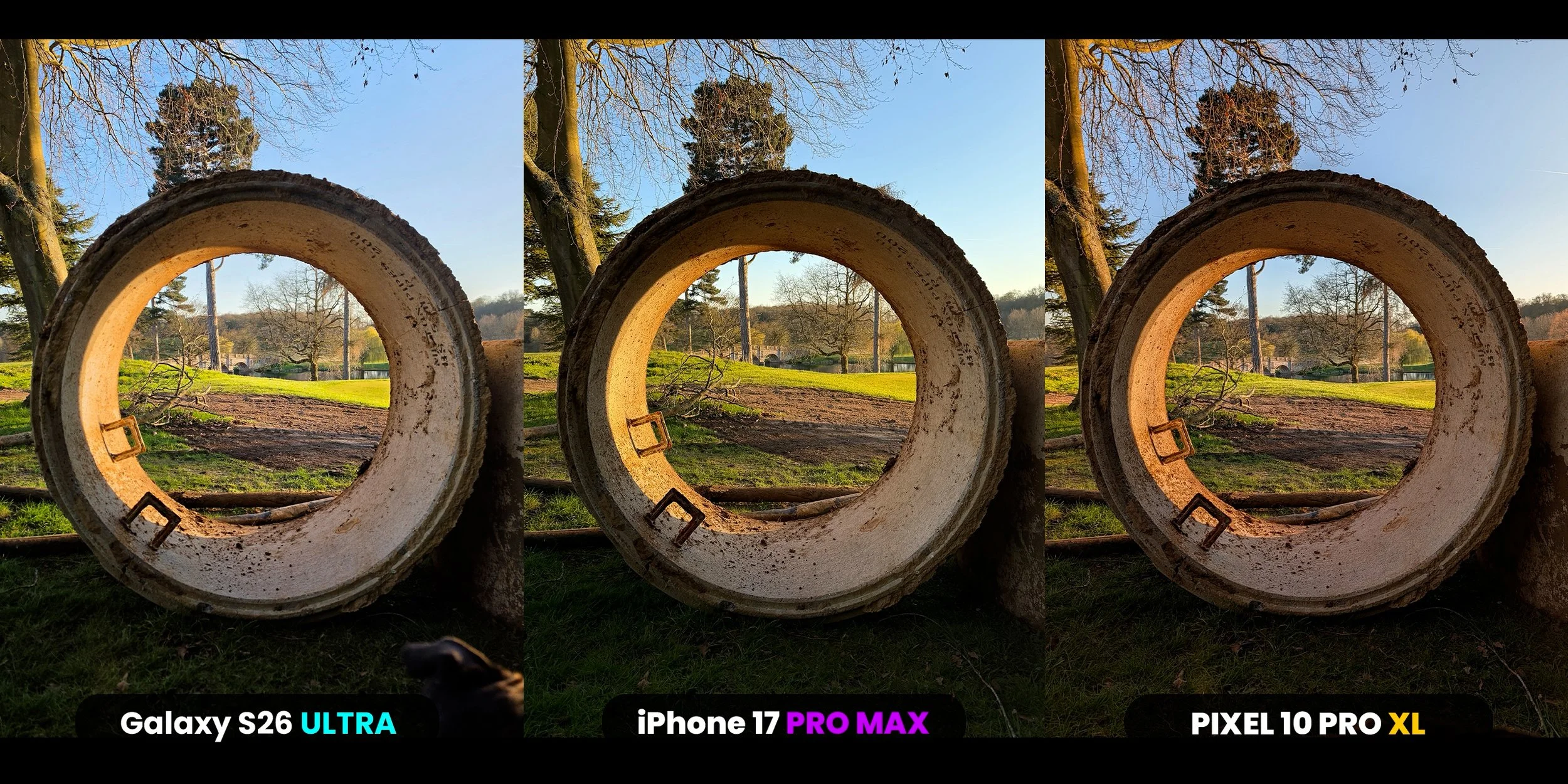
Okay, so this one is a great test of dynamic range, as this kind of concrete pipe thing in the foreground is in the shadows beneath a tree, and in the distance, it is extremely bright. So firstly, what do you think of the colours in the foreground and in the shadows of this image? And now let's zoom into the bridge way back there in the background and get a good look at those distant details to see which one is winning in this area.
Okay, so let me know so far — have the results surprised you? Is there one phone you think is going to completely outperform the others? Let me know in the comments. Now see that bridge? We were just looking at it through that pipe. Let's head over there for a maximum megapixel test.
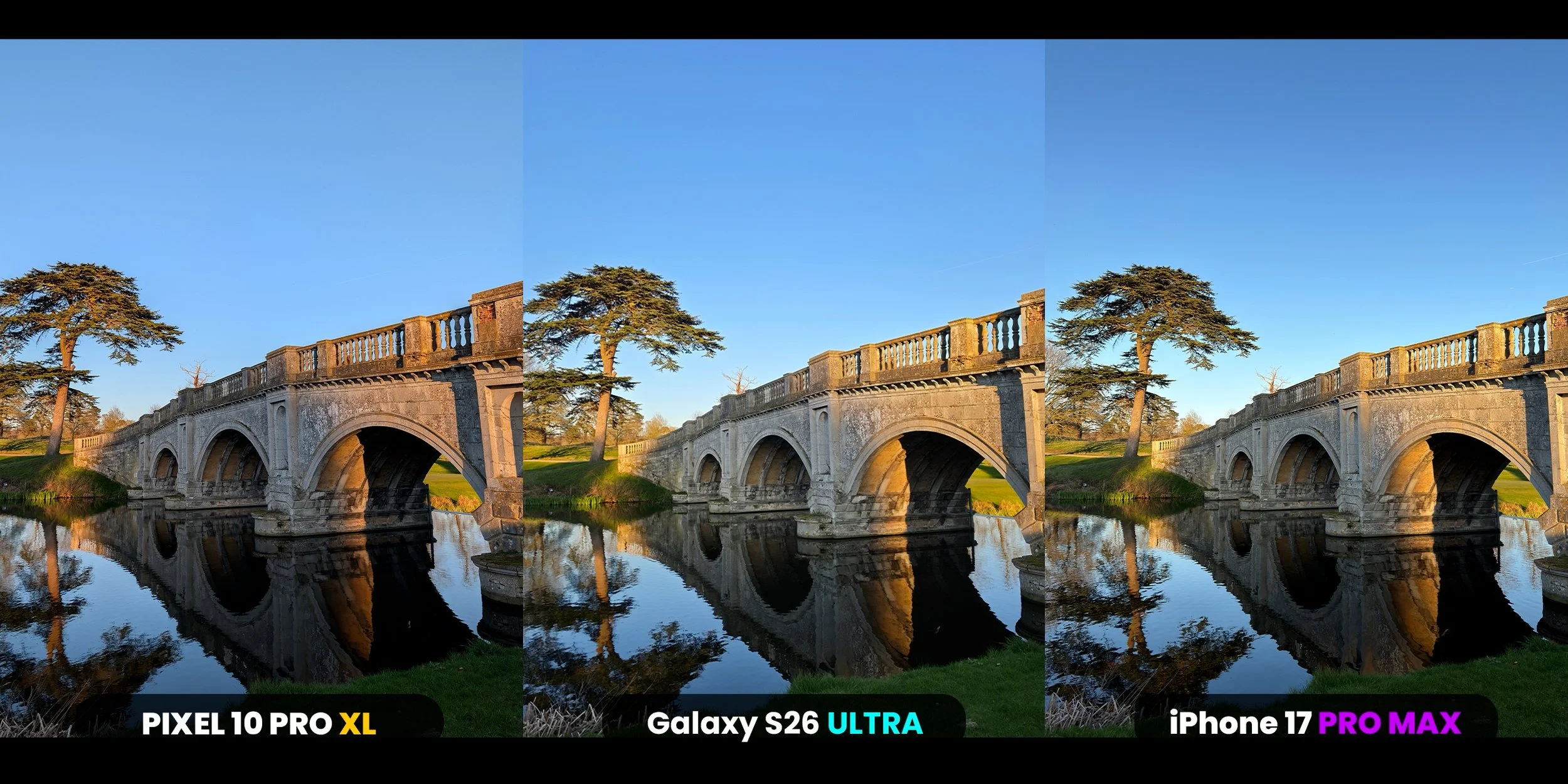
So we have three flagship phones, three different-sized primary sensors, with three different megapixel counts. The iPhone has a 48 megapixel sensor. The Pixel has a 50 megapixel sensor. And the Galaxy S26 Ultra has an insane 200 megapixel sensor. But can you tell the difference?
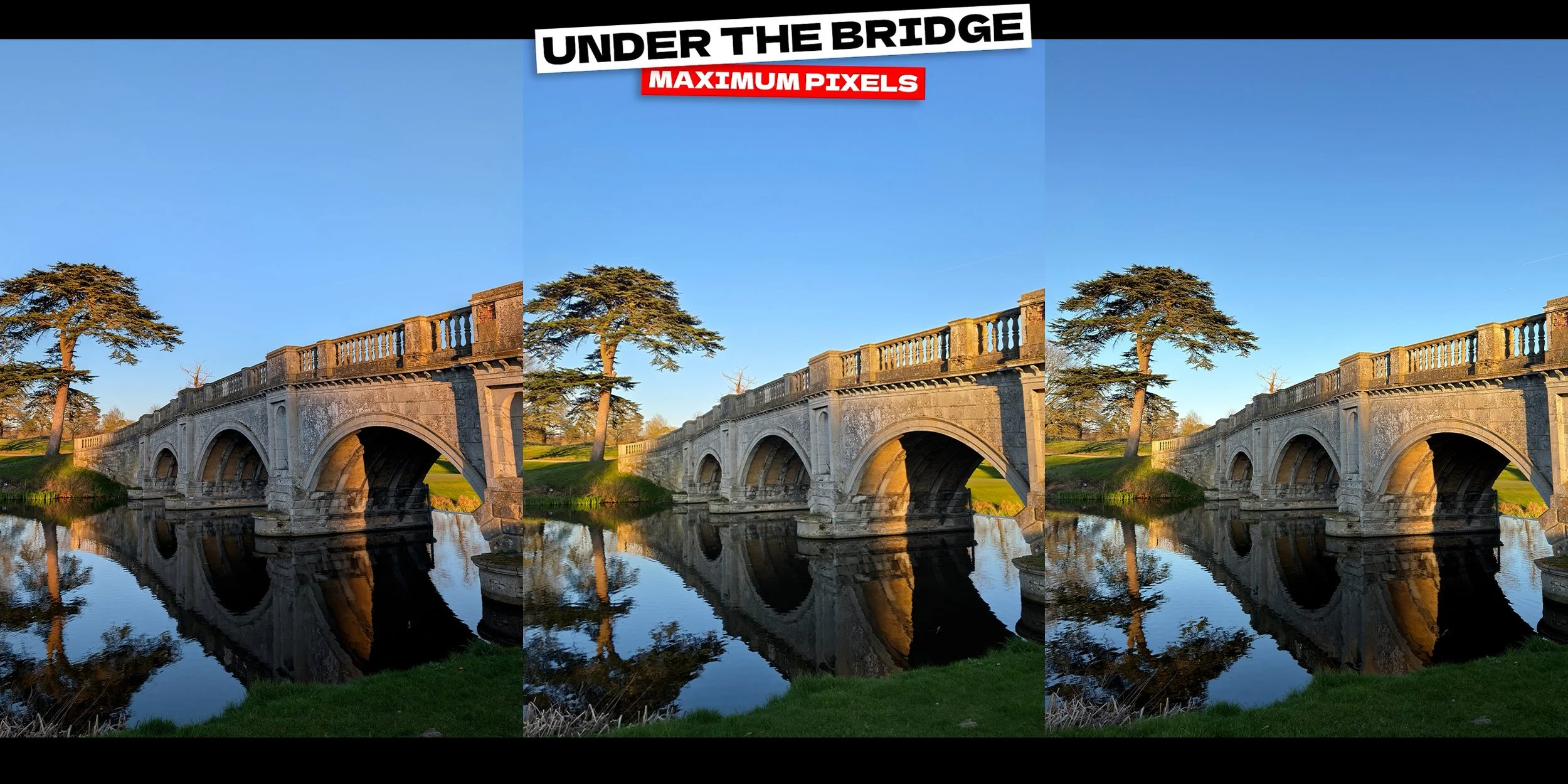
Let me know — did you choose the highest megapixel count, the lowest, or somewhere in between as the best image? And regardless of what you choose, there is something important to learn from this: megapixel counts don't count for much if the sensor sizes are smaller and the lenses and coatings are not high quality. Also, the digital image processing and camera AI play a big part. And often this can actually make up for weaker sensors, rubbish lenses, and coatings. And really, I could talk a lot more on this subject, but ain't nobody got time for that.
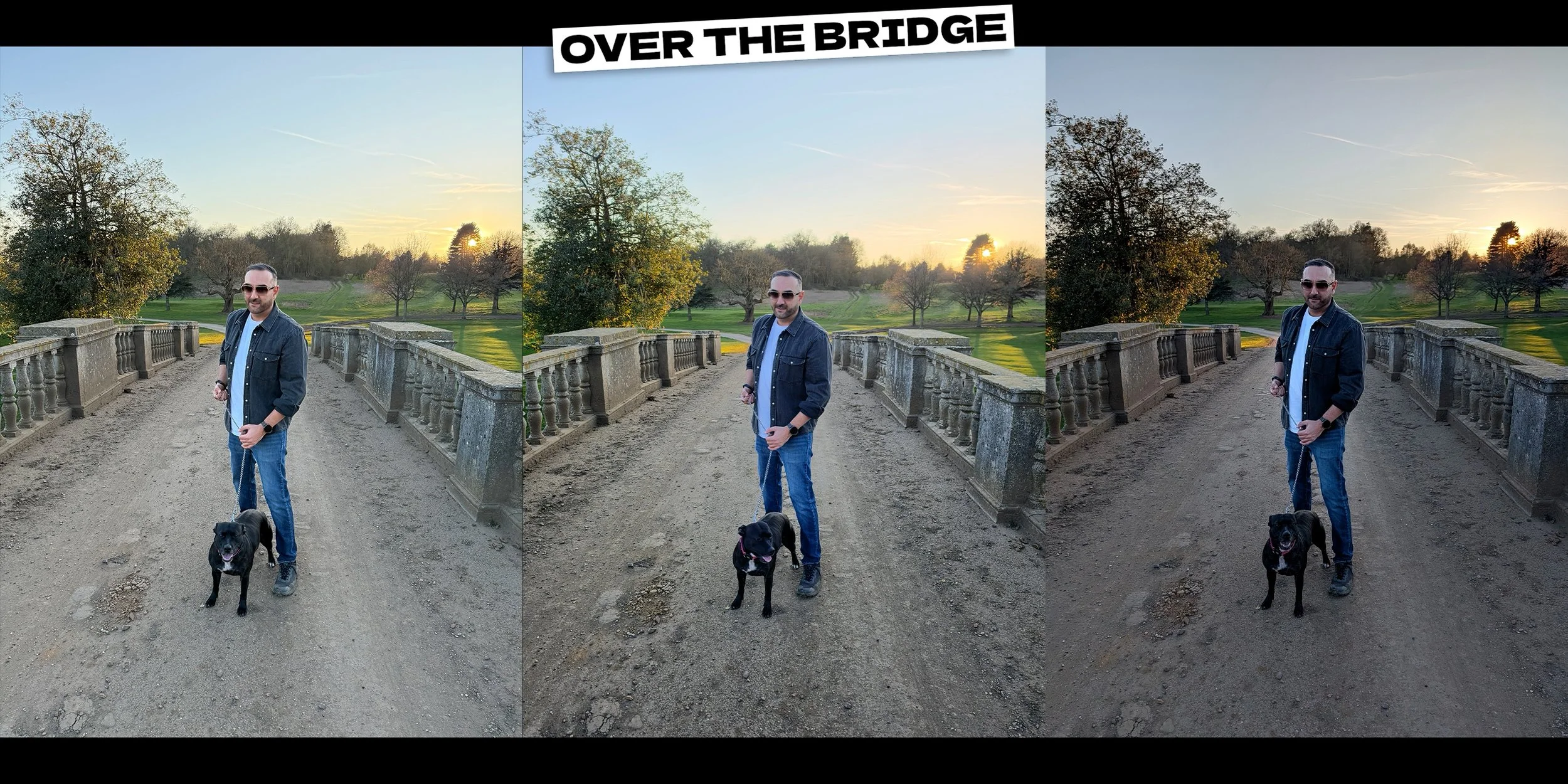
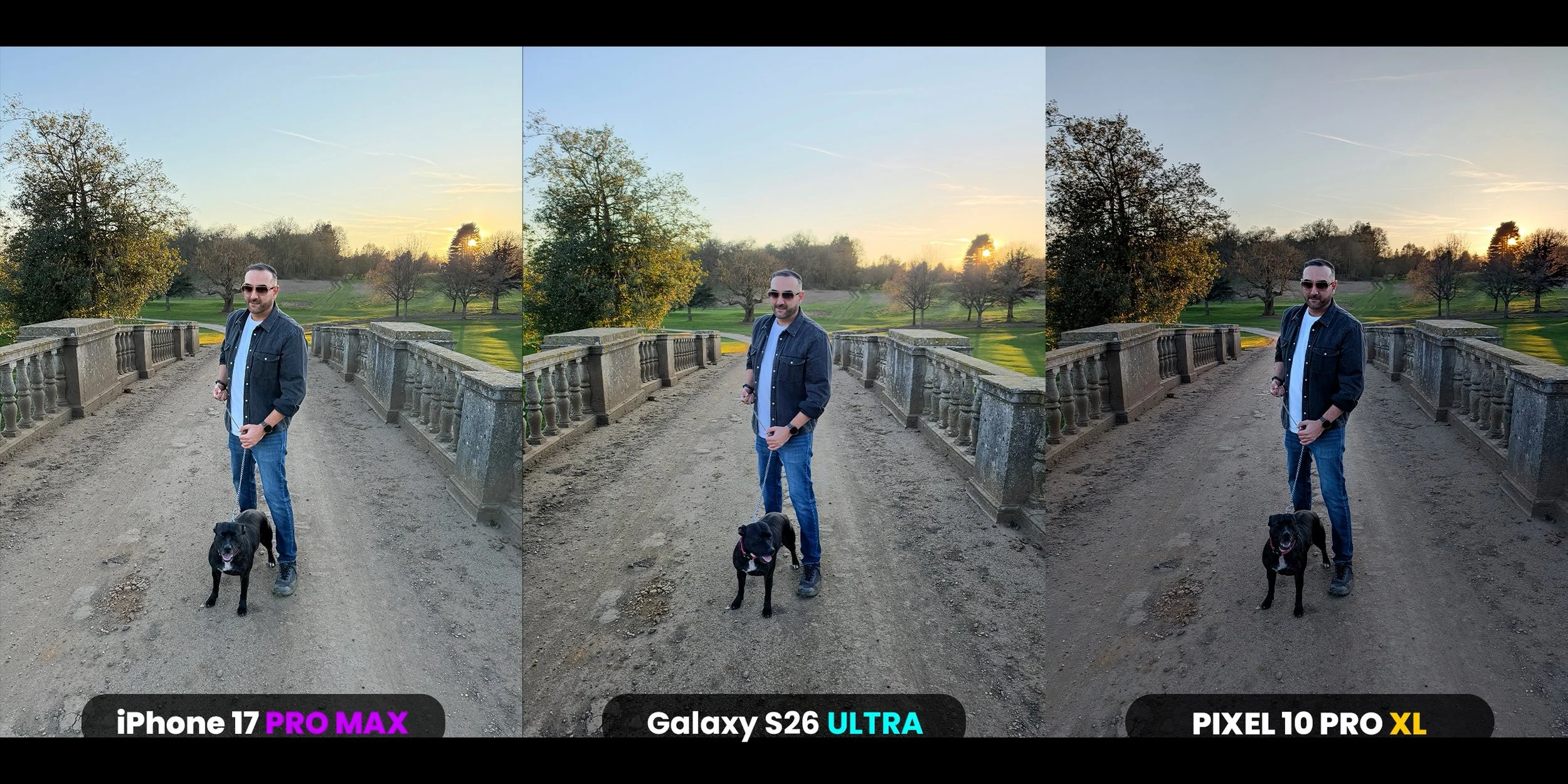
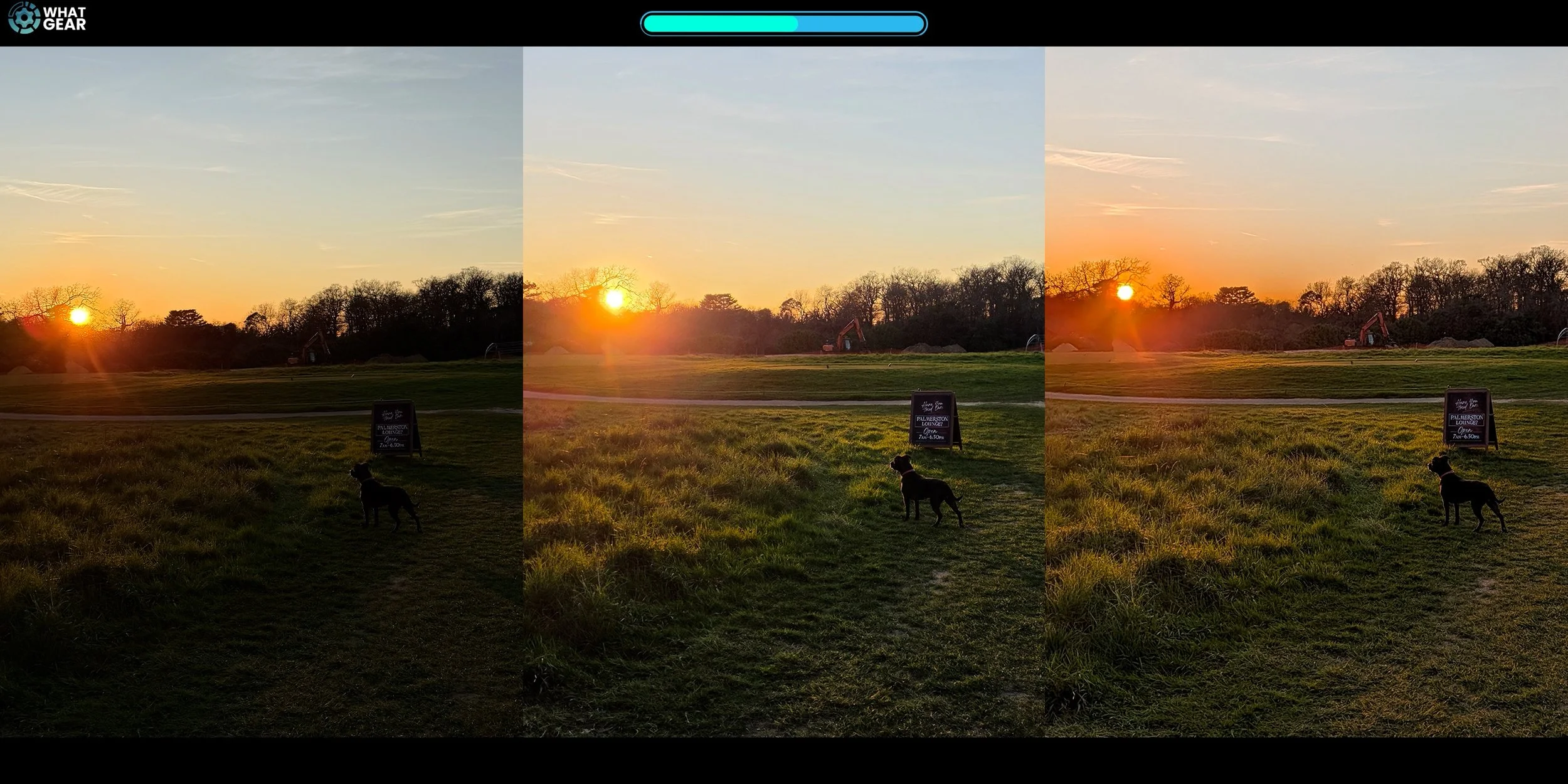
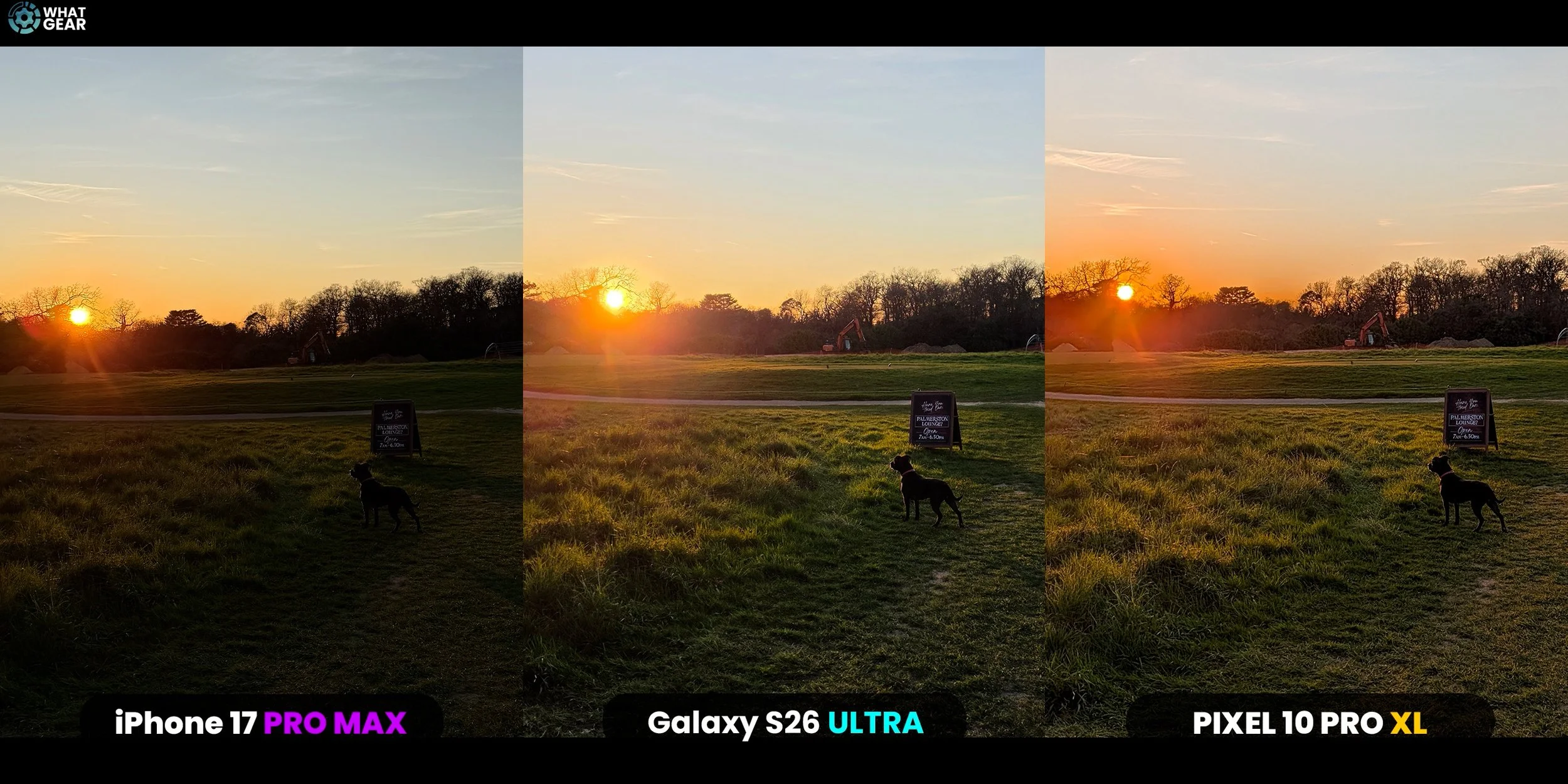
So let's move on to the next one. Here is me and The Phantom Menace. Again, a bright sunset in the back, which poses a challenge for the cameras when it comes to handling dark details and shadows, as you see here on the dog. She is notoriously hard to take good photos of because her fur is kind of dark brown/black. So let's get a good look at the dog and see which one has captured the best details. And you could base the win just off that. But if you want to look at the overall image and choose which one looks the best in its entirety, that works too.
So now it's time for me to step out for a minute and grab a cup of tea. Coming up is a video stabilisation test, a zoom test, and then a duck hunt. You'll see what I mean. So I just want to chime in real quick here, because any smartphone can take a photo of a static object like a building and sharpen it up to make it look good. But you might be interested to see which one does the best when it comes to a moving target.
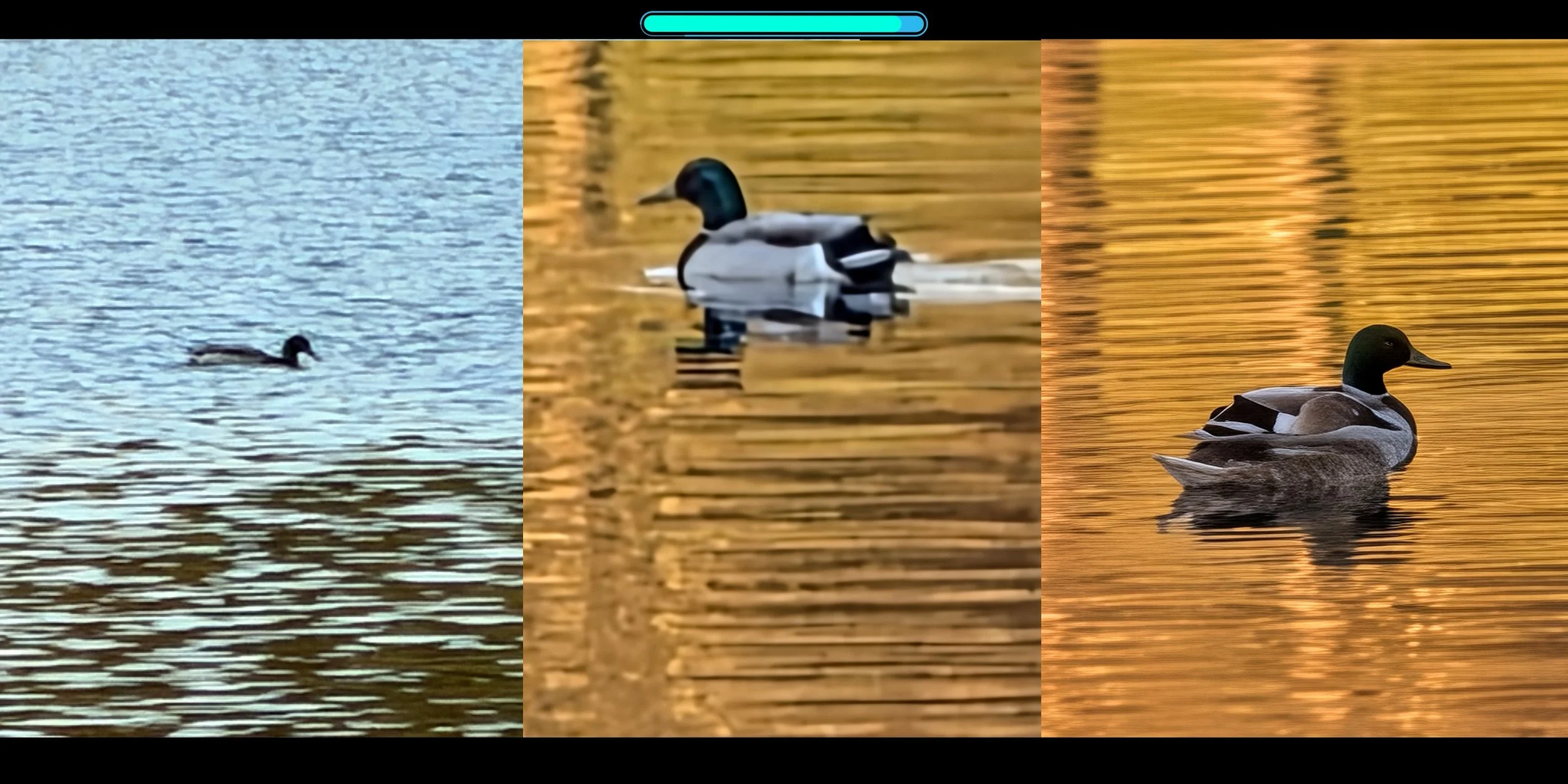
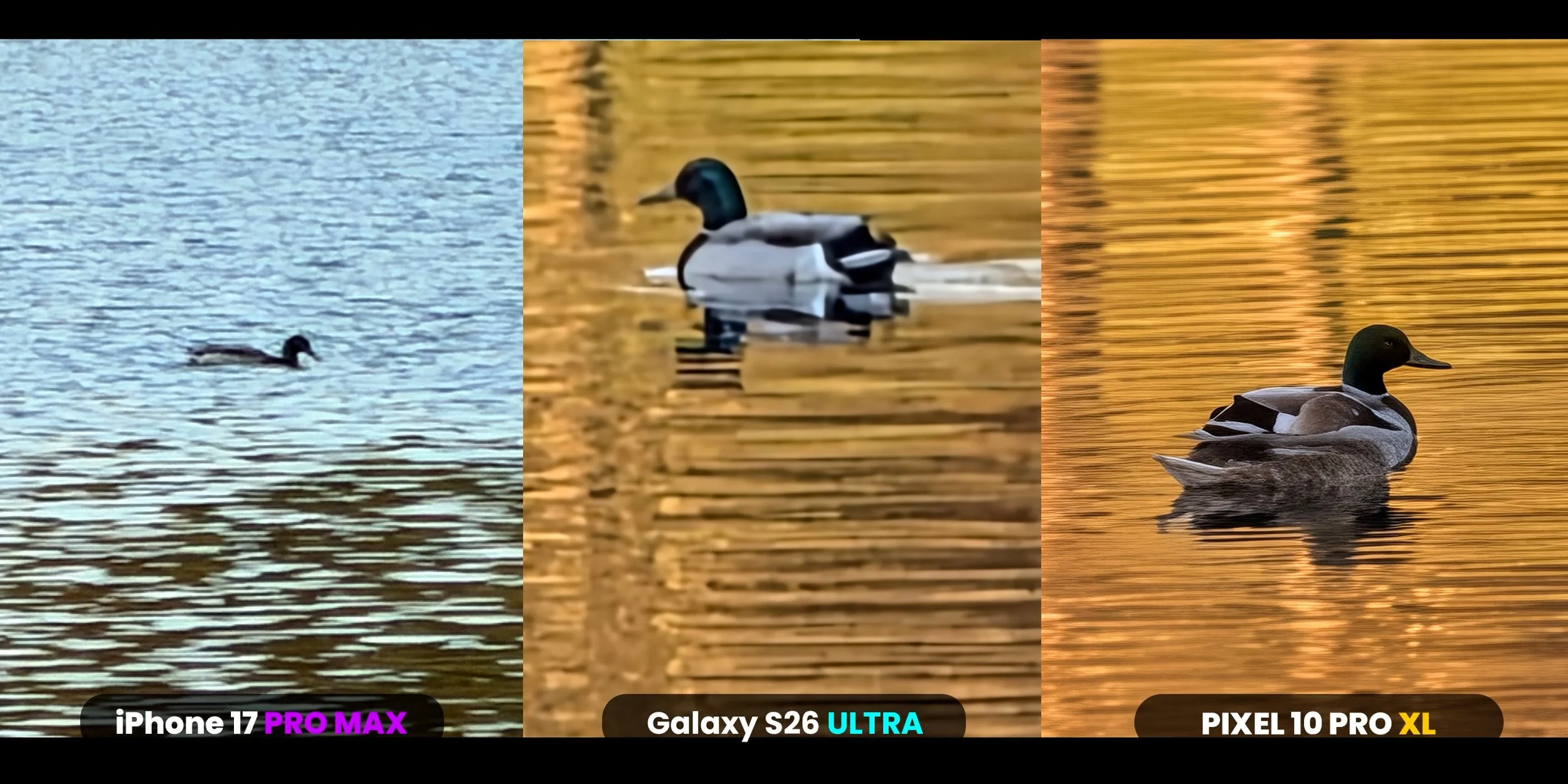
And here is that duck hunt I was talking about. Apologies — the shots aren't exactly the same. They were moving around and they were hard to track.Now, honestly, there is a really clear winner here. However, what I will say is that when you zoom into this picture taken on the Pixel, there are actually two ducks in the shot, and the one closer to the camera has its eye kind of blended into the feathers on the duck behind, which is quite bizarre. Anyway, let me know your thoughts on this and let's keep it moving.
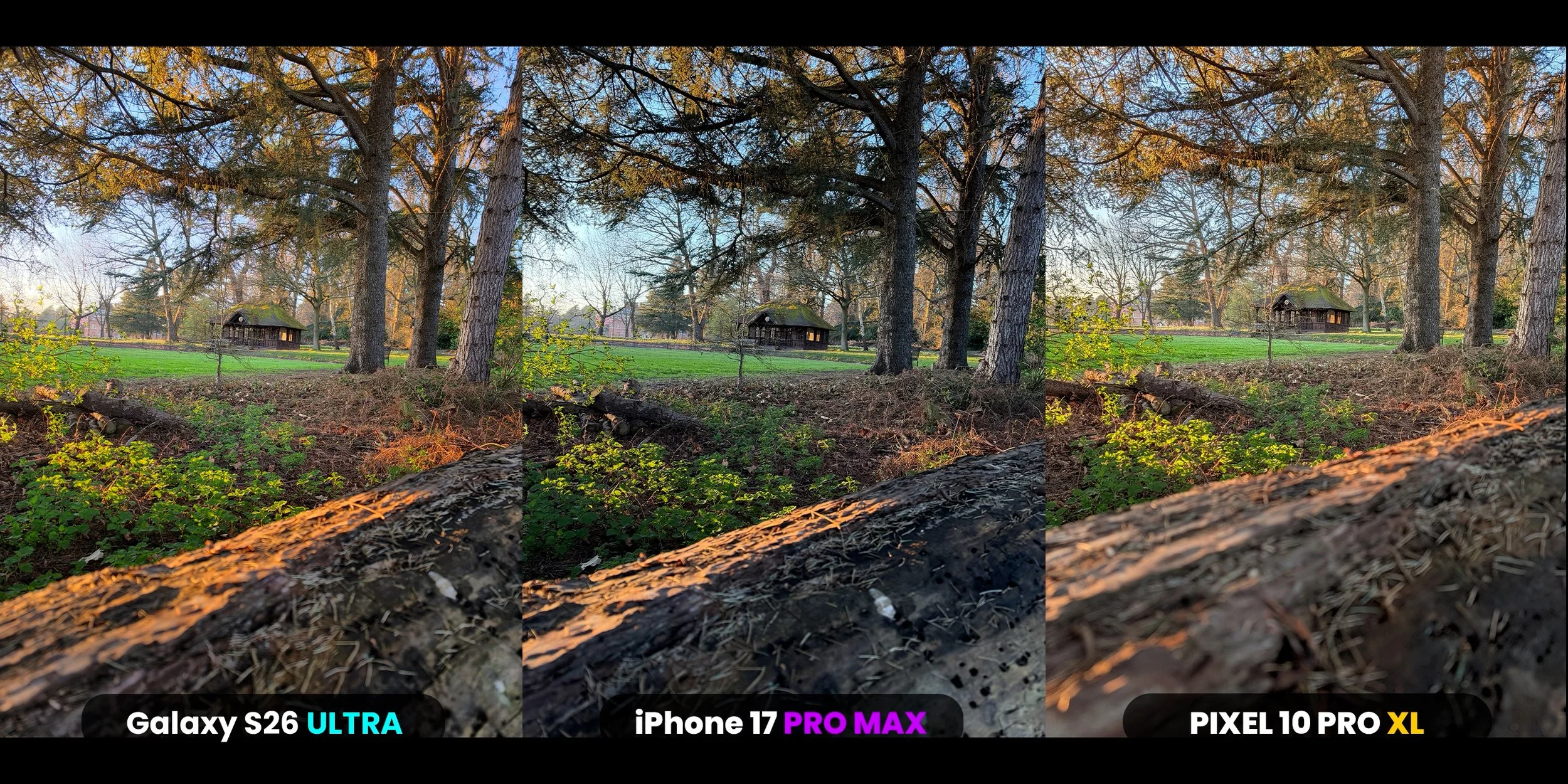
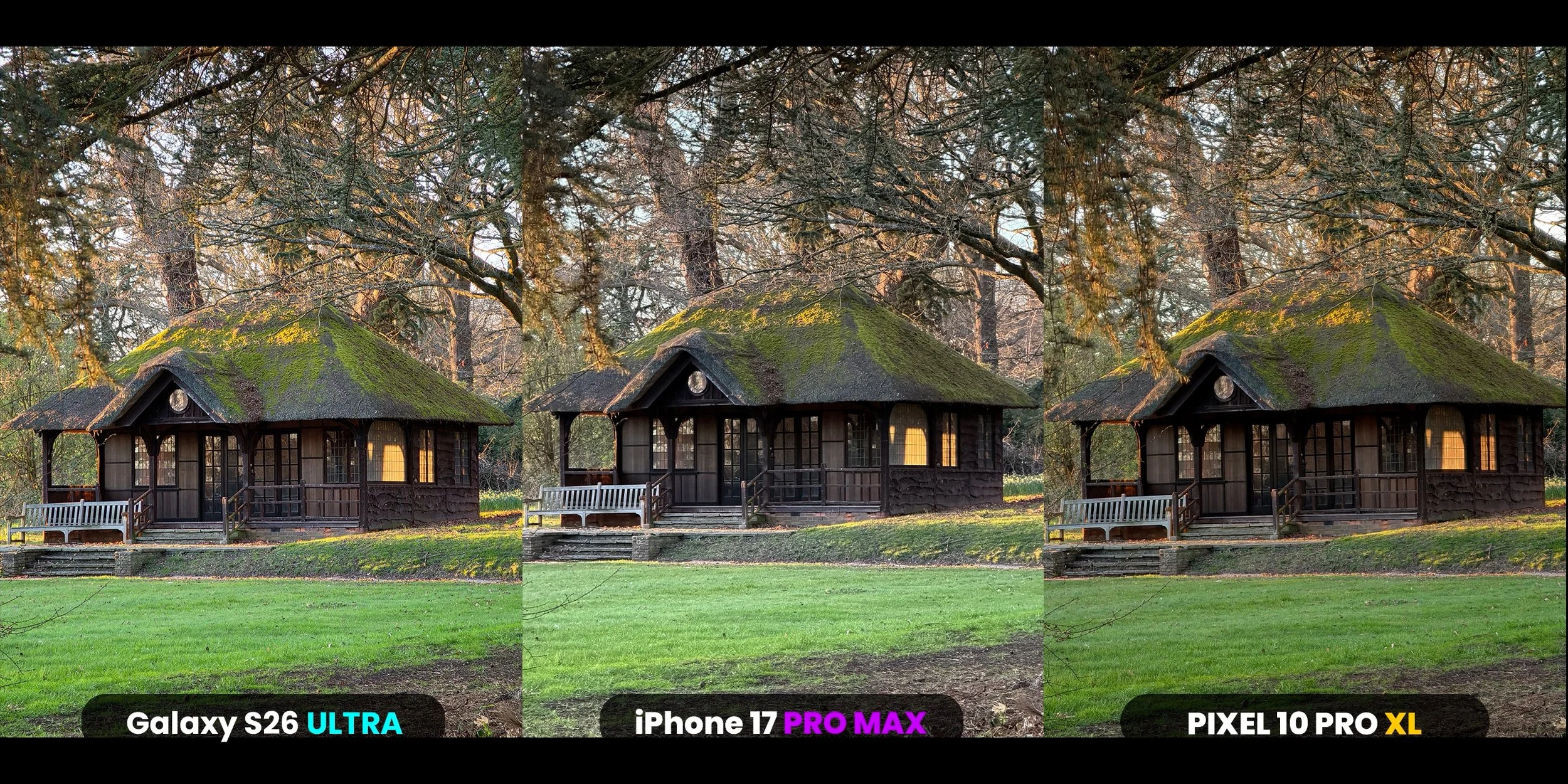
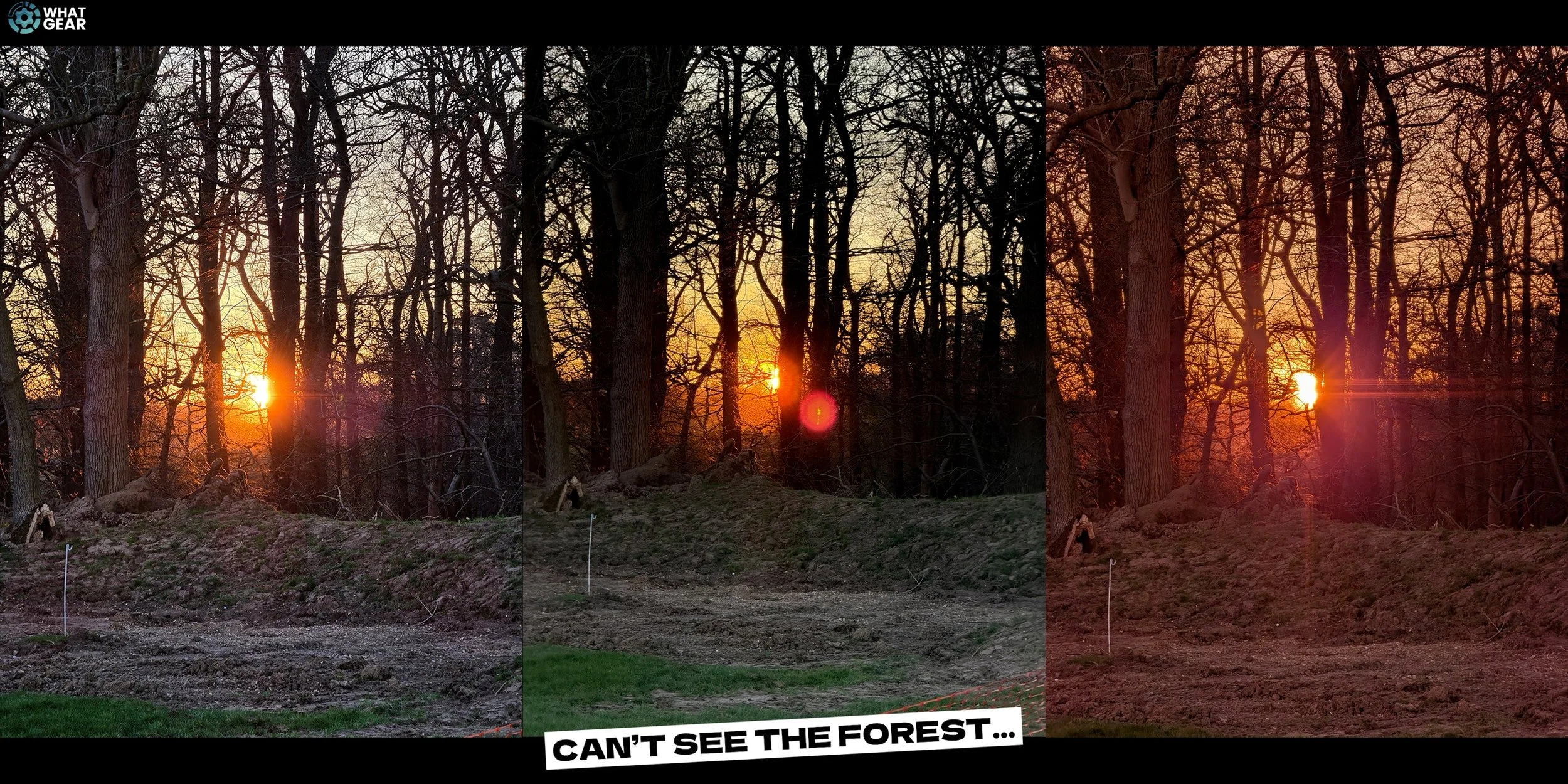
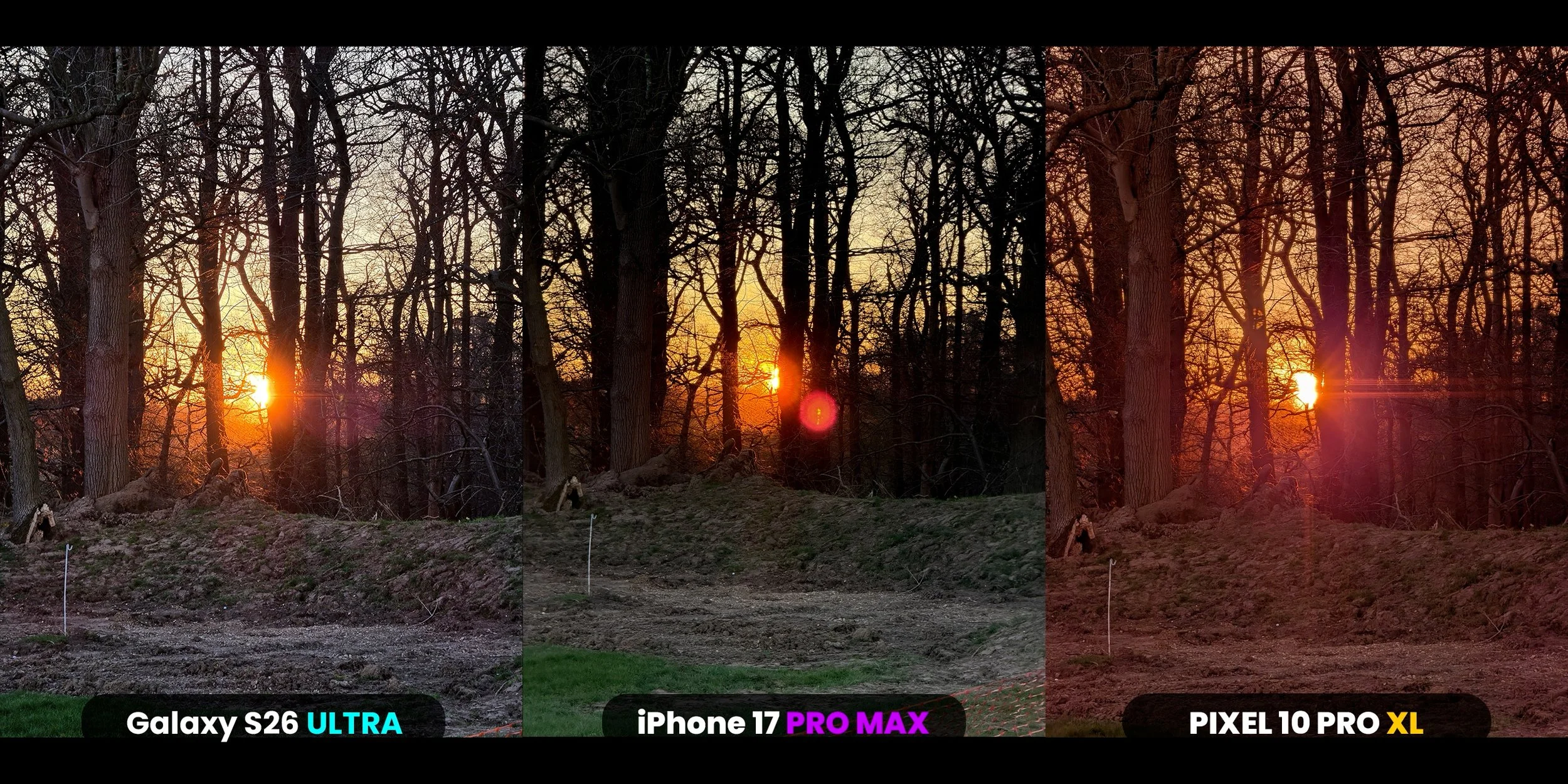
Here is a shot through the trees of a little spooky cabin. This is to see which one has actually gathered the most amount of light and detail. I have noticed that sometimes when the primary camera sensor is so good, it's actually better to crop into an image than use the telephoto camera, because sometimes it gives better results. Anyway, let's pick your winner here. And then we're going to have a closer look at this with a telephoto zoom.
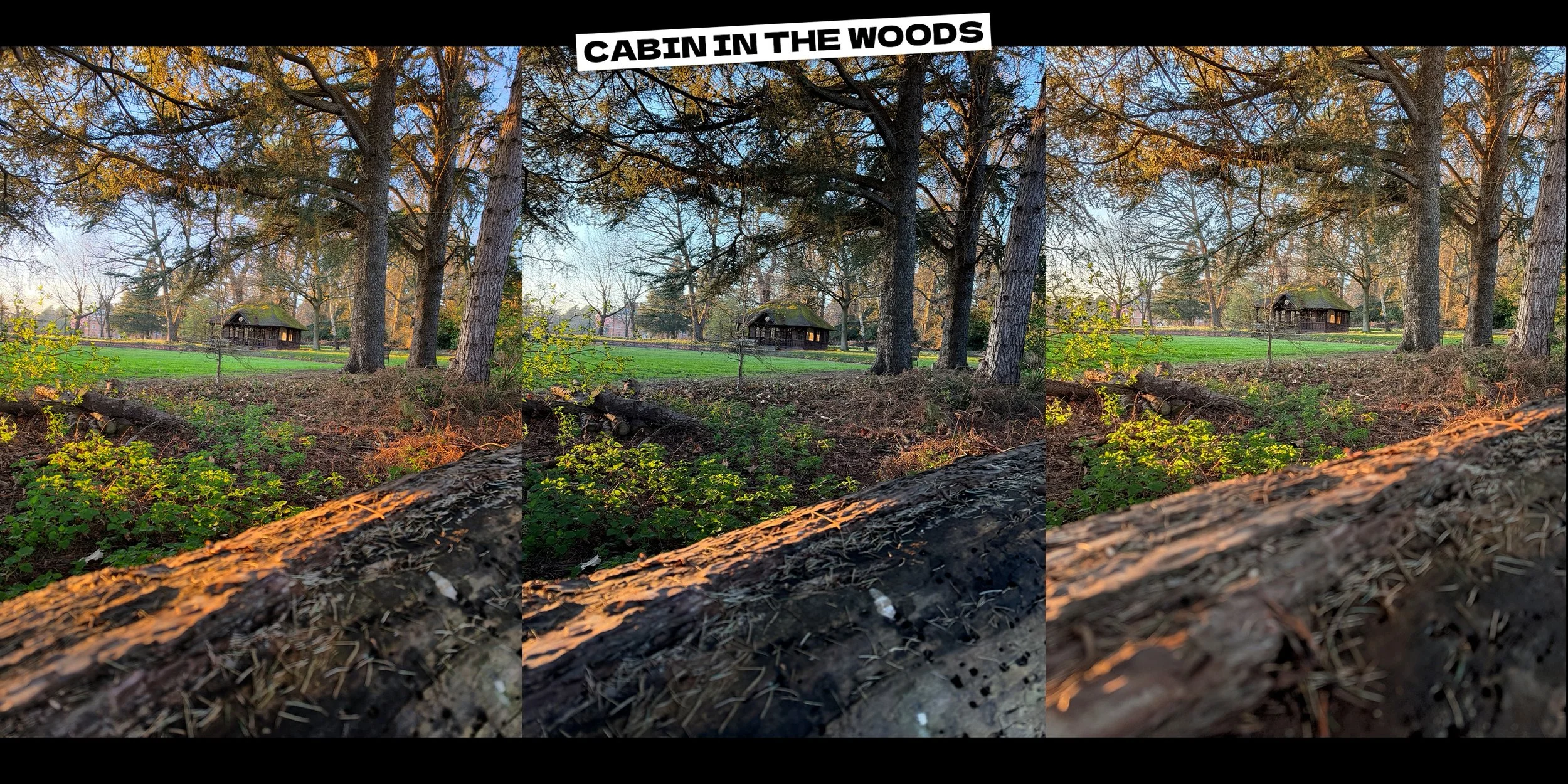
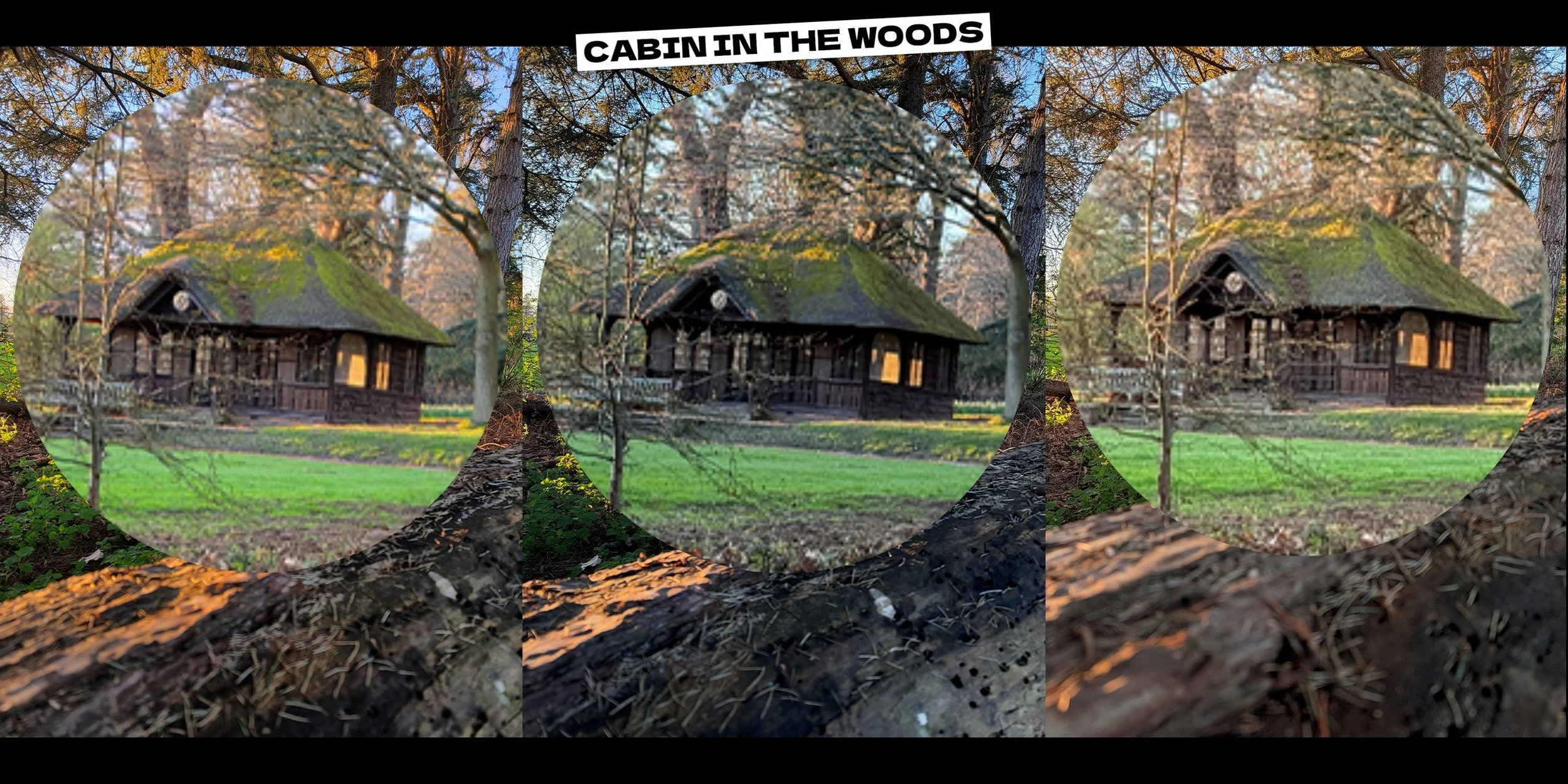
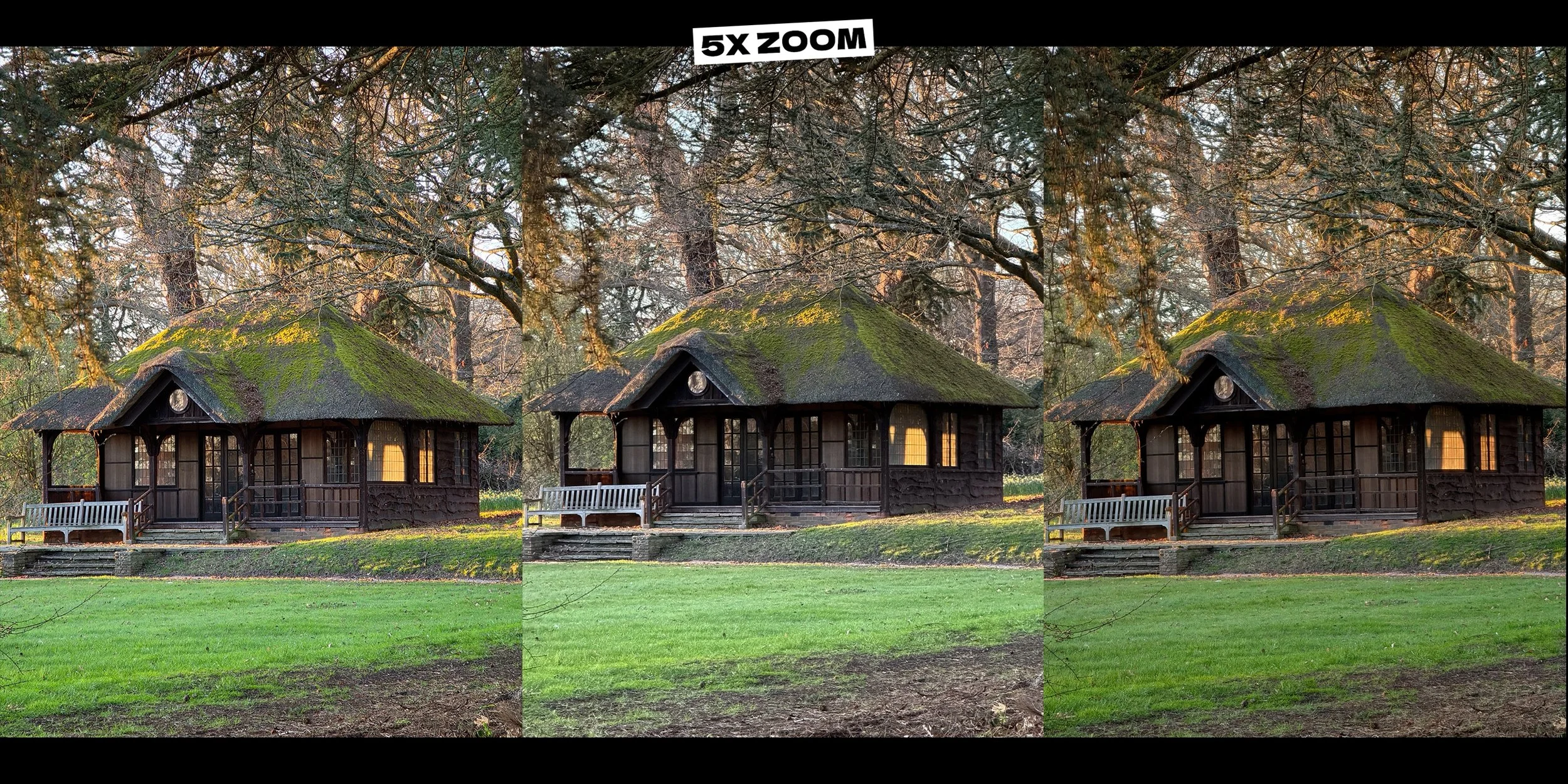
So yeah, I think this is one of those scenarios where the telephoto is definitely going to be better than cropping in on the primary camera. All three look really good, but this little round dial on the front of this building — let's zoom into that and see what we can see there. And let's start that timer.
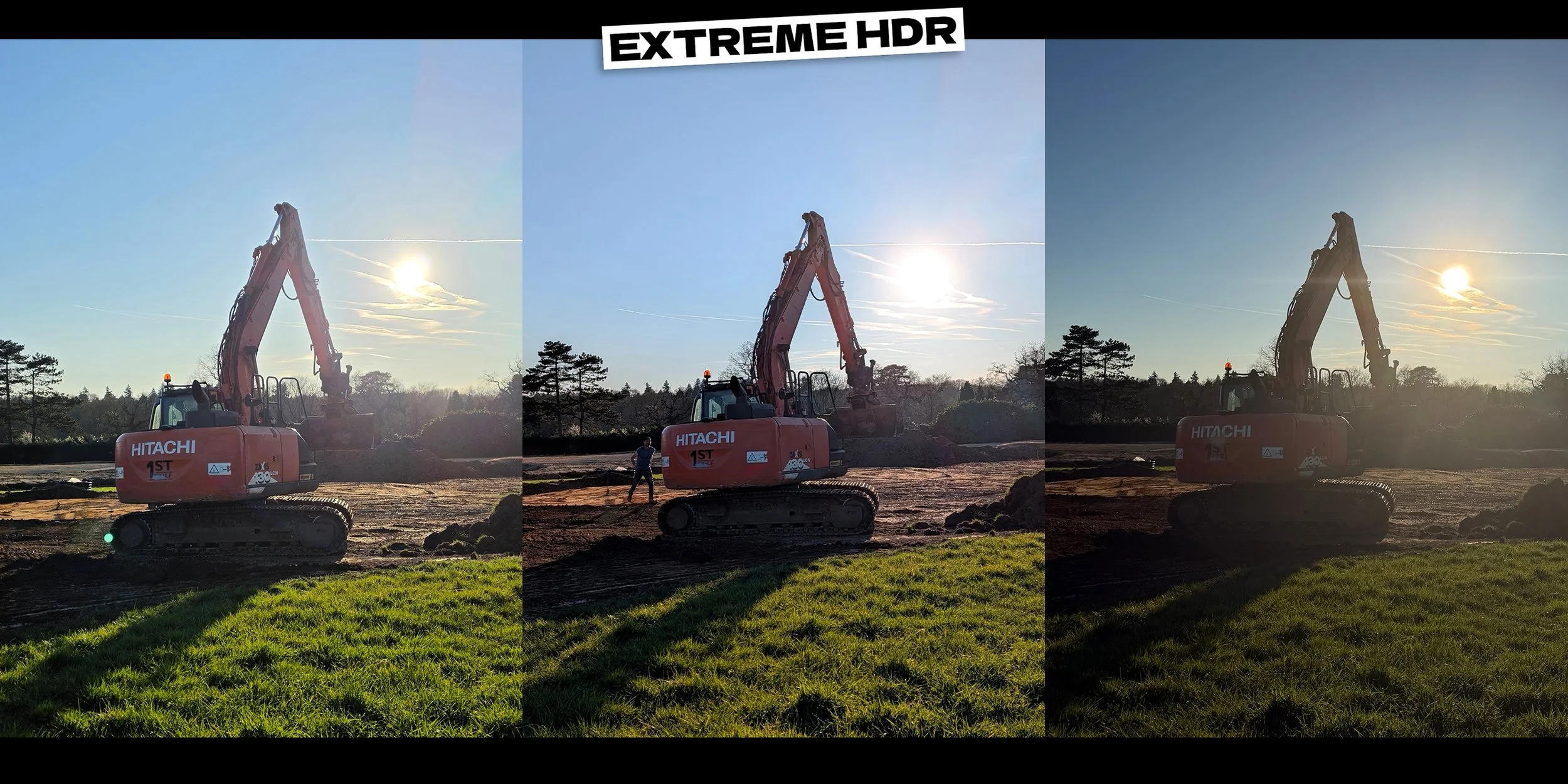
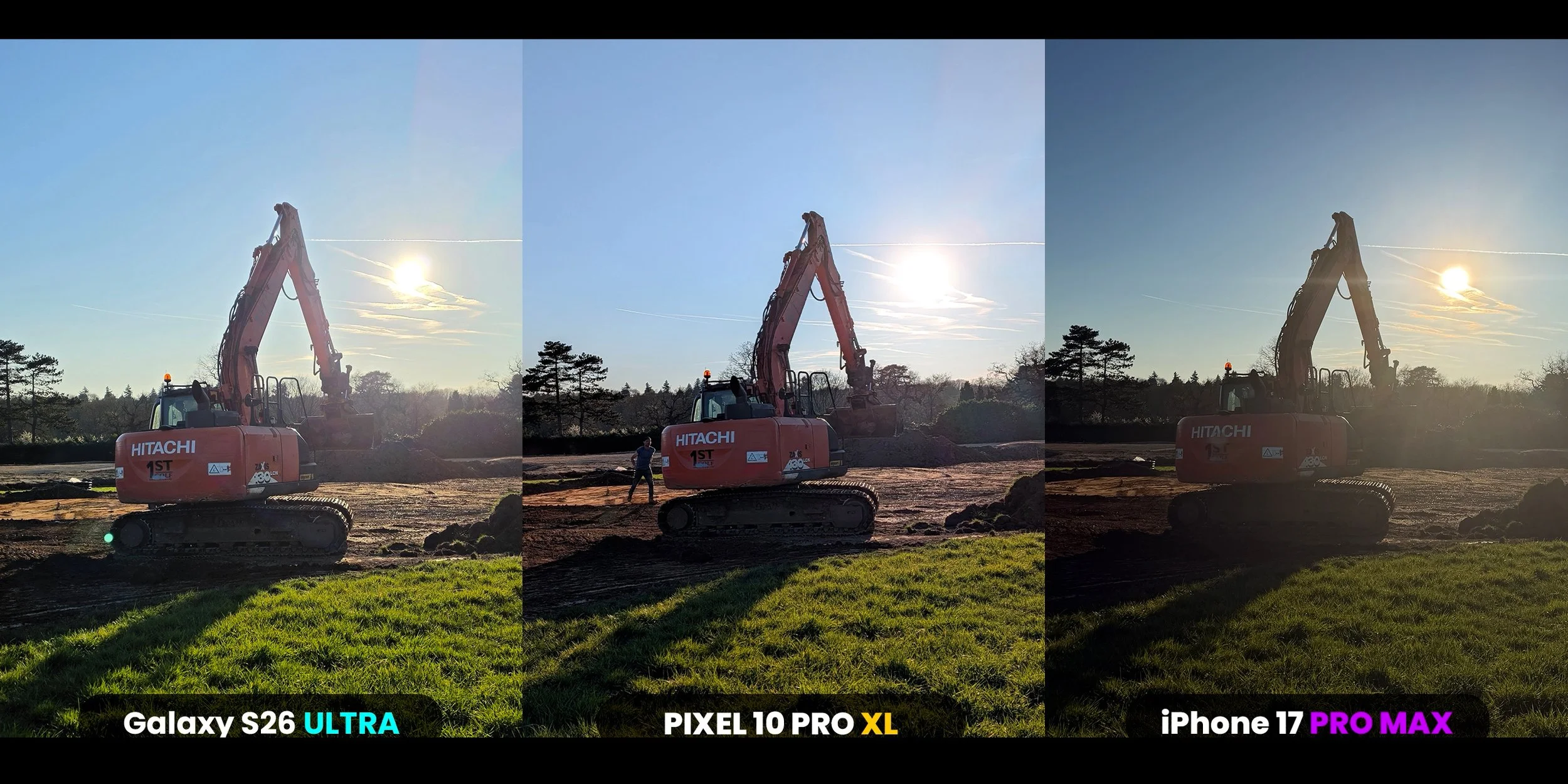
So, HDR camera tests don't get much more extreme than shooting directly at the sun. And you'll notice there's a really nice cloud pattern back there too, which looks kind of cool. And in the foreground, the shadows cast by the tractor give us a good idea of which phones possibly have the best dynamic range. Again, this one is largely about balance. Because you can expose for the sun and make that look really nice with the clouds, or you could expose for the foreground and let the sun blow out. But I do believe we are seeing both approaches here. So choose your winner.
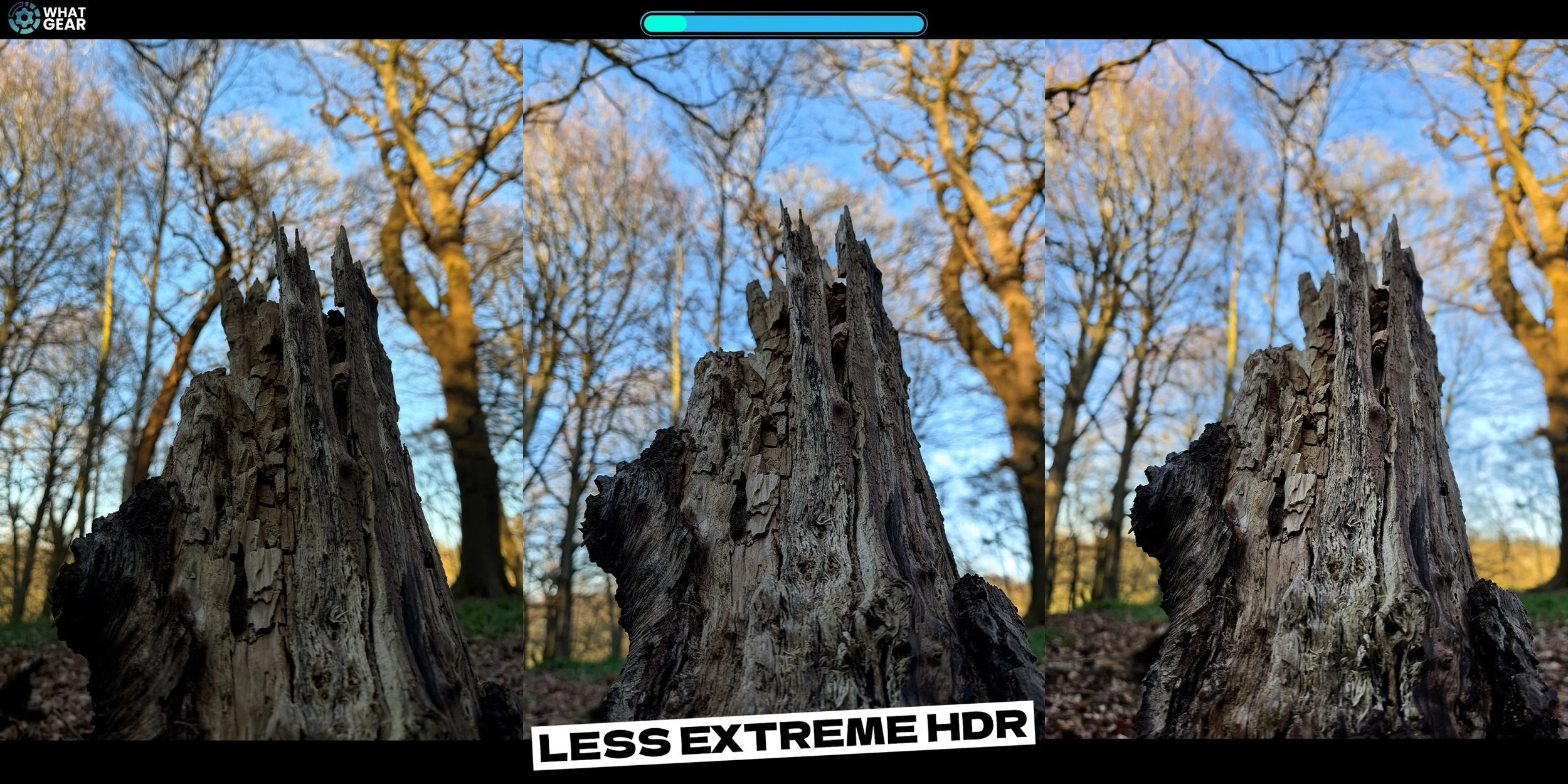
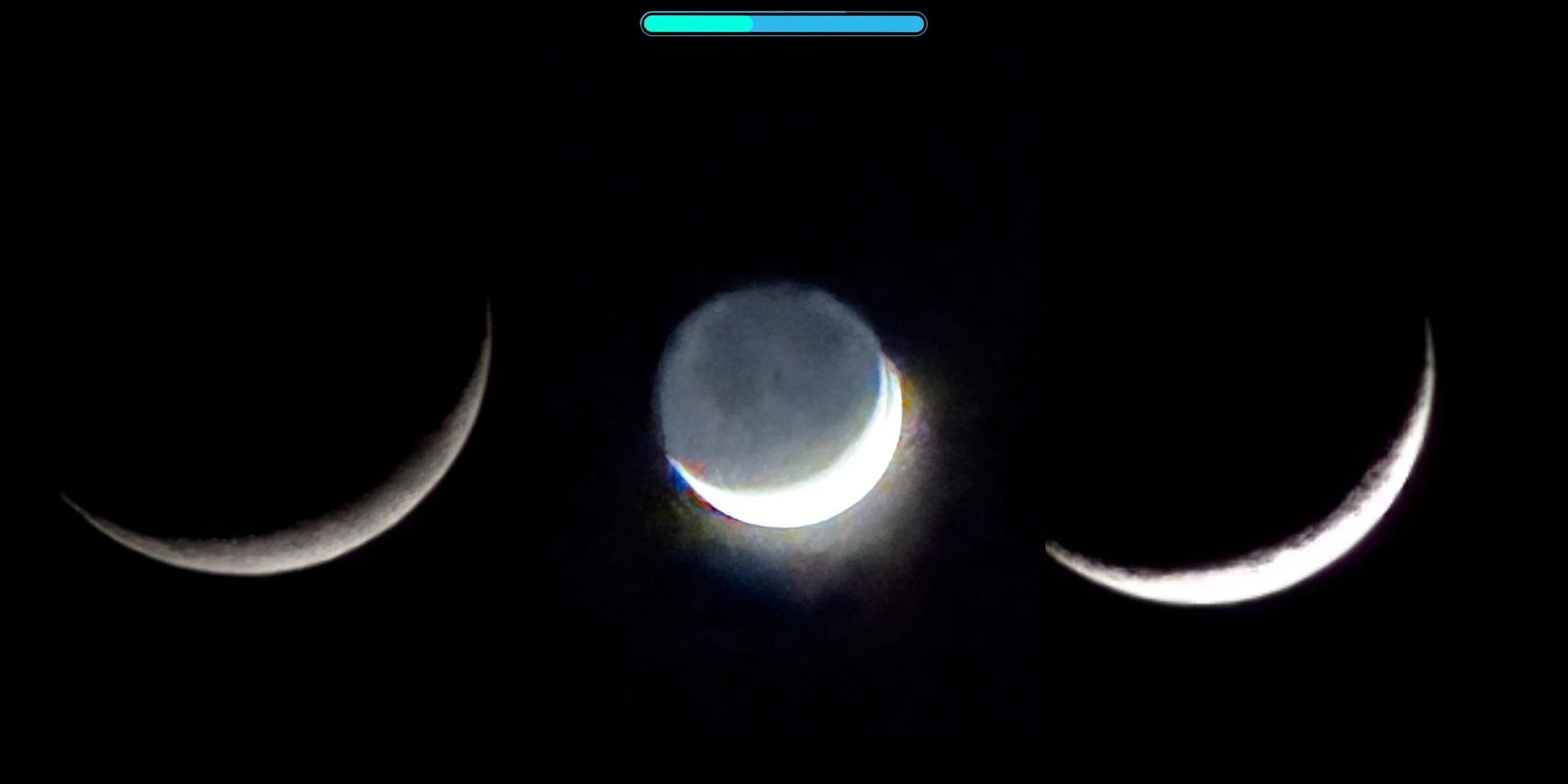
I feel like I've been talking too much, so we're just going to speed run through the next few photos, then we'll do a nighttime moon zoom, and then I will join you again for the low-light night shots.
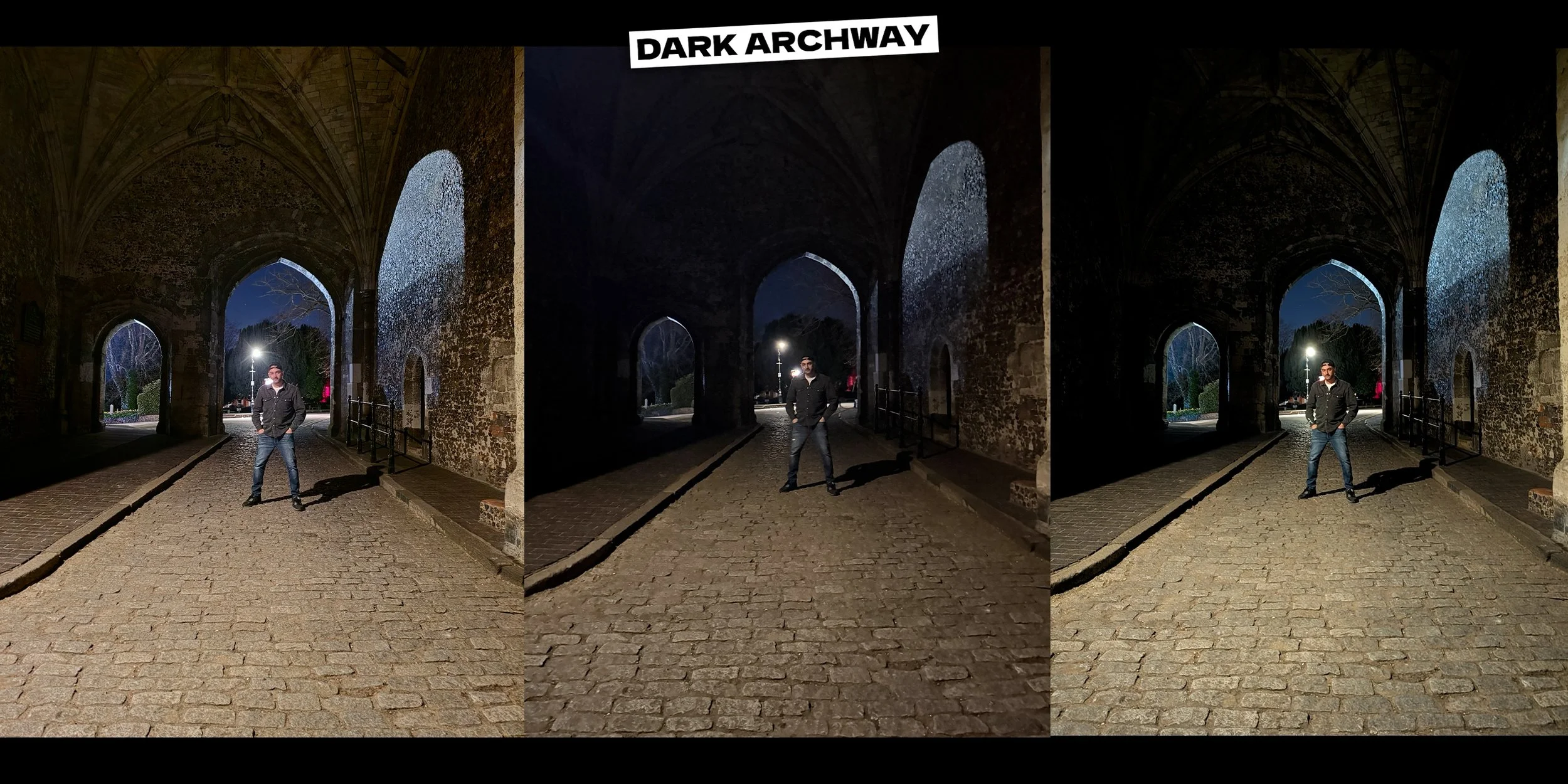
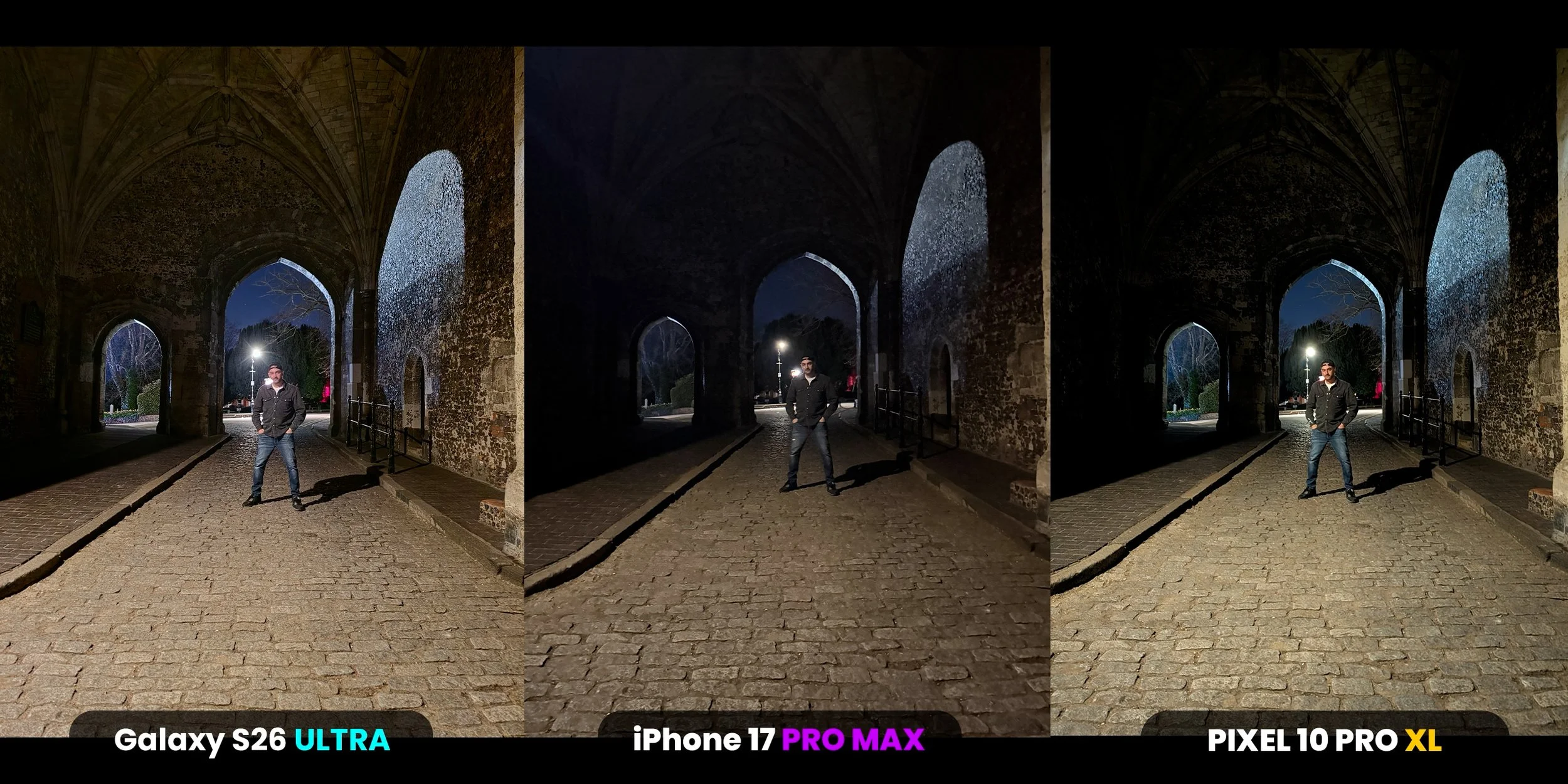
So I know this looks well-lit, but trust me, when I was standing there with my own eyes, it was incredibly dark underneath this archway. I'm actually blown away by all three of the phones, just because of how bright these images appear, knowing how dark it actually was. And I do believe there is a clear winner here. One of them just has crazy shadow detail, but sometimes people like things to look more like real life, so maybe you'd prefer the more contrasty look. So you choose and mark it down on your scorecard.
This one is quite interesting. It was a clear night, and there were stars out. And in two of these images, you can actually see some. And in one of them — yeah, not so much. And if you look right at the top of this cathedral, you'll notice the details begin to darken and, in some cases, fade away entirely. Now, there could be two reasons for this: One, the sensor is not sensitive enough, or two, the image processing is better on a couple of the devices. There's also a bit of a colour difference here, but it is subtle. So let's start the timer, and you choose which one wins here.
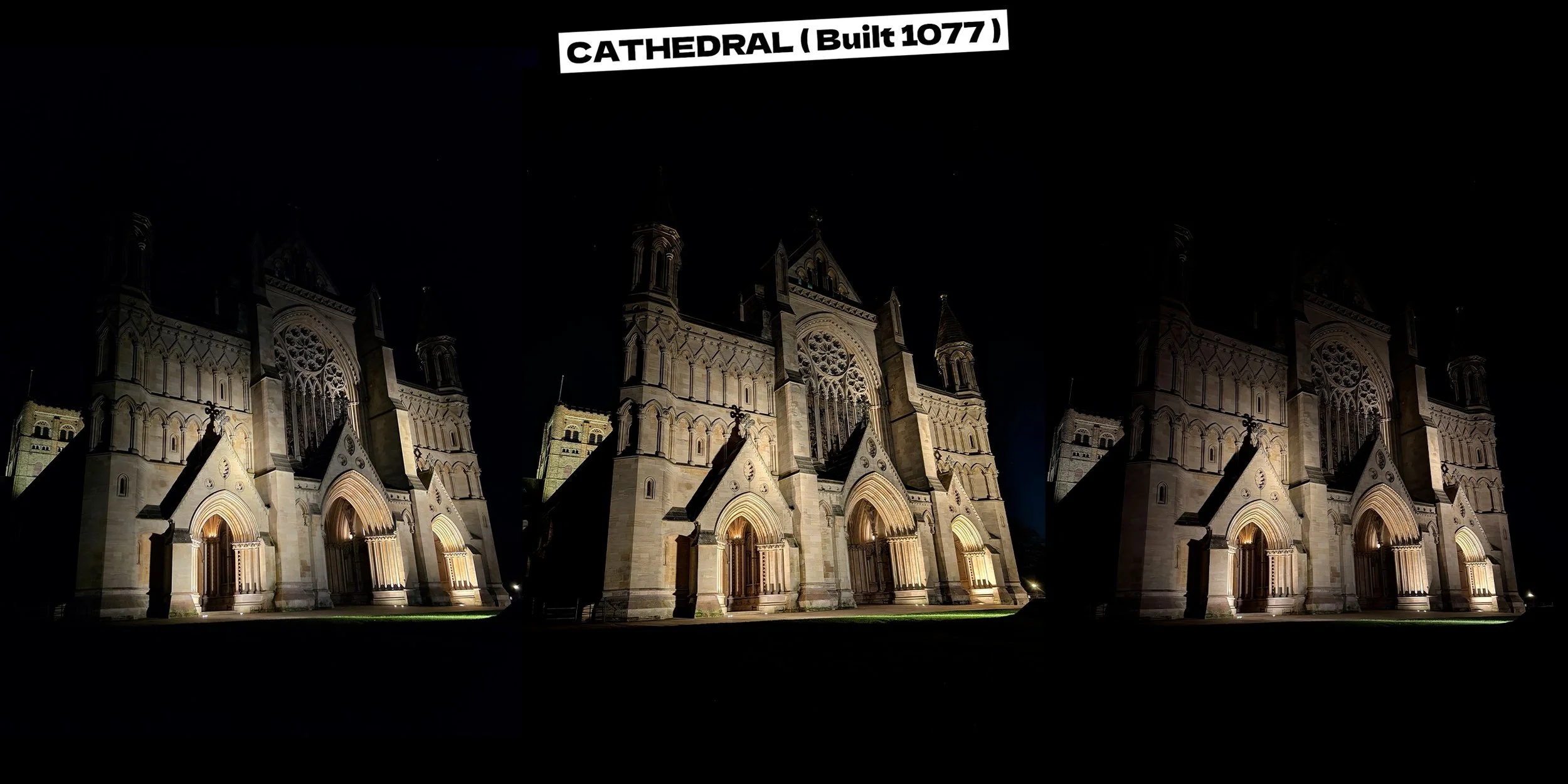
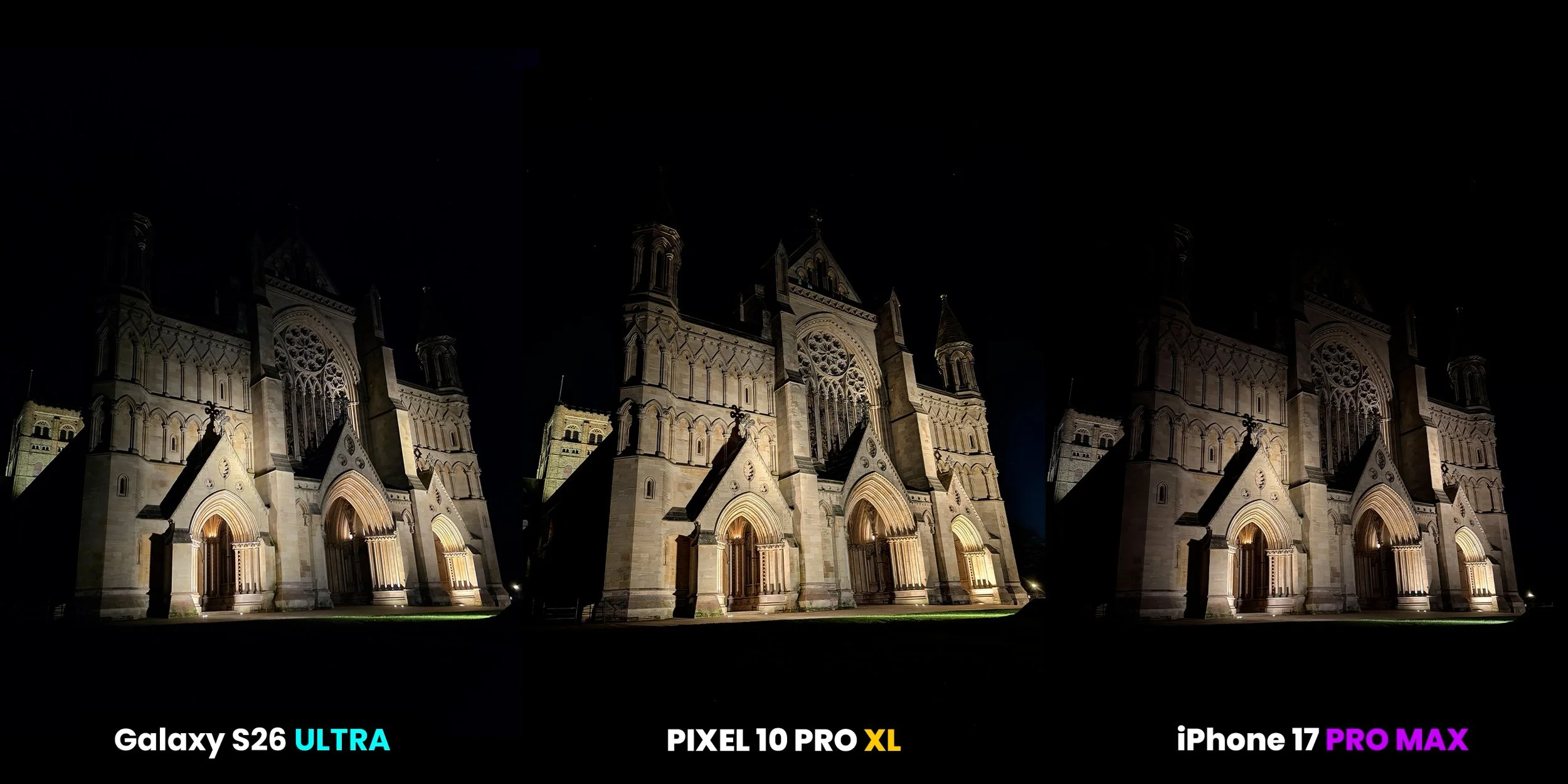
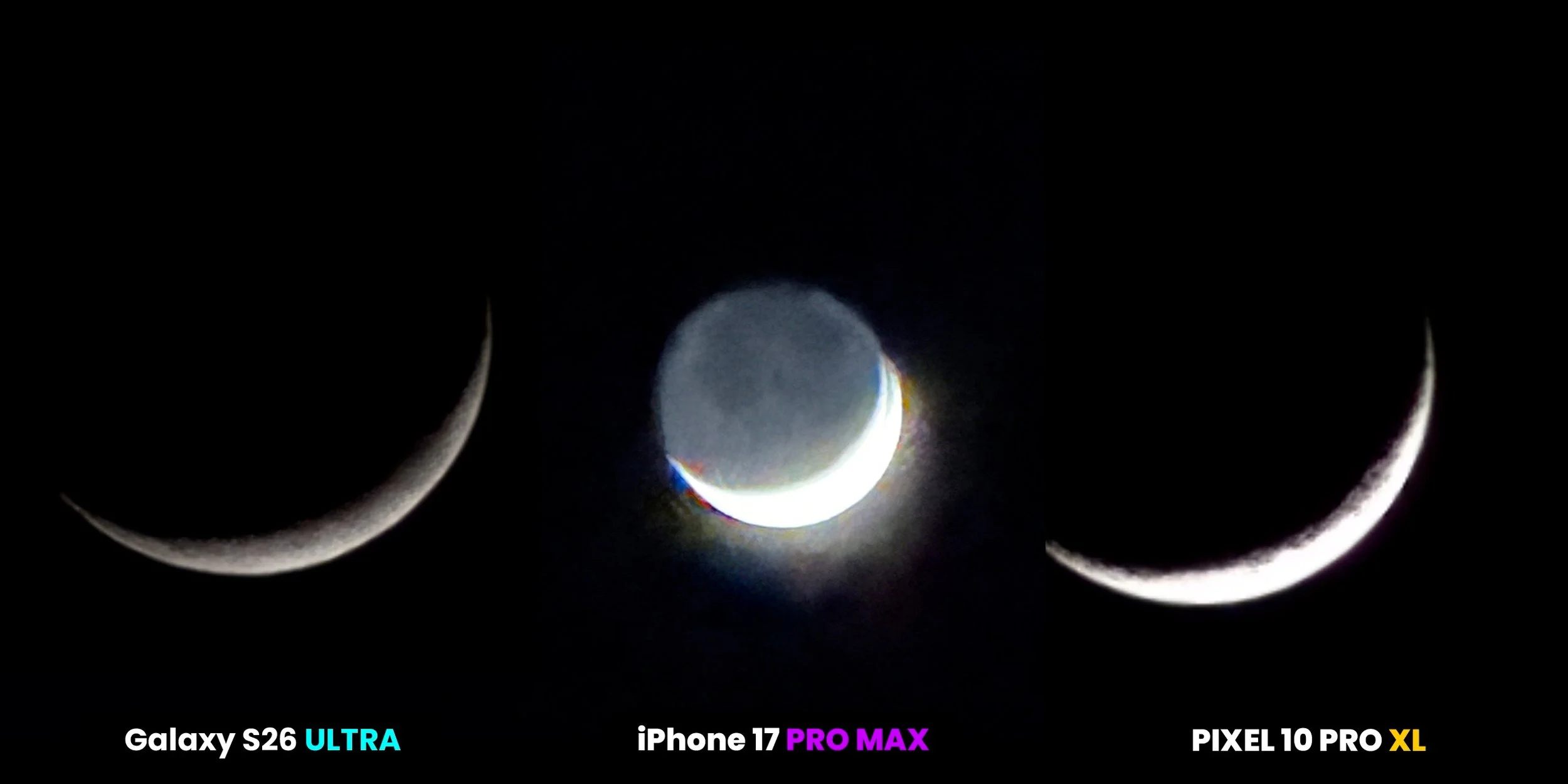
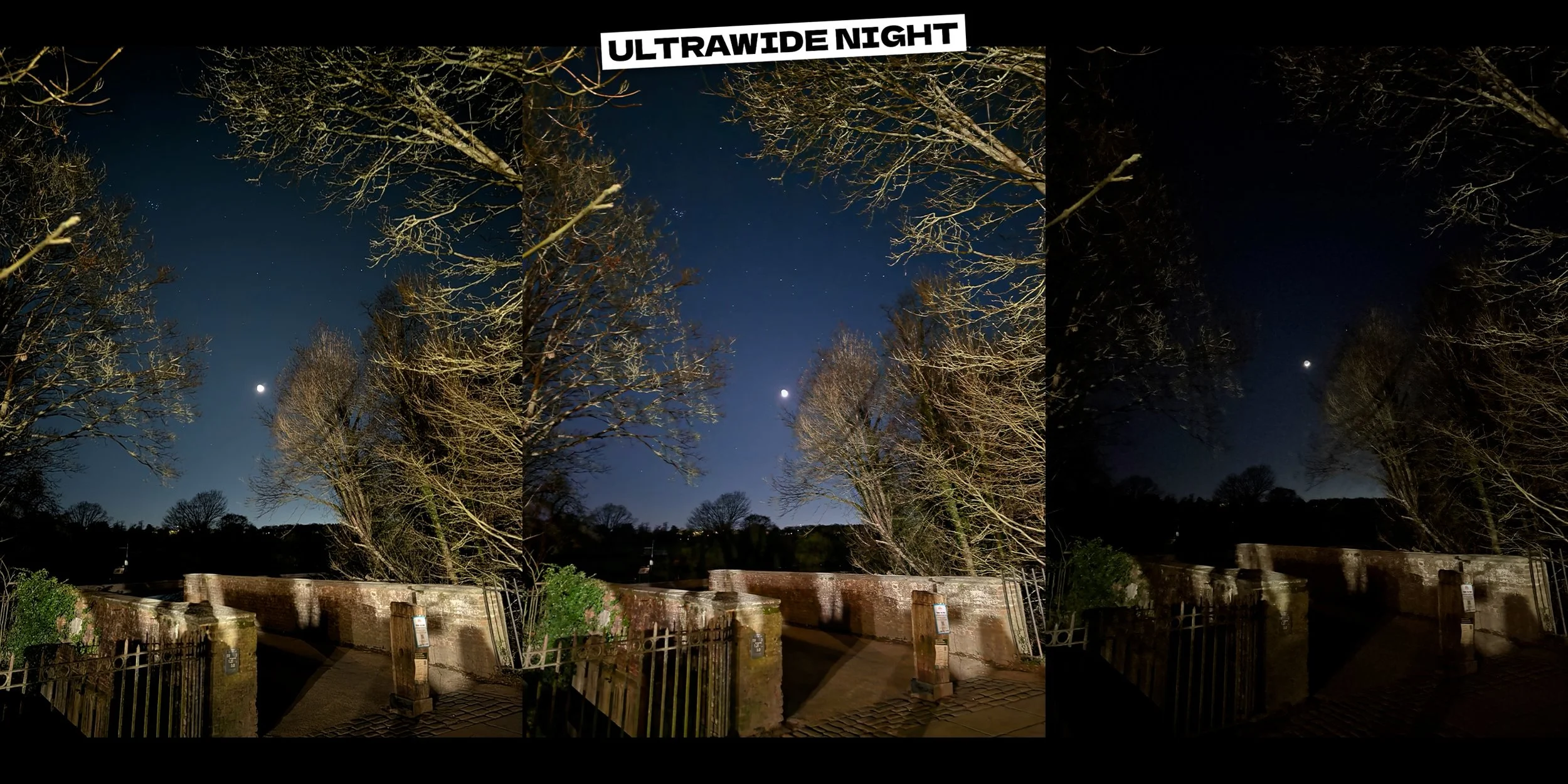
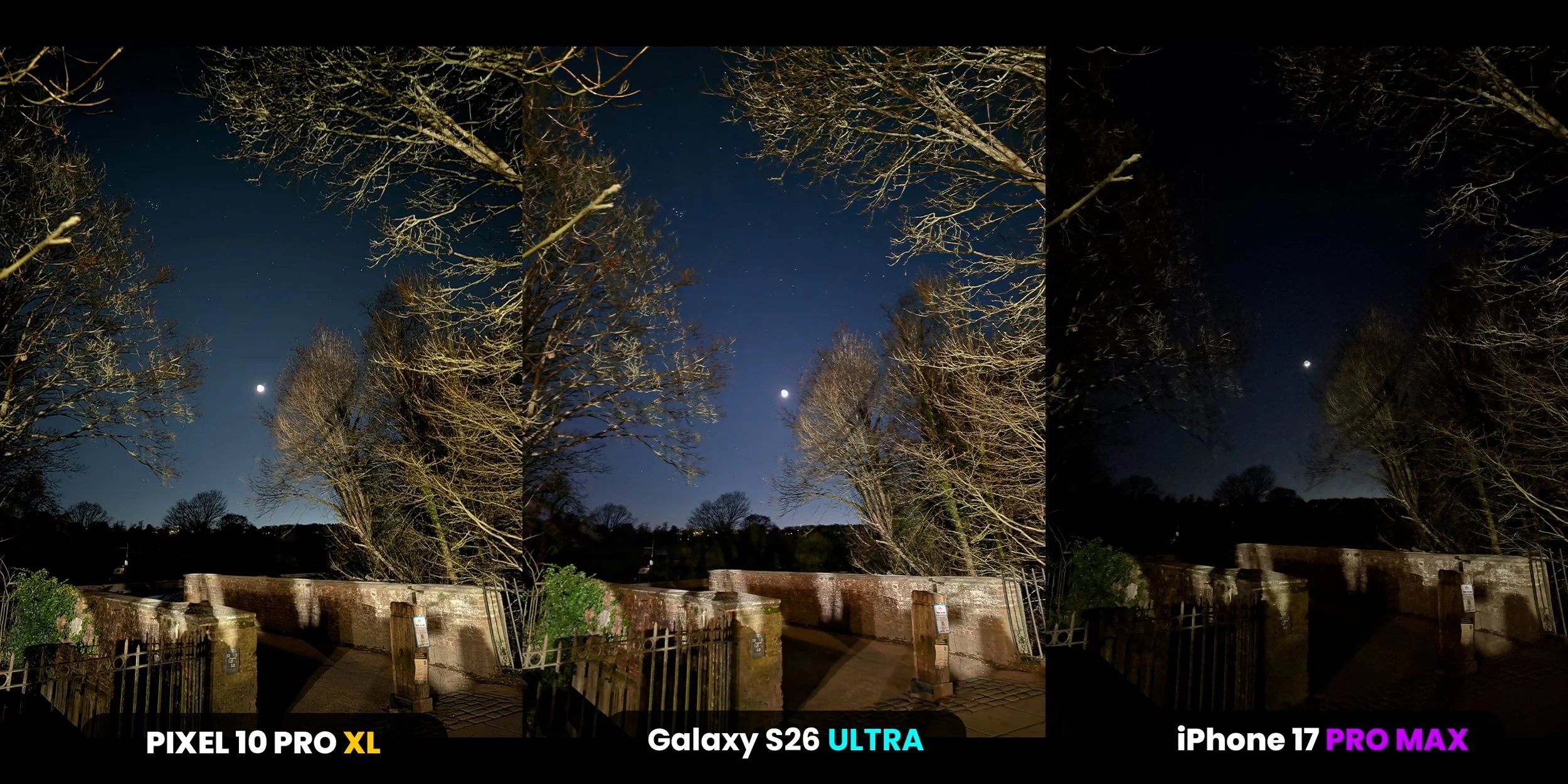
So honestly, the difference here surprised me a lot. How about you? Let me know in the comments. Now remember how I said the ultra-wide sensor and lenses are usually kind of an afterthought when it comes to camera hardware for smartphone manufacturers? Let’s see which one actually has the most sensitive ultra-wide sensor by taking this extreme night shot of the night sky. I think we could pick a winner just based on which one is seeing the most stars. But when we zoom back out, you'll notice there is some good foreground detail here too, so you might want to factor that in.
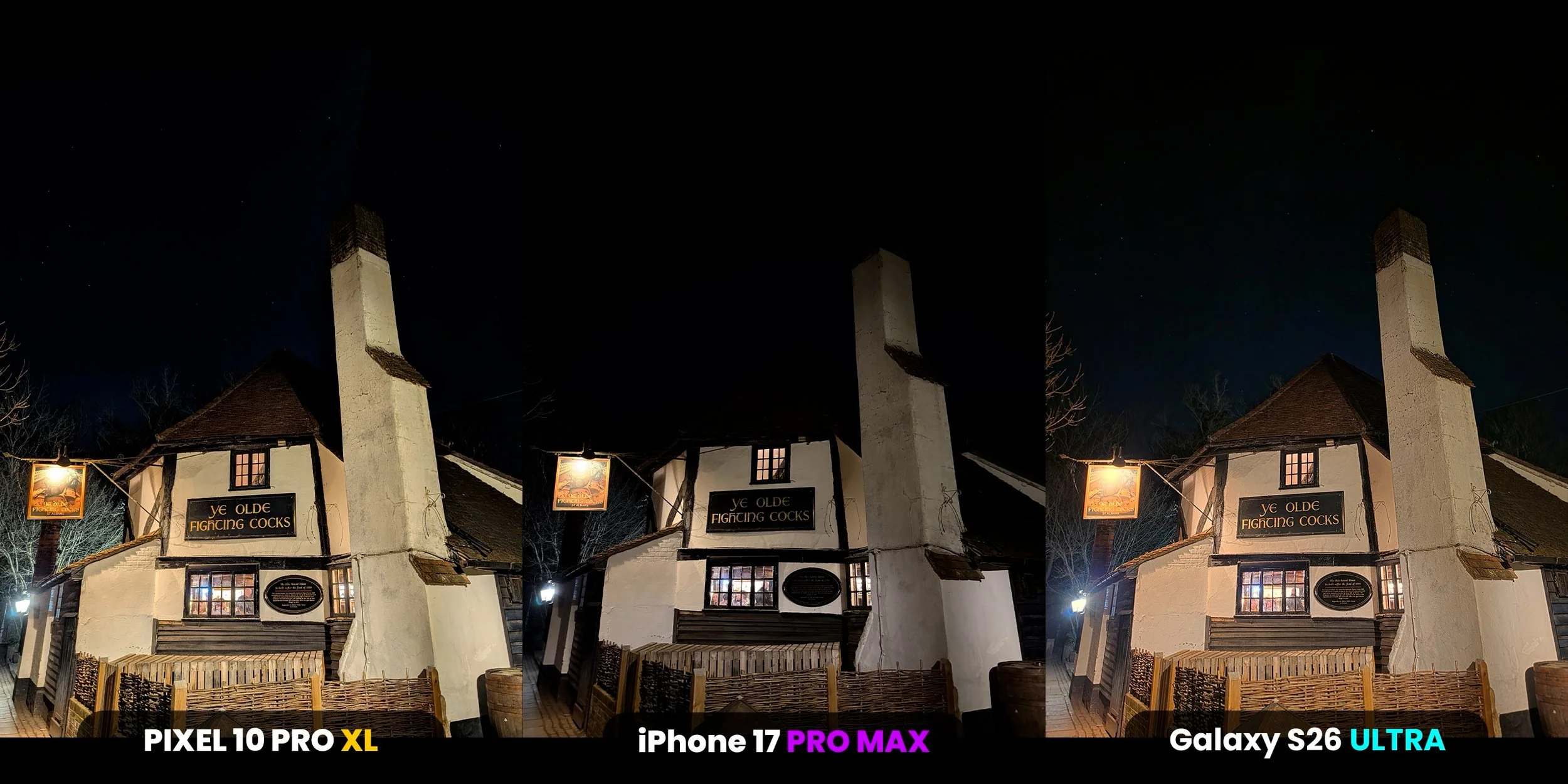
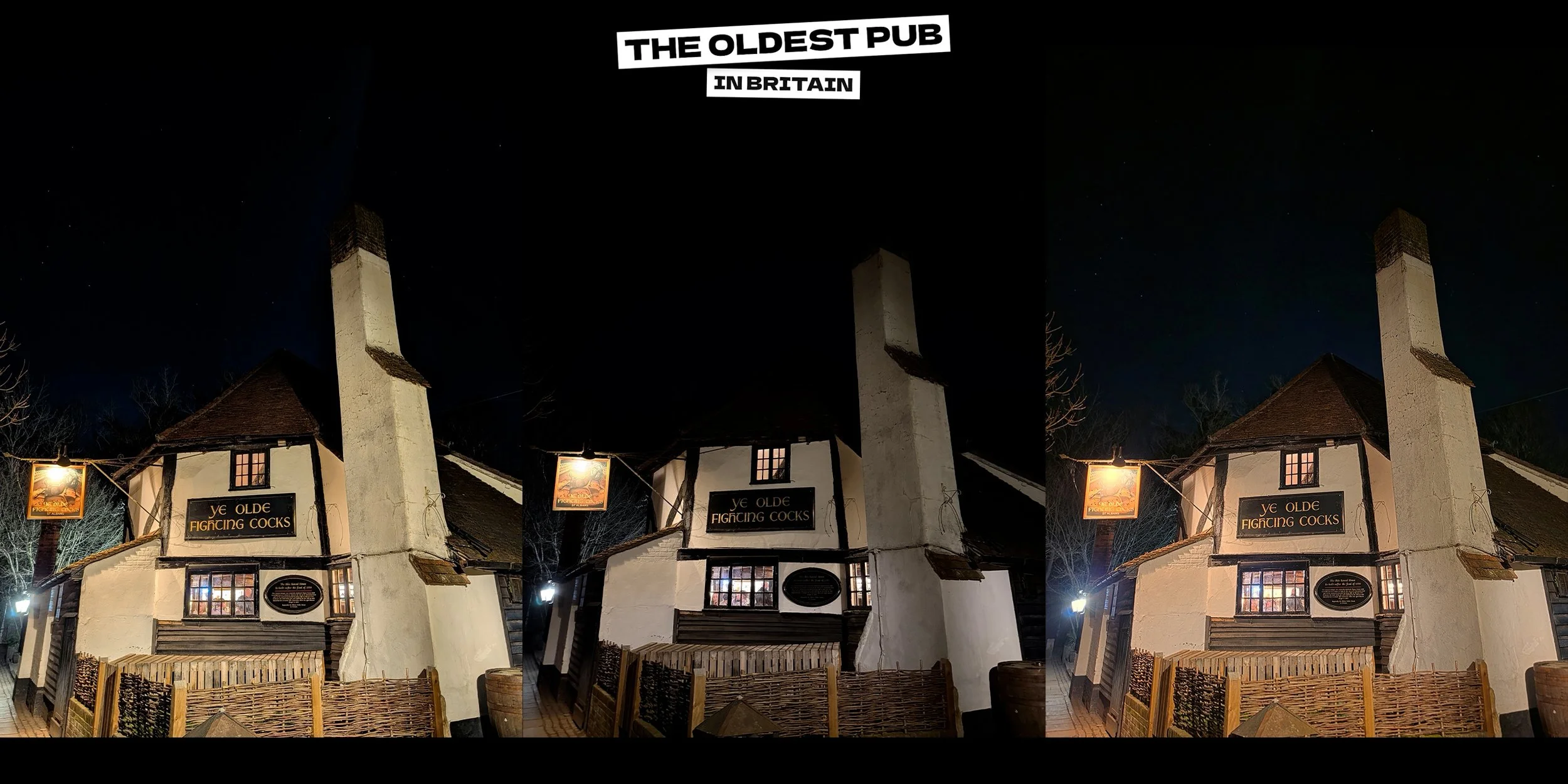
So now let me introduce you to the oldest pub in Britain — Ye Olde Fighting. Back in the old days, around 793 AD, they used to bet money on fights, get drunk, and watch fighting. And it's kind of gone full circle because nowadays people get drunk and occasionally watch fights after they've had too many beers. I'm joking — it's actually a really nice family pub. And this is the last photo. So it is time to total up your scorecards to find out which flagship has won this blind camera comparison shootout. And please do let me know in the comments which one won on your scorecard.
I'm genuinely very interested to read those, and I will try my very best to reply. And if you guys enjoyed this blind camera comparison and you've got any tips for me on how to improve it even more, do let me know in the comments! I hope you've enjoyed this unique approach to camera comparisons. I think they're more enjoyable than the classic side-by-side stuff, but they're also much more difficult to make for me. But it's worth it if you guys enjoy it.