Poco F8 Pro vs. Poco F8 Ultra: The Difference Is Not What You Think
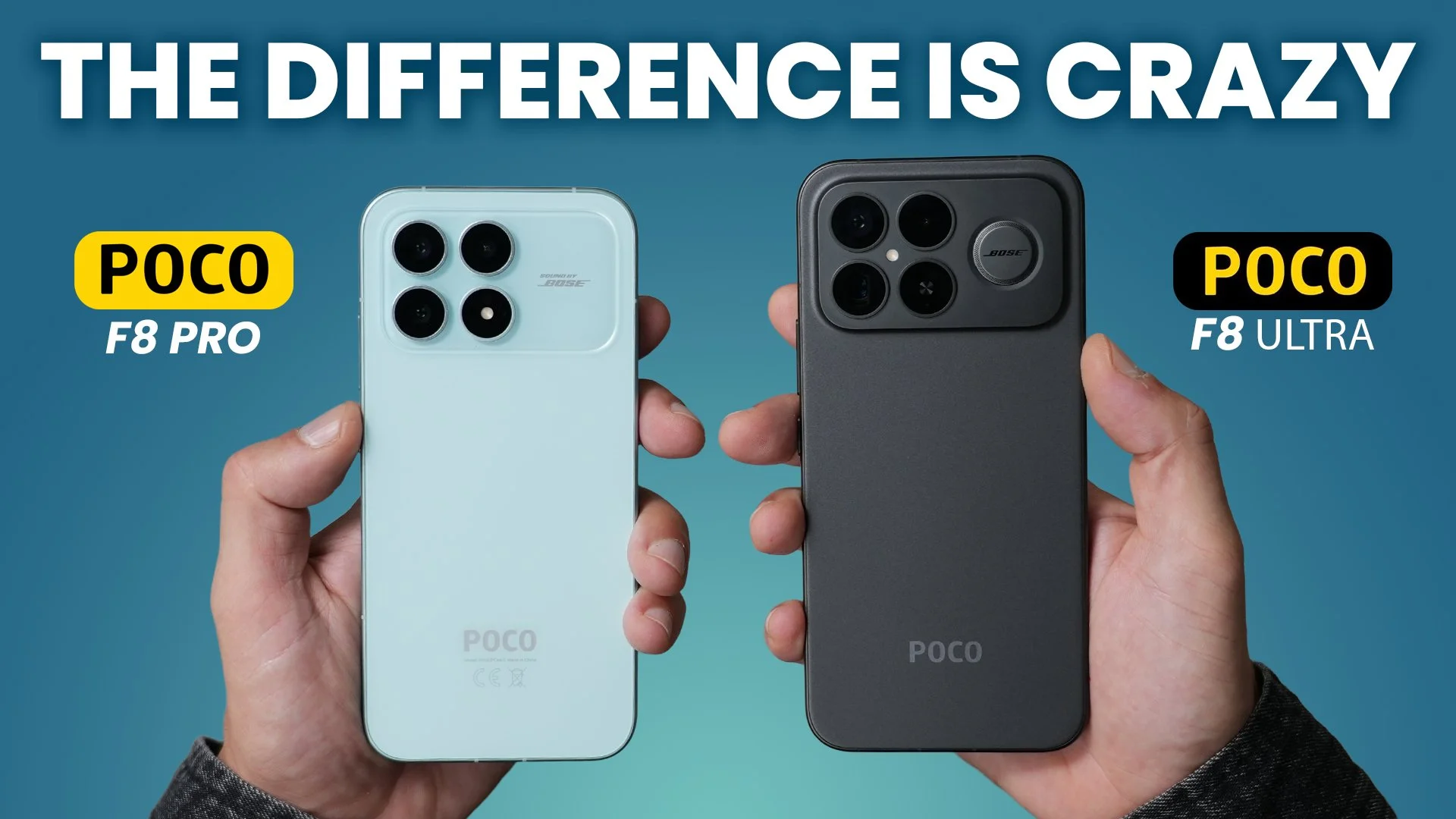
If you are torn between the new Poco F8 Pro and the Poco F8 Ultra, you aren't alone. On paper, they might look like siblings, but dig a little deeper and you’ll find over 20 distinct differences that set them apart.
From a surprising collaboration with Bose to a nerve-wracking benchmark test that didn't go as planned, here is the ultimate breakdown to help you decide which powerhouse deserves a spot in your pocket.
Design and Durability
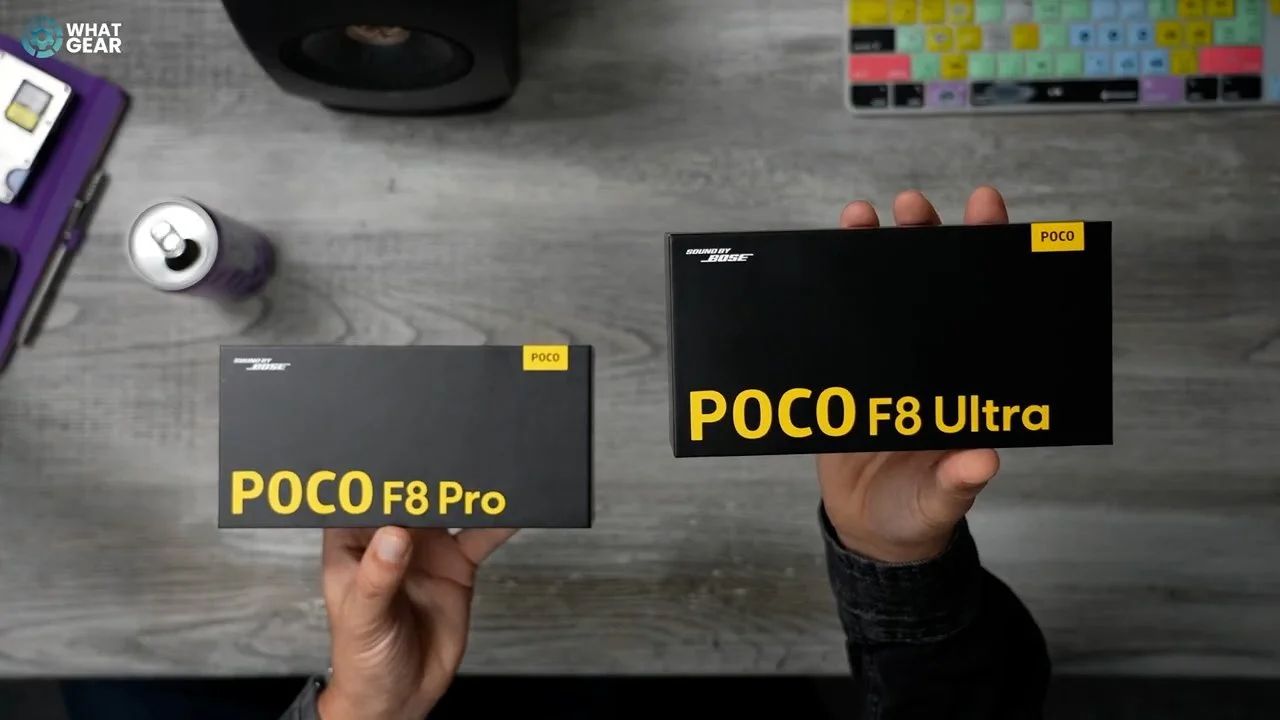
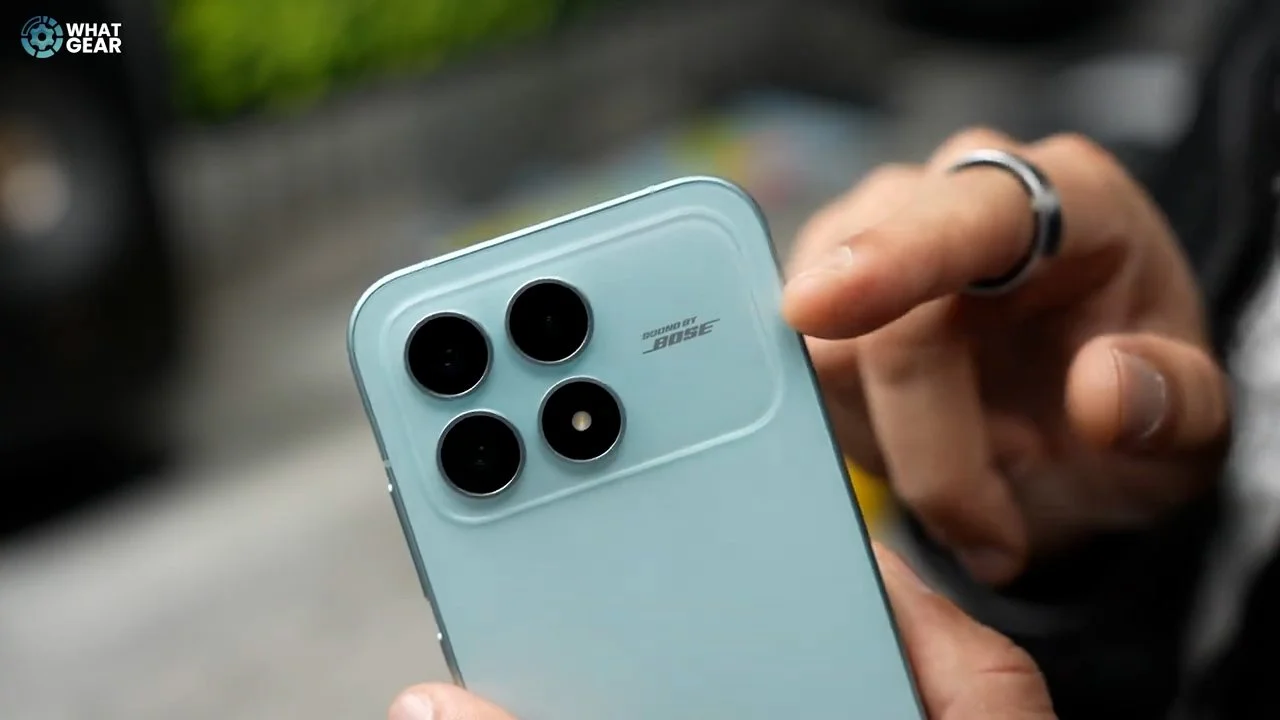
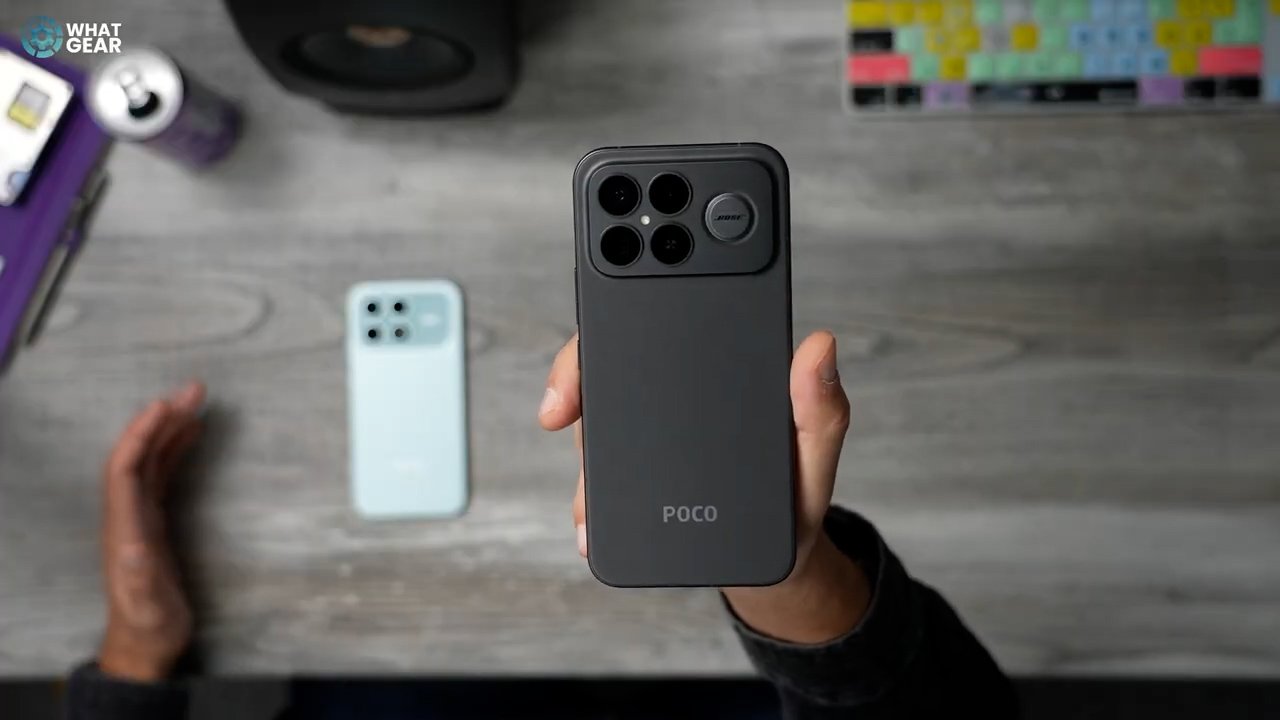
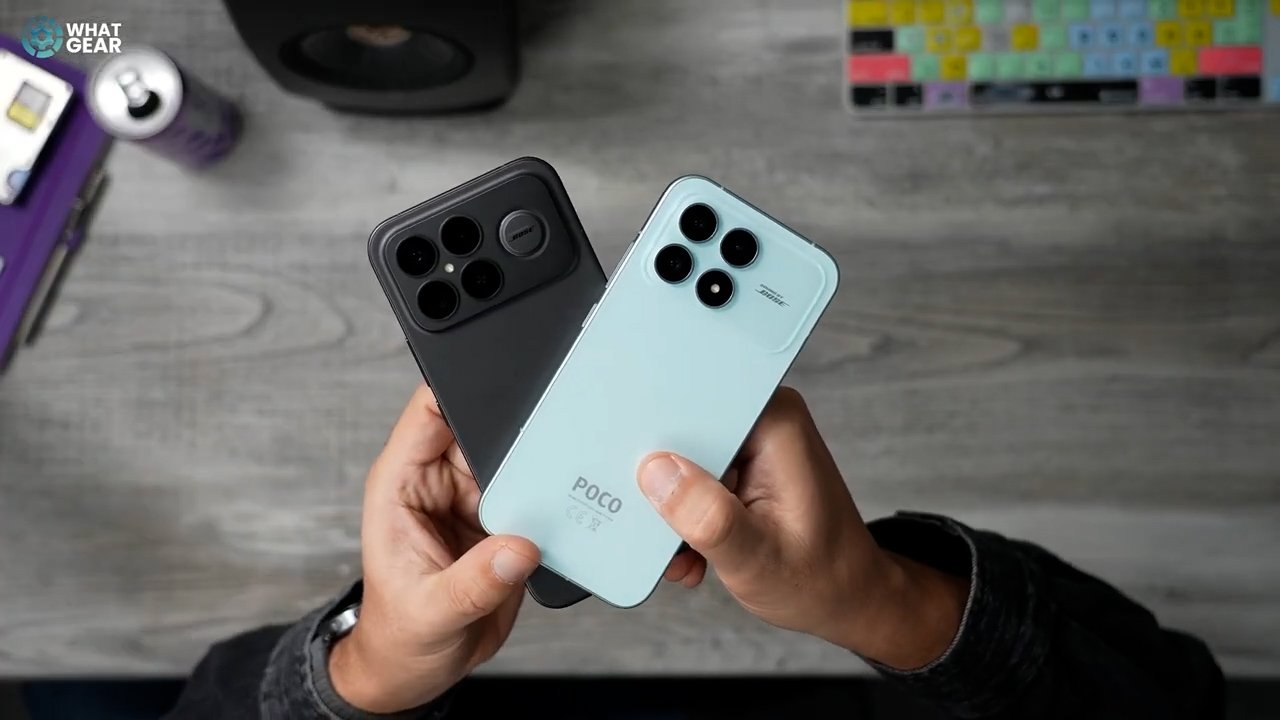
At first glance, both phones borrow design cues from popular flagships (the camera module shape is undeniably iPhone-esque). However, the Ultra elevates the look with a "frosted" finish and a seamless glass camera plateau, whereas the Prosticks to a classic glossy finish.
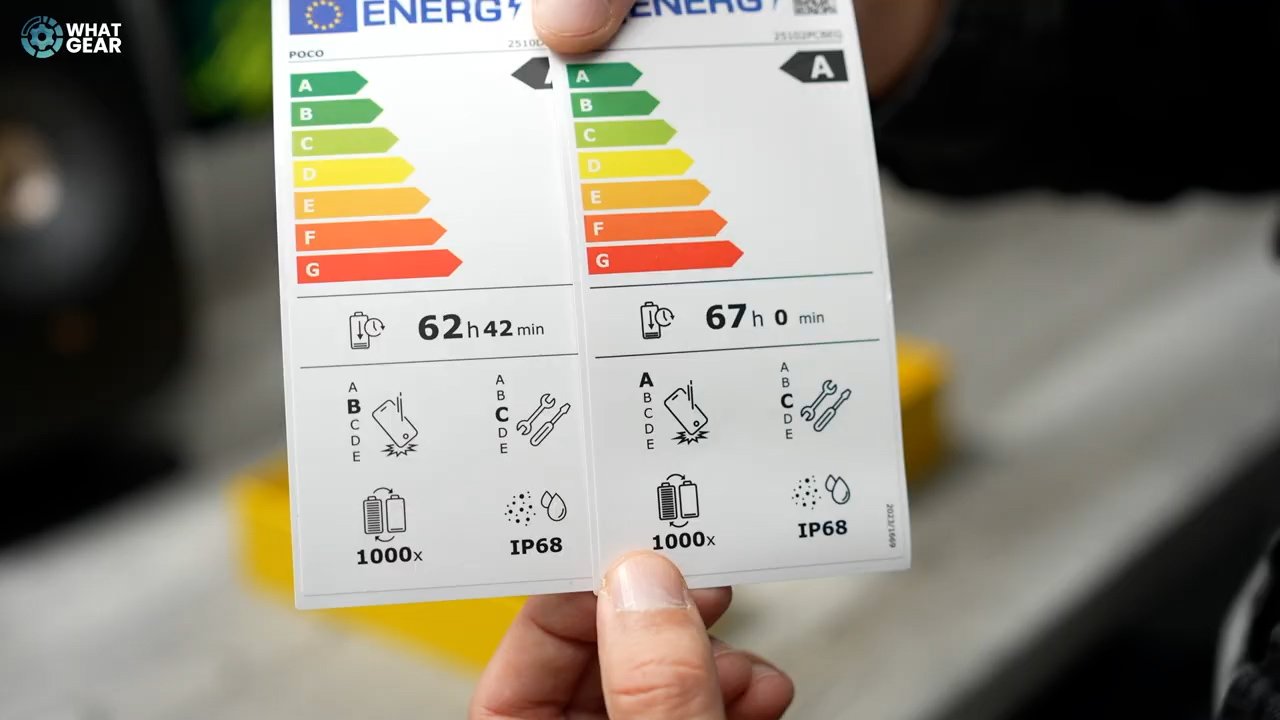
Drop Rating: The Pro holds a B-rating, while the Ultra boasts an A-rating, thanks in part to the more durable Poco Shield glass.
Weight: The Ultra is heavier at roughly 220g (versus the Pro’s 199g), but it utilizes lightweight glass fiber materials to keep the bulk manageable.
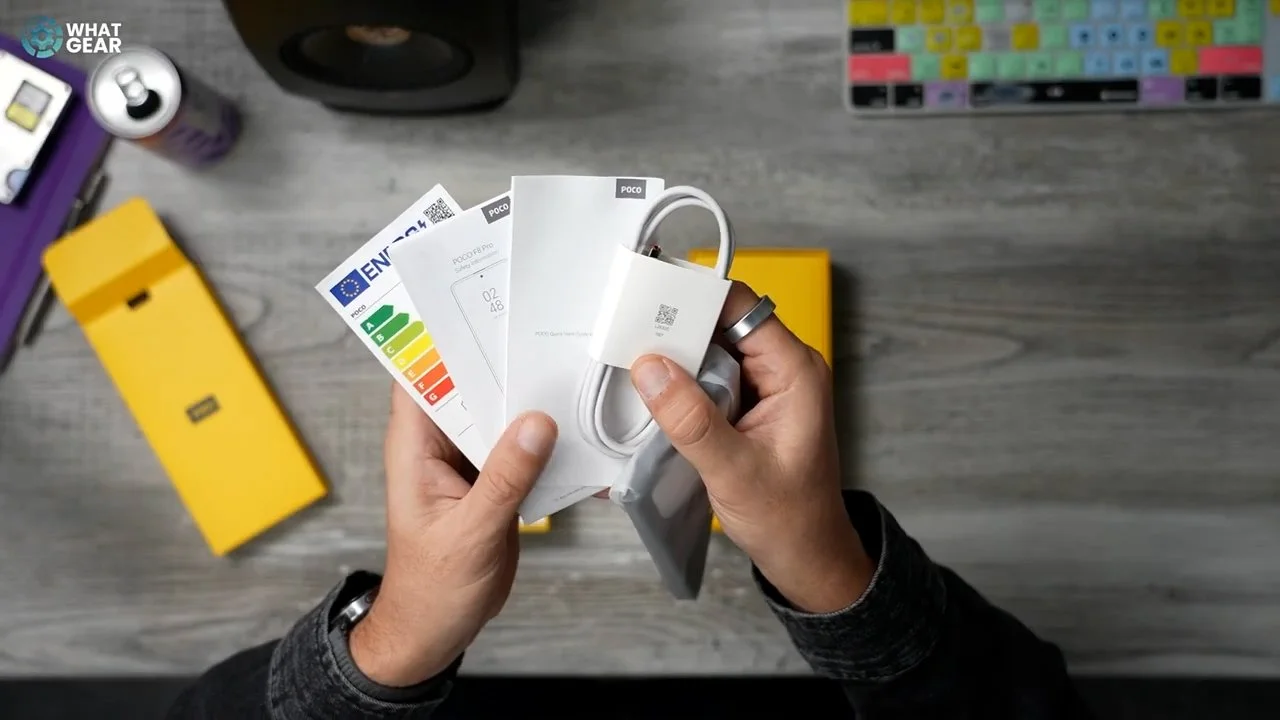
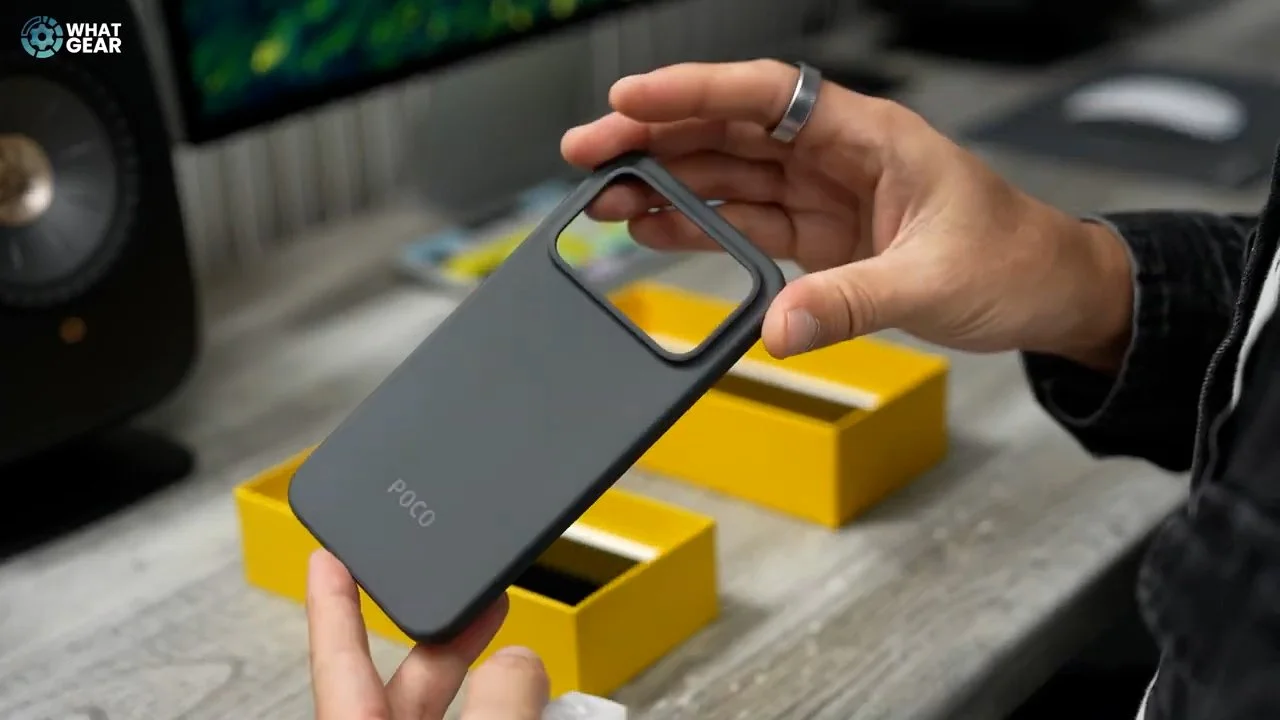
In the Box: Both come with a charger, cable, and a basic silicone case.
Display Quality
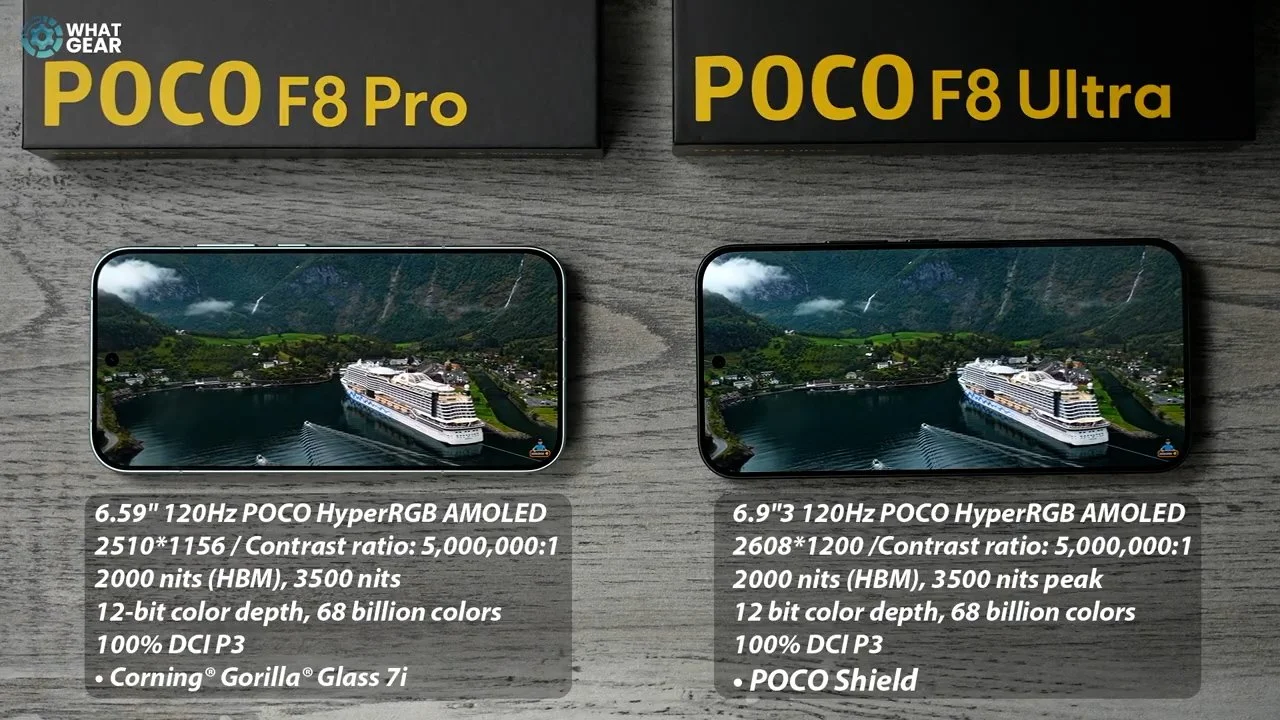
Both devices feature stunning AMOLED 120Hz displays with a blinding 3,500 nits peak brightness—brighter than many top-tier competitors. They also introduce Poco’s new M10 luminous material, improving power efficiency by over 11%.
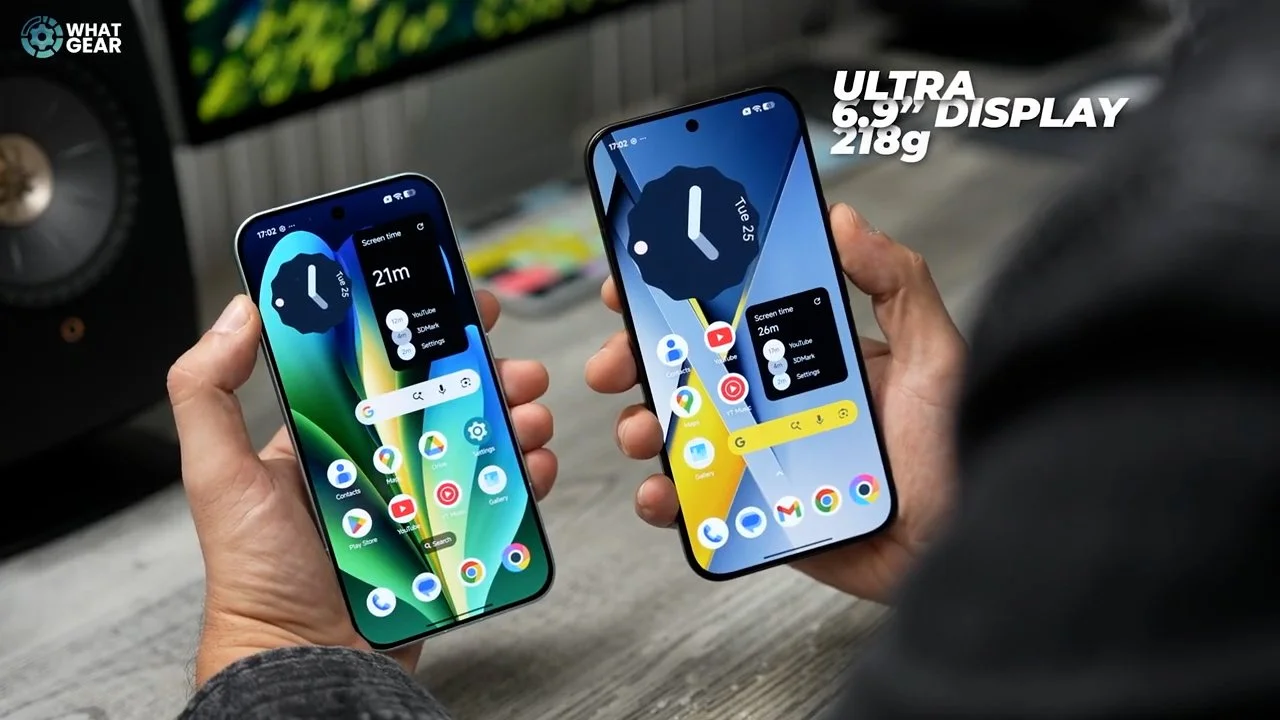
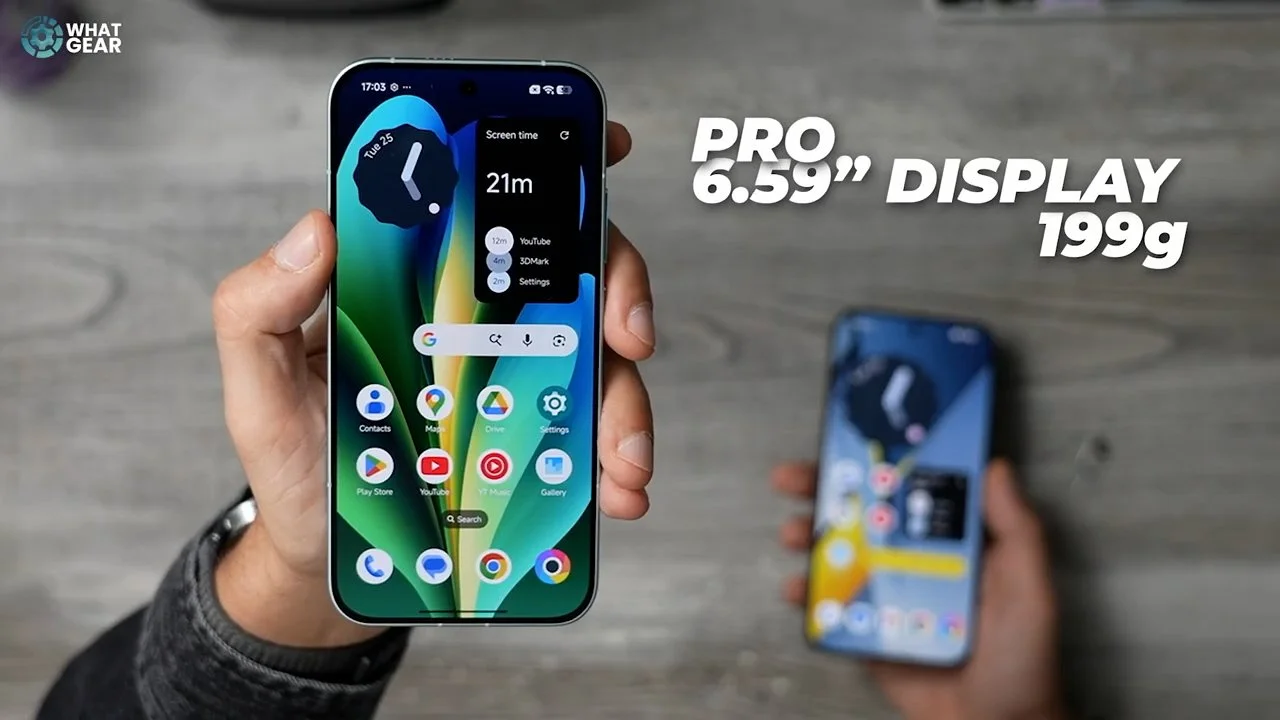
The Ultra Advantage:
Size: A massive 6.9-inch screen.
Resolution: A true 2K resolution (2608 x 1200) compared to the Pro's 1.5K (2510 x 1156).
Battery and Charging
The "Ultra" name really shines in the battery department. It packs a massive 6,500 mAh silicon-carbon battery, providing roughly 1.5 hours more screen time out of the box than the Pro’s 6,210 mAh cell.
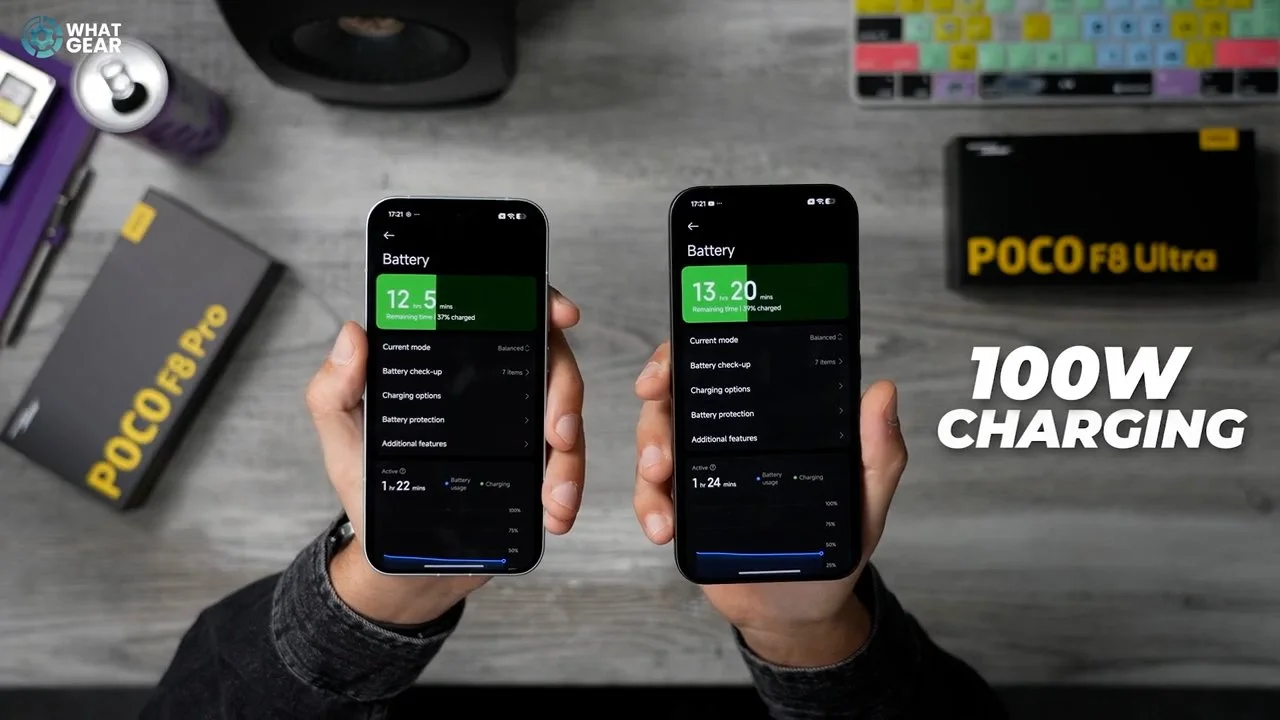


Wired Charging: Both support blisteringly fast 100W charging.
Wireless Charging: The Ultra supports 50W wireless charging, a feature completely absent on the Pro.
Audio: The Bose Difference
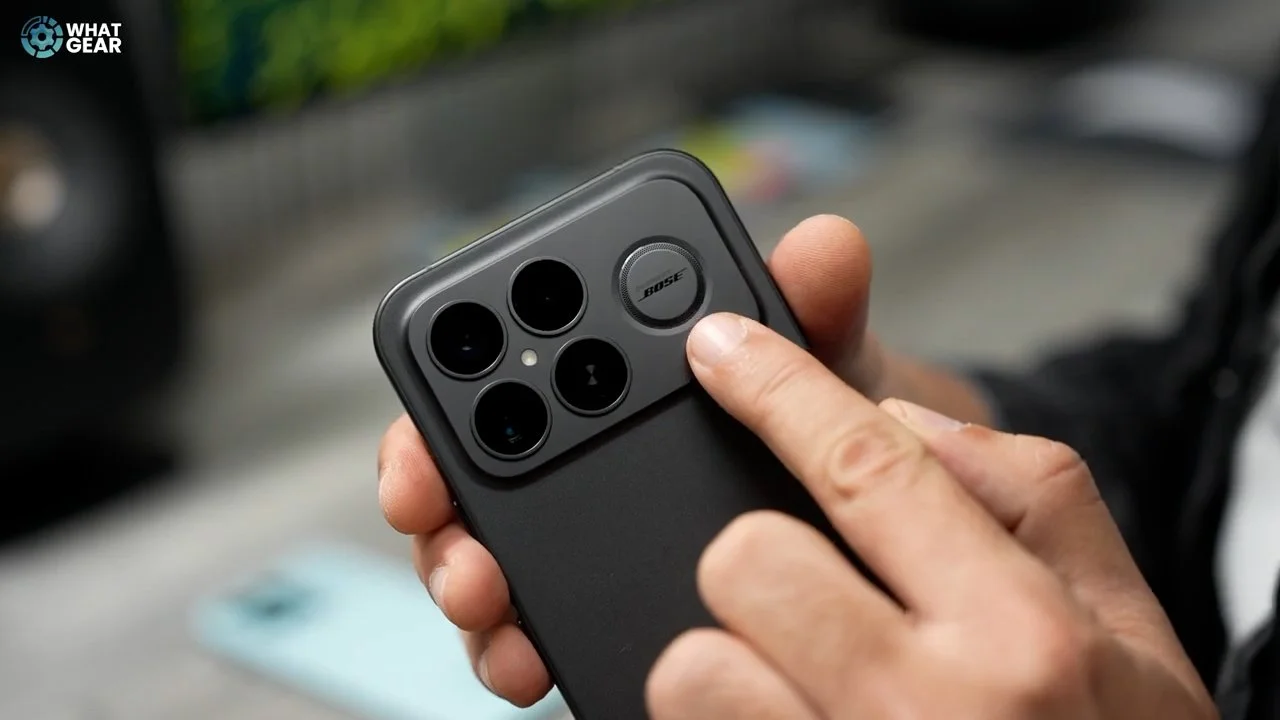
One of the biggest surprises is the Ultra’s collaboration with Bose. The F8 Ultra features a 2.1 sound system with a dedicated subwoofer on the back.
The Verdict: The Ultra delivers the best bass we have ever heard on a non-gaming smartphone, with depth and clarity that easily outperforms the Pro and even rivals the latest iPhone.
Cameras
If photography is your priority, the Ultra is the clear winner.
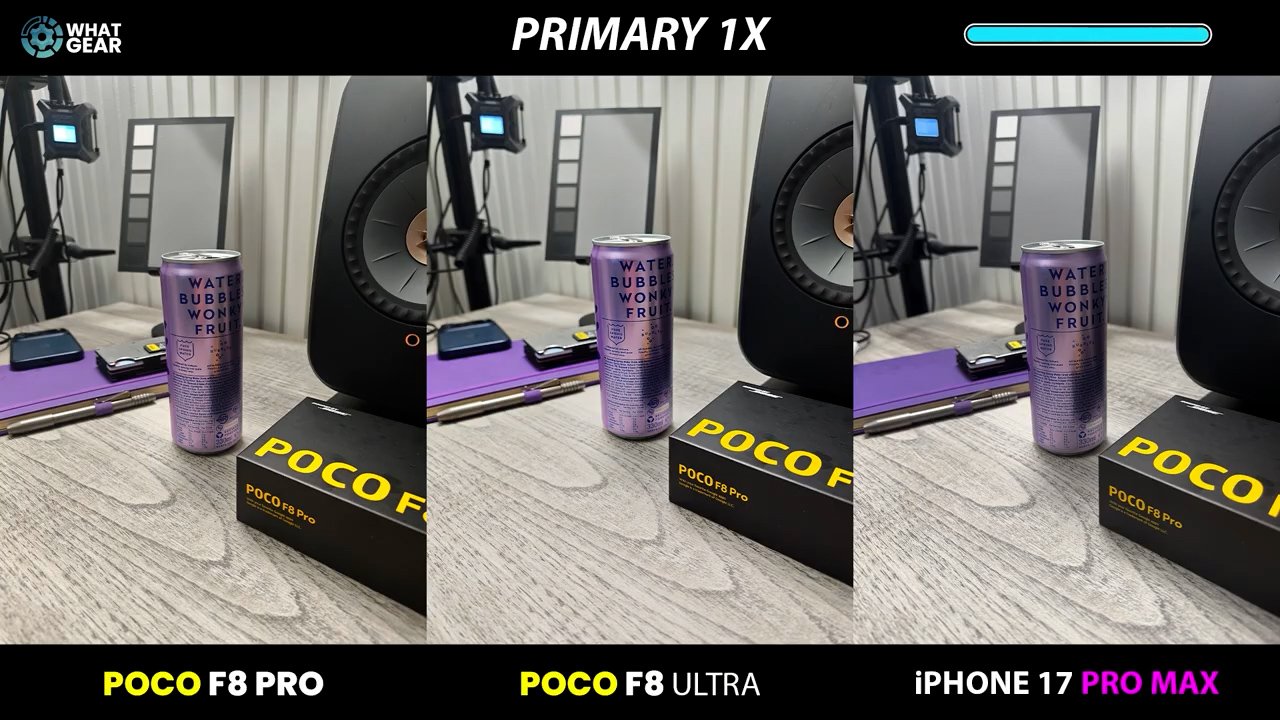
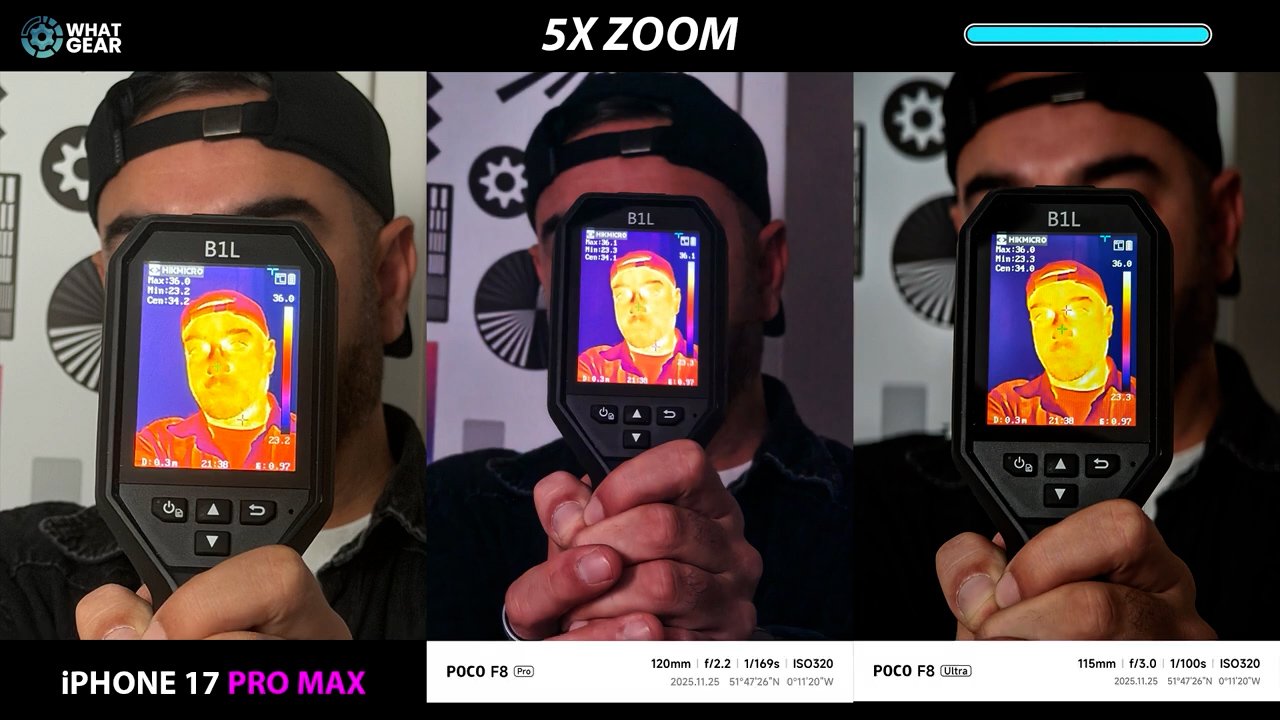
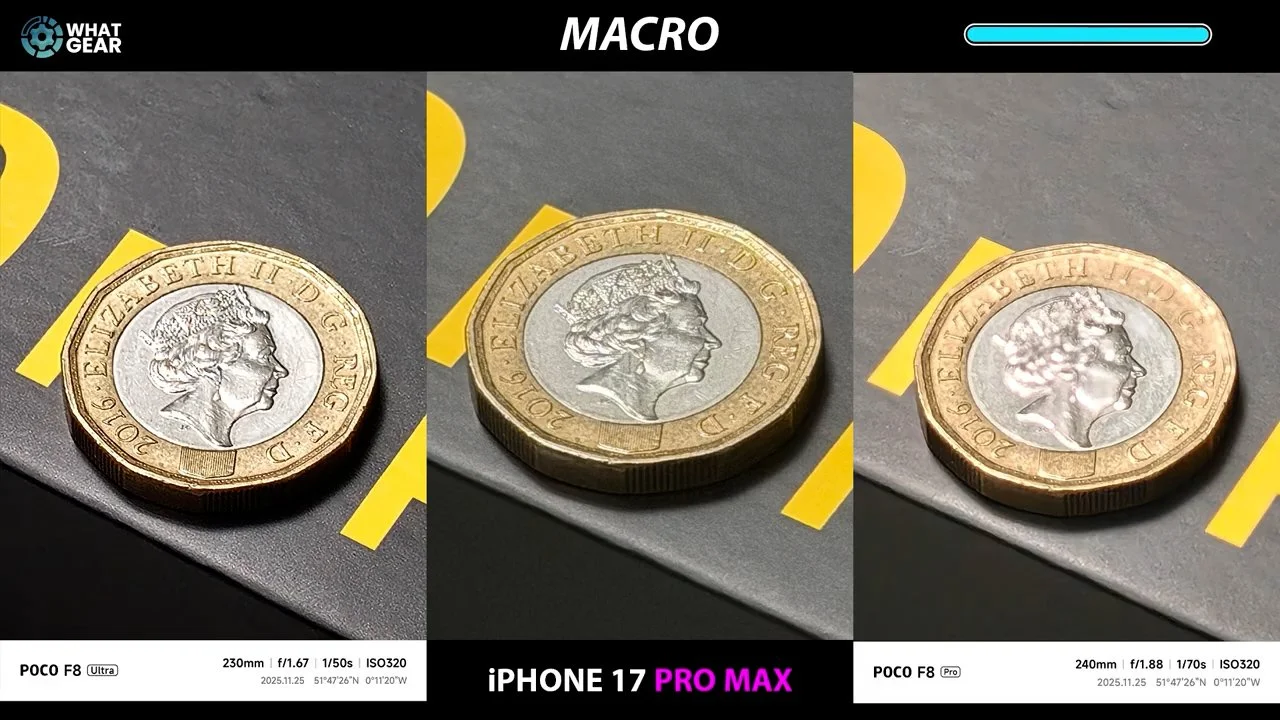
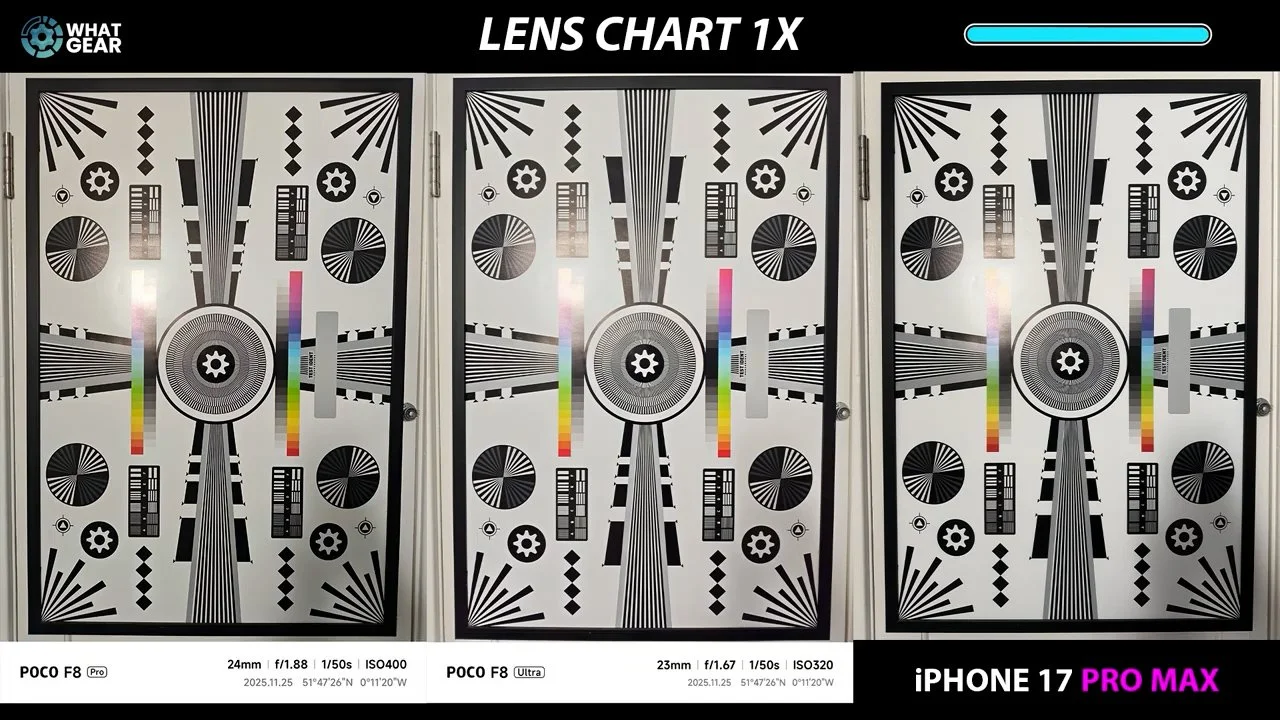
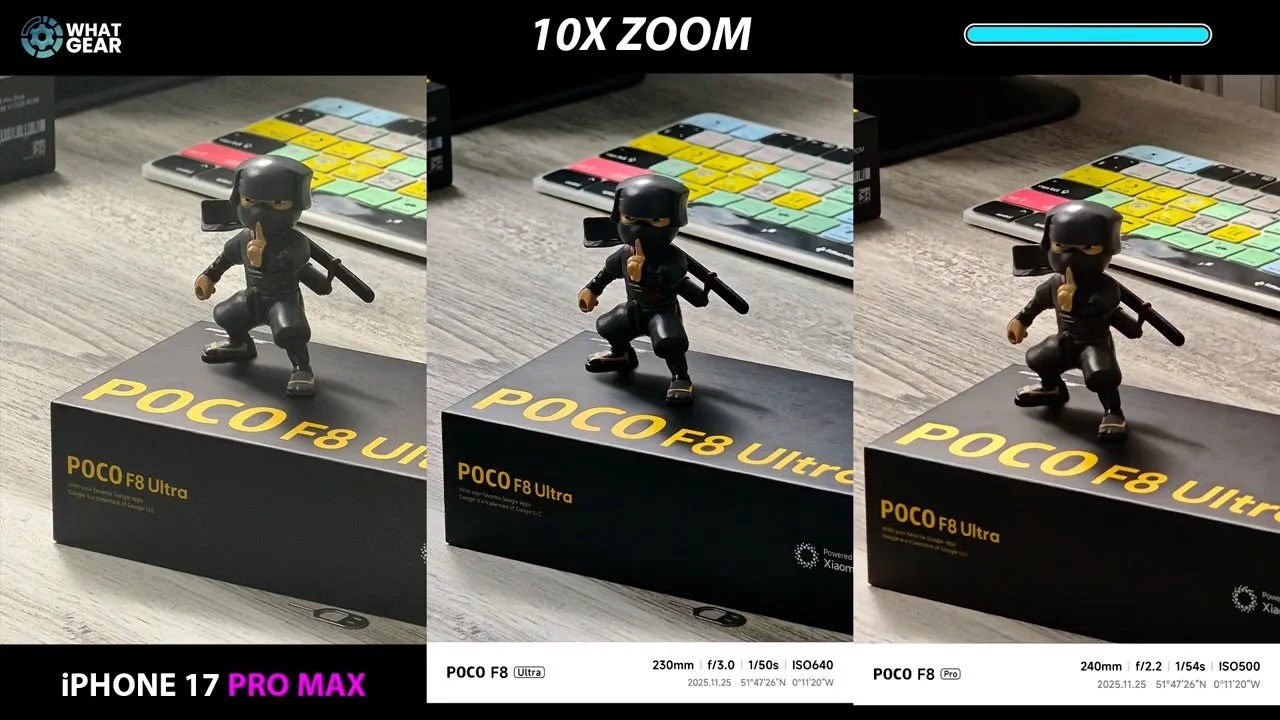
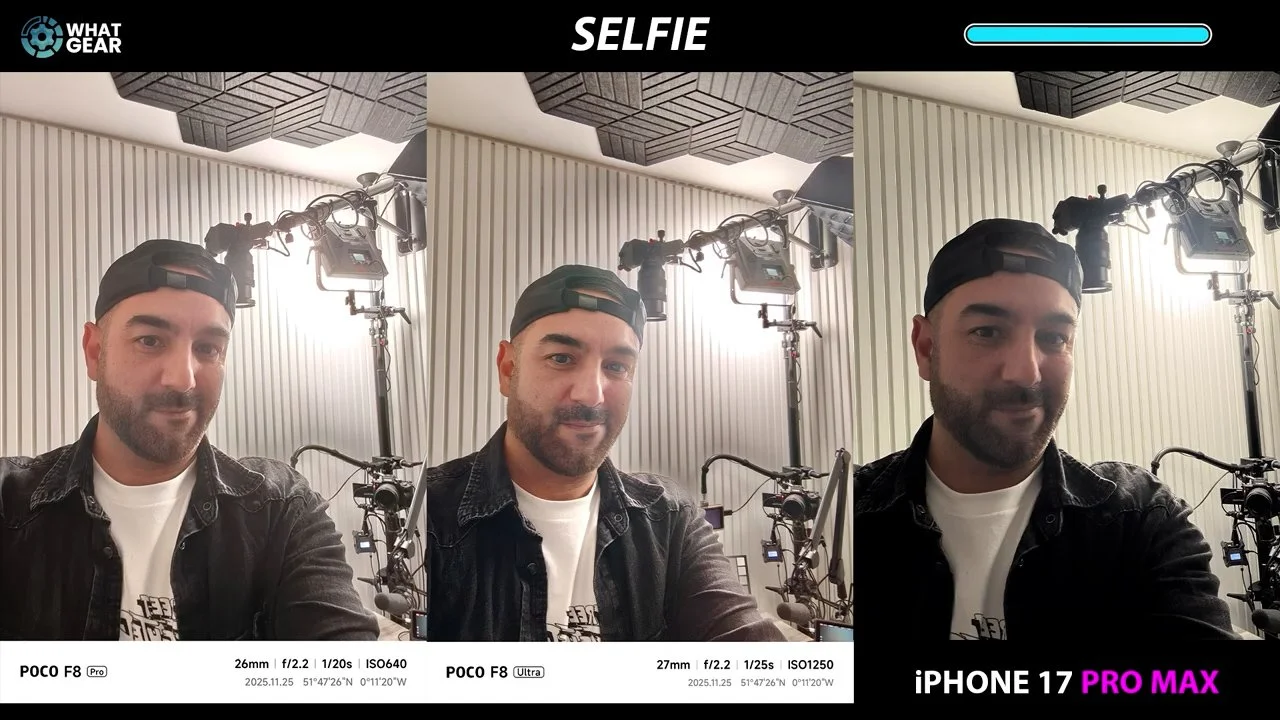
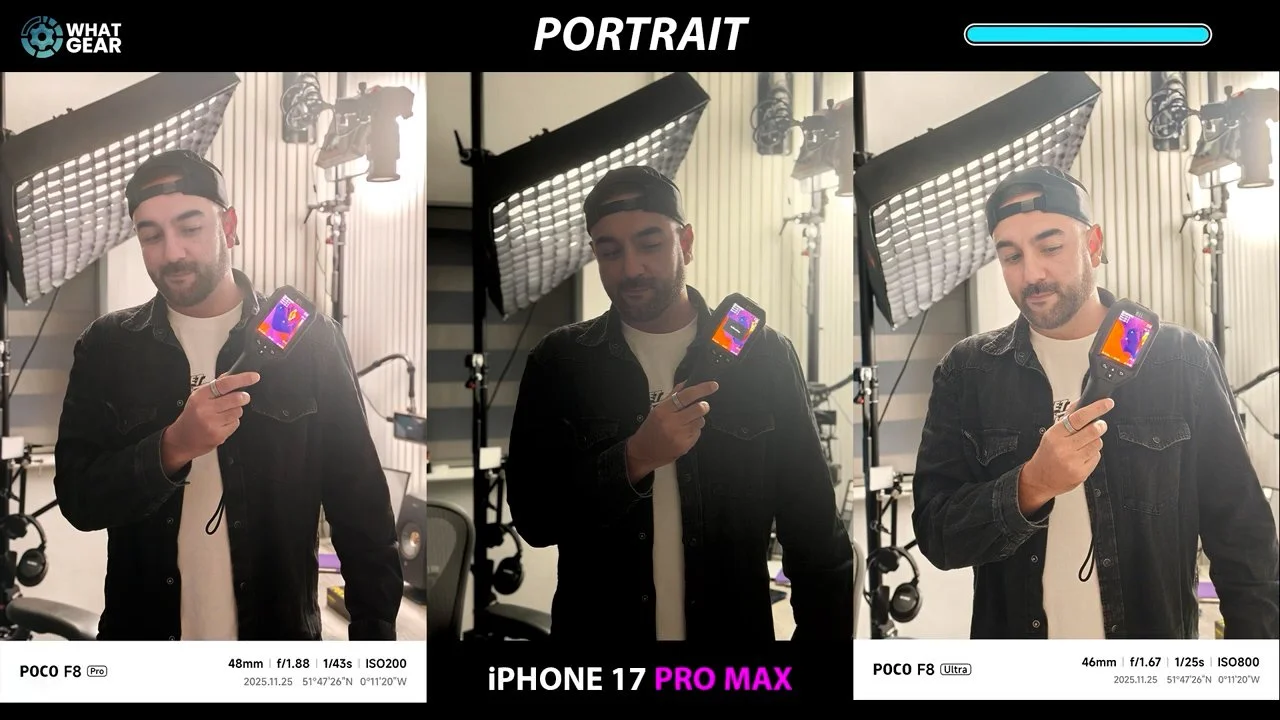
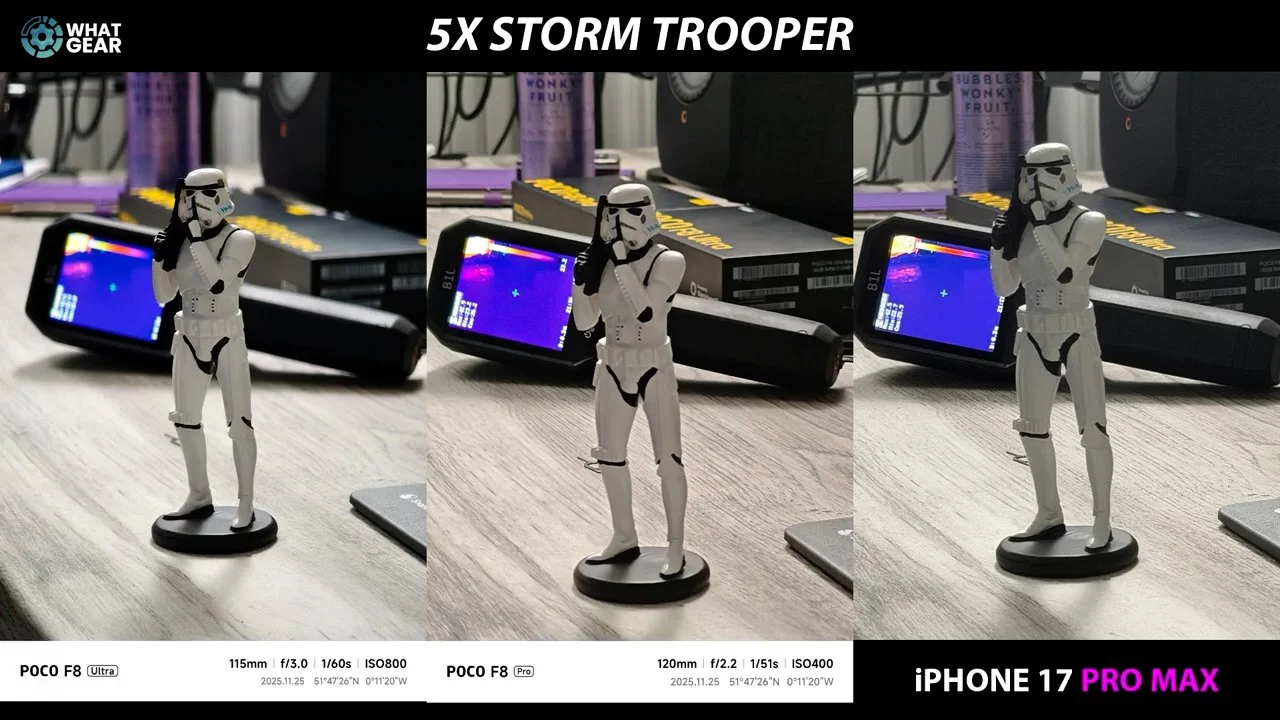
Primary Sensor: The Ultra uses a larger 1/1.31” Light Fusion sensor for superior low-light performance (vs. the Pro’s smaller 1/1.55” sensor).
Zoom: The Ultra features a 5x optical periscope zoom (115mm equivalent), whereas the Pro is limited to a 2.5x telephoto lens.
Selfies: A 32MP shooter on the Ultra vs. 20MP on the Pro.
Performance & The "Nerve-Wracking" Benchmark
This is where things get complicated.
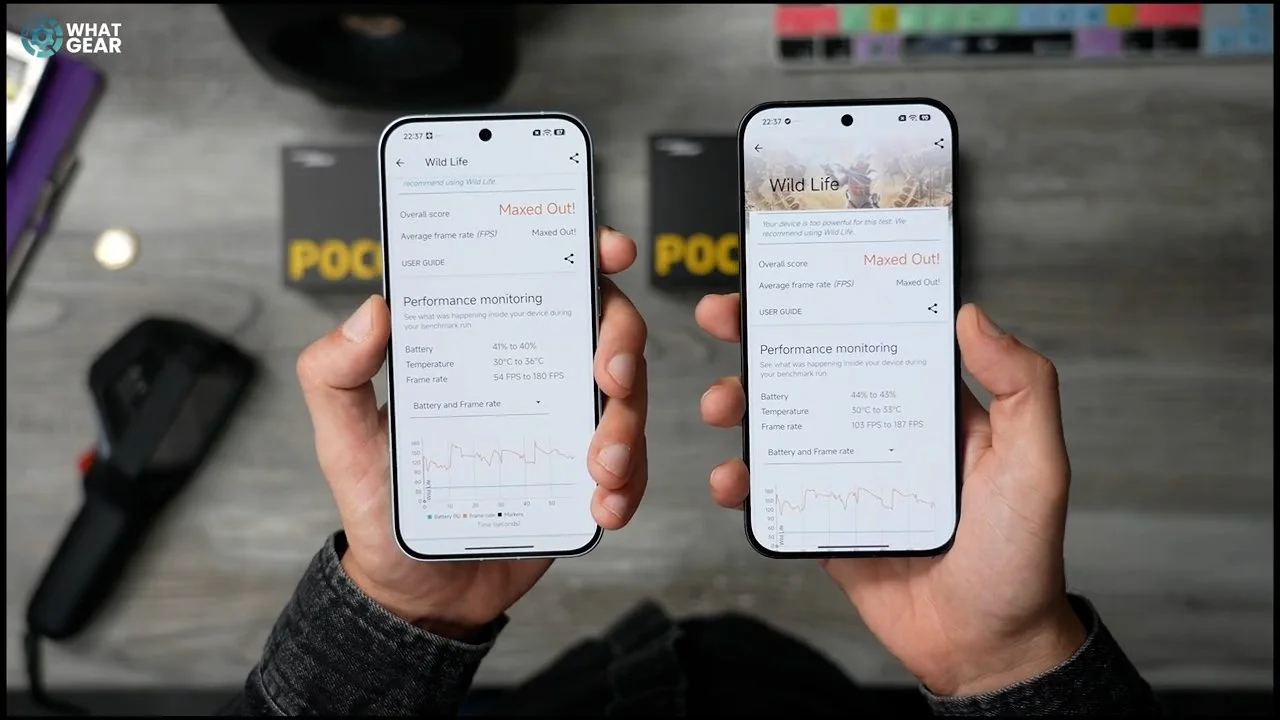
The Specs:
Pro: Snapdragon 8 Elite (4.32 GHz).
Ultra: Snapdragon 8 Elite Gen 5 (4.66 GHz) + a dedicated Vision Boost D8 chipset for graphics upscaling.
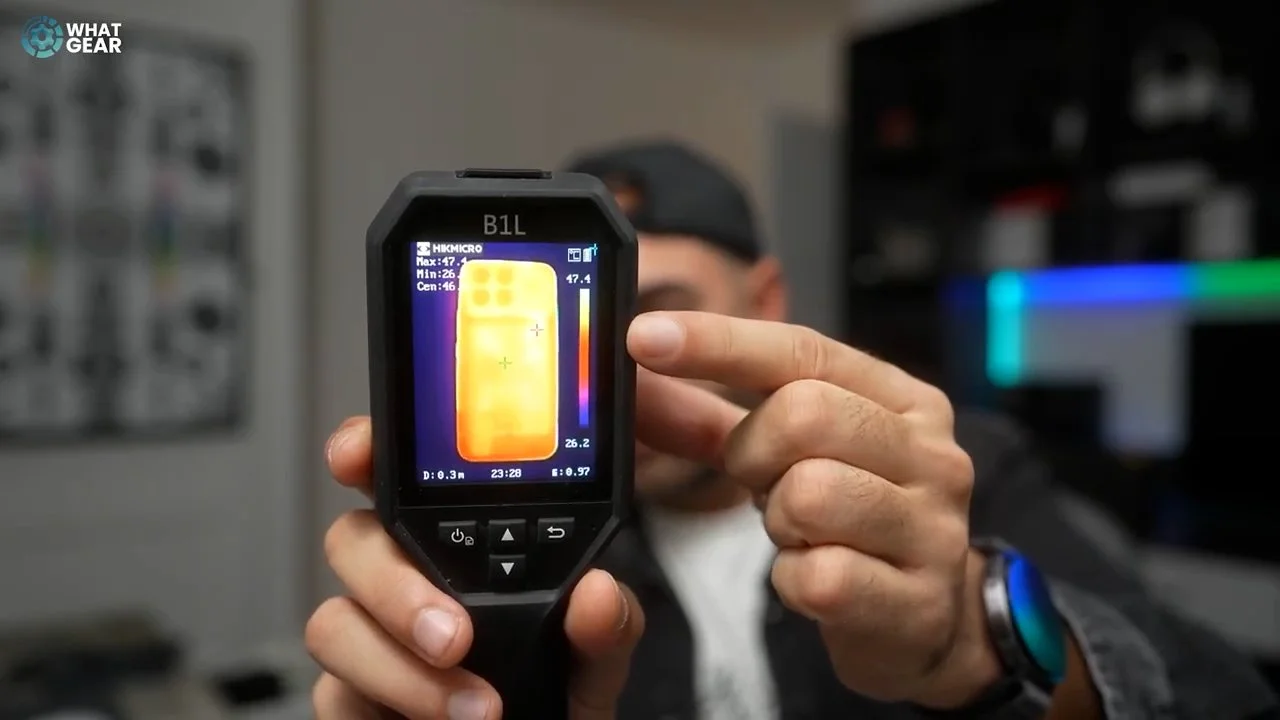
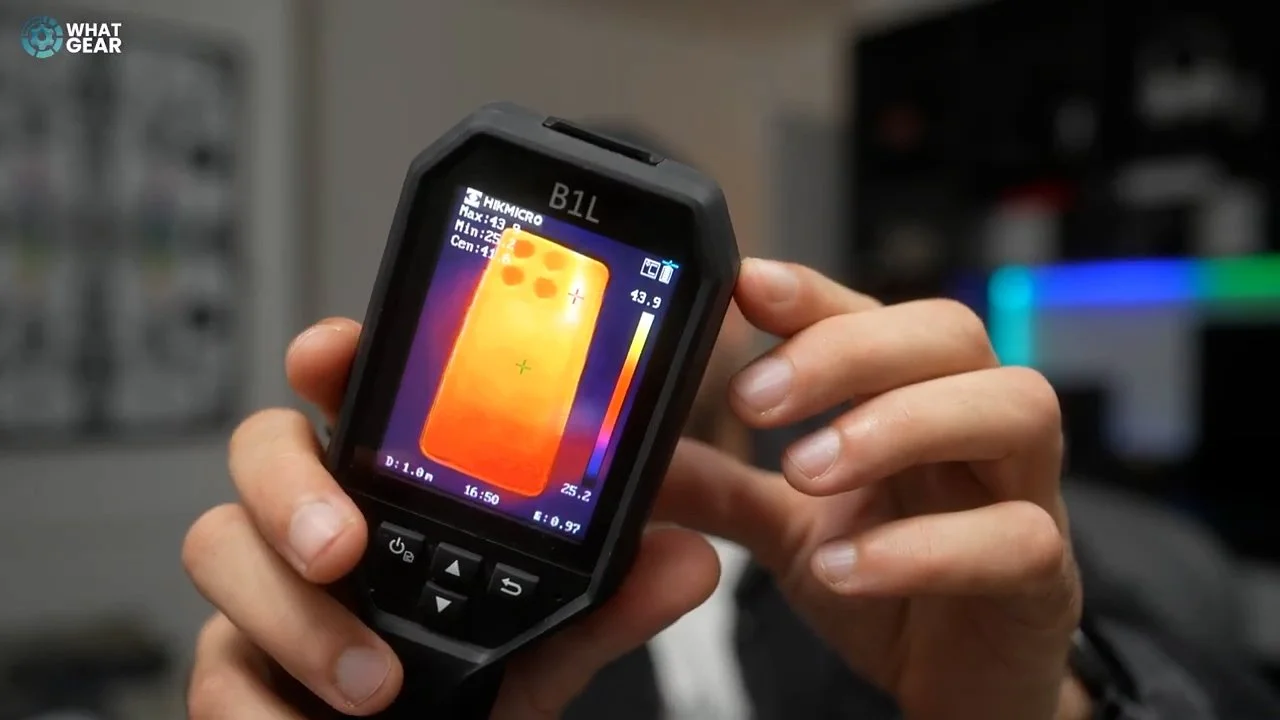
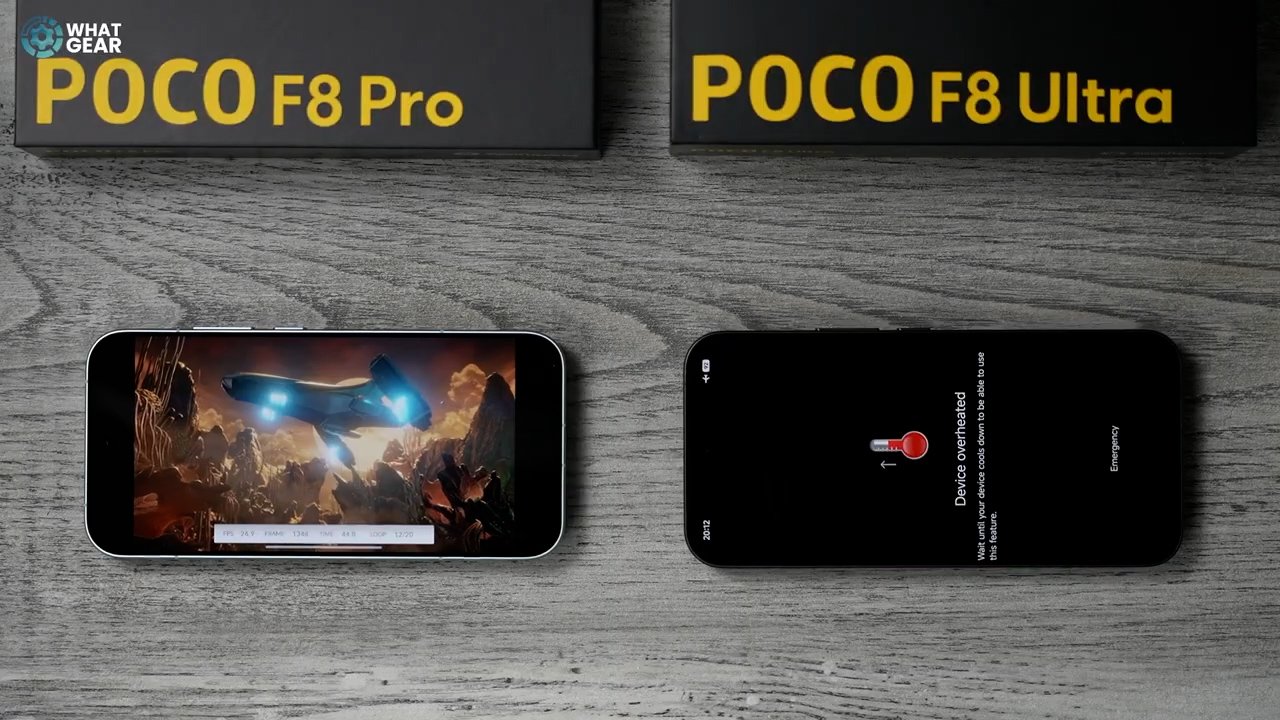
The Stress Test: During a 20-minute 3D Mark Extreme stress test, the Poco F8 Ultra actually overheated and failed to complete the test. The heat dissipation couldn't keep up with the raw power of the new chip. The Pro, using the slightly older but more optimized chip, finished the test with stable thermals (under 44°C).
Note: As these are launch-day devices, this is likely a software optimization issue that Poco can patch, but it is something to keep in mind.
Final Verdict: Which One Should You Buy?
Despite the overheating hiccup in the stress test, the Poco F8 Ultra is the superior device. It isn't just a small step up; it offers meaningful upgrades in audio, battery life, display resolution, and camera versatility.
Pick the Ultra if: You want the best mobile audio on the market, superior zoom photography, and wireless charging.
Pick the Pro if: You want a lighter phone, stable sustained performance out of the box, and don't care about wireless charging.